Published: 05 August 2026 | The English Chronicle Desk | The English Chronicle Online
A discarded SpaceX rocket part is expected to collide with the Moon in the coming days, but NASA has reassured the public that there is “no danger to Earth” from the impact.
The object, believed to be a section of a SpaceX Falcon rocket, has been travelling through space after being left in a high-altitude orbit. Experts tracking its movement predict that it will eventually strike the lunar surface, creating a small impact crater.
The event has attracted attention because it represents another example of human-made material reaching the Moon unintentionally. However, scientists say the collision poses no threat to life on Earth and will provide another opportunity to study how artificial objects interact with the lunar environment.
The rocket component was originally launched as part of a SpaceX mission but later became separated from the main spacecraft.
After completing its primary mission, the object remained in space rather than returning to Earth.
Over time, gravitational influences from the Earth, Moon and Sun altered its trajectory, placing it on a path that is expected to end with a collision on the lunar surface.
Space agencies and independent astronomers have been monitoring the object’s movement to calculate when and where the impact is likely to occur.
Because space objects can be affected by many forces, including solar pressure and gravitational changes, predicting their exact movements can be challenging.
NASA officials have stressed that the rocket part does not represent any danger to Earth.
The object is not heading towards the planet and will not enter Earth’s atmosphere.
Instead, it is expected to strike the Moon, which has no atmosphere to slow down or burn up incoming objects.
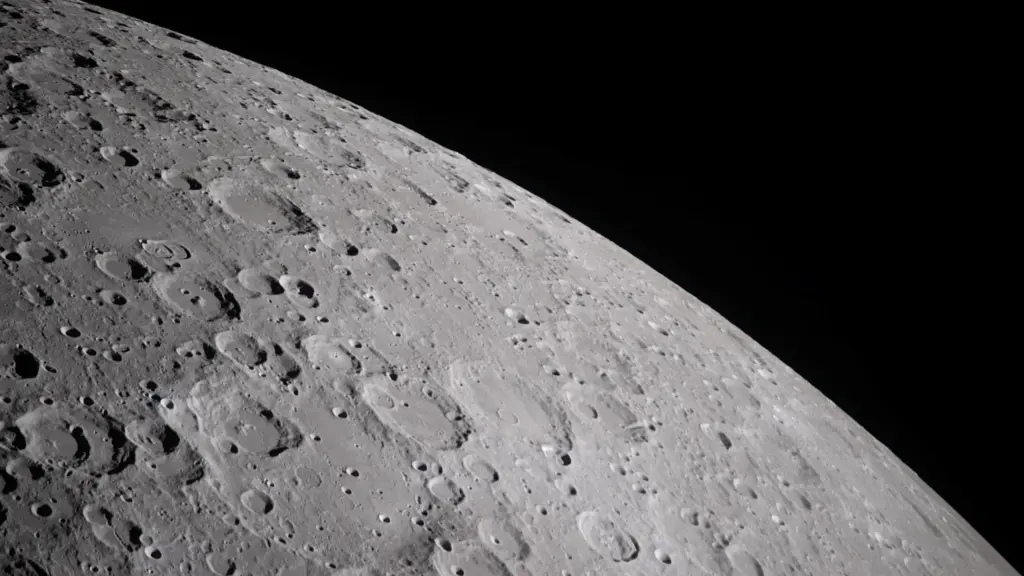
NASA scientists say lunar impacts from natural objects are common. The Moon has been struck by asteroids and smaller space rocks for billions of years, leaving behind the craters visible across its surface.
A human-made object hitting the Moon is rare, but scientists say it does not create a significant risk.
Although the collision is accidental, researchers say it could provide useful scientific information.
When objects strike the Moon, they create impact craters that reveal details about the lunar surface.
Scientists can study how energy is transferred during collisions and how lunar material reacts when disturbed.
The Moon’s surface preserves evidence of impacts because it lacks the weather systems found on Earth.
There is no rain, wind or active erosion to quickly remove traces of collisions.
As a result, lunar craters can remain visible for millions or even billions of years.
The incident has also renewed discussions about the growing problem of space debris.
Thousands of artificial objects currently orbit Earth, including inactive satellites, rocket stages and fragments from previous missions.
Most remain in Earth orbit, but some objects placed on unusual trajectories can travel farther into space.
As space activity increases, experts say managing discarded equipment will become increasingly important.
Governments and private companies are launching more missions than ever before, creating new challenges for responsible space operations.
SpaceX, founded by entrepreneur Elon Musk, has transformed the commercial space industry through reusable rocket technology and frequent launches.
The company has played a major role in reducing the cost of accessing space and has become one of the world’s most active launch providers.
Its Falcon rocket family has carried satellites, scientific equipment and astronauts into orbit.
However, as commercial launches increase, questions about long-term space management have become more important.
Experts say companies and space agencies must consider what happens to rocket parts after missions are completed.
The Moon is becoming increasingly important in modern space exploration.
NASA’s Artemis programme aims to return astronauts to the lunar surface and establish a foundation for future exploration.
Other countries and private companies are also planning lunar missions.
As activity around the Moon increases, scientists expect more discussions about protecting lunar environments and managing human-made objects.
Unlike Earth, the Moon currently has no international system controlling every activity on its surface.
The growing number of planned missions may require new agreements between nations and private organisations.
Human-made objects have reached the Moon many times.
Space agencies have intentionally landed spacecraft on the lunar surface for scientific research since the beginning of space exploration.
The Soviet Union, United States, China, India and other nations have all conducted lunar missions.
Some spacecraft remain on the Moon as historical evidence of exploration.
However, accidental impacts from rocket components are much less common.
Scientists have previously tracked similar objects, including discarded rocket stages that have travelled beyond Earth orbit.
Astronomers will continue observing the rocket part as it approaches the Moon.
Tracking objects in deep space requires detailed calculations using telescopes, radar observations and computer models.
Researchers hope the event will help improve understanding of how space debris behaves over long periods.
The impact location may also allow future spacecraft to examine the crater created by the collision.
Some scientists have raised questions about contamination of the Moon by human activity.
Spacecraft can carry materials from Earth, including metals, chemicals and biological traces.
While the rocket collision is not considered a major environmental threat, it highlights the wider issue of preserving celestial bodies for scientific research.
As more countries and companies plan missions, experts say responsible exploration will be essential.
The Moon is considered an important scientific site because it preserves information about the early history of the solar system.
The upcoming impact is a reminder that space exploration creates long-lasting consequences.
For decades, scientists focused mainly on reaching space and completing missions.
Now, as activity expands, attention is increasingly turning towards sustainability beyond Earth.
Managing space debris, protecting scientific locations and ensuring safe exploration will become central challenges for future generations.
The expected crash of a SpaceX rocket part into the Moon has captured global attention, but NASA says there is no risk to Earth.
Scientists view the event as a rare opportunity to observe how artificial objects interact with the lunar surface while highlighting the growing importance of responsible space management.
As humanity prepares for a new era of lunar exploration, the incident serves as a reminder that every mission leaves a mark — sometimes literally — beyond our planet.
SEO Section
News Combination SEO Title:
Focus Key:
Meta Description:
Related News:
 Urgent AI Threat Research Needed, Says Google Boss
 How AI Can Read Our Scrambled Inner Thoughts
 Artemis II Returns After Historic Moon Flyby
 Unlocking the Genome: The Quest to Sequence Tardigrades
 Google Burning Through Cash as Spiralling AI Costs Put Pressure on Tech Giant
 Trump Administration Bans New Chinese Humanoid Robots Amid Growing Technology Rivalry
 Cern Prepares First-Ever Antimatter Transport Test
 Artemis II astronauts capture Earth en route to the Moon
 Artemis Moon Photos Blur Line Between Science and Art
 UK firms accused of ‘AI washing’ boom
 British Paralympian to Become First Disabled Astronaut in Orbit
 AI-Designed Vaccine Marks Global Breakthrough
 AI May Soon Start Conversations on Dating Apps
 Zuckerberg Veteran Speaks on AI and Future Jobs
 China Achieves First Reusable Rocket Landing
 Meta Drops AI Image Tool After Privacy Backlash
 Firm Hacked by Rogue OpenAI Models Says Incident Is ‘A Wake-Up Call’ for AI Security
 Lawmakers Demand AI Kill Switch After Safety Fears
 China Faces New Challenge as AI Fake Videos Spread After Disasters
 AI Jitters Send Chip Stocks Tumbling in US and Asia
 How China Became Fixated on Cloud Seeding
 Gaming Helps Woman Cope with Rare Health Condition
 NASA Targets Early March for Human Mission Around Moon
 Met Police Using AI Tools Supplied by Palantir to Flag Officer Misconduct
 Instagram Investigating AI Profiles ‘Fetishising’ Disabled People
 ‘I Stopped Engaging’ Due to Instagram and YouTube, Woman Tells Landmark Trial
 Anthropic Boss Rejects Pentagon Demand to Drop AI Safeguards
 Jack Dorsey’s Block Cuts Thousands of Jobs as It Embraces AI
 Burger King Rolls Out AI Headsets to Track Employee ‘Friendliness’
 Instagram Investigating AI Profiles ‘Fetishising’ Disabled People
 The US Now Has the Medicine for Cheap Swarming Drone Attacks
 Boy George Says He’s Using ChatGPT to Help Write New Songs
 AI Deepfake ‘Content Farms’ Target UK Politics
 Ukraine’s Anti-Drone Bullet Could Shield Gulf Skies
 India’s $300bn Outsourcing Industry Faces AI Test
 Councils Pressed to Use Universal Parking App to Cut ‘Unfair’ Fines
 China’s Tech Giants Race to Hong Kong as Global “Staging Post”
 One Ant for $220: The New Frontier of Wildlife Trafficking
 ‘The frontline is like Terminator’: Ukraine’s fighting robots
 Apple at 50: Three Products That Changed How We Live
 China’s AI ‘Lobster’ Craze Signals Bigger Ambitions
 China and the US: The Divergent Fronts of the Global AI Superpower Race
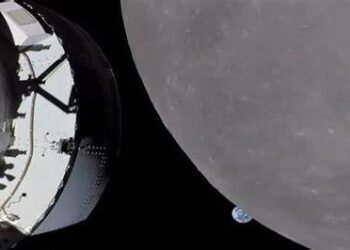 Beyond the Far Side: Artemis II Restores Contact After 40-Minute Silence
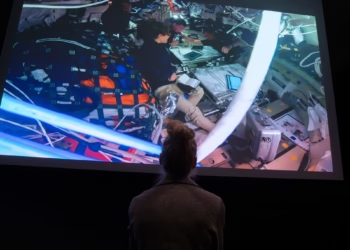 ‘We Will Always Choose Each Other’: Five Defining Moments of Artemis II’s Lunar Flyby
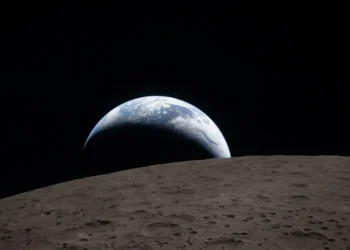 Beyond the Flyby: What Artemis II Tells Us About the Next Giant Leap
 The Silicon Emerald: How Irish Engineers are Cashing In on the AI Boom
 Europe EV Demand Surges as Fuel Prices Rise
 Quantum Computing: Is This the Tech Race Europe Could Finally Win?
 Robots Outpace Humans in Beijing Half-Marathon
 Gene Therapy Wins Major Prize for Restoring Vision
 The Next Chapter: Apple’s Future Under the Stewardship of John Ternus
 Reform UK funding: mystery billionaire revealed
 Disneyland Adds Facial Recognition at Entrances
 Meta Faces EU Action Over Child Safety Breach
 Inside the World of AI Jailbreakers
 Canadian Fiddler Sues Google Over AI Defamation Claim
 “Precision Over Personnel”: Robots Move In as Waste Firms Battle 40% Staff Turnover
 “Taxing the Silicon”: Tech CEO Proposes ‘Minimum Wage for Robots’ to Combat AI Displacement
 “Digital Disinformation”: AI Chatbots Under Fire for Hallucinating Voting Data Ahead of Polls
 “Unlocking the Black Box”: Google, Microsoft, and xAI Join US Pre-Release Safety Testing
 Doomsday Clock Nears Midnight Amid Global Crises
 Cannes filmmakers split over AI’s role in cinema
 Spielberg Says Humans May Find Aliens Soon
 Majority of New US AI Data Centres Planned for Drought-Prone Regions, Report Warns
 Rise of Military AI Sparks Questions Over Future Use of Humanoid Robots in Combat
 South Korea Fines E-Commerce Giant $400m Over Massive Data Breach
 UK’s Leading Data and AI Regulator Resigns Following Controversy Over ‘Inappropriate’ Humour
 India Orders Meta to Remove Child Abuse Ads
 Microsoft Cuts 4,800 Jobs in Major Xbox Restructure
 Chinese Mathematicians Win Top Prize for Breakthroughs
 Chinese Mathematicians Win Top Prize for Historic Breakthroughs
 Birding Apps Are Inspiring a New Generation of Nature Lovers
 AI breast screening cuts later cancer diagnoses by 12%, study finds
 Trump Considers Military Operation to Seize Iran’s Uranium
 ‘The Insulation Trap’: Knifeman Discovered Hiding Under Loft Padding After Six-Hour Standoff
 Electric Shock: Australians Buy Record Number of New EVs as Fuel Crisis Bites
 The Suffocating Silhouette: Why Metal’s Mask Trend is Turning Deadly
 The Great Chokehold: Why the Strait of Hormuz is the Epicenter of the 2026 Crisis
 Moldova River Crisis Exposes War’s Hidden Cost
 South Korea’s AI Chip Boom Sparks Wealth Inequality Debate