Published: 28 July 2026 | The English Chronicle Desk | The English Chronicle Online
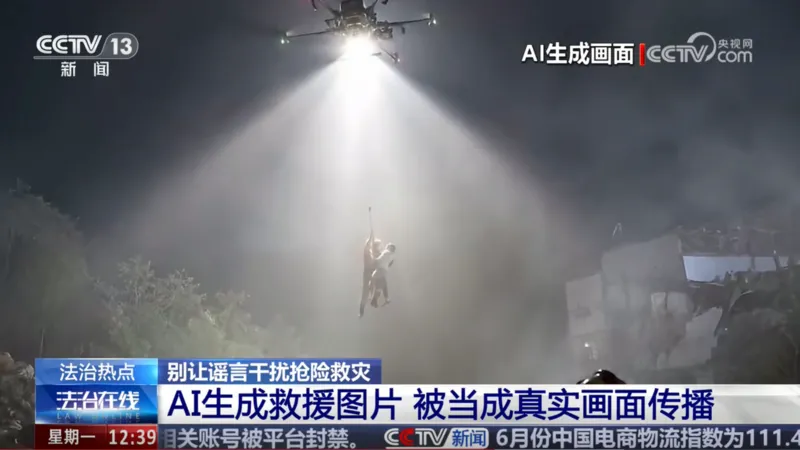
As China battles a growing number of natural disasters, authorities and communities are facing a new and increasingly complex threat: fake artificial intelligence-generated videos spreading misinformation during times of crisis.
From floods and earthquakes to extreme weather events, emergency situations have increasingly become targets for AI-generated content designed to appear real. These fabricated videos can create confusion, spread false information and make it harder for authorities and the public to respond effectively.
The rise of artificial intelligence tools capable of producing realistic images, videos and audio has transformed the way information can be created and shared. While the technology has many positive uses, experts warn that it also provides new opportunities for misinformation, particularly during moments when people are searching for urgent updates.
In China, where natural disasters can affect large populations, the spread of fake AI content has become a significant concern for officials responsible for emergency communication.

During major disasters, people often turn to social media platforms for immediate information about affected areas, rescue operations and safety warnings. However, the speed at which false content can spread means that inaccurate reports can reach thousands or even millions of people before they are corrected.
Some AI-generated videos have reportedly shown fictional scenes of destruction, fake rescue operations or events that never happened. Created to look like genuine news footage, such content can be difficult for ordinary viewers to identify.
The challenge is particularly serious because disaster situations already involve fear, uncertainty and emotional reactions. A convincing fake video showing a collapsed building, a major flood or emergency response failure can cause unnecessary panic.
Experts say the problem is not only about false information but also about the damage it can cause to public trust.
When people become unsure whether online videos are genuine, they may begin questioning real information from emergency services, government agencies and journalists.
This creates a difficult environment during disasters when accurate communication is essential.
China has experienced a range of serious natural disasters in recent years, including major floods, earthquakes and extreme weather events. These incidents have tested emergency response systems and increased the importance of reliable information.
Authorities have increasingly focused on improving digital monitoring, identifying false content and regulating the use of artificial intelligence.
China has introduced rules aimed at managing AI-generated content, requiring certain AI services to follow identification and safety requirements. Officials have argued that regulation is necessary to prevent misuse of emerging technologies.
However, experts say enforcement remains challenging because AI tools are becoming more advanced and widely available.
Creating realistic fake videos once required expensive equipment and specialist skills. Today, many AI tools allow users to generate convincing digital content with relatively little technical knowledge.
This accessibility has raised concerns among governments, technology companies and researchers worldwide.
The problem extends beyond China. Countries around the world are struggling with similar challenges as artificial intelligence becomes more powerful.
Disinformation campaigns using AI-generated content have already raised concerns during elections, conflicts and public emergencies.
Researchers warn that disasters may become one of the most effective environments for misinformation because people naturally seek immediate answers and may share content before verifying its accuracy.
For emergency officials, controlling false information has become an additional responsibility alongside rescue operations and disaster management.
Previously, authorities mainly focused on providing warnings, organising evacuations and coordinating relief efforts. Now they must also compete with a flood of online content that may include misleading or entirely fabricated material.
The spread of fake AI videos can also affect rescue efforts.
False reports about blocked roads, available shelters or disaster locations can misdirect people and emergency teams. In extreme cases, misinformation could delay assistance reaching those who need it most.
Emergency communication experts say speed and transparency are among the most effective ways to reduce the influence of false information.
Providing frequent official updates can help prevent rumours from filling information gaps.
However, officials also face pressure to release information quickly while ensuring that details are accurate.
The rise of AI-generated misinformation has increased calls for stronger cooperation between governments, technology companies and media organisations.
Social media platforms are being encouraged to improve systems that detect manipulated content and clearly label AI-generated material.
Technology experts say detection tools must continue evolving because AI generation methods are improving rapidly.
The battle between AI creators and AI detection systems has become a constant technological race.
As fake content becomes more realistic, traditional methods of identifying misinformation, such as checking image quality or obvious editing mistakes, are becoming less reliable.
Experts recommend that users develop stronger digital awareness and avoid immediately sharing dramatic content during emergencies.
They suggest checking information through multiple reliable sources, including official emergency agencies and established news organisations.
However, they also acknowledge that identifying sophisticated AI-generated videos may be difficult even for experienced users.
The issue has become especially sensitive in countries where information management during crises is closely connected with public confidence in institutions.
Authorities must demonstrate that they can provide accurate information while preventing harmful false content from spreading.
At the same time, critics have warned that efforts to control misinformation should not be used to restrict legitimate reporting or public discussion.
They argue that maintaining a balance between preventing harmful content and protecting access to information is essential.
China’s experience reflects a wider global challenge: artificial intelligence has changed not only how information is created but also how societies must verify what they see.

Natural disasters already create uncertainty and fear. The addition of realistic fake videos introduces a new layer of complexity for governments, emergency workers and ordinary citizens.
As climate-related disasters become more frequent and AI technology continues advancing, the ability to distinguish fact from fiction will become increasingly important.
For China, the fight against fake AI videos represents a new front in disaster management.
The challenge is no longer only responding to floods, earthquakes or storms. It is also protecting public understanding during moments when accurate information can save lives.
As authorities, technology companies and communities adapt to this new reality, the ability to recognise trustworthy information may become one of the most important tools in facing future emergencies.
Related News:
 Artemis II Returns After Historic Moon Flyby
 Artemis II astronauts capture Earth en route to the Moon
 Apple at 50: Three Products That Changed How We Live
 Robots Outpace Humans in Beijing Half-Marathon
 Canadian Fiddler Sues Google Over AI Defamation Claim
 Doomsday Clock Nears Midnight Amid Global Crises
 China mine blast death toll rises to 90
 UK firms accused of ‘AI washing’ boom
 British Paralympian to Become First Disabled Astronaut in Orbit
 Unlocking the Genome: The Quest to Sequence Tardigrades
 China Achieves First Reusable Rocket Landing
 Meta Drops AI Image Tool After Privacy Backlash
 Magnitude 7.1 Earthquake Strikes Japan, Several Injured
 People Trapped in Japan Shopping Centre After Earthquake
 Britain deploys RAF specialists to assist Belgium with drone threats
 Night after night, Belgium is on high alert.
 Hitler’s DNA Confirms He Truly Had Only One Testicle
 Poll Reveals China Leads World in Trusting AI Technology
 US Clears Nvidia AI Chip Sales to China in Policy Shift
 UK New Car Discounts Near £6,000 as Prices Are Slashed
 Urgent AI Threat Research Needed, Says Google Boss
 Anthropic AI Refuses Pentagon’s Safety Demand
 Social Media Trial: Woman Says Addiction Began at Six
 Instagram Investigating AI Profiles ‘Fetishising’ Disabled People
 Anthropic Boss Rejects Pentagon Demand to Drop AI Safeguards
 Brady Tkachuk Denies AI Video Claims After Olympic Gold
 Nine Killed in Karachi Consulate Protest
 Boy George Says He’s Using ChatGPT to Help Write New Songs
 Tiny Possum and Glider Thought Extinct for 6,000 Years Found in Remote West Papua
 Musk’s xAI Permit Sparks Fury Over Power Plant Expansion
 The Kill Line: A Shifting Vision of the American Dream
 Cern Prepares First-Ever Antimatter Transport Test
 ABC Staff Strike Over Pay and AI Concerns
 One Ant for $220: The New Frontier of Wildlife Trafficking
 How and When to See April’s Full Pink Moon
 ‘The frontline is like Terminator’: Ukraine’s fighting robots
 Beyond the Far Side: Artemis II Restores Contact After 40-Minute Silence
 ‘We Will Always Choose Each Other’: Five Defining Moments of Artemis II’s Lunar Flyby
 Beyond the Flyby: What Artemis II Tells Us About the Next Giant Leap
 Europe EV Demand Surges as Fuel Prices Rise
 Gene Therapy Wins Major Prize for Restoring Vision
 Canadian astronaut French words ease language row
 OpenAI CEO Apologizes After Canada Shooting Case
 Chornobyl Still at Risk 40 Years After Disaster
 Reform UK funding: mystery billionaire revealed
 RAF Typhoons scrambled amid Russian drone threat near Nato
 Southeast Asia Turns to Russia Amid Energy Crisis
 Disneyland Adds Facial Recognition at Entrances
 Escobar’s Hippos May Be Moved to India Zoo
 Meta Faces EU Action Over Child Safety Breach
 Inside the World of AI Jailbreakers
 China Fireworks Factory Blast Kills 21 in Hunan
 Australia pushes Pacific security pact amid China tension
 BJP Sweeps West Bengal in Historic Breakthrough
 “Digital Disinformation”: AI Chatbots Under Fire for Hallucinating Voting Data Ahead of Polls
 US Awaits Iran Reply on New Ceasefire Proposal
 One Nation Stuns Australia With Historic Farrer Win
 Musk v OpenAI Trial: The Battle for the Soul of AI
 Hormuz Talks Near Critical Stage
 Ebola outbreak in DRC overwhelms health system as cases surge
 Discontent grows around Putin amid war strain
 UN Issues Urgent Warning: Imminent Return of El Niño
 AI-Designed Vaccine Marks Global Breakthrough
 AI May Soon Start Conversations on Dating Apps
 Zuckerberg Veteran Speaks on AI and Future Jobs
 Millions Gather for Khamenei’s Six-Day State Funeral
 India Orders Meta to Remove Child Abuse Ads
 KAAN Fighter Jet Signals New Era for NATO Air Power
 Venezuela Quake Death Toll Surpasses 4,000
 China Detains US Scientist Linked to North Korea Nuclear Research
 Google Burning Through Cash as Spiralling AI Costs Put Pressure on Tech Giant
 Lawmakers Demand AI Kill Switch After Safety Fears
 Chinese Mathematicians Win Top Prize for Breakthroughs
 India’s ‘Cockroach’ Protesters Begin Talks With Government
 Bangladesh President to Step Down After Political Shift
 Chinese Mathematicians Win Top Prize for Historic Breakthroughs
 Houthis Strike Saudi Arabia as Middle East Tensions Rise
 India’s Gen Z Protesters Claim Victory, Demand More Change
 India’s Gen Z Protest Movement Enters a New Phase
 US and Iran Pause Strikes as Diplomatic Talks Loom