Published: 02 June 2026. The English Chronicle Desk. The English Chronicle Online.
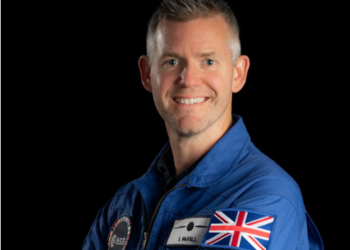
In a landmark development for inclusive space exploration, Britain is poised to make history as a pioneering Paralympian and medical professional prepares to become the first person with a physical disability to live and work in Earth’s orbit. John McFall, a 45-year-old orthopaedic surgeon from Hampshire, has long been a figure of remarkable resilience, and he is now set to bring that same spirit to the frontier of commercial spaceflight. The mission, made possible through a strategic partnership between the UK Space Agency and the California-based startup Vast, marks a significant departure from traditional astronaut selection criteria. Vast is currently in the advanced stages of constructing Haven-1, a compact, cutting-edge commercial space station designed to push the boundaries of microgravity research and private orbital habitation.

John McFall’s journey to the stars is rooted in a life defined by overcoming adversity. At the age of 19, a devastating motorcycle accident resulted in the loss of his right leg, a life-altering event that would have sidelined many. However, McFall channeled his energy into elite athletics, eventually securing a bronze medal in the 100-meter sprint at the 2008 Beijing Paralympics. His professional trajectory took a similarly disciplined path as he qualified as an NHS orthopaedic surgeon, blending his personal experience with physical disability with a deep professional understanding of human anatomy and rehabilitation. In 2022, his unique background caught the attention of the European Space Agency (ESA), which selected him for the “Fly!” project—an initiative designed to determine whether astronauts with physical disabilities could safely and effectively participate in long-duration missions to the International Space Station.
The upcoming mission to Haven-1, tentatively scheduled to take place soon after the station’s proposed launch in 2027, represents a two-week scientific expedition of immense potential. The station itself is a marvel of modern commercial aerospace engineering, slightly smaller than a standard bus but optimized for efficiency and comfort. Its interior, finished in warm maplewood veneer, offers a stark contrast to the utilitarian look of older space modules, while a large domed window provides inhabitants with an unparalleled view of the Earth below. For McFall, the scientific objectives are twofold. First, the mission will monitor how the unique environment of space affects his body and his prosthetic limbs, which rely on a complex array of sensors and microprocessors. Second, the data collected will provide invaluable insights that could lead to the development of lighter, more adaptable, and highly durable prosthetics for disabled people across the globe.
Beyond the immediate technical goals, McFall views his participation as a catalyst for social change. He is deeply aware that his presence in orbit will challenge the long-held societal preconceptions regarding the roles and capabilities of individuals with disabilities. By demonstrating that a person with a physical disability can perform as a highly skilled astronaut in one of the most demanding environments imaginable, McFall is advocating for a future where inclusivity is the standard, not the exception. He has been vocal about his desire to ensure this mission remains rooted in substantive research rather than becoming a mere public relations exercise. His primary motivation, he insists, is to do his job well and contribute meaningful knowledge to the field of space exploration and medical science.
The agreement between the UK Space Agency and Vast, formalized through a memorandum of understanding, sets the stage for a collaborative effort to secure the necessary sponsorships to fund the flight. The mission profile envisages a launch aboard SpaceX’s Crew Dragon capsule, propelled by the workhorse Falcon 9 rocket. This approach highlights the growing synergy between government-backed space agencies and private enterprise. If successful, McFall will be the first British citizen to reach orbit since Tim Peake’s widely celebrated Principia mission nearly a decade ago. Reflecting on the significance of the upcoming flight, Peake described McFall as a beacon of inspiration for anyone who has ever been told that there are limits to what they can achieve, noting that this agreement represents a transformative moment for the future of human spaceflight.
The mission is also expected to advance scientific understanding of degenerative conditions that are common on Earth, such as osteoporosis and muscle wastage. The microgravity environment of Haven-1 acts as a unique laboratory where these physiological processes are accelerated, allowing scientists to study them in ways that are impossible on the ground. The research could eventually lead to breakthrough rehabilitation programs for amputees and provide new methods for maintaining bone density and muscle mass. As the aerospace sector continues its shift toward the commercialization of low Earth orbit, McFall’s presence aboard Haven-1 could establish a new precedent, ensuring that the next generation of space pioneers reflects the diversity and potential of humanity itself.

For John McFall, the adventure is both a personal challenge and a duty to the scientific community. The prospect of living in orbit is a culmination of his curiosity, his professional dedication, and his inherent drive to push boundaries. As he prepares for the grueling training regimen that lies ahead, he remains focused on the bigger picture: proving that the stars are within reach for everyone, regardless of physical ability. His mission is not just a flight into space, but a profound statement on the strength of the human spirit and the relentless pursuit of progress. As the global space community watches, McFall stands ready to prove that the only true limitations are the ones we impose on ourselves, and that the future of exploration is, and should remain, open to all.
Related News:
 Artemis II Returns After Historic Moon Flyby
 UK firms accused of ‘AI washing’ boom
 Unlocking the Genome: The Quest to Sequence Tardigrades
 Meta Drops AI Image Tool After Privacy Backlash
 Cern Prepares First-Ever Antimatter Transport Test
 Artemis II astronauts capture Earth en route to the Moon
 Apple at 50: Three Products That Changed How We Live
 Europe EV Demand Surges as Fuel Prices Rise
 Robots Outpace Humans in Beijing Half-Marathon
 Gene Therapy Wins Major Prize for Restoring Vision
 Reform UK funding: mystery billionaire revealed
 Disneyland Adds Facial Recognition at Entrances
 Meta Faces EU Action Over Child Safety Breach
 Inside the World of AI Jailbreakers
 Canadian Fiddler Sues Google Over AI Defamation Claim
 Doomsday Clock Nears Midnight Amid Global Crises
 Cannes filmmakers split over AI’s role in cinema
 Gen Z turns to BirdTok for a gentler digital escape
 Virgin Trains Moves Closer to Challenging Eurostar Monopoly
 UK Bans Fake Numbers: Scammers Lose Their Trick
 Vibe coding’ named Collins dictionary’s word of the year
 Patients to Test Health at Home to Ease NHS Winter Pressure
 Britain deploys RAF specialists to assist Belgium with drone threats
 Stop using ChatGPT to write speeches, AI minister tells MPs
 Northern Lights may illuminate UK skies this week
 New laws to bolster UK’s defences against cyber attacks on NHS, transport and energy
 Working-Class Men with Prostate Cancer Left Behind by NHS
 New AI tool could cut wasted efforts in organ transplants
 How Cultures Interpreted the Aurora Through History
 Sundar Pichai Cautions on AI Hype and Market Risks
 Google Chief Urges Caution: Don’t Trust AI Blindly
 US Judge Says Meta Did Not Hold Illegal Social Media Monopoly
 Healthy Habits in Your 30s That Boost Life in Your 70s
 Coffins Now Too Large to Cremate Amid Rising Obesity Crisis
 AI Actress Creator Says Tilly Norwood Won’t Replace Actors
 Google Removes Some AI Health Summaries Over Safety Concerns
 Nasa ISS Medical Evacuation: Crew-11 To Return Early
 UK Threatens Action Against X Over Sexualised AI Images
 EU launches Grok AI probe into X over explicit images
 AI job losses UK: Britain faces sharper employment shock
 UK AI avatar firm Synthesia valuation jumps to $4bn
 ABC Facebook Page Briefly Hacked, Adult Photos Posted
 US Robotaxis Train for London Streets Before Launch
 Meta trial over child exploitation claims begins
 Autistic Girls Often Missed in Childhood Diagnoses, Study Finds
 Most Statin Side-Effects Are Not Caused by Drugs, Study Confirms
 Childnet Censorship Row Over Teen Safety Speeches
 BT Names New Openreach Chief Amid Major Fibre Expansion
 Tech Trends Set to Transform Life in 2026
 Starmer Targets AI Chatbots Over Child Safety Concerns
 Ocean Warming Drives Massive Marine Life Loss, Study Warns
 Stewart Brand on Musk, Bezos and a Life of Long Thinking
 Facial Recognition Error Leads to Wrongful Arrest in Milton Keynes
 Zorevunersen Breakthrough for Dravet Syndrome
 Cancer Death Rate in Britain Falls by Nearly a Third
 Taking Multivitamins Daily Could Slightly Slow Ageing, Study Finds
 The Kill Line: A Shifting Vision of the American Dream
 ‘Drinking from a Fetid Pond’: Superbug Genes in Lough Neagh
 Scientists Unveil Heavier Proton at CERN LHC
 Artemis II: Humanity Returns to the Moon After Decades
 Norway’s Telenor Faces Lawsuit Over Myanmar Data Breach
 UK Banks to Deploy Controversial Mythos AI Tool Next Week
 UK Faces Growing Threat of Scale Hacktivist Attacks
 WHO approves first malaria drug for babies
 UK Watchdogs Warn Over AI Facial Recognition Oversight
 DeepMind Staff Vote to Unionize Over US Military Contract
 Trump Lands in Beijing for High-Stakes Summit with Xi
 Court Upholds Landmark Win for Transgender Rights
 Labor Defies Warnings Over Controversial Capital Gains Reform
 British Paralympian Set to Make History in Earth Orbit
 Stolen Mobiles Could Soon Become Useless Bricks
 SpaceX Prepares for Historic Valuation Launch
 AI to Help Botanists Win the Critical Race Against Extinction
 UK Ministers Lobby Trump Over Under-16s Social Media Ban
 Deadly H5 Bird Flu Reaches Australia’s East Coast
 Sydney Records Hottest June Since 1859 as Expert Warns New High a ‘Signature’ of Global Warming
 Record £28m Fine for Virgin Media Over Cancellation Woes
 Telstra Software Fault Triggers Massive Nationwide Outage
 Police Alert Facials: A New Era of Retail Security
 Weight-Loss Drugs Offer Food Savings Mainly to High Earners