Published: 19 May 2026. The English Chronicle Desk. The English Chronicle Online.
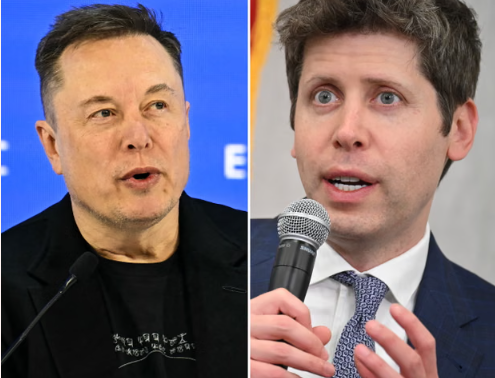
On Monday morning, a federal jury in Oakland, California, handed down a historic and resounding legal victory. The high-stakes decision directly favored Sam Altman and OpenAI in their long, bitter courtroom battle. For many months, this dramatic dispute with billionaire Elon Musk captivated the global technology sector. The final verdict completely cleared the artificial intelligence firm of all substantial wrongdoing. Specifically, the jury found Sam Altman, OpenAI, and Greg Brockman entirely not liable. Elon Musk had claimed that the co-founders unjustly enriched themselves through the enterprise. Furthermore, the tech tycoon alleged that they broke an original founding contract.
The unanimous courtroom verdict was delivered after less than two hours of deliberation. This exceptionally rapid conclusion represents a stark rebuke of the claims made by Musk. The billionaire and his legal team had aggressively argued that Altman stole a charity. They claimed this theft occurred during the dramatic structural transformation of the startup. However, the American jury firmly rejected these arguments after reviewing all presented evidence. The judge also issued an immediate dismissal of all related legal charges yesterday. This swift action provides the artificial intelligence firm with a definitive stamp of approval. Consequently, OpenAI can now confidently advance its highly ambitious, lucrative for-profit plans.
Trillion Dollar Ambitions Move Forward in Silicon Valley
These commercial plans are already moving forward with immense momentum across the industry. The clear legal path allows the company to go public later this year. Financial experts project a stunning valuation of around one trillion dollars for OpenAI. This monumental initial public offering represents a major milestone for the modern tech economy. Conversely, the strict legal demands made by Elon Musk would have completely jeopardized everything. Musk had strongly demanded that Sam Altman be removed from his executive position. He also wanted the lucrative for-profit arm to transfer billions to the non-profit.
Such a massive financial disruption would have severely damaged investor confidence before the offering. A prolonged delay to this financial bonanza may have been Musk’s true objective. His own massive conglomerate combines several cutting-edge aerospace and technology businesses. These include SpaceX, the satellite internet service Starlink, and the artificial intelligence competitor xAI. Interestingly, recent financial reports indicate that SpaceX is planning to go public this June. Therefore, delaying OpenAI could have provided a distinct commercial advantage to his ventures. Now, the future success of OpenAI seems all but guaranteed to the world.
Wall Street Breathes a Collective Sigh of Relief
Even the richest man in the world could not halt this momentum. Naturally, Wall Street is currently breathing a very deep, collective sigh of relief. Global investors are famously wary of prolonged corporate upheaval and deep financial uncertainty. Professor Sarah Kreps offered valuable insights regarding this major development in California. Kreps serves as the director of the Tech Policy Institute at Cornell. She called the legal ruling a vivid reflection of a tough reality. Developing frontier artificial intelligence models remains an incredibly expensive and capital-intensive endeavor.
Consequently, maintaining a pure non-profit status is simply not viable today. The industry involves fierce competition that requires billions of dollars in constant funding. Kreps explained that the decision is likely to reassure many nervous tech investors. It successfully avoids a potentially chaotic outcome for the famous artificial intelligence firm. A different verdict could have challenged the commercial structure and Microsoft partnership. It also could have severely disrupted all future fundraising plans for the company. Ultimately, purely nonprofit models are incredibly difficult to sustain at the cutting edge.
Unresolved Questions Surround the Great Tech Boom
What the dramatic trial did not deliver were answers to major questions. The global community still faces deep uncertainties regarding safety, governance, and labor. Furthermore, Elon Musk had very little claim to the mantle of safety champion. His own technology companies have faced many egregious lapses in recent years. For instance, critics frequently highlight his chatbot’s numerous offensive outputs and systemic failures. Therefore, many observers viewed his sudden crusade for safety with deep skepticism. The legal battle seemed far more about personal pride than protecting humanity.
Let us not confuse the jury’s verdict with true societal justice. This important sentiment was shared by Catherine Bracy, a prominent technology advocate. Bracy serves as the chief executive officer of the organization Tech Equity. She argued that Elon Musk lost this major case on a technicality. The executive referenced the strict statute of limitations that governed the trial. Because of this, she called for the state’s attorney general to act. Bracy wants officials to revisit the original agreement made with OpenAI. That historic agreement initially allowed for its conversion into a for-profit enterprise.
A Strict Legal Timeline Dictates the Final Verdict
The California jury found that Musk’s lawsuit was filed much too late. The legal action was officially initiated in 2024, missing key deadlines. Therefore, the complex case did not fall within the required statute of limitations. One of the key legal arguments surrounded when the alleged harms occurred. This included his central claim regarding a serious breach of charitable trust. OpenAI successfully argued that Musk was well aware of the structural plans. The billionaire allegedly knew about the for-profit pursuit as early as 2017.
Consequently, his legal team filed the case outside the three-year limit. Professor Sarah Kreps echoed these important procedural points during her recent commentary. She noted that the trial turned on a specific issue about timing. This reality unfortunately leaves a lot of crucial debates completely unresolved today. Society must still determine how these powerful systems should be properly governed. Additionally, we must question who benefits from these tools from an economic perspective. Many wonder if the rapid pace of deployment is disconnected from public comfort.
Personal Rivalries Continue to Shape Modern History
Following the verdict, lawyers representing Elon Musk promised a swift legal appeal. Despite their significant loss, they claimed to achieve a very important goal. They believe the trial successfully exposed Sam Altman’s alleged corporate deceptions. Attorney Steve Molo claimed that the courtroom testimony was valuable for the world. He insisted that the jury’s final decision was merely a technical matter. However, the official statement from OpenAI was a much more straightforward proclamation. They viewed the quick verdict as an absolute validation of their integrity.
Attorney William Savitt spoke firmly on behalf of the victorious technology firm. He stated that Mr. Musk can tell his various elaborate stories. What the jury found yesterday is that these are just stories, not facts. He added that the final verdict was a deeply substantive decision. Whoever the true victor, this trial demonstrated a fascinating dynamic in tech. A remarkably small cabal, consisting mostly of men, rules the industry. This trial’s central element was a bitter vendetta brought against Altman. The future of artificial intelligence still depends heavily on these personal rivalries. This reality highlights a broad disconnect between developers and the general public.
Related News:
 Virgin Trains Moves Closer to Challenging Eurostar Monopoly
 North Sea oil workers must lose weight or face job loss
 New laws to bolster UK’s defences against cyber attacks on NHS, transport and energy
 UK Taskforce Unveils Plan to Streamline Nuclear Reactor Rules
 UK Car Sales Pass 2 Million as Chinese Brands Surge
 MPs warn AI financial risks threaten UK stability
 MPs warn AI financial risks threaten UK stability
 AI job losses UK: Britain faces sharper employment shock
 UK AI avatar firm Synthesia valuation jumps to $4bn
 SpaceX Plans $1.5tn IPO Amid Planetary Alignment
 Amazon mistakenly signals new global layoffs to employees
 UK New Car Discounts Near £6,000 as Prices Are Slashed
 Bithumb Bitcoin Mistake Shocks Crypto World
 BT Names New Openreach Chief Amid Major Fibre Expansion
 AI fears hit UK wealth and comparison sites
UK Firms Warned of Rising Iran Cyber Threats
AI fears hit UK wealth and comparison sites
UK Firms Warned of Rising Iran Cyber Threats
 UK Firms Warned of Rising Iran Cyber Threats
 Revealed: UK AI Push Faces Phantom Investment Claims
 Tesla Enters British Energy Market Following Ofgem Approval
 ABC Staff Strike Over Pay and AI Concerns
 High Court Orders Lynch Estate to Pay £920m to HPE
 UK Watchdog Probes Five Firms Over Fake Review Failings
 New Gmail Feature Ends Era of Embarrassing Email Names
 Apple at 50: Three Products That Changed How We Live
 OpenAI Halts Stargate UK Project Amid Energy Crisis
 Washington Summit Targets Massive Cyber Risks From Latest AI Breakthrough
 Heavier SUVs Accelerate Britain’s Pothole Crisis
 Europe EV Demand Surges as Fuel Prices Rise
 Reform UK funding: mystery billionaire revealed
 Disney+ Wins Champions League Rights in Key Markets
 DeepMind Staff Vote to Unionize Over US Military Contract
 Vodafone Seeks Full Control of UK Mobile in £4.3bn Deal
 SpaceX IPO Filing Reveals Bizarre Details of Musk’s Empire
 Tech Giant Nvidia Shatters Wall Street Financial Projections
 China mine blast death toll rises to 90
 UK rejects EV charging VAT cut amid Treasury clash
 UK firms accused of ‘AI washing’ boom
 SpaceX Targets Record Listing as Musk Eyes Trillionaire Status
 SpaceX Prepares for Historic Valuation Launch
 Silicon Valley Shifts South as AI Boom Transforms City Housing
 CMA Approves Major Bakery Merger to Prevent Market Collapse
 BT and Verizon Form Landmark Global Joint Venture
 AI Transformation Sparks Major Job Cuts at British American Tobacco
 Trump Faces Backlash Over $2bn Earnings Since Return
 Ocado CEO Tim Steiner to Step Down by 2028
 Record £28m Fine for Virgin Media Over Cancellation Woes
 Xavier Niel Becomes Vodafone’s Largest Shareholder
 Weight-Loss Drugs Offer Food Savings Mainly to High Earners
 Reeves Faces Setback as Labour May Miss Homes Target
 Trump’s UK Ambassador Urges North Sea Drilling to Strengthen US Ties
 Ryanair Chief UK Economy ‘Doomed’ Under Labour
 UK Bans Fake Numbers: Scammers Lose Their Trick
M&S Profits More Than Halve After Cyber-Attack
UK Bans Fake Numbers: Scammers Lose Their Trick
M&S Profits More Than Halve After Cyber-Attack
 Vibe coding’ named Collins dictionary’s word of the year
 Patients to Test Health at Home to Ease NHS Winter Pressure
 Britain deploys RAF specialists to assist Belgium with drone threats
 Millionaires group urge Reeves to introduce wealth tax to ‘lift kids out of poverty’
 From Lego to Pokémon: How Adults Are Driving UK Toy Market Growth
 Sundar Pichai Cautions on AI Hype and Market Risks
 Starmer Says Labour’s Economic Plan Needs Years to Deliver
 Starmer Faces Parliamentary Battles Over UK-EU ‘Reset’ Plan
 ScottishPower Tops List of Worst UK Energy Suppliers
 ABC Facebook Page Briefly Hacked, Adult Photos Posted
 Meta trial over child exploitation claims begins
 UK Unemployment Rate Climbs to 5.2% Peak
 Stewart Brand on Musk, Bezos and a Life of Long Thinking
 The Kill Line: A Shifting Vision of the American Dream
 Rising Costs Force Families to Rethink Days Out
 US and Iran Agree to Two-Week Provisional Ceasefire
 Artemis II Returns After Historic Moon Flyby
 Central Bank Chiefs Hold Crisis Simulation in Washington
 UK Staycations Rise as Travel Fears Grow
 Former Brexit Chief Calls for Rejoining the EU
 Silent Tracks: Rail Line Without Passengers
 UK Watchdogs Warn Over AI Facial Recognition Oversight
 Trump and Xi Convene in Beijing for Historic High-Stakes Summit
 Reeves to Fast-Track Clean Energy Amid Iran Crisis
 Tube Strike Brings Capital to a Standstill Over Shift Disputes
 Stolen Mobiles Could Soon Become Useless Bricks
 Sainsbury’s Boss Optimistic As Grocery Inflation Eases