Published: 9 June 2026
The English Chronicle Desk
The English Chronicle Online
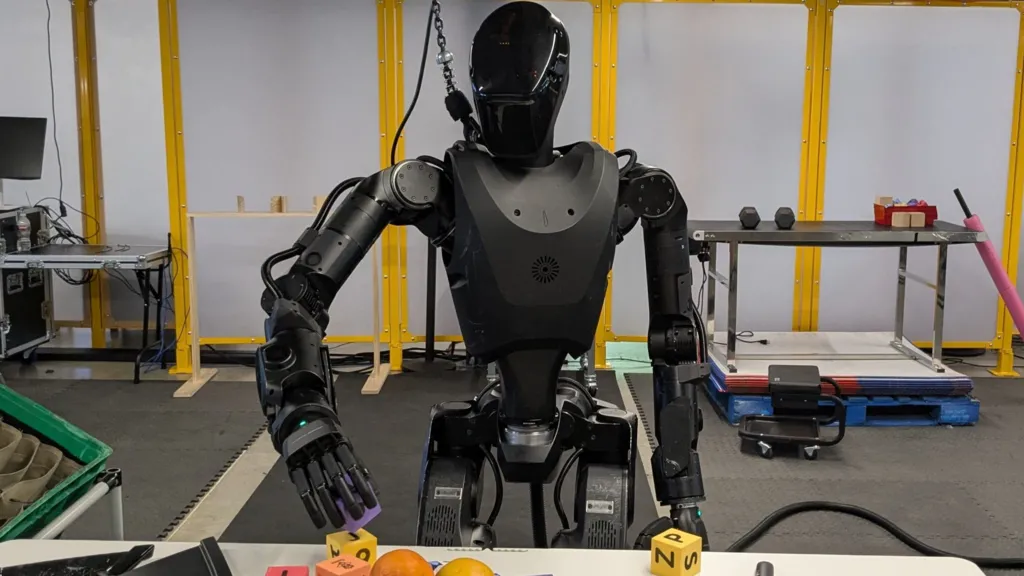
The rapid development of artificial intelligence and advanced robotics is prompting fresh debate over whether humanoid robots could one day become part of modern warfare and military operations.
Defence agencies and technology firms around the world are investing heavily in autonomous systems capable of performing tasks traditionally handled by soldiers, including surveillance, logistics and battlefield reconnaissance.

Researchers say humanoid robots are attracting particular interest because of their ability to move through environments designed for humans, such as buildings, staircases and urban infrastructure.
Military planners believe such systems could eventually assist troops in dangerous situations by carrying equipment, locating casualties or operating in high-risk combat zones.
Although fully autonomous humanoid combat units remain largely experimental, advances in machine learning, sensor systems and robotic mobility are accelerating development timelines.
Supporters argue that robotic deployment could reduce military casualties and improve operational efficiency during complex missions.
However, the idea of robots operating in combat environments has triggered major ethical and legal concerns among academics, policymakers and human rights organisations.
Critics warn that autonomous military systems may create accountability problems if machines are involved in life-and-death decisions during armed conflict.
International discussions over so-called “killer robots” have intensified in recent years, with campaign groups urging governments to establish global restrictions before the technology becomes widespread.
Technology experts also caution that current humanoid robots still face major limitations involving energy consumption, durability and decision-making reliability under unpredictable battlefield conditions.
Some analysts believe robotic systems will initially serve in support roles rather than direct combat, supplementing human troops instead of replacing them entirely.

Geopolitical competition between major powers is expected to further accelerate military AI research, making autonomous defence technology an increasingly important strategic issue.
The debate reflects broader concerns over how quickly artificial intelligence is reshaping warfare, security and international power dynamics.
Check Out Our Latest News At>>
Related News:
 Ukraine’s Anti-Drone Bullet Could Shield Gulf Skies
 Musk Cuts Starlink Access for Russian Forces – Giving Ukraine an Edge at the Front
 Urgent AI Threat Research Needed, Says Google Boss
 Met Police Using AI Tools Supplied by Palantir to Flag Officer Misconduct
 Anthropic Boss Rejects Pentagon Demand to Drop AI Safeguards
 Jack Dorsey’s Block Cuts Thousands of Jobs as It Embraces AI
 How AI Can Read Our Scrambled Inner Thoughts
 The US Now Has the Medicine for Cheap Swarming Drone Attacks
 Boy George Says He’s Using ChatGPT to Help Write New Songs
 India’s $300bn Outsourcing Industry Faces AI Test
 Councils Pressed to Use Universal Parking App to Cut ‘Unfair’ Fines
 China’s Tech Giants Race to Hong Kong as Global “Staging Post”
 One Ant for $220: The New Frontier of Wildlife Trafficking
 ‘The frontline is like Terminator’: Ukraine’s fighting robots
 China’s AI ‘Lobster’ Craze Signals Bigger Ambitions
 China and the US: The Divergent Fronts of the Global AI Superpower Race
 Beyond the Far Side: Artemis II Restores Contact After 40-Minute Silence
 Beyond the Flyby: What Artemis II Tells Us About the Next Giant Leap
 The Silicon Emerald: How Irish Engineers are Cashing In on the AI Boom
 Artemis II Returns After Historic Moon Flyby
 Quantum Computing: Is This the Tech Race Europe Could Finally Win?
 Robots Outpace Humans in Beijing Half-Marathon
 Gene Therapy Wins Major Prize for Restoring Vision
 The Next Chapter: Apple’s Future Under the Stewardship of John Ternus
 Reform UK funding: mystery billionaire revealed
 RAF Typhoons scrambled amid Russian drone threat near Nato
 Disneyland Adds Facial Recognition at Entrances
 Meta Faces EU Action Over Child Safety Breach
 Inside the World of AI Jailbreakers
 Canadian Fiddler Sues Google Over AI Defamation Claim
 “Precision Over Personnel”: Robots Move In as Waste Firms Battle 40% Staff Turnover
 “Taxing the Silicon”: Tech CEO Proposes ‘Minimum Wage for Robots’ to Combat AI Displacement
 “Digital Disinformation”: AI Chatbots Under Fire for Hallucinating Voting Data Ahead of Polls
 “Unlocking the Black Box”: Google, Microsoft, and xAI Join US Pre-Release Safety Testing
 Doomsday Clock Nears Midnight Amid Global Crises
 UK firms accused of ‘AI washing’ boom
 British Paralympian to Become First Disabled Astronaut in Orbit
 AI-Designed Vaccine Marks Global Breakthrough
 AI May Soon Start Conversations on Dating Apps
 Spielberg Says Humans May Find Aliens Soon
 UK Faces Pressure Over Red Arrows Future
 Zuckerberg Veteran Speaks on AI and Future Jobs
 Majority of New US AI Data Centres Planned for Drought-Prone Regions, Report Warns
 Spectacular ‘Blood Moon’ Illuminates Skies Across the Globe
 Big Pharma Investment Freeze Puts UK Life Sciences Sector Under Strain
 UK Bans Fake Numbers: Scammers Lose Their Trick
 Vibe coding’ named Collins dictionary’s word of the year
 Patients to Test Health at Home to Ease NHS Winter Pressure
 Britain deploys RAF specialists to assist Belgium with drone threats
 Northern Lights may illuminate UK skies this week
 Sundar Pichai Cautions on AI Hype and Market Risks
 AI breast screening cuts later cancer diagnoses by 12%, study finds
 Most Statin Side-Effects Are Not Caused by Drugs, Study Confirms
 Starmer Weighs Fast-Tracking Defence Boost
 Indian University Kicked Out of AI Summit for Claiming Chinese Robot Dog as Its Own Invention
 How Do You Modernise Mango Farming? India’s Growers Urged to Innovate as Climate Change Hits
 AI Coding Firm’s ‘Pride’ at Business Award Win
 Stewart Brand on Musk, Bezos and a Life of Long Thinking
 Burger King Rolls Out AI Headsets to Track Employee ‘Friendliness’
 Minister Meets Crews Who Will ‘Take Out’ Iranian Drones
 Social Media Giant Trial Reaches Final Jury Decision
 Trump Considers Military Operation to Seize Iran’s Uranium
 ‘Zoom Dysmorphia’ Explosion: BDD Patients Quadruple in Post-Pandemic UK
 ‘The Insulation Trap’: Knifeman Discovered Hiding Under Loft Padding After Six-Hour Standoff
 Electric Shock: Australians Buy Record Number of New EVs as Fuel Crisis Bites
 The Great Chokehold: Why the Strait of Hormuz is the Epicenter of the 2026 Crisis
 Moldova River Crisis Exposes War’s Hidden Cost
 Is Britain Ready? Experts Warn of ‘Bizarre’ Military Delay
 Beyond the Swoosh: Anta Sports Overtakes Rivals to Become Global Top Three
 The “Dry” Life: Teens Trialing Social Media Bans Call Initial Disconnection “Boring” and “Dry”
 “The Pivot to Pakistan”: Trump Pauses ‘Project Freedom’ in Hormuz Amid Iran Deal Hopes
 “The New Silk Road”: India and Vietnam Forge Strategic Maritime Alliance to Counter Regional Volatility
 “The Digital Frontier”: Scotland’s Papers Grapple with AI Harassment and ‘Mortgage Bottlenecks’
 Shivon Zilis Takes the Stand in Landmark OpenAI Trial
 Court Upholds Landmark Win for Transgender Rights
 “Eyes in the Sky, Spikes on the Ground”: Advanced Satellite Imagery and AI Algorithms Deployed Across Britain to Save the Vanishing Hedgehog
 “The Critical Intervention”: Essential Steps for Identifying and Treating Heat-Related Emergencies
 Discontent grows around Putin amid war strain
 UN Issues Urgent Warning: Imminent Return of El Niño
 UK Faces Most Dangerous Era, Military Chief Warns