Published: 8 June 2026
The English Chronicle Desk
The English Chronicle Online
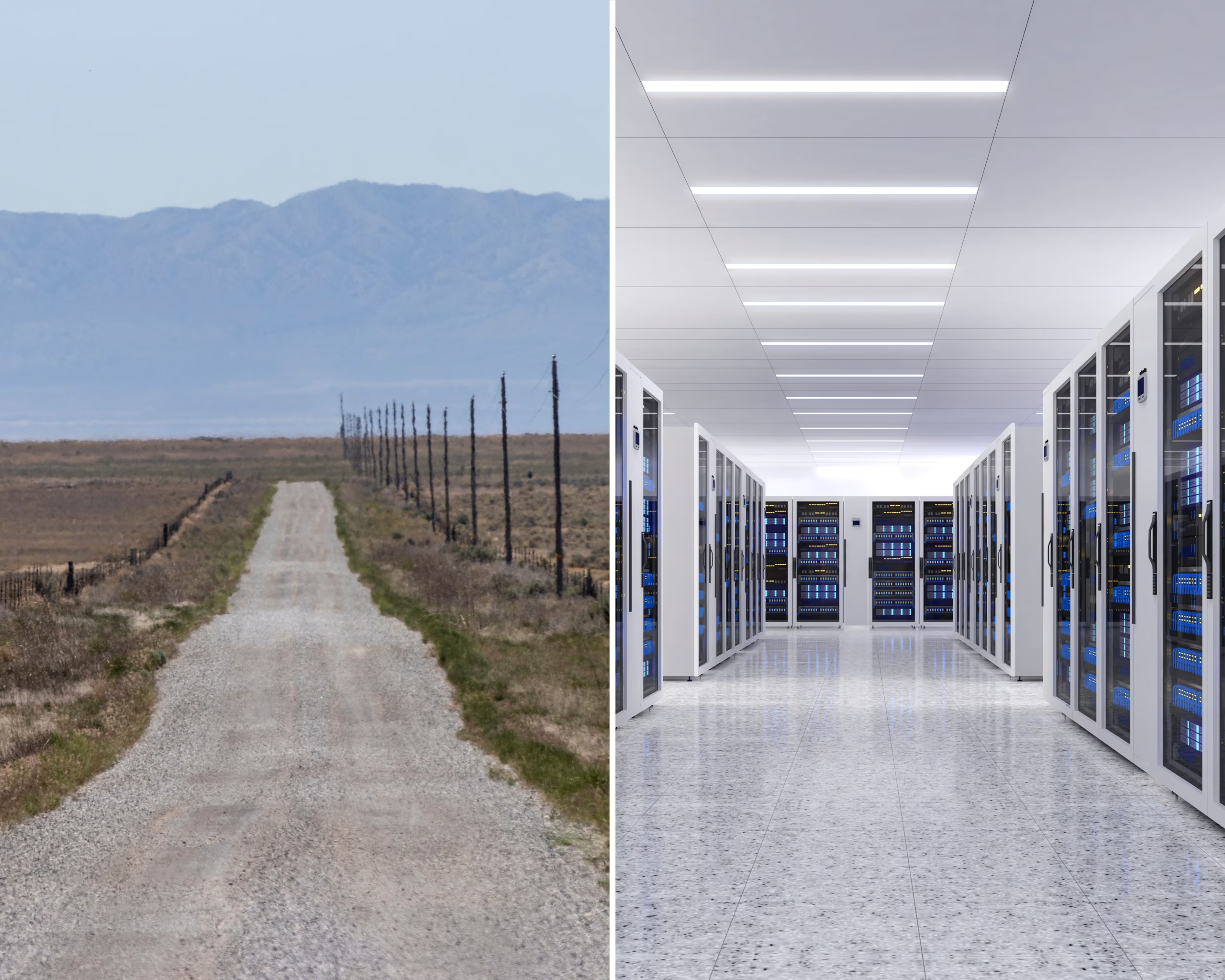
A new analysis has found that a majority of planned artificial intelligence data centre developments in the United States are being built in regions already facing significant drought stress, raising concerns over long-term water security and environmental sustainability.
The report highlights that rapid expansion of AI infrastructure is concentrating in areas where water resources are under pressure, particularly in parts of the western and south-western United States.

Data centres require substantial amounts of water for cooling systems, especially in large-scale facilities designed to support advanced AI computing workloads.
Environmental researchers warn that continued clustering of such facilities in drought-affected regions could intensify competition for limited water supplies between industry, agriculture and local communities.
The findings come amid a global surge in demand for AI computing power, which has driven large technology firms to expand data centre capacity at unprecedented speed.
Industry representatives argue that companies are increasingly investing in water-efficient cooling technologies and exploring alternative energy and infrastructure solutions.
However, climate experts say adoption of such technologies remains uneven, and in many cases traditional water-intensive cooling systems are still widely used.
Local authorities in affected regions have expressed mixed views, with some welcoming investment and job creation, while others raise concerns about resource strain and environmental resilience.
Water management specialists warn that planning decisions for data centres are often made without fully accounting for long-term hydrological risks or climate change projections.
The report calls for stricter environmental assessment standards, greater transparency in site selection and improved coordination between technology companies and regional water authorities.

Policy analysts say the issue reflects a broader tension between technological expansion and climate adaptation, particularly in energy- and water-intensive digital infrastructure.
The debate is expected to intensify as AI adoption accelerates and governments seek to balance innovation with environmental sustainability.
Check Out Our Latest News At>>
Related News:
 Jack Dorsey’s Block Cuts Thousands of Jobs as It Embraces AI
 India’s $300bn Outsourcing Industry Faces AI Test
 China’s Tech Giants Race to Hong Kong as Global “Staging Post”
 China’s AI ‘Lobster’ Craze Signals Bigger Ambitions
 China and the US: The Divergent Fronts of the Global AI Superpower Race
 The Silicon Emerald: How Irish Engineers are Cashing In on the AI Boom
 Reform UK funding: mystery billionaire revealed
 “Precision Over Personnel”: Robots Move In as Waste Firms Battle 40% Staff Turnover
 UK firms accused of ‘AI washing’ boom
 AI May Soon Start Conversations on Dating Apps
 Zuckerberg Veteran Speaks on AI and Future Jobs
 Airline Leaders Warn 2050 Net Zero Target May No Longer Be Achievable
 Conservationist Promotes Giant Snail Farming to Protect Endangered Guitarfish
 How to Exit Your Broadband Contract Without Paying Exit Fees
 Ed Davey Urges Government to Block Elon Musk’s Tesla from Supplying UK Home Energy
 UK and US Forge Landmark Deals to Build Modular Nuclear Reactors Across Britain
 Big Pharma Investment Freeze Puts UK Life Sciences Sector Under Strain
 UK Could Generate Nearly £2bn Annually by Taxing SUVs, New Study Reveals
 Jaguar Land Rover Extends Production Halt Following Cyber-Attack
 British AI Startup Outshines Human Forecasters in Global Prediction Contest
 Royal Mail Owner Acquires Stake in Collect+ and Launches High Street Rebrand
 Virgin Trains Moves Closer to Challenging Eurostar Monopoly
 New laws to bolster UK’s defences against cyber attacks on NHS, transport and energy
 BP’s Influence Sparks Controversy in UK STEM Education
 Robo-Vaccination Could Transform Fight Against Bovine TB
 MPs warn AI financial risks threaten UK stability
 MPs warn AI financial risks threaten UK stability
 Amazon mistakenly signals new global layoffs to employees
 UK New Car Discounts Near £6,000 as Prices Are Slashed
 BT Names New Openreach Chief Amid Major Fibre Expansion
 AI fears hit UK wealth and comparison sites
 The Chinese AI App Sending Hollywood Into a Panic
 AI Coding Firm’s ‘Pride’ at Business Award Win
 Anthropic Boss Rejects Pentagon Demand to Drop AI Safeguards
 Burger King Rolls Out AI Headsets to Track Employee ‘Friendliness’
 Water Cremation Introduced in UK First
 Boy George Says He’s Using ChatGPT to Help Write New Songs
 Revealed: UK AI Push Faces Phantom Investment Claims
 Tesla Enters British Energy Market Following Ofgem Approval
 UK Pushes NHS and MoD to Buy British Tech
 Councils Pressed to Use Universal Parking App to Cut ‘Unfair’ Fines
 One Ant for $220: The New Frontier of Wildlife Trafficking
 Jim Ratcliffe’s £3.5bn Chemical Plant Delayed with Parts Stranded in the Gulf
 The “Trap” Is Closing: New Global Laws Target Subscription Loops
 The $11k Ticket: High Stakes and Dynamic Pricing in FIFA’s First Open Sale
 New Gmail Feature Ends Era of Embarrassing Email Names
 Apple at 50: Three Products That Changed How We Live
 Electric Shock: Australians Buy Record Number of New EVs as Fuel Crisis Bites
 War, Windfalls, and the Carbon Trap: The Iran Conflict’s Brutal Energy Math
 UK Fossil Fuel Expansion Risks Global Climate Collapse
 The Great Chokehold: Why the Strait of Hormuz is the Epicenter of the 2026 Crisis
 Southern Skies: High Turnout and Surprise Visitors in Birdwatch 2026
 Heavier SUVs Accelerate Britain’s Pothole Crisis
 The Pouch Peril: Dental Experts Probe the ‘Seismic’ Impact of Nicotine Pouches on Oral Health
 Big Tech Lobbies EU to Hide Massive Datacentre Emissions
 Night of Fire: Thousands of Turkeys Perish in Cheshire Barn Inferno
 ‘The End of the Quiet Era’: Japan Relaxes Arms Export Rules in Historic Pivot From Pacifism
 ‘Maritime Drones and Steel’: £50m Defence Deals Set to Spark Job Boom in Plymouth and South Yorkshire
 The Next Chapter: Apple’s Future Under the Stewardship of John Ternus
 Human Capital for AI Infrastructure: Meta Cuts 8,000 Staff to Fuel $135bn Bet
 The $111 Billion Handshake: Warner Bros. Shareholders Greenlight Paramount Merger
 Beyond the Swoosh: Anta Sports Overtakes Rivals to Become Global Top Three
 The Sinking Ledger: How Climate Change Is Dismantling the Pacific’s Economic Backbone
 Disneyland Adds Facial Recognition at Entrances
 Inside the World of AI Jailbreakers
 Capitalism ‘Suicidal’, Warns Petro at Climate Summit
 UK Firm Faces Backlash Over US Oil Advertising Deals
 “Grounded”: Beijing Implements Total Ban on Drone Sales Citing Capital Security
 Record May Heat to Cold Front in Eastern Australia
 Vodafone Seeks Full Control of UK Mobile in £4.3bn Deal
 “The Oakland Showdown”: OpenAI President Testifies Musk Physically Threatened Him in 2017
 A Massive Legal Triumph Reshapes the Future of AI
 AI-Designed Vaccine Marks Global Breakthrough
 Bear Escapes Factory Through Open Window
 Spielberg Says Humans May Find Aliens Soon
 Can Ordinary Investors Buy SpaceX Shares?
 Sinkhole Outside Chip Shop “Has Cut Trade in Half”, Owner Says
 “I Applied for Hundreds of Jobs” — The Advice That Finally Worked
 Gamers Push Back Against Industry Over Shutdown of Online Games
 Extra £174m Set Aside as Costs Rise on Lower Thames Crossing Project