
Published: 02 May 2026. The English Chronicle Desk. The English Chronicle Online
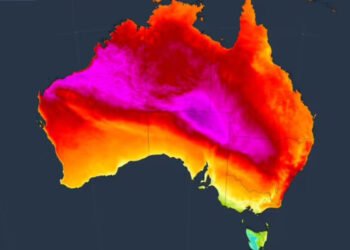
Australia is set for a dramatic weather shift after an unusual burst of early May warmth that saw temperatures soar well above seasonal averages across several states, before an approaching cold front brings rain, thunderstorms and a sharp drop in conditions across the south-east.
The unseasonal warmth, which has affected New South Wales, Victoria, South Australia and Tasmania, is now expected to give way to a much cooler and more unstable weather pattern as a cold front sweeps in from the Southern Ocean. The change marks one of the most striking early autumn-to-winter transitions in recent years, with meteorologists warning of sudden temperature drops, heavy rainfall and storm activity in multiple regions.
According to Australia’s national weather authority, the Bureau of Meteorology, the warm spell was driven by a strong high-pressure system that funnelled hot northerly winds across the south-east of the continent. This airflow pushed daytime temperatures to levels between 10 and 14 degrees Celsius above the seasonal average in several areas, creating conditions more typical of late summer than early winter.

In Victoria, the warmth was particularly intense, with cities such as Geelong, Shepparton and Bendigo recording their hottest May days on record. Temperatures climbed into the high 20s, surprising residents who had expected significantly cooler autumn weather. Tasmania also experienced record-breaking warmth, with Hobart reaching 26.9C and Launceston recording 24.3C, both setting new benchmarks for early May conditions.
Night-time temperatures also remained unusually high, with parts of South Australia, Queensland, Victoria, Tasmania and New South Wales experiencing overnight readings between eight and twelve degrees above average. This extended warmth contributed to what meteorologists described as a prolonged period of “unseasonably warm conditions,” which have persisted for several weeks leading into the weekend.
However, this pattern is now shifting rapidly as a cold front moving from the Southern Ocean merges with a cloud band over Western Australia. The combined system has strengthened into a significant weather front that is sweeping across South Australia before pushing towards Victoria and Tasmania, bringing with it a marked change in conditions.
Meteorologist Christie Johnson explained that the transition would be both fast and noticeable, especially after the recent warmth. She noted that cooler air has already begun extending across South Australia and into western Victoria, where maximum temperatures are expected to fall back into the high teens. The full impact of the cold air mass is forecast to reach south-eastern regions by Monday, bringing a significant drop in daytime temperatures and a much colder feel overall.
Johnson emphasised that the sudden shift would feel particularly sharp because of the preceding warmth. The contrast between recent record-breaking temperatures and the incoming cold air is expected to make the change more pronounced for residents, especially in areas that have recently experienced spring-like conditions.
Alongside the temperature drop, the weather system is expected to bring widespread instability. Thunderstorms, heavy rainfall and strong winds are forecast across parts of South Australia, Victoria and Tasmania over the weekend and into the early part of the week. There is also a risk of severe storms in isolated areas, with potential for flash flooding due to intense rainfall in short periods.
Coastal regions may also experience abnormally high tides as the weather system interacts with atmospheric pressure changes. These conditions, combined with strong winds, could lead to hazardous conditions in exposed areas, particularly along southern coastlines.
While the south-east prepares for the cold front, Sydney is expected to remain largely unaffected by the most severe conditions. Forecasts suggest that the city will continue to experience relatively mild autumn weather, with temperatures remaining in the mid-20s for much of the week. Sunday is expected to reach around 26C, while Monday is forecast to bring rain with temperatures around 25C.
In contrast, Melbourne will see a more significant shift. Rain is expected throughout much of the week, with temperatures dropping from a Sunday maximum of around 23C to as low as 13C by Thursday. This rapid decline highlights the strength of the incoming cold air mass and its ability to reshape regional weather patterns within just a few days.
The broader weather pattern comes after Australia experienced its driest April since 2018, adding further complexity to the current transition. Dry conditions combined with sudden temperature swings can increase the risk of extreme weather events, particularly when unstable systems move in quickly after prolonged warmth.

Meteorologists have been closely monitoring the interaction between warm continental air and colder Southern Ocean systems, which has created the conditions for this rapid shift. The merging of these systems often leads to increased storm activity, as well as sharp contrasts in temperature and pressure across relatively short distances.
Experts say such fluctuations are not uncommon during seasonal transitions in Australia, but the intensity and speed of this particular change stand out. The combination of record-breaking warmth followed by a fast-moving cold front highlights the volatility of weather patterns during autumn, especially in southern regions of the country.
As the cold front continues its eastward movement, authorities are urging residents in affected areas to stay informed about local weather warnings, particularly regarding storms and potential flooding. Emergency services have also advised caution in low-lying areas and regions prone to rapid water accumulation during heavy rainfall events.
While the warm spell offered an unexpected taste of summer-like conditions in early May, the incoming cold front is expected to restore more typical seasonal temperatures across much of the south-east. However, the sharp contrast between the two systems is likely to leave a lasting impression, underscoring the increasingly unpredictable nature of weather patterns across Australia.
Related News:
 Ocean Warming Drives Massive Marine Life Loss, Study Warns
 BP’s Influence Sparks Controversy in UK STEM Education
 Record-Breaking Heat Looms Over South-East Australia as Catastrophic Fire Risk Escalates
 How Sandhill Ashes Rebuilt a Bushfire-Hit Rural Community
 AI Climate Claims Face Greenwashing Backlash
 Scotland’s Climate Plans Face Scrutiny Over ‘Science Fiction’ Targets
 Tropical Flowers Shift Blooming Due to Climate Crisis
 Musk’s xAI Permit Sparks Fury Over Power Plant Expansion
 ‘Drinking from a Fetid Pond’: Superbug Genes in Lough Neagh
 Evacuations Ordered as California Wildfires Spread Fast
 UK Records Earliest Spring as Nature Awakens Fast
 Queensland Braces for Potential Second Severe Cyclone Hit
 Heavier SUVs Accelerate Britain’s Pothole Crisis
 Big Tech Lobbies EU to Hide Massive Datacentre Emissions
 Governments Fail Murray-Darling River Projects
 Chornobyl Still at Risk 40 Years After Disaster
 Older Than Dinosaurs: Secrets of Mayfly Dance Revealed
 Capitalism ‘Suicidal’, Warns Petro at Climate Summit
 Doomsday Clock Nears Midnight Amid Global Crises
 AI Turf War Erupts at the Prestigious Chelsea Flower Show
 UK Faces Mass Water Shortages by 2055, Lords Warn
 UK rejects EV charging VAT cut amid Treasury clash
 Man killed in shark attack on Great Barrier Reef
 Hope for mountain bongos returns to Kenya
 UN Issues Urgent Warning: Imminent Return of El Niño
 Cambridge Recreates Historic 336-Year-Old Garden
 Green Lawsuits Surge as AI Expansion Strains Planet
 Deadly H5 Bird Flu Reaches Australia’s East Coast
 Sydney Records Hottest June Since 1859 as Expert Warns New High a ‘Signature’ of Global Warming
 Lanarkshire AI Hub Fails Energy Promises
 UK Heatwaves Ignite Crisis of Sleep and Public Safety
 UK Seas Face Extreme Heatwave as Global Temperatures Surge
 Europe Scorched as Record Heatwaves Grip the Continent
 Concerns Rise Over New Zealand’s AI Datacentre Plans
 Three-Quarters of England’s Riverbanks Still Off Limits
 London’s 2026 ‘Great Stink’ Raises Sewer Concerns
 Wildfires rage across Europe as hundreds arrested in France
 Gen Z turns to BirdTok for a gentler digital escape
 Virgin Trains Moves Closer to Challenging Eurostar Monopoly
 UK Bans Fake Numbers: Scammers Lose Their Trick
 Vibe coding’ named Collins dictionary’s word of the year
 Patients to Test Health at Home to Ease NHS Winter Pressure
 Britain deploys RAF specialists to assist Belgium with drone threats
 Northern Lights may illuminate UK skies this week
 New AI tool could cut wasted efforts in organ transplants
 Sundar Pichai Cautions on AI Hype and Market Risks
 ‘Extinct’ Antelope Returns to Sahara, Bringing Hope
 Google Removes Some AI Health Summaries Over Safety Concerns
 PM pushes urgent hate speech and gun laws after Bondi terror attack
 Bondi memorial flowers preserved in lasting tribute artwork
 Judi Dench Champions Fight to Save London’s Green Spaces
 Half the World’s Largest Cities Face Rising Water Stress
 EU launches Grok AI probe into X over explicit images
 ABC Facebook Page Briefly Hacked, Adult Photos Posted
 Meta trial over child exploitation claims begins
 BT Names New Openreach Chief Amid Major Fibre Expansion
 Tech Trends Set to Transform Life in 2026
 ‘It’s a horrible feeling’: Loma Bropho’s Struggle to Secure Housing
 Stewart Brand on Musk, Bezos and a Life of Long Thinking
 Greenpeace $345m Ruling Sparks Appeal Battle
 The Kill Line: A Shifting Vision of the American Dream
 Family of Alleged Bondi Gunman Seeks Name Suppression
 Extreme Weather: Europe Shivers as Cyclone Narelle Hits
 Sam Konstas Dropped as Australia Unveils New Contract List
 Artemis II Returns After Historic Moon Flyby
 UK Banks to Deploy Controversial Mythos AI Tool Next Week
 Medellín’s Green Revolution: A Global Climate Blueprint
 Labor Reforms NDIS Amidst Mounting Budget Concerns
 WHO approves first malaria drug for babies
 Court Upholds Landmark Win for Transgender Rights
 Tony Abbott Returns as New Liberal Party President
 Pope Meets Families in Italy Toxic Waste Zone
 Stolen Mobiles Could Soon Become Useless Bricks
 UK Ministers Lobby Trump Over Under-16s Social Media Ban
 US Courts Back Trump on Park Signage Removals
 Britain’s Mini Fan Craze Sparks Major Waste Crisis
 Telstra Software Fault Triggers Massive Nationwide Outage
 US Chemical Accidents Rise as Protections Are Rolled Back
 UK Schools Struggle as Classrooms Top 40C
 Thames Water Future Remains Uncertain Amid Funding Crunch