Published: 23 April 2026. The English Chronicle Desk. The English Chronicle Online.
A major independent review has exposed a significant failure by state governments to deliver critical infrastructure projects. These projects were designed specifically to improve the health of rivers within the northern Murray-Darling basin region. Authorities promised these vital improvements eight years ago to help support local ecosystems and protect vulnerable wildlife populations. The federal inspector general of water compliance, Troy Grant, led the comprehensive investigation into these stalled developmental efforts. His final report confirms that both New South Wales and Queensland governments have severely underdelivered on their pledged engineering commitments. This program was originally created as a toolkit intended to boost environmental health without requiring the diversion of extra water.
The original agreement aimed to compensate for a 2018 federal decision regarding water allocation levels for the region. Governments promised to deliver infrastructure that would allow water to reach essential wetlands with much greater ease and efficiency. They also pledged to increase local fish populations and protect environmental water flows from being pumped out as it moved downstream. The federal government committed one hundred and sixty-six million dollars to support the successful completion of these important environmental initiatives. Unfortunately, the deadline for these projects is fast approaching at the end of this current calendar year with very little actual progress.
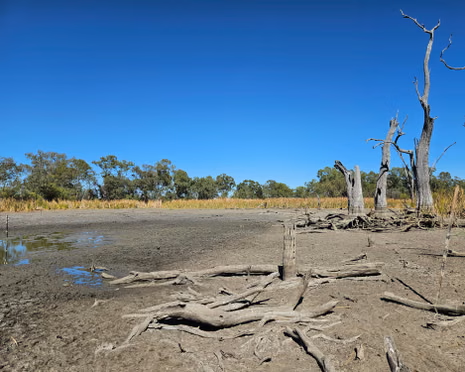
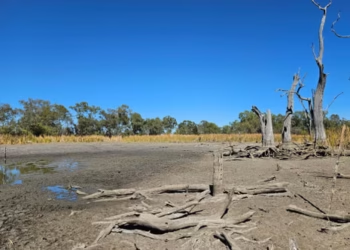
 The failure to deliver these projects has had immediate and devastating consequences for the surrounding natural environment, particularly in New South Wales. Scientists recently had to conduct an emergency rescue of turtles found suffering in parched wetlands near the Gwydir region. The New South Wales government failed to secure any of the private land access necessary to improve water flows over the floodplains in that area. This inaction directly contributed to the tragic loss of wildlife that depended on those specific habitats for their survival and long-term health. The inability to manage these projects effectively has left environmental experts feeling deeply concerned about the future of the river system.
Furthermore, a specific project intended to install passages for fish migration around various barriers has shown extremely poor results during the implementation phase. The original target was to cover over two thousand kilometres, but the government later reduced that goal to just over five hundred kilometres. To date, the project has managed to deliver only sixty-four kilometres of infrastructure, which represents a tiny three percent of the original ambitious target. Inspector Grant described the delivery of these fishways as absolutely abysmal, highlighting the vast gap between government promises and the reality on the ground.
In Queensland, the situation remains equally disappointing, as promised upgrades to regional weirs never actually proceeded past the initial feasibility and planning stages. The inspector general likened the entire Northern Basin Toolkit program to a plane full of passengers being flown without an active pilot at the controls. He noted that the only measures that actually succeeded were those based on policy changes, which essentially did not cost the taxpayers a single cent. The environment is clearly the biggest loser in this situation, alongside the hardworking taxpayers who expected their money to be used for genuine conservation efforts.
The report serves as a stark wake-up call for everyone involved as a broader review of the entire Murray-Darling basin plan begins to take shape. Professor Jamie Pittock from the Australian National University expressed deep frustration over the ongoing failure to protect these vital rivers. He argued that the failure to implement these promised actions directly leads to the death of turtles, fish, and precious wetlands that remain at constant risk. The lack of accountability remains a significant concern, especially when communities rely on these governments to act responsibly and transparently regarding their shared environmental duties.
The New South Wales water minister, Rose Jackson, has acknowledged the findings and expressed a commitment to turning the situation around for the better. She stated that the program was established several years ago under the former government, which she claims made very little progress during its tenure in office. Jackson noted that it has been challenging to deliver all the necessary measures within a short timeframe, though she remains dedicated to achieving better environmental outcomes. She has held meetings with the inspector general to discuss how they can improve the current trajectory of the projects moving forward.
Political opposition figures have criticized the situation, highlighting that millions of dollars have been spent without achieving the intended protections for the river system. Sarah Hanson-Young, the environment spokesperson for the Greens, noted that the report makes it abundantly clear that the allocated funds have not gone toward meaningful conservation. Other experts have suggested that the remaining money could be better spent on water buy-backs and other initiatives known to return crucial environmental flows to the basins. This perspective emphasizes a shift toward more direct methods of restoring health to rivers and wetlands that have suffered from years of neglect and mismanagement.

Queensland officials have defended their position by claiming that the federal government distributed the vast majority of funding to New South Wales despite large portions of the basin being located within their own state borders. They also criticized the former state government for failing to conduct basic costings and necessary due diligence on the projects they originally submitted for consideration. The current government claims it is now working hard to deliver real outcomes for their rural and regional communities despite these historical shortcomings. Federal representatives stated that they are currently considering the recommendations and expect the findings will be incorporated into broader reviews of the national water laws and the basin plan.
Trust in the political process is at stake as citizens watch the slow progress of these critical environmental projects across the country. The collaborative nature of the Murray-Darling basin plan requires shared responsibility and high levels of accountability from all jurisdictions involved in the agreement. Without significant improvements to transparency and a renewed focus on practical delivery, the future of these ecosystems remains under threat from ongoing inaction. Whether the authorities can successfully implement the necessary changes before the final deadline remains a subject of intense public debate and scrutiny throughout the nation. Ensuring the long-term survival of these iconic river systems depends entirely on the willingness of governments to prioritize their stated environmental commitments over political convenience and administrative delay. The coming months will likely see increased pressure on officials to demonstrate measurable progress to restore the public faith lost throughout this process.
Related News:
 Record-Breaking Heat Looms Over South-East Australia as Catastrophic Fire Risk Escalates
 How Sandhill Ashes Rebuilt a Bushfire-Hit Rural Community
 Record May Heat to Cold Front in Eastern Australia
 Man killed in shark attack on Great Barrier Reef
 ‘Extinct’ Antelope Returns to Sahara, Bringing Hope
 Eden Project Founder Celebrates 25 Years of Nature’s Hope
 Dog Food Emissions: 1% of UK Greenhouse Gas Revealed
 Dutch Nationwide Fireworks Ban Expected to Transform New Year Traditions
 Liberal Turmoil Threatens Victorian Election Hopes
 PM pushes urgent hate speech and gun laws after Bondi terror attack
 Wildlife Targets at Risk in England and Northern Ireland
 Bondi memorial flowers preserved in lasting tribute artwork
 Polycrisis Anxiety Leaves Many Feeling Trapped in the Present
 Kent Residents Continue Facing Water Supply Disruptions
 Antarctic Penguins Shift Breeding Season Amid Climate Change
 Judi Dench Champions Fight to Save London’s Green Spaces
 Nationals Crisis Meeting Threatens Coalition Stability
 Half the World’s Largest Cities Face Rising Water Stress
 Silence and Unity Mark Bondi Terror Attack Memorial
 Storm Chandra flooding leaves England on high alert
 Gentoo Penguins First Birds on Australian Territory Hit by Bird Flu
 Chikungunya Spread in Europe Climbs as Climate Warms
 NSW to Introduce Minimum Age for Ebike Riders
 Scotland’s Emissions Plans Face Criticism for Over-Reliance on Technology
 ‘It’s a horrible feeling’: Loma Bropho’s Struggle to Secure Housing
 Anthony Albanese Must Uphold Rights for All Australians
 Ocean Warming Drives Massive Marine Life Loss, Study Warns
 Greenpeace $345m Ruling Sparks Appeal Battle
 Wood burner legal threats spark council row
 Yorkshire Water Funding Sparks Debate Amid Fines and Pay Row
 SA Liberals Back Candidate With Controversial Views on Homosexuality
 Welsh Water Faces £44.7m Enforcement Over Sewage Breaches
 The Truth Behind Rising Energy Costs and Fossil Fuel Myths
 ‘Drinking from a Fetid Pond’: Superbug Genes in Lough Neagh
 New £10bn rescue plan offered for Thames Water
 Family of Alleged Bondi Gunman Seeks Name Suppression
 Extreme Weather: Europe Shivers as Cyclone Narelle Hits
 Victorian Liberals Face New Crisis Over Candidate Ethics
 Middle East Deluge: Freak Storms Bangle Desert Nations
 Trump to Deploy “God Squad” Over Gulf Wildlife Protections
 RNLI Beach Rescues Surge as Coastal Popularity Hits New High
 Sam Konstas Dropped as Australia Unveils New Contract List
 The Secret Identity Behind the Enfield Oak Felling
 Evacuations Ordered as California Wildfires Spread Fast
 Cyclone Maila Intensifies to Category Five Strength
 RSPB Urges Summer Bird Feeder Removal to Curb Disease
 15 Million Oysters Set to Revive UK Marine Ecosystems
 Medellín’s Green Revolution: A Global Climate Blueprint
 Labor Reforms NDIS Amidst Mounting Budget Concerns
 Broken Promises: Murray-Darling River Crisis Deepens
 Renewable Energy as a Strategic Shield for UK Security
 Urban Flood Crisis: A Growing Threat to English Homes
 Escobar’s Hippos May Be Moved to India Zoo
 Capitalism ‘Suicidal’, Warns Petro at Climate Summit
 UK Firm Faces Backlash Over US Oil Advertising Deals
 The Lion Guard: How One Woman Heals the Zambezi Valley
 Ukraine strikes Tuapse as oil disaster worsens
 Charities Demand Labour Deliver Urgent New Clean Air Act
 Tony Abbott Returns as New Liberal Party President
 Hope for mountain bongos returns to Kenya
 Saving Our Lost Rainforests: The Battle for Dartmoor
 Shockwaves Across Australian Cricket as Melbourne Rivals Dissolve
 Global Tech Giants Face Off Against Australia Over Media Levies
 Whitehall Steps In: The Battle Over Thames Water Deepens
 UK Launches Massive Campaign To Save Precious Water Supply
 US Courts Back Trump on Park Signage Removals
 Deadly H5 Bird Flu Reaches Australia’s East Coast
 Moira Deeming Gains Respite in Liberal Party Standoff
 China’s Pacific Missile Test Sparks Regional Alarm
 UK Heatwaves Ignite Crisis of Sleep and Public Safety
 The Melbourne Bird: Art or Vandalism?
 Britain’s Mini Fan Craze Sparks Major Waste Crisis
 Global Climate Progress: Europe Leads as US Lags Behind
 The Carbon Capture Con: Wasted Billions for Taxpayers
 US Chemical Accidents Rise as Protections Are Rolled Back
 Concerns Rise Over New Zealand’s AI Datacentre Plans
 Swift Nesting Crisis Sparks Outrage in South Tyneside
 Japan Bear Hunt: Serial Fridge Raider Sparks Panic
 Thames Water Future Remains Uncertain Amid Funding Crunch
 Three-Quarters of England’s Riverbanks Still Off Limits