Published: 8 August 2026. The English Chronicle Desk. The English Chronicle Online
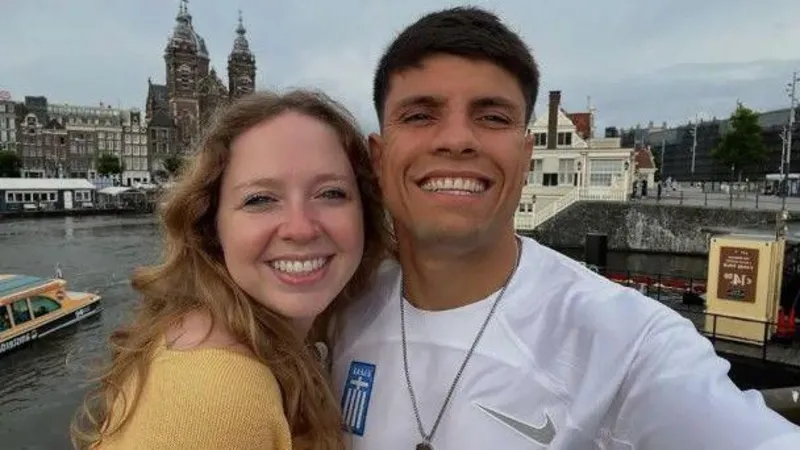
An Afghan boxer has been charged with the alleged murder of Scottish aid worker Elisabeth Ross in Athens after investigators were provided with what police described as “key” details by his wife.
Sharif Ahmadzai, 26, has been accused of homicide with intent, a charge comparable to murder under Scots law, as well as robbery and weapons offences following the discovery of Ross’s body inside a suitcase in an abandoned building in Athens.
Ross, 38, from Edinburgh, was found dead on 18 July in the Kypseli district of the Greek capital after a homeless man discovered the suitcase in a derelict property.
Greek authorities believe the aid worker had been killed several days before her body was discovered. The case has attracted international attention because of Ross’s humanitarian work supporting refugees and migrants in Greece.
Ahmadzai appeared in court and requested an English translator but did not enter a plea. His lawyer said his client had chosen to remain silent while waiting for additional forensic evidence and argued that his rights had been damaged by the release of information from the investigation.
The defence has questioned aspects of the prosecution’s case, including the initial uncertainty over Ross’s cause of death.

Police sources told the BBC that Ahmadzai was arrested after his wife, Alaina Hall, provided information that investigators considered important to the case.
Among the details she reportedly shared was location data from a tracking application that allegedly placed Ahmadzai and Ross at the same apartment on 15 July, the day investigators believe Ross was killed.
Hall, who has a child with Ahmadzai, told police that she and her husband first met Ross while volunteering with a refugee charity in Athens earlier in 2026.
She described Ross as a kind and compassionate person who was dedicated to helping others.
According to court documents, Hall said Ross had asked Ahmadzai to help deliver Bibles after they became acquainted through charity work.
Hall told investigators that on 15 July she saw a message from Ross to Ahmadzai which appeared to suggest plans to meet.
She later claimed that she woke during the night and discovered her husband had left their home unexpectedly.
According to her statement, she checked his location through her phone and saw that he was at an apartment on Rethymno Street.
She told police: “I was surprised because there was no particular reason for him to be there at that time.”
Hall said Ahmadzai later told her he had been watching football at a café and had only visited the apartment to use the toilet.
She initially accepted his explanation but later became suspicious.
Hall told investigators that in the days following Ross’s disappearance, Ahmadzai appeared unusually distressed and spoke about the death of a relative in India.
She claimed he suggested leaving Athens suddenly.
However, she said his behaviour later changed and he appeared happier, buying her a new phone and giving her €2,550.
Hall said she questioned where the money came from because she felt he could not provide a convincing explanation.
When reports emerged that a woman’s body had been discovered inside a suitcase near their area, Hall said she woke during the night fearing that it could be Ross.
She told police that she contacted the aid worker but received replies that did not appear consistent with Ross’s usual communication style.
Hall said the messages did not match Ross’s normal English or the emojis she typically used.
She told investigators that the combination of dates, messages and her husband’s behaviour made her increasingly uncomfortable.
After Ross was identified as the victim, Hall reported receiving threatening messages containing photographs of herself and her baby.
She said she became frightened and that she and Ahmadzai stayed in separate locations overnight.
Ahmadzai’s lawyer, Christos Erdas, said his client denied the homicide charge.
He said Ahmadzai had exercised his legal right to remain silent and criticised what he described as leaks of evidence and documents from the investigation.
The lawyer argued that the presumption of innocence must be respected.
Erdas said Ross’s body showed no obvious external injuries when it was discovered and argued that the cause of death needed further clarification.
He requested that forensic medical reports, including toxicological and histological examinations, be added to the case file before his client presents a full defence.
The lawyer said Ahmadzai’s position was not one of denial but rather a decision to wait until all evidence had been properly collected.
Ahmadzai has been remanded in custody while awaiting trial, which could take up to 18 months.
Greek police said Ahmadzai was initially detained over illegal weapons possession before being charged with homicide, robbery and other offences.
Investigators allege that he stole more than €10,000 from Ross’s bank accounts using her cards.
Police said evidence suggested Ross’s body was placed inside a suitcase and transported to the abandoned building where it was later found.
Authorities also allege that messages were sent from Ross’s phone to friends and family after her death before the device was switched off.
Greek media reports have claimed that Ahmadzai purchased a phone and sent messages pretending to represent an extremist organisation, although those reports have not been independently confirmed by investigators.
Ross had travelled to Greece to support refugees and migrants through humanitarian work.
She arrived in the country on 26 June and spent time in the Athens region before her death.
Friends and family have described her as compassionate, generous and committed to helping vulnerable people.
Her death has caused widespread sadness among those involved in refugee support networks.
Authorities used international cooperation to identify her after her body was discovered. Interpol was contacted, and American authorities assisted Greek investigators by identifying her fingerprints.

The investigation has involved multiple agencies as Greek authorities attempt to establish the full timeline surrounding Ross’s final days.
The case has also raised questions about the challenges faced by humanitarian workers operating abroad and the risks involved in supporting vulnerable communities.
While prosecutors continue building their case, Ahmadzai’s defence team maintains that further evidence is required before conclusions can be reached.
The trial is expected to examine the forensic findings, digital evidence, financial records and witness statements that investigators have collected.
For Ross’s family and friends, the legal process represents a search for answers about the loss of a woman remembered for her dedication to helping others.
Related News:
 Murdered Student ‘Algasim’ Was ‘the Most Special Person’, Friends Say
 UK Charity Watchdog Probes Settlement Donations
 Madeleine McCann Case: German Woman at Centre of Hit-and-Run Theory Speaks Out
 UK Home Office to Launch French Beach Signage to Warn Asylum Seekers of Risks
 UK Recognises State of Palestine in Push to Preserve Hope for Peace
 Jailed Georgian Opposition Leaders Warn UK of Iranian Links to Ruling Party
 Cooper Unveils £4m Cyber Plan Against Russian Hackers
 China’s Mega Embassy in London Faces Further Delay
 Prince Andrew met alleged Chinese spies during Pitch@Palace China trips
 Kosovo agrees to host Britain’s refused asylum seekers
 UK Gamer Recruited by Wagner Group Found Guilty of Arson
 Trump Speaks on Prince Andrew’s Royal Scandal Fallout
 Just Stop Oil Protesters Convicted Amid Climate Defence Row
 British Grandmother to Return Home After Death Sentence in Bali
 New review urges UK to repatriate Shamima Begum, others from Syria
 Emails Show Epstein Funded Mandelson’s Husband After Jail
 How Much Could Andrew’s Arrest Hurt the Royal Family?
 Epstein Files Reveal High‑Profile Names in New US Government Release
 Russian Troops Executed by Commanders, Soldiers Tell BBC
 Two Arrested After Woman Set on Fire in Revenge Attack
 Epstein Tried to Buy a Palace in Morocco Days Before His 2019 Arrest
 Family ‘Incredibly Worried’ for Jailed Iran Couple
 Five Years On Since Sarah Everard, What’s Actually Changed?
 Stranger ‘On Drugs’ Stabbed Saudi Student to Death in Cambridge
 Calls Grow to Remove Billboard Following Lyra McKee Graffiti
 UK Government’s First Repatriation Flight to Leave Middle East, More Planned
 Man on Trial for Rape That Led to Andrew Malkinson’s Wrongful Jailing
 Why Aren’t Our Dirtiest Roads Getting Cleaned?
 Sisters Who Could Not Swim Drowned While Paddling in Snowdonia, Inquest Hears
 Four arrested on suspicion of assisting Iran’s intelligence service
 Undercover officer deceived women with ‘grotesque and cruel’ lies, spycops inquiry told
 Inside the Russian Explosives Plot That Targeted the UK
 Expert in Letby Trial Failed to Disclose Hospital Probe
 Children’s Author Convicted in Husband Poisoning Case
 Teen Admits Filming Westfield Chair Prank
 Justice Served: Nine Indian Cops Sentenced to Death for Custodial Murder
 Ben Roberts-Smith Denies War Crime Allegations in First Statement
 Iran Threats Target Journalists in UK
 Digital Trail Exposes Colombian Mercenaries in Sudan
 Second Explosion in Three Days Leaves Thirteen Dead in Kerala
 Shadows in the Valley: Pahalgam Remembers a Year of Grief
 Walsall Rapist Jailed After Hate-Filled Online Trail
 Two Children Die in Wolverhampton House Fire Tragedy
 “Terrorism Suspect” Arrested in Devon as Investigation into London Jewish Site Attacks Widens
 Cartel crackdown raises fears of fresh violence
 US ‘Narco Boat’ Strikes Draw Global Outcry
 “Community Shield”: Met Police Deploy Specialist 100-Officer Team to Guard London’s Jewish Postcodes
 “The Rooftop Mystery”: Police Launch ‘Suspicious Death’ Probe After Body Found in Luxury Garden
 “The Blue Light Intersection”: Seventeen-Year-Old Critically Injured in ‘Nasty’ Police Pursuit Crash
 “The Shadow of Lord Warwick Street”: Second Teenager Charged in ‘Nasty’ Murder of 14-Year-Old Eghosa Ogbebor
 Search Intensifies for Missing Hiker on WA Bibbulmun Track
 “Hidden in Plain Sight”: Government Launches Elite High Street Taskforce After Shock BBC Exposure of Illicit Shopfronts
 “Untouchable” on TikTok: The Brazen Digital Underworld of Britain’s Teenage Motorbike Thieves
 “Content for the Algorithm”: Conviction of TikTok Duo Exposes the Dangerous Trend of Targeted Social Media Hate Tourism
 “The Rhetoric of Terror”: Landmark Sentencing Looms for Radicalized Extremist Who Plotted Campaign of Violence Against British Synagogues
 Man Arrested 22 Years After Leeds Teen Murder
 Teen Among Arrests at Nowak Protest as Three Charged
 Lyra McKee’s Former Partner Speaks of Lasting Grief
 Watchdog Says MI5 Knew Agent’s Violent Misogynistic Views
 Ukrainian Suspect Alters Account in Monaco Murder Case
 Murder Probe Continues After Arrest Release
 New Footage Revives Peter Falconio Mystery
 Bangkok Bar Fire Kills 27, Leaves Eight Critically Injured
 Police Rule Out Political Motive in Widdecombe Killing
 Over 100 Firefighters Tackle Major Blaze in East London
 Uncle of Man Arrested in Ann Widdecombe Investigation Says Family Was Left ‘Shocked’ by News
 UK Faces Diplomatic Challenge as Pakistan Resists Deportation of Convicted Grooming Gang Figure
 French Police Launch Formal Investigation Into Woman Following Fatal Stabbing of British National
 UK’s Largest Muslim Convention Scales Up Security Amid Rising Bigotry
 Suzy Lamplugh Mystery Still Haunts Detectives
 Burnham Reaffirms Support for Ukraine During Zelensky Visit
 Ecuador Police Battle Gangs in Growing Drugs War
 Man Admits Taking Ambulance With Patient Inside
 Two Held After Woman Found Dead in Liverpool Hotel
 Man Jailed After Noise Dispute Ends in Fish Killing
 Court Restores Sentence in Emma Lovell Murder Case
 Burnham Considers Inquiry Into Epstein UK Connections
 Families Furious After Jailed Funeral Boss Apologises
 Harper Widow Fights Early Release of Killer’s
 Harper Case Officer Condemns Possible Early Release