Published: 7 August 2026. The English Chronicle Desk. The English Chronicle Online
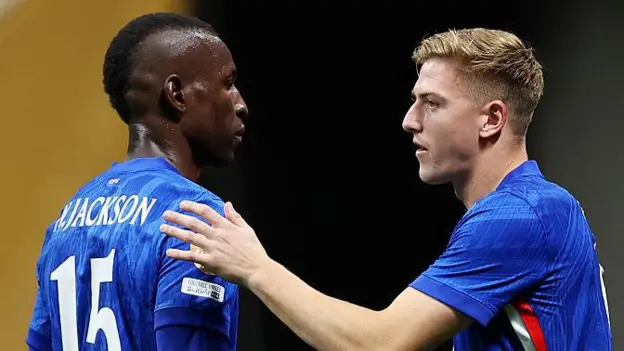
Chelsea are facing another major squad reshuffle as the club looks to reduce an oversized playing group that has grown to 41 senior and first-team players.
The west London club has spent recent years building one of the deepest squads in European football, but the size of the group has created challenges around registration rules, player development and maintaining team harmony.
With a new season approaching, Chelsea’s hierarchy is expected to make difficult decisions over which players remain part of the manager’s plans and which will leave through transfers, loans or permanent exits.
The club’s recruitment strategy has focused heavily on signing young talent, often offering long-term contracts to promising players from around the world. While the approach has created a large pool of potential stars, it has also resulted in a congested squad with limited opportunities for some individuals.

Chelsea must now balance their ambition of building a future dynasty with the practical need to create a manageable squad.
Premier League clubs are required to operate within strict registration limits, meaning Chelsea cannot simply keep every player available. Reducing the number of senior players has become a priority before the transfer window closes.
Chelsea’s recent recruitment model has produced a group containing established internationals, emerging academy graduates and highly rated young prospects.
However, managing such a large squad presents difficulties for coaches.
Players competing for the same positions may struggle for regular minutes, while those who are not involved in matchday squads can become frustrated.
A smaller squad would allow the manager to create clearer roles, improve training quality and maintain stronger competition for places.
Chelsea’s ownership has previously defended its strategy of investing in young players, arguing that long contracts provide stability and protect the club’s future.
But the next stage of the project requires deciding which signings will become important first-team players and which may need to move elsewhere.
Several experienced players could leave as Chelsea attempt to create space.
Players who are not considered central to the manager’s plans may be encouraged to find new clubs, particularly if Chelsea receive suitable offers.
The club has previously shown a willingness to sell established names in order to maintain financial flexibility and continue investing in new talent.
Some departures could also help Chelsea comply with financial regulations while reducing wage commitments.
The club’s transfer policy has relied heavily on generating income through player sales, particularly after spending large sums on recruitment.
Chelsea’s biggest challenge may involve deciding what to do with some of their younger signings.
The club has invested heavily in teenagers and players in their early twenties, many of whom were signed with the expectation that they would eventually become key members of the squad.
However, not every young player can immediately establish themselves at Stamford Bridge.
Some may leave temporarily on loan to gain experience, while others could be sold if Chelsea believe their development would be better served elsewhere.
The loan system has historically played an important role in Chelsea’s development strategy, allowing young players to gain first-team football before returning stronger.
But with so many players needing opportunities, competition for loan destinations has also increased.
Chelsea’s famous academy has produced a number of successful first-team players, but the current squad situation could make the pathway more complicated.
Young academy graduates need opportunities to progress into senior football, but a crowded first-team environment can limit their chances.
The club must decide whether certain academy players are ready for Premier League football or whether they should continue developing away from Stamford Bridge.
Chelsea have previously benefited financially from academy sales, with graduates helping generate significant transfer income.
This model may continue as the club looks to balance sporting ambition with financial requirements.
Chelsea’s expected clear-out will likely involve several different approaches.
Some players may leave permanently through transfers, while others could move on loan with the possibility of future returns.
The club may also consider swap deals or structured transfers that allow them to manage finances while improving the squad.
Selling players before purchasing new ones has become increasingly important for Chelsea, particularly after significant spending during recent transfer windows.
The club’s recruitment team will need to carefully assess whether new arrivals are necessary or whether existing players can fill available roles.
The responsibility for managing the squad will ultimately fall on Chelsea’s head coach.
Choosing which players to include in the first-team plans can be one of the most challenging tasks for any manager.
A large squad may appear beneficial because it provides options, but it can also create problems if players feel overlooked.
The coach must establish clear expectations and ensure that those who remain are fully committed to the club’s objectives.
Chelsea’s recent instability in the dugout has also made squad management more complicated, with several managers having different ideas about recruitment and player usage.
Chelsea’s squad reduction comes with expectations that the remaining group must compete at the highest level.
After several seasons of transition, supporters want to see progress and a return to regular Champions League football and domestic success.
The club’s young squad has shown potential, but consistency remains a major challenge.
Reducing the squad size could help create a stronger identity and allow key players to develop greater understanding on the pitch.
The challenge will be ensuring that departures do not weaken the team’s depth.

The coming weeks could represent one of the most important periods of Chelsea’s recent rebuild.
The club must decide which players represent the future and which no longer fit the long-term vision.
A 41-man squad may demonstrate ambition and financial power, but success requires more than simply collecting talent.
Chelsea must now turn potential into performance by creating a balanced group capable of competing across multiple competitions.
The final list of departures will reveal much about the direction of the club and the confidence the management has in its current generation of players.
For Chelsea supporters, the clear-out will bring uncertainty, but it may also provide the foundation for a more focused and competitive team.
Related News:
 Football Regulator Contacts West Ham Over “Serious Allegations” Linked to Sullivan
 David Sullivan Barred from Contact with West Ham Women’s and Youth Teams Since 2023
 New Premier League Fixtures Set Stage for Thrilling Season
 Klopp Reveals Liverpool’s Bid to Sign Mbappe
 Manchester United Women Part Ways with Marc Skinner Ahead of New WSL Season
 Newcastle Complete £25.7m Deal for Braga Goalkeeper Hornicek
 Semenyo Welcomes Maresca’s Attacking Philosophy as Perfect Fit
 How All‑Time Great Casemiro Revived His Man Utd Career
 Is This Premier League Striker a Secret Maths Genius?
 He Was Once a Teen ‘Superstar’. Why Did James Van Der Beek Need Help to Pay His Medical Bills?
 England’s Brave New Era Runs Up Against Murrayfield Ghosts
 ALL GUNNS BLAZING: Arsenal vs Wigan LIVE SCORE – FA Cup Updates
 Managing Man Utd the ‘Ultimate Role’ – Carrick
 Can Chelsea Kick‑Start Faltering Palmer?
 Scotland World Cup Party in Boston Gets Green Light After Security Breakthrough
 Scotland Ranked Lowest in Europe in Key Metric
 Sunderland Stun Newcastle as Brobbey Strikes Late Winner
 The Living Heart of Manchester United: Bruno Fernandes
 Eddie Howe Faces Seven Game Test to Secure Newcastle Future
 Premier League Clubs Tense Over Regulator Costs
 Liam Rosenior Faces Mounting Pressure at Chelsea
 Premier League drama defines crucial weekend
 Arteta urges Arsenal to step up in Atlético semi-final
 Arteta Reinvents Emirates Stadium Into Football Fortress
 Champions at Last: Arsenal Conquer the Premier League
 Farewell to an Icon: Pep Guardiola to Exit Manchester City
 Southgate Calls for Different Approach to Boys
 Fans Bring Flags and Fire to World Cup Scenes
 11 EFL Stars Ready to Shine at World Cup
 Fans Invited to Share Scotland World Cup Stories
 Iran Team Arrives in Mexico Amid US Visa Dispute
 “My Drinking Days Are Over” — How to Enjoy an Alcohol-Free World Cup
 Scotland Branded “Unprofessional” in World Cup Fallout as England Build Momentum
 Kane Enters Ballon d’Or Debate After Bayern Form, but World Cup Seen as Decisive Factor
 Chinese Football Fans Embrace Referee as Unexpected World Cup Figure
 Referee Controversy Raises Questions Over FIFA’s Control of the World Cup
 Nike Charges Fans Most for World Cup Replica Shirts
 Saka Playing Through Pain As England World Cup Campaign Looms
 England Cruise Past Costa Rica as World Cup Warm-Up Sharpens Tuchel’s Vision
 Messi Equals World Cup Record In Masterclass Victory
 Tuchel’s England Mission Goes Beyond Football Success
 Historic Victory for Canada as They Defeat Nine-Man Qatar
 Heartbreak for Canada as Koné Suffers Horrific Injury
 Cape Verde Hold Uruguay in Dramatic World Cup Clash
 Great Stories, Little Jeopardy – Does the New World Cup Format Really Work?
 Paraguay Shock Germany in Historic Penalty Shootout
 Morocco Beat Dutch in Wild World Cup Penalty Drama
 Tuchel Set to Retain Southgate’s Penalty Strategy as England Focus on Tournament Success
 Haaland Heroics Send Norway Into Historic Last 16 Knockout
 Kane Saves Tuchel as England Survive Dramatic Exit
 Pubs Granted Permission to Stay Open Until 5am for England’s World Cup Clash with Mexico
 Paul Seixas: French Cycling’s Teenage Hope at the Tour
 Trump Helps Clear Balogun for Belgium World Cup Clash
 Norway’s Stunning World Cup Victory Over Brazil
 Trump Helps Clear Balogun for Belgium World Cup Clash
 England’s 10 Men Hold Firm in World Cup Thriller
 Belgium Thrashes USA After Red Card Controversy
 Ronaldo Says Farewell to the World Cup Stage
 Balogun Drama Overshadows USA’s World Cup Exit
 Egyptian Fury After Argentina World Cup Heartbreak
 Mbappé Brilliance Leads France Into Semi-Finals
 Kane vs Haaland: Which Striker Would You Choose?
 De la Fuente’s Spain Eye History Through Unity
 Haaland’s Two Worlds Meet on Football’s Biggest Stage
 Rollercoaster Semi-Final Leaves Fans Breathless
 Bryne Backs Haaland Before England World Cup Clash
 Lamine Yamal’s Birthday: Football, Fame, and France
 Rice Poised for England Semi-Final Clash Against Argentina
 Spain Shock France to Reach World Cup Final
 Tuchel: England Ready for Historic Argentina Clash
 Argentina End England’s World Cup Dream With Semi-Final Victory
 Argentina Face FIFA Investigation After Players Display Falklands Banner Following World Cup Victory
 Who Am I? Guess World Cup Star No 40 – The Mystery Player Captivating Football Fans
 Sir David Beckham Consoled by Victoria After Heartbreaking World Cup Defeat
 World Cup Rings for Winners as Trump Attendance Confirmed
 Thousands of Tickets Still Available for England v France Clash
 Sixteen Titles in Five Years: How Spain Built an Unrivalled Era of Football Dominance
 Zidane Confirmed as France Head Coach
 Zidane Confirmed as France Head Coach After Long Wait
 FIFA Faces Fresh Pressure as Critics Threaten Non-Cooperation