Published: 7 July 2026 | The English Chronicle Desk | The English Chronicle Online
The United States entered the 2026 FIFA World Cup carrying the hopes of a nation, the advantage of playing on home soil and growing belief that a talented generation of players could finally propel American football into the sport’s global elite. Instead, the tournament ended in disappointment, with questions now being asked about whether the extraordinary controversy surrounding striker Folarin Balogun’s suspension contributed to what many observers have described as a chaotic conclusion to the hosts’ campaign.
For months before the tournament, expectations surrounding the United States had reached unprecedented levels. The national team, guided by Mauricio Pochettino, featured a youthful squad blending European experience with home-grown talent. With the support of passionate crowds and the familiarity of playing at home, many believed the Americans were capable of reaching the latter stages of the competition for the first time since the 2002 World Cup.
However, what should have been remembered for football became increasingly dominated by controversy away from the pitch.
The centre of that controversy was Folarin Balogun, the striker whose performances had made him one of the tournament’s standout players. Having scored three goals in his opening matches, Balogun emerged as the attacking focal point of the American side and one of the most dangerous forwards in the competition.

His tournament appeared to take a dramatic turn during the knockout match against Bosnia and Herzegovina.
Initially shown no card for a challenge on defender Tarik Muharemovic, the incident was reviewed by the Video Assistant Referee before the referee upgraded the punishment to a straight red card for serious foul play.
The dismissal immediately sparked widespread debate.
Many former players, pundits and supporters argued the challenge looked accidental rather than reckless, questioning whether the punishment matched the offence.
With the United States preparing to face Belgium in the last 16, Balogun’s automatic one-match suspension appeared to leave the hosts without their leading goalscorer at the most crucial stage of the tournament.
Then came an unprecedented twist.
Only hours before the Belgium match, FIFA announced that Balogun’s suspension had been suspended under provisions within its disciplinary regulations.
The governing body explained that the player would instead serve a one-year probationary period, allowing him to participate immediately while retaining the red card on his disciplinary record.
The announcement stunned football observers around the world.
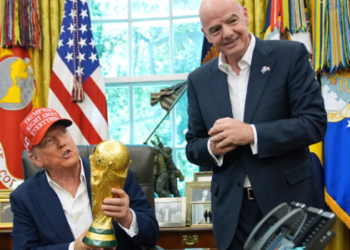
Even more remarkable were subsequent reports that United States President Donald Trump had personally contacted FIFA officials on multiple occasions before the decision.
Trump later publicly thanked FIFA for what he described as correcting an injustice, fuelling accusations that political influence had entered one of the world’s biggest sporting competitions.
FIFA maintained that its disciplinary committee had acted within existing regulations and insisted the decision followed established procedures rather than political pressure.
Nevertheless, the timing of the announcement generated widespread criticism.
Belgium’s football federation expressed astonishment at the ruling and questioned its consistency with FIFA’s own disciplinary framework.
Belgium manager Rudi Garcia suggested the decision undermined confidence in the integrity of international football, while commentators across Europe debated whether sporting governance had become unnecessarily politicised.
Within the United States camp, however, the reaction was understandably different.
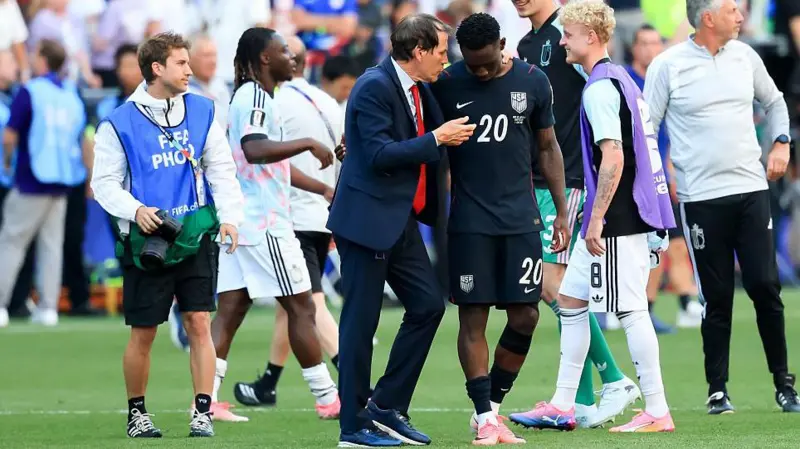
Players welcomed the return of their leading striker, while Mauricio Pochettino praised FIFA’s decision, arguing that Balogun had been unfairly dismissed in the first place.
Team captain Christian Pulisic said the reversal simply felt like justice had been restored.
For a brief moment, it appeared the United States had received exactly the boost it needed.
Instead, the controversy became an unavoidable distraction.
Preparation for one of the nation’s biggest football matches was overshadowed by legal interpretations, disciplinary regulations and political headlines rather than tactical analysis or player performance.
Sports psychologists frequently emphasise the importance of routine and mental focus before major knockout matches.
Unexpected developments, particularly those attracting global media attention, can alter team dynamics regardless of whether the news is positive or negative.
Players spent the final hours before facing Belgium answering questions about Balogun’s availability rather than concentrating solely on football.
Whether that ultimately influenced performances on the pitch remains impossible to prove.
Football matches are decided by countless variables including tactics, individual moments, physical preparation and simple fortune.
Yet many analysts argue the episode symbolised a broader problem affecting the American campaign.
Throughout the tournament, attention repeatedly drifted away from football itself.
Instead of celebrating the country’s emergence as a genuine football nation, discussions increasingly centred on officiating decisions, disciplinary disputes and political intervention.
For a host nation hoping to showcase its growing football culture, that represented an unfortunate shift in narrative.
The United States has spent decades attempting to establish itself among football’s traditional powers.
Investment in youth development, Major League Soccer, coaching infrastructure and player pathways has produced a generation capable of competing with many of Europe’s strongest nations.
Hosting the World Cup alongside Canada and Mexico was intended to demonstrate how far American football had progressed.
Much of that progress remains undeniable.
Crowds filled stadiums, enthusiasm reached record levels and young players continued inspiring new supporters across the country.
Yet sporting legacies are often shaped as much by moments of controversy as by victories.
The Balogun affair quickly became one of the defining stories of the tournament.
Supporters remain divided over whether FIFA reached the correct decision.
Many believe the original red card represented an obvious refereeing mistake that deserved correction regardless of timing.
Others argue that overturning an automatic suspension immediately before a knockout fixture created an appearance of inconsistency capable of damaging confidence in disciplinary processes.
Neither perspective fully explains why the United States ultimately failed to achieve its ambitions.
Football rarely offers such simple conclusions.
Even with Balogun available, success depended upon collective performance against elite opposition.
Belgium, like every remaining nation in the knockout stages, possessed exceptional quality capable of punishing even minor tactical or defensive mistakes.
For Mauricio Pochettino, attention will now inevitably turn towards evaluating the tournament as a whole.
Despite the disappointing conclusion, the foundations of a promising national team remain intact.
Many of America’s key players are still entering the prime years of their careers, suggesting future opportunities to build upon the experience gained during this World Cup.
Administrators may also reflect upon broader lessons extending beyond football itself.
The extraordinary circumstances surrounding Balogun’s suspension highlighted the importance of transparent governance, consistent disciplinary procedures and clear communication from international sporting organisations.
Regardless of whether FIFA acted correctly under its regulations, the controversy demonstrated how rapidly confidence can be challenged when major decisions appear inconsistent or poorly explained.
Ultimately, the United States’ World Cup campaign will be remembered for more than results alone.

It showcased the nation’s growing football ambition, the passion of home supporters and the emergence of another talented generation of players.
At the same time, it became entangled in one of the tournament’s most remarkable controversies.
Whether the Balogun saga directly contributed to America’s exit may never be definitively answered.
What is certain is that the episode altered the narrative surrounding the host nation’s campaign, leaving many to wonder whether one of the greatest opportunities in American football history became overshadowed by events that unfolded far beyond the boundaries of the pitch.
Related News:
 Rising World Cup Ticket Prices Spark Concern
 Scotland Branded “Unprofessional” in World Cup Fallout as England Build Momentum
 Chinese Football Fans Embrace Referee as Unexpected World Cup Figure
 Referee Controversy Raises Questions Over FIFA’s Control of the World Cup
 Nike Charges Fans Most for World Cup Replica Shirts
 Saka Playing Through Pain As England World Cup Campaign Looms
 England Cruise Past Costa Rica as World Cup Warm-Up Sharpens Tuchel’s Vision
 ‘We all love him’: Henderson backs Bellingham for England success
 Can France Escape the Ghosts of their 2002 World Cup Nightmare?
 Deschamps Shields Mbappé From Fierce Political Storm
 Messi Equals World Cup Record In Masterclass Victory
 Erling Haaland Double Fires Norway To Victory On Debut
 Iran Files Official Fifa Complaint Over World Cup Travel
 Historic Victory for Canada as They Defeat Nine-Man Qatar
 Heartbreak for Canada as Koné Suffers Horrific Injury
 Declan Rice Facing Burnout as Tuchel Confronts Midfield Crisis
 Rodrygo Reflects On World Cup Pressure And Social Media
 How ‘Little Scotland’ Is Embracing the World Cup Spirit
 Cape Verde Hold Uruguay in Dramatic World Cup Clash
 World Cup 2026: Reclaiming the American Dream
 The Forgotten Hosts Making World Cup History Behind the Scenes
 Great Stories, Little Jeopardy – Does the New World Cup Format Really Work?
 Martinelli Strikes Late as Brazil Edge Past Brave Japan
 Paraguay Shock Germany in Historic Penalty Shootout
 Morocco Beat Dutch in Wild World Cup Penalty Drama
 England Fans Praised for ‘Excellent’ Behaviour During World Cup Campaign
 France Dominate Sweden as Deschamps’ New Era Takes Shape
 Haaland Heroics Send Norway Into Historic Last 16 Knockout
 Kane Saves Tuchel as England Survive Dramatic Exit
 Ramos Sends Portugal into the Last 16
 Swiss Star Manzambi Shines in World Cup Victory
 Trump Helps Clear Balogun for Belgium World Cup Clash
 Norway’s Stunning World Cup Victory Over Brazil
 England Triumph in Azteca World Cup Thriller
 Trump’s Red-Card Intervention Hurts the US World Cup
 Trump Intervenes in Fifa World Cup Balogun Ban
 Haaland Makes History as England Prepare for Biggest Test
 England’s 10 Men Hold Firm in World Cup Thriller
 USA World Cup Heartbreak: Belgium Ends Their Dream
 Spanish Late Winner Sends Ronaldo Into Final Sunset
 Belgium Thrashes USA After Red Card Controversy
 Southgate Calls for Different Approach to Boys
 Rivalry That Changed Modern Football Forever
 Can Vinicius Win Over Brazil at Last?
 Fifa Faces Backlash Over Ticket Payment Demand
 Fans Bring Flags and Fire to World Cup Scenes
 11 EFL Stars Ready to Shine at World Cup
 Arsenal Trio Named on Player of the Year List
 Three Arsenal Stars Make Award Shortlist
 Fans Invited to Share Scotland World Cup Stories
 Fans Angry Over US Visa Rules Before World Cup
 Iran Team Arrives in Mexico Amid US Visa Dispute
 “My Drinking Days Are Over” — How to Enjoy an Alcohol-Free World Cup
 Kane Enters Ballon d’Or Debate After Bayern Form, but World Cup Seen as Decisive Factor
 Football Regulator Contacts West Ham Over “Serious Allegations” Linked to Sullivan
 David Sullivan Barred from Contact with West Ham Women’s and Youth Teams Since 2023
 Safeguarding Probe Limits West Ham Owner’s Role
 Football Hopes to Outshine World Cup Drama in Mexico
 Tension Grips Mexico City Ahead of World Cup Opener
 Inside the Three Lions: Bellingham Reveals Euro 2024 Flaws
 Chaos and Celebration at the Historic Azteca Stadium
 Real Madrid Sign Marc Cucurella From Chelsea
 Why Bringing Back Jordan Henderson Is Thomas Tuchel’s Masterstroke
 World Cup Fury as Iran Coach Slams Fifa and US
 Tuchel’s England Mission Goes Beyond Football Success
 New Premier League Fixtures Set Stage for Thrilling Season
 Pampered, Protected and Primed – So Why Didn’t Scotland’s Players Perform?
 Tuchel Set to Retain Southgate’s Penalty Strategy as England Focus on Tournament Success
 US Advance Past Bosnia in World Cup Thriller
 Spain Dominates Austria to Reach Quarter-Finals
 VAR Drama: Portugal Win in Thriller
 Pubs Granted Permission to Stay Open Until 5am for England’s World Cup Clash with Mexico
 Taylor Swift and Travis Kelce Marry at Madison Square Garden
 Paul Seixas: French Cycling’s Teenage Hope at the Tour
 Police Probe Claim of Missing £1.5m in Yes Scotland Campaign
 Trump Helps Clear Balogun for Belgium World Cup Clash
 Ronaldo Says Farewell to the World Cup Stage
 Kylian Mbappé Slams Paraguayan Senator Over Racist Attack
 Saka Solidifies Role as Tuchel’s Key England Lieutenant
 Scotland World Cup Party in Boston Gets Green Light After Security Breakthrough