Published: 16 June 2026. The English Chronicle Desk. The English Chronicle Online.
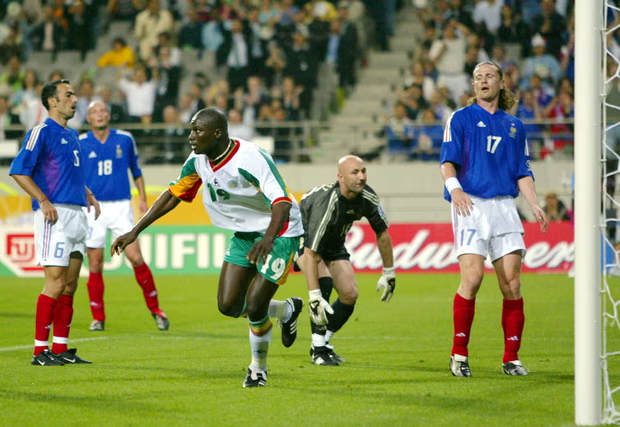
Pape Thiaw smiles warmly whenever he is asked about that famous opening match at the World Cup back in 2002. It was truly historic, says the current Senegal manager, who was a vital part of the squad that shocked the world by defeating France. The reigning world champions were stunned one to nil in South Korea during one of football’s greatest upsets. Twenty-four years later, these two proud footballing nations are preparing to meet again in their opening group fixture. It will be another story entirely, or at least we hope for a different tale, notes Didier Deschamps.
History might not necessarily repeat itself when the two teams walk out in New Jersey this Tuesday afternoon. However, the intriguing comparisons between these two specific matches are impossible for football fans to ignore completely. Deschamps himself was not involved in that painful 2002 campaign, having retired the previous year. Laurent Blanc, another monumental figure when France lifted the trophy on home soil, had also retired from internationals. Blanc was the absolute rock at the heart of the defence, just as Raphaël Varane was recently. Varane is one of four key leaders to have retired since the final defeat against Argentina. Legendary figure Hugo Lloris, clinical Olivier Giroud, and the brilliant Antoine Griezmann have all moved on as well.
The extraordinary Kylian Mbappé has now replaced Lloris, the most-capped French player of all time, as captain. By Deschamps’ own candid admission, the modern superstar possesses quite a different character and personality to his predecessor. The experienced manager notes that the baton has been passed, yet the squad feels short of leaders. Able goalkeeper Mike Maignan, entering a tournament as number one for the first time, could fill that void. However, there is an undeniable need for more voices to emerge within the current French dressing room.
The complex question of leadership is not the only significant issue currently facing the ambitious Mbappé. His tactical relationship on the pitch with Ousmane Dembélé is perhaps an even bigger problem for France. Dembélé has rarely delivered his absolute best football consistently when wearing the famous blue international shirt. We must not forget his calamitous performance in the dramatic World Cup final four years ago in Qatar. The winger was notably hooked before the half-time whistle blew after a truly miserable defensive display.
Dembélé’s recent Ballon d’Or victory has led to an intense clamour for his inclusion upfront. Fans want him in the number nine position, where he has thrived under Luis Enrique at PSG. However, that specific central spot is firmly occupied by the irreplaceable Mbappé at the international level. When asked about Mbappé’s role as the central striker, Deschamps’ retort remains incredibly simple and direct. Luis Enrique, Carlo Ancelotti, Xabi Alonso, and Álvaro Arbeloa have all made that same decision recently. They chose to deploy Mbappé centrally at club level over the course of the last three years.
Repositioning the superstar forward at this late juncture would be completely illogical for the national team. But Dembélé’s consistent struggles on the right wing are feeding an intense, rolling national football debate. It feels very akin to the selection headache that plagued England way back in the summer of 2006. Back then, managers faced constant concerns about fitting Steven Gerrard and Frank Lampard into the same midfield.
Deschamps finally satiated the demanding masses in France’s final pre-tournament warm-up game against Northern Ireland last week. The manager opted for a three-one victory while giving Dembélé a much more central tactical role. He operated directly behind Mbappé and just to the left of the exciting young talent Michael Olise. While Olise grabbed the headlines with a brilliant hat-trick, Dembélé’s overall influence on the match remained limited. The intense mental and physical expenditure of the recent Champions League final against Arsenal provides mitigation. Given the incredibly forgiving nature of the expanded group stage, Deschamps may well repeat the tactical experiment.
Roger Lemerre, the unfortunate France manager in 2002, was famously blessed with an immense embarrassment of riches. Yet, the coach failed completely to find the correct attacking formula during that faded Asian campaign. In the domestic season leading up to that tournament, Thierry Henry topped the Premier League scoring charts. Meanwhile, clinical forward David Trezeguet had just finished as the top goalscorer in the tough Italian Serie A. Young star Djibril Cissé had also claimed the golden boot while playing in the French Ligue 1.
Despite boasting those incredible attacking options, France shockingly failed to score a single goal during the tournament. The holders finished rock bottom of their group and crashed out in the opening round of matches. It remains the absolute worst title defence in history and serves as a warning to this generation. Individual talent alone within an attacking armada offers absolutely no ironclad guarantee of collective tournament success.
A collective sense of arrogance also contributed heavily to that historic failure twenty-four years ago in Korea. We genuinely thought we were far better than we actually were, recalls legendary defender Lilian Thuram. We were living in a comfortable cocoon and foolishly believed we had already progressed past the groups. The iconic defender adds that France’s performances during that specific tournament were completely absurd and utterly tragic.
Deschamps is always quick to point out that he was not part of that squad himself. He also reminds journalists that plenty of his current players had not even been born back then. But that does not mean there are no historical scars or valuable lessons to be learned here. When a French sportsperson becomes too comfortable, that is rarely when they perform at their absolute best. He said this recently in a comment that sounded like a direct response to Lucas Hernández.
Hernández had confidently asserted to the media that France currently possess the best attack in the world. This month, teenage sensation Rayan Cherki added that France want to completely crush all of their opponents. Deschamps is actively trying to rein in that talk, demanding humility rather than hubris from his players.
Deschamps, entering his final tournament as France manager, does not want to stifle their attacking potential, however. Having faced heavy criticism for his tactical conservatism in the past, he seems ready to change things. He appears much more willing to let his creative players off the leash at this summer tournament. The manager wants his side to be far less readable to opponents than they were previously. The exciting presence of fresh players such as Olise and Cherki will certainly help achieve that goal.
Midfielder Adrien Rabiot says the young duo have added tremendous freshness and enthusiasm to the international squad. Lemerre made the fatal mistake of not refreshing his aging squad ahead of the 2002 World Cup. Deschamps, partially forced by circumstance, has picked ten players who have never played a major tournament before. Furthermore, twelve members of this current squad have never played a single minute of World Cup football.
There is always a incredibly fine line between maintaining continuity and falling into dangerous, lazy stagnation. France proved that reality in the most painful manner possible during their unforgettable disaster in South Korea. The current French setup has clearly opted for total renewal at this specific North American World Cup. They will go even further down that path when Zinedine Zidane takes over after this tournament. As France approach a fascinating new era, the current players want to end this chapter perfectly. Rabiot insists the squad wants to deliver a beautiful final homage to the most decorated manager around.
Related News:
 Nike Charges Fans Most for World Cup Replica Shirts
 Saka Playing Through Pain As England World Cup Campaign Looms
 England Cruise Past Costa Rica as World Cup Warm-Up Sharpens Tuchel’s Vision
 ‘We all love him’: Henderson backs Bellingham for England success
 Deschamps Shields Mbappé From Fierce Political Storm
 Messi Equals World Cup Record In Masterclass Victory
 Erling Haaland Double Fires Norway To Victory On Debut
 Iran Files Official Fifa Complaint Over World Cup Travel
 Historic Victory for Canada as They Defeat Nine-Man Qatar
 Heartbreak for Canada as Koné Suffers Horrific Injury
 Declan Rice Facing Burnout as Tuchel Confronts Midfield Crisis
 Rodrygo Reflects On World Cup Pressure And Social Media
 Cape Verde Hold Uruguay in Dramatic World Cup Clash
 World Cup 2026: Reclaiming the American Dream
 Martinelli Strikes Late as Brazil Edge Past Brave Japan
 Paraguay Shock Germany in Historic Penalty Shootout
 Morocco Beat Dutch in Wild World Cup Penalty Drama
 France Dominate Sweden as Deschamps’ New Era Takes Shape
 Haaland Heroics Send Norway Into Historic Last 16 Knockout
 Kane Saves Tuchel as England Survive Dramatic Exit
 Ramos Sends Portugal into the Last 16
 Swiss Star Manzambi Shines in World Cup Victory
 Norway’s Stunning World Cup Victory Over Brazil
 England Triumph in Azteca World Cup Thriller
 Trump’s Red-Card Intervention Hurts the US World Cup
 Trump Intervenes in Fifa World Cup Balogun Ban
 England’s 10 Men Hold Firm in World Cup Thriller
 USA World Cup Heartbreak: Belgium Ends Their Dream
 Spanish Late Winner Sends Ronaldo Into Final Sunset
 Belgium Thrashes USA After Red Card Controversy
 Messi’s Tears and Triumph in Epic World Cup Escape
 Switzerland Advance in Penalty Thriller
 Egyptian Fury After Argentina World Cup Heartbreak
 World Cup 2026 Power Rankings: England on the Rise
 Mbappé Brilliance Leads France Into Semi-Finals
 Belgium Draws Global Support Before Spain Showdown
 Haaland and Bellingham: A Dortmund Bond Tested
 Rice Poised for England Semi-Final Clash Against Argentina
 Tuchel Backs England Stars to Overcome Messi’s Argentina
 Safeguarding Probe Limits West Ham Owner’s Role
 Football Hopes to Outshine World Cup Drama in Mexico
 Tension Grips Mexico City Ahead of World Cup Opener
 Inside the Three Lions: Bellingham Reveals Euro 2024 Flaws
 Chaos and Celebration at the Historic Azteca Stadium
 Real Madrid Sign Marc Cucurella From Chelsea
 Why Bringing Back Jordan Henderson Is Thomas Tuchel’s Masterstroke
 World Cup Fury as Iran Coach Slams Fifa and US
 Tuchel’s England Mission Goes Beyond Football Success
 New Premier League Fixtures Set Stage for Thrilling Season
 US Advance Past Bosnia in World Cup Thriller
 Spain Dominates Austria to Reach Quarter-Finals
 VAR Drama: Portugal Win in Thriller
 Taylor Swift and Travis Kelce Marry at Madison Square Garden
 Paul Seixas: French Cycling’s Teenage Hope at the Tour
 Ronaldo Says Farewell to the World Cup Stage
 Kylian Mbappé Slams Paraguayan Senator Over Racist Attack
 World Cup Racism Reflects Growing Abuse Patterns
 Bryne Backs Haaland Before England World Cup Clash
 World Cup Fever Set to Boost UK Economy by £500m
 England and Norway Fans Turn Miami Into World Cup Carnival
 Spain’s Superstar Fan: Keyne Yamal Steals the Spotlight
 Lamine Yamal’s Birthday: Football, Fame, and France
 Spain Clinch Final Spot in Masterclass Victory Over France
 Tuchel: England Ready for Historic Argentina Clash
 Saka Solidifies Role as Tuchel’s Key England Lieutenant
 Tiny Curacao Makes History as Smallest Nation to Reach World Cup
 Australia Face Big Changes as Cummins and Lyon Ruled Out of Ashes
 Aston Villa Remain Arsenal’s Key Obstacle in Title Pursuit
 Ben Stokes injury joke after brutal ball strike
 BBC World Cup Presenting Duties Shared Among Trio
 English Cricket Faces Moral Crisis Over Indian Investment
 Scott Parker Leaves Burnley After Premier League Drop
 Arteta urges Arsenal to step up in Atlético semi-final
 RFU Backs Borthwick Despite England’s Poor Six Nations
 England Call Up Janse van Rensburg for Nations Campaign
 Guardiola to Exit Man City; Maresca Lineup Nears
 Alice Capsey Sparks England Win With Brilliant Fifty
 Man City Threaten Legal Action Over Haaland Real Madrid Shirt
 Fifa Official Under Investigation Over Hand Gesture Controversy
 Women’s T20 World Cup Breaks Records But Gaps Remain