Published: 22 April 2026. The English Chronicle Desk. The English Chronicle Online.
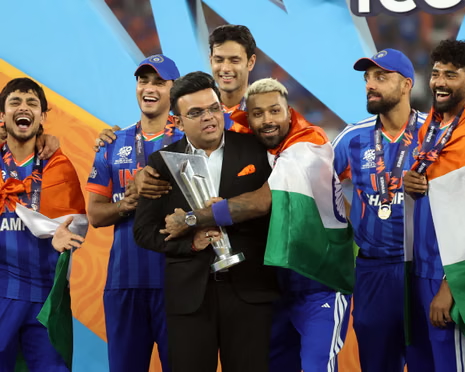
The digital landscape offers a carefully curated window into modern cricket’s leadership. Social media channels frequently highlight vibrant moments of celebration and triumph for global audiences. A recent thirty-seven second video clip from the BCCI showcases scenes of pure jubilation. It captures the aftermath of India’s spectacular T20 World Cup victory in Ahmedabad city. The squad performed with immense skill to defeat New Zealand in the final match. They scored a massive total of two hundred and fifty-five runs during that game. Yet the footage focuses heavily on Jay Shah, the chair of the global council. He embraces players and coaches while basking in the glow of their hard-earned success. He appears alongside former captains and even lifts the trophy with star players present. Such imagery positions him as the central protagonist in a story about team victory. This transformation of an administrator into a visual icon feels rather unusual for cricket.
Jay Shah has certainly experienced a rapid rise within the hierarchy of global cricket. He served as the BCCI honorary secretary before ascending to his current ICC position. That role commands significant power regardless of the intense political background surrounding his family. His father remains a prominent figure within the upper echelons of Indian national politics. Such influence is projected online by the official social media handles of governing bodies. These platforms frequently feature slow-motion clips of the chair watching matches from stands. One specific video even focused on the back of his head during a final. The ICC occasionally shares content that tracks his movements throughout important tournament match days. These digital montages ensure that his presence is felt throughout every major global event.
The sport’s governing bodies also promote his personal rankings and professional achievements with great enthusiasm. A major Indian newspaper recently listed him among the hundred most powerful people countrywide. The ICC promoted this specific news on social media alongside a very adoring message. They suggested that power and responsibility always travel together in this important leadership role. The BCCI created a custom graphic to share this news with their followers. They included other cricketers on this list but ranked them well below their chair. This creates a specific image of a brilliant administrator guiding cricket toward incredible heights. Supporters often point to the successful Women’s Premier League as evidence of progress. They also highlight the robust health of national teams under his current strategic oversight.

However, many observers still have substantial questions regarding the actual vision for global cricket. While the visuals remain bountiful, the verbal explanations of his strategy are largely missing. His public award speeches are easy to locate but genuine interviews remain quite scarce. We are left wondering what those loftier goals actually mean for the wider game. He previously mentioned a desire to prioritize Test cricket and improve the women’s game. These statements were welcomed by fans but lacked any specific or concrete implementation details. The current situation feels like an elaborate production centered entirely on one powerful individual. This approach might be acceptable if the core governance of cricket were healthy. Unfortunately, recent independent reports suggest the current structure faces several very serious problems.
A comprehensive report on cricket’s global structure paints a much more concerning picture overall. It criticizes the chaotic scheduling that affects both international fixtures and domestic franchise competitions. The document scrutinizes the current inequitable distribution of vital ICC revenues among member nations. It argues that the governing body fails to act as a proper global custodian. No single person seems to be in charge of the sport’s long-term health. The players’ body felt compelled to compile this report as a necessary wake-up call. These systemic issues unfortunately persist while major events suffer due to ongoing geopolitical tensions. The joy seen on the field in Ahmedabad masks these deep structural concerns. Major tournaments have been hurt by political decisions that divide the sport’s competitive landscape.
The sport is currently in desperate need of transparent and truly accountable leadership styles. Those who care deeply about cricket deserve to know exactly what is planned next. We need less focus on polished social media visuals and more emphasis on dialogue. It is far more valuable to hear the voice of the person in charge. The era of silent administration must give way to a more open, honest communication. Real leadership requires more than just smiling for the cameras during a trophy presentation. It demands a clear roadmap for addressing the complex challenges facing the entire game. We hope to see a shift toward meaningful engagement with the public very soon. Cricket fans deserve to understand the actual direction in which their sport is heading.
Related News:
 Granit Xhaka Rescue Earns Everton Draw at Sunderland
 Bellingham has ‘the edge’ among England No 10s
 Man City Masterclass on Guardiola’s Milestone Day Exposes Liverpool Woes
 VAR Must Rein Its Neck In to Save Football’s Spirit
 Mary Earps’s Manchester United Return Faces Mixed Reception
 UK and Ireland Announce Venues for Euro 2028 Tournament
 Saka Solidifies Role as Tuchel’s Key England Lieutenant
 Former Lion Heskey Warns of Shortage of England Strikers
 Tiny Curacao Makes History as Smallest Nation to Reach World Cup
 Haiti Qualifies for World Cup Despite Coach Never Visiting Country
 Australia Face Big Changes as Cummins and Lyon Ruled Out of Ashes
 Van de Ven Tackle Leaves Isak with Fractured Leg
 ECB powerless to halt England’s recurring Ashes failures
 Stokes urges empathy for England players amid Ashes struggles
 Aston Villa Remain Arsenal’s Key Obstacle in Title Pursuit
 Salah Shines as Egypt Knock Out Ivory Coast at Afcon
 Raphinha doubles up as Barcelona beat Real Madrid in Super Cup
 Xabi Alonso leaves Real Madrid, Arbeloa Takes Over
 Maya Joint stunned by Valentová in Australian Open upset
 Chelsea warn fans of danger in Naples after hospital incidents
 Liverpool Chase Champions Glory With Stunning Qarabag Victory
 Carlos Alcaraz Triumphs Over Zverev in Five-Set Australian Open Epic
 Ben Stokes injury joke after brutal ball strike
 Wrestler at 60: A Powerful New Start in the Ring
 Arsenal blow lead as Arteta rues Wolves draw
 England v Ireland: Scrum Battle Takes Centre Stage
 BBC World Cup Presenting Duties Shared Among Trio
 Craig Tiley Leaves Australian Open Legacy
 English Cricket Faces Moral Crisis Over Indian Investment
 Hudson-Odoi Sends Nottingham Forest Into Europa Last 16
 Buttler Eyes Vital Run Surge as England Face New Zealand
 World Cup Drinks Breaks Could Bring ITV Ad Debate
 Saka criticism response: Arsenal star dismisses outside noise
 Spurs Coach Defends Early Kinsky Substitution at Atlético
 Abramovich Chelsea Sale Cash Faces Jersey Probe
 Champions League Failure Sparking Premier League Crisis
 African World Cup Fans Face $15,000 Entry Bond Fee
 Teenage Titan: Sooryavanshi Smashes IPL Records
 Sam Konstas Dropped as Australia Unveils New Contract List
 ECB Faces Backlash Over Disability Premier League Inclusion
 The Wildest Plastico: Leverkusen and Wolfsburg Thriller
 Maguire Commits Future to Manchester United with New Deal
 Can De Zerbi Restore Belief to Save Spurs From the Drop?
 Robots Outpace Humans in Beijing Half-Marathon
 Ashley Cole: Finding His Voice and Vision in Italy
 A Nine-Goal Thriller Redefines European Football Brilliance
 George North Announces Retirement From Rugby
 $13bn World Cup Set to Break All Revenue Records
 Disney+ Wins Champions League Rights in Key Markets
 FIFA Confirms Global Ban for Benfica Star Prestianni
 The Global Battle for Control Over the Women’s Game
 Fernandes Equals Assist Record as United Secure Third
 Bracing for the Cherries: Guardiola Likens Vital Bournemouth Trip to the Dentist
 De Zerbi Rallies Spurs To Fight Relegation Threat
 The Battle for Wembley Sparking Unprecedented Legal Warfare
 Chasing Glory: The Quest for a New World Cup Champion
 Tuchel Defends Tough England Squad Decisions
 Farewell to an Icon: Pep Guardiola to Exit Manchester City
 Chasing Paris Glory Amid Familiar Echoes
 Tom Pidcock On Chasing Tadej Pogacar And His Future Ambitions
 Is Ollie Robinson the Chaos English Cricket Needs Today?
 Saka Playing Through Pain As England World Cup Campaign Looms
 Iran Files Official Fifa Complaint Over World Cup Travel
 Women’s T20 World Cup Breaks Records But Gaps Remain
 Serena Williams Returns to Wimbledon Centre Court
 Martinelli Strikes Late as Brazil Edge Past Brave Japan
 Paraguay Shock Germany in Historic Penalty Shootout
 France Dominate Sweden as Deschamps’ New Era Takes Shape
 Mexico World Cup Joy Turns to Tragedy as Two Die in Crowds
 US Advance Past Bosnia in World Cup Thriller
 Kane Saves Tuchel as England Survive Dramatic Exit
 The Stokes Departure: A New Era or a Tactical Mistake?
 Taylor Swift and Travis Kelce Marry at Madison Square Garden
 Trump’s Red-Card Intervention Hurts the US World Cup
 Trump Intervenes in Fifa World Cup Balogun Ban
 NCAA Rules Unchanged After Supreme Court Transgender Ruling
 USA World Cup Heartbreak: Belgium Ends Their Dream
 Mbappé Brilliance Leads France Into Semi-Finals
 Spain’s Superstar Fan: Keyne Yamal Steals the Spotlight
 Lamine Yamal’s Birthday: Football, Fame, and France