Published: 1 July 2026
The English Chronicle Desk
The English Chronicle Online
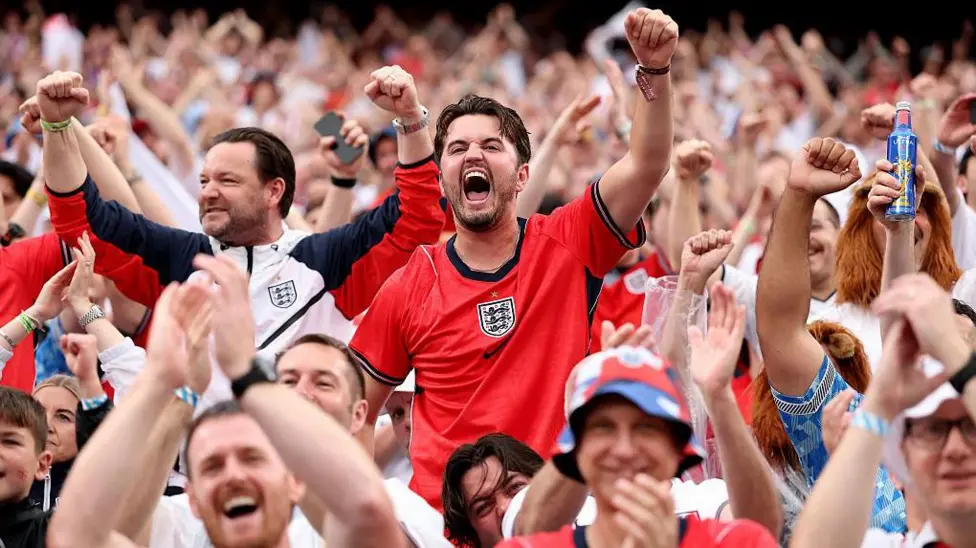
England supporters have been praised for their conduct during the World Cup, with officials, local organisers and football authorities describing fan behaviour as “excellent” throughout the tournament.
The positive assessment comes after thousands of England supporters travelled abroad to follow the national team, creating vibrant atmospheres inside stadiums and fan zones while largely avoiding the disorder that has sometimes overshadowed major international tournaments in the past.
Tournament organisers said England fans had played a significant role in creating a festive environment, contributing to the event’s success both inside and outside match venues.
Supporters have followed the team in large numbers since the opening stages of the competition, generating colourful displays, singing throughout matches and helping turn England fixtures into some of the tournament’s most atmospheric occasions.

Officials responsible for fan safety and event management have reported relatively few major incidents involving England supporters compared with concerns often associated with large-scale international sporting events.
Many local authorities have welcomed the behaviour of travelling fans, noting that most supporters have respected local laws, engaged positively with host communities and contributed to tourism spending in host cities.
The praise reflects a notable shift in perceptions of England supporters over recent decades.
During the latter part of the twentieth century, English football fans frequently faced criticism due to incidents of hooliganism and crowd disorder that damaged the reputation of the national game.
Authorities invested heavily in tackling those problems through stronger policing, improved stadium security and stricter regulations.
Football governing bodies also introduced measures designed to promote positive supporter culture and reduce antisocial behaviour.
Many observers believe those efforts have helped transform the image of England’s travelling support.
Football historians note that the modern England fan base differs significantly from previous generations.
International tournaments now attract a broad mix of supporters, including families, younger fans and first-time travellers.
The growth of organised supporter groups and official fan engagement programmes has also contributed to changes in behaviour and expectations.
Supporters themselves argue that the overwhelming majority of England fans simply want to enjoy football, support their team and experience major tournaments in a positive way.
Many have expressed pride in the recognition received during the World Cup.
For those attending matches, the tournament has provided an opportunity not only to support England but also to interact with fans from around the world.
Images of supporters sharing songs, exchanging scarves and celebrating football together have become common throughout the competition.
Such scenes are often highlighted by organisers as examples of sport’s ability to bring people together across cultural and national boundaries.
Security experts say large tournaments present complex logistical challenges.
Managing crowds, ensuring public safety and preventing disorder require extensive planning and cooperation between local authorities, police forces and football organisations.
Positive supporter behaviour can significantly reduce those pressures.
When fans engage responsibly, resources can be focused on maintaining a welcoming atmosphere rather than responding to incidents.
The praise directed at England supporters has therefore been welcomed by both organisers and law enforcement agencies.
Football authorities have also highlighted the role supporters play in the performance of the national team.
Players frequently speak about the importance of crowd support during major tournaments.
The presence of passionate fans can boost morale, create memorable atmospheres and help players feel connected to those following their journey.
England’s squad has repeatedly acknowledged the backing received throughout the competition.
Several players have commented on the energy generated by supporters inside stadiums, describing it as a source of motivation during difficult moments.
Managers and coaching staff likewise recognise the impact that positive fan engagement can have on team spirit.
The World Cup has also demonstrated the economic significance of travelling supporters.
Hotels, restaurants, transport providers and local businesses in host cities have benefited from increased visitor numbers.
Tourism officials estimate that football fans contribute substantial revenue during major sporting events, supporting local economies and creating temporary employment opportunities.
Many host communities have welcomed England supporters as part of that broader economic impact.
Business owners in several tournament cities have reported strong demand linked to match days and fan activities.
For organisers, positive behaviour enhances these benefits by encouraging a welcoming environment for visitors.
Despite the praise, authorities continue to remind supporters about the importance of respecting local laws and regulations.
Large crowds inevitably create challenges, and officials stress that maintaining good standards requires ongoing cooperation between fans and organisers.
Supporter groups have echoed those messages, encouraging responsible behaviour and respect for host communities.
Many fan organisations view positive conduct as an important way of representing both England and football itself.
The recognition received during the tournament is therefore being seen as a collective achievement.
Sports sociologists suggest the changing image of England supporters reflects wider developments within football culture.
The sport has become increasingly family-oriented and globally connected, encouraging more diverse forms of fan participation.
Social media, organised supporter networks and international travel have also influenced how fans engage with major events.
As a result, supporter culture today often emphasises celebration, community and shared experiences rather than confrontation.
The World Cup has provided a platform for those values to be displayed on a global stage.
For many England fans, the praise received from organisers and local officials is as much about national reputation as football itself.
Positive stories help challenge outdated stereotypes and highlight the role supporters can play in enhancing major sporting events.

Whether England’s tournament journey ultimately ends in triumph or disappointment on the pitch, many supporters will return home knowing their conduct has been recognised positively.
Officials believe that reputation will benefit future tournaments and strengthen relationships between football authorities, host nations and travelling fans.
As the World Cup continues, England supporters remain determined to back their team while maintaining the standards that have earned widespread praise.
If current assessments are any indication, their contribution to the tournament may be remembered not only for the noise they created in the stands but also for the example they set beyond them.
Related News:
 Rising World Cup Ticket Prices Spark Concern
 Scotland Branded “Unprofessional” in World Cup Fallout as England Build Momentum
 Chinese Football Fans Embrace Referee as Unexpected World Cup Figure
 Referee Controversy Raises Questions Over FIFA’s Control of the World Cup
 Nike Charges Fans Most for World Cup Replica Shirts
 Saka Playing Through Pain As England World Cup Campaign Looms
 England Cruise Past Costa Rica as World Cup Warm-Up Sharpens Tuchel’s Vision
 ‘We all love him’: Henderson backs Bellingham for England success
 Can France Escape the Ghosts of their 2002 World Cup Nightmare?
 Deschamps Shields Mbappé From Fierce Political Storm
 Messi Equals World Cup Record In Masterclass Victory
 Erling Haaland Double Fires Norway To Victory On Debut
 Iran Files Official Fifa Complaint Over World Cup Travel
 Historic Victory for Canada as They Defeat Nine-Man Qatar
 Heartbreak for Canada as Koné Suffers Horrific Injury
 Declan Rice Facing Burnout as Tuchel Confronts Midfield Crisis
 Rodrygo Reflects On World Cup Pressure And Social Media
 How ‘Little Scotland’ Is Embracing the World Cup Spirit
 Cape Verde Hold Uruguay in Dramatic World Cup Clash
 World Cup 2026: Reclaiming the American Dream
 The Forgotten Hosts Making World Cup History Behind the Scenes
 Great Stories, Little Jeopardy – Does the New World Cup Format Really Work?
 Martinelli Strikes Late as Brazil Edge Past Brave Japan
 Paraguay Shock Germany in Historic Penalty Shootout
 Morocco Beat Dutch in Wild World Cup Penalty Drama
 Southgate Calls for Different Approach to Boys
 Rivalry That Changed Modern Football Forever
 Can Vinicius Win Over Brazil at Last?
 Fifa Faces Backlash Over Ticket Payment Demand
 Fans Bring Flags and Fire to World Cup Scenes
 11 EFL Stars Ready to Shine at World Cup
 Arsenal Trio Named on Player of the Year List
 Three Arsenal Stars Make Award Shortlist
 Fans Invited to Share Scotland World Cup Stories
 Fans Angry Over US Visa Rules Before World Cup
 Iran Team Arrives in Mexico Amid US Visa Dispute
 “My Drinking Days Are Over” — How to Enjoy an Alcohol-Free World Cup
 Kane Enters Ballon d’Or Debate After Bayern Form, but World Cup Seen as Decisive Factor
 Football Regulator Contacts West Ham Over “Serious Allegations” Linked to Sullivan
 David Sullivan Barred from Contact with West Ham Women’s and Youth Teams Since 2023
 Safeguarding Probe Limits West Ham Owner’s Role
 Football Hopes to Outshine World Cup Drama in Mexico
 Tension Grips Mexico City Ahead of World Cup Opener
 Inside the Three Lions: Bellingham Reveals Euro 2024 Flaws
 Chaos and Celebration at the Historic Azteca Stadium
 Real Madrid Sign Marc Cucurella From Chelsea
 Why Bringing Back Jordan Henderson Is Thomas Tuchel’s Masterstroke
 World Cup Fury as Iran Coach Slams Fifa and US
 Tuchel’s England Mission Goes Beyond Football Success
 New Premier League Fixtures Set Stage for Thrilling Season
 Pampered, Protected and Primed – So Why Didn’t Scotland’s Players Perform?
 Tuchel Set to Retain Southgate’s Penalty Strategy as England Focus on Tournament Success
 London Set to Honour Euro 2025 Champions as Lionesses Take Victory Parade Through the Capital
 Tottenham Takes On Newcastle
 Rugby Confronts Safety Concerns with Smart Mouthguards at Women’s World Cup
 Premier League Supercomputer Predicts Tough Season for Man Utd Amid Three-Team Title Battle
 Mbappé Hat-Trick Powers Real Madrid to 5-0 Rout Over Kairat
 Chaos at Ibrox as Martin’s Rangers Era Comes to an End
 Wolvaardt’s Masterclass Fires South Africa into First World Cup Final
 Saka Solidifies Role as Tuchel’s Key England Lieutenant
 Tiny Curacao Makes History as Smallest Nation to Reach World Cup
 Australia Face Big Changes as Cummins and Lyon Ruled Out of Ashes
 Manchester United Fan Group Targets Jim Ratcliffe Over Club Chaos
 ALL GUNNS BLAZING: Arsenal vs Wigan LIVE SCORE – FA Cup Updates
 Swearing, Illicit Filming & Rule Changes – What Next in Curling Cheating Row?
 Hilary Knight speaks out on Trump’s recent hockey remarks
 Can Chelsea Kick‑Start Faltering Palmer?
 Scotland World Cup Party in Boston Gets Green Light After Security Breakthrough
 Sunderland Stun Newcastle as Brobbey Strikes Late Winner
 Eddie Howe Faces Seven Game Test to Secure Newcastle Future
 Tiger Woods: Golf Legend Steps Away to Seek Treatment
 Van Dijk Rallies Liverpool for Massive PSG Comeback
 Premier League Clubs Tense Over Regulator Costs
 Beyond the Swoosh: Anta Sports Overtakes Rivals to Become Global Top Three
 “Three-Wheeled Triumph”: Mayor of Erewash Completes 2,000-Mile European Charity Run
 Premier League drama defines crucial weekend
 Arteta urges Arsenal to step up in Atlético semi-final
 Champions at Last: Arsenal Conquer the Premier League
 The Battle for Wembley Sparking Unprecedented Legal Warfare
 Stokes Retirement Announcement Dominates Dramatic Fourth Day of Deciding Test