Published: 01 July 2026. The English Chronicle Desk. The English Chronicle Online.
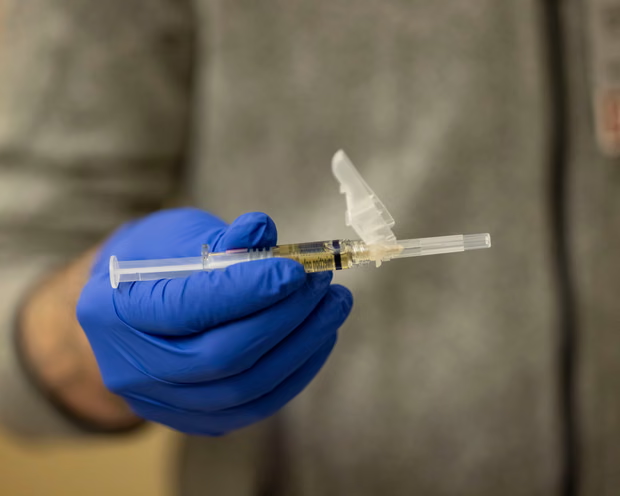
A truly vital medication that is currently heavily subsidised for many Australians living with opioid dependency will soon be pulled from the market entirely by the end of this year. This sudden announcement has naturally caused significant alarm among dedicated doctors and pharmacists who rely on the treatment daily. The United States pharmaceutical company known as Indivior recently confirmed that all marketing and sales of their long-acting injectable prescription opioid, which is called Sublocade, will officially cease from the thirty-first of December. A spokesperson for the company described this difficult move as a purely commercial decision made after reviewing their ongoing operations. This concerning news comes less than a single month after the pharmaceutical giant AstraZeneca announced that they would also remove their breast cancer and endometriosis medicine, known as Zoladex, from the national pharmaceutical benefits scheme and the private market. Similar to the recent decision regarding Sublocade, the company cited a distinct lack of commercial viability as the primary driver for their exit from the Australian market. The federal health minister, Mark Butler, stated just last month that global drug pricing remains in an enormous state of flux due to significant recent changes in international policy. The spokesperson for Indivior told reporters that the company intends to work closely with the appropriate Australian authorities and various medical experts to ensure that an orderly transition takes place, which should hopefully minimise disruption for those who currently depend on this specific medication for their ongoing recovery and well-being.
Sublocade was originally added to the federal pharmaceutical benefits scheme back in 2020 and was widely considered a significant and welcome advance in medical treatment for people living with opioid dependency issues. Traditional treatments such as methadone and buprenorphine often require patients to make daily or very frequent visits to a local pharmacy, which can prove to be an enormous logistical burden for many individuals. Sublocade is a highly effective, long-acting, monthly injection that is carefully administered at a local pharmacy or a GP clinic. While there is currently an alternative monthly injection called Buvidal that remains available through the government scheme, Melbourne general practitioner Dr Owen Harris noted that, in his extensive professional experience and in the experience of many other clinical colleagues, the Sublocade product is simply much better suited for some specific individuals. He explained that it is far more stable, it lasts for a longer period of time, people generally feel much better while taking it, and it has truly been a life-changing development for many of his patients. Some people can even stretch their prescribed dose out to once every six weeks, or occasionally even longer depending on their specific biological response. He stated quite honestly that it has been a life-saving and life-changing tool for many of the vulnerable patients he treats in his busy clinic. A federal health department spokesperson noted that any proposed discontinuation of a necessary medicine can cause genuine concern for patients and the clinicians who care for them. Maintaining consistent access to safe, effective, and affordable medicines remains a top priority for the department during these difficult times. The spokesperson also reiterated that these are strictly commercial decisions made by private global companies, and the Australian government cannot legally compel a company to continue supplying a specific medication if they choose to withdraw it.
Minister Butler explained last month that certain policies, such as the United States’ most favoured nations approach, are currently reshaping how major global companies think about their pricing structures across different international markets. Part of the core argument for this policy is that the United States should pay the same price as various reference countries, with figures like Donald Trump arguing that pharmaceutical companies have historically been discounting drugs to enter foreign markets such as Australia, while simultaneously subsidising those cheaper medicines by charging significantly more to patients within the United States. Critics of this specific US policy argue that pharmaceutical companies will likely not compromise their massive profits in the United States and will instead choose to raise their prices in smaller markets so the United States has to pay the same rate, or they will simply pull out of those smaller markets altogether if higher prices are not agreed upon by the local governments. An adjunct professor at the University of Sydney’s pharmacy school, Brendan Shaw, said that pharmaceutical companies are increasingly examining the financial impact on their global markets whenever they agree to supply cheaper medicines to Australia under the current government scheme. He stated that what the United States’ position has done is effectively draw these complex debates out into the light, and companies are now scrambling to adjust their strategies. It has, quite frankly, caused chaos across the industry and the broader health sector worldwide as these major companies all try to readjust to this shifting landscape. Shaw is also a former chief executive of Medicines Australia, which represents the research-based pharmaceutical industry in the country. He said he suspected that more drugs might eventually be pulled from the Australian market because of the intense financial pressures that are currently building internationally. He believes that companies are going to have to make a very difficult decision about where they put their medicines and what price levels they set, all while keeping one eye on what potential impact that might have on some of the major markets internationally.
Dependence on various opioids such as codeine, oxycodone, and heroin is deeply associated with a wide range of negative health and social harms, with medications like Buvidal and Sublocade playing a vital role in helping people to manage the ongoing effects of their dependency. On a snapshot day in 2025, there were over fifty-seven thousand Australians receiving some form of pharmacotherapy treatment for their opioid dependence, according to the latest data released by the Australian Institute of Health and Welfare. Back in 2020, pharmacist Angelo Pricolo became the first person in Australia to successfully administer a dose of Buvidal to a patient. He described both Buvidal and Sublocade, which both contain the active ingredient buprenorphine, as particularly important for those living in remote or rural areas where access to healthcare services can be quite limited. He noted that there are significant differences between Sublocade and Buvidal which mean that some patients will respond much better to one specific medication over the other. He noted that they sometimes see those patients who require higher doses do much better with the Sublocade product, and the duration of the action can also be different between the two options. Choice for the patient and the healthcare provider is extremely important and can be the deciding factor that determines successful engagement in long-term treatment or, conversely, a dangerous return to illicit drug use. But he argued that it is not just the simple matter of choice that is the main issue here. If we only have one drug left, and for some entirely unforeseeable reason it cannot be accessed, then that is a massive issue for the entire community. The addiction treatment space is a very delicate ecosystem with an already vulnerable cohort that now seems to have been dealt another very unfair result.
Related News:
 Townsville Hospital Probes Privacy Breach After Activist Posts Foetus Image
 Hospice Cuts Raise Alarm Across England Amid Funding Crisis
 Celebrities and Charities Demand UK Government Act on Child Poverty
 Patients to Test Health at Home to Ease NHS Winter Pressure
 Shouting Works Best to Deter Gulls, UK Study Finds
 Reeves rejects £1bn plea for NHS redundancy payouts
 Working-Class Men with Prostate Cancer Left Behind by NHS
 Senator John Fetterman Hospitalized After Fall from Heart Flare-Up, Keeps Sense of Humor
 New AI tool could cut wasted efforts in organ transplants
 Stroke Patient Mistaken for Drunk, Care Delayed
 ‘Traumatic Wait’: Northern Ireland Women Face Breast Cancer Delays
 Healthy Habits in Your 30s That Boost Life in Your 70s
 Scottish Families Take Legal Action Over School CO Leak
 Coffins Now Too Large to Cremate Amid Rising Obesity Crisis
 Vicki Fears Losing Motability Car
 Five-Year-Old Dies After Rare Tonsil Surgery Complication
 Fibromyalgia Patients Struggle as NHS Fails to Provide Care
 More Patients Now Contacting GPs Online, Data Shows
 Kenya Signs $2.5bn Health Deal with US Amid Data Concerns
 Children to Receive Home Vaccines as England Acts
 UK Enforces Junk Food Ad Ban Before 9pm
 Patients Collapsing in NHS Corridors, Watchdog Warns
 Liberal Turmoil Threatens Victorian Election Hopes
 Google Removes Some AI Health Summaries Over Safety Concerns
 PM pushes urgent hate speech and gun laws after Bondi terror attack
 Bondi memorial flowers preserved in lasting tribute artwork
 Polycrisis Anxiety Leaves Many Feeling Trapped in the Present
 Silence and Unity Mark Bondi Terror Attack Memorial
 How Sandhill Ashes Rebuilt a Bushfire-Hit Rural Community
 Small risk warning raised over weight-loss jabs in UK review
 Streeting moves on doctor pay to end strike dispute
 Autistic Girls Often Missed in Childhood Diagnoses, Study Finds
 UK reports baby formula toxin poisoning cases across the country
 Most Statin Side-Effects Are Not Caused by Drugs, Study Confirms
 Chikungunya Spread in Europe Climbs as Climate Warms
 Placenta Accreta Warning as Hunt Urges Action
 ‘It’s a horrible feeling’: Loma Bropho’s Struggle to Secure Housing
 Anthony Albanese Must Uphold Rights for All Australians
 The rise of rejection sensitive dysphoria: How it shapes lives
 NHS Maternity Units Cover Up Harmful Childbirth Errors
 Weight-loss drugs may transform heart attack recovery
 Zorevunersen Breakthrough for Dravet Syndrome
 Cancer Death Rate in Britain Falls by Nearly a Third
 New Zealand Covid Response Praised Despite Lingering Scars
 Taking Multivitamins Daily Could Slightly Slow Ageing, Study Finds
 Canada Plasma Deaths Raise Safety Concerns After Two Donors Die
 ‘Drinking from a Fetid Pond’: Superbug Genes in Lough Neagh
 NHS Plans to Cut Overseas Workers Labeled Overambitious
 Family of Alleged Bondi Gunman Seeks Name Suppression
 Palantir Boss Defends NHS Deal Amid Government Break Clause
 Sam Konstas Dropped as Australia Unveils New Contract List
 Unions Raise Concerns Over Doctors’ Pay Dispute
 Blue Badge Surge Prompts Calls for Urgent Fraud Crackdown
 Private Profits From NHS Contracts Spark Urgent National Debate
 Labor Reforms NDIS Amidst Mounting Budget Concerns
 Crisis in NHS Surgery Scheduling Hits Patients Hard
 Britain’s Health Decline: A Growing National Concern
 New AI Tool To Target Obesity Risk And Transform NHS Care
 WHO approves first malaria drug for babies
 Hantavirus Cruise: Britons Face 45-Day Isolation Order
 Barrister Criticises Trial After Suicide Case Verdict
 Crisis in the Canary Islands as Cruise Ship Evacuated
 UK Experts Urge Four-Day Week to Combat National Obesity
 Cruisers Face Perth Quarantine After Hantavirus Outbreak
 Wes Streeting faces narrow road to Labour members’ favour
 Tony Abbott Returns as New Liberal Party President
 Maldives Cave Diving Tragedy Raises Safety Alarm
 Pope Meets Families in Italy Toxic Waste Zone
 Ben Proud Defends Enhanced Games Participation
 Record Spending Highlights Growing Crisis In National Health Service
 AI Medical Error: NHS Doctors Risk Facing Huge Lawsuits
 Clean Air Initiatives Spark Major Fall in London Hospital Admissions
 Labour MP Revives Blocked Assisted Dying Bill in Commons
 NHS Urges Investigation For Irregular Periods
 Deadly H5 Bird Flu Reaches Australia’s East Coast
 UK Heatwaves Ignite Crisis of Sleep and Public Safety
 Arizona Toddler Found Alive in Hospital Cold Room
 Trump Immigration Cuts Threaten US Caregiver Stability
 UK Schools Struggle as Classrooms Top 40C
 London Tube Heat Reaches Dangerous Levels