Published: 25 May 2026. The English Chronicle Desk. The English Chronicle Online.
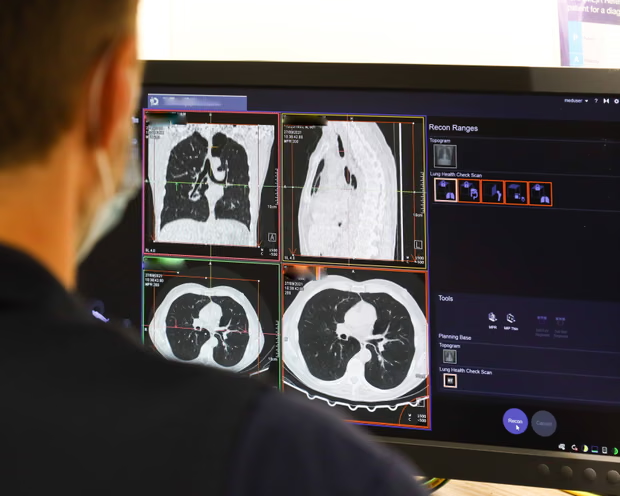
The National Health Service is paying private companies unprecedented amounts of money to examine essential medical scans. This financial trend has emerged because public hospitals are currently far too busy to handle the workload. Medical staff shortages are also contributing significantly to this growing reliance on outside corporations for assistance.
Recent research indicates that the amount spent on outsourcing these diagnostic procedures is growing very quickly. Ministers are receiving warnings that this situation reflects a long-term failure to train enough doctors. The issue involves interpreting complex computed tomography images and magnetic resonance imaging results for patients across Britain.
Medical scans remain absolutely vital for diagnosing severe diseases like cancer at an early stage. They are also crucial for monitoring how well patients respond to their ongoing medical treatments. Therefore, healthcare providers must ensure that these diagnostic results are processed as quickly as possible.
Many hospitals currently rely on independent health companies to read these scans without major delays. This practice ensures that anxious patients receive their critical medical results in a prompt manner. However, health boards across the United Kingdom gave two hundred and forty-one million pounds last year.
This massive sum went entirely to private firms tasked with undertaking this vital diagnostic work. As the overall demand for imaging increases, this specific spending has doubled over five years. The total expenditure was just one hundred and twenty million pounds back in twenty-one.
Furthermore, this current spending has tripled from the eighty-one million pounds recorded in eighteen. The figure for last year represents a twelve percent increase over the previous twelve months. This means the outsourcing bill grew by twenty-five million pounds in just one year.
The Royal College of Radiologists collated these startling figures in its annual workforce census report. This professional organisation stated that health service spending on private scan reading is ballooning rapidly. They noted that a nationwide shortage of qualified radiologists has left hospitals with insufficient capacity.
Consequently, the health service is haemorrhaging vital cash to these independent commercial firms every month. The organisation also raised serious concerns about the quality of analysis provided by private companies. Sometimes the work was so poor that public doctors had to read scans again.
This duplication of effort raises major questions about the actual benefits of this outsourcing strategy. Eighty-six percent of department heads had serious concerns that privatisation results in lower quality reports. Additionally, ninety percent said that public doctors needed to double-check these outsourced medical reports.
The president of the organisation stated that this increasing reliance on outsourcing is not sustainable. He warned that the financial costs of this practice are currently spiralling out of control. In the short term, outsourcing can help managers handle large diagnostic backlogs quite effectively.
However, it cannot provide a long-term solution to the severe workforce shortages facing hospitals. Clinical radiologists play an essential role in making the majority of patient diagnoses every day. Unfortunately, the rising demand for scans is completely outstripping the current capacity of staff.
The Department of Health and Social Care acknowledged that these services face growing pressure. However, officials said a forthcoming workforce plan would eventually provide the necessary clinical staff needed. The organisation has urged ministers to boost the workforce by creating more training roles.
There are currently eleven qualified applicants for every single training post available in Britain. To ignore this call and continue spending heavily on outsourcing would be highly short-sighted. This practice would not represent the best use of limited public health service funds.
It would also fail to serve the best long-term interests of patients requiring care. A prominent thinktank warned that the health service could become permanently reliant on private firms. The director of this organisation said that the use of teleradiology companies is growing.
History shows that once governments hand these roles to corporations, they remain in private hands. This process takes valuable income and revenue away from public hospitals across the country. It also removes the opportunity to train the next generation of public medical staff.
The main risk is that the public system becomes wholly dependent on private companies. These independent businesses often have a sole focus on their financial bottom line instead. A government spokesperson said they recognise the massive pressures currently facing these vital radiology services.
They also acknowledged that demand for diagnostic imaging has risen significantly in recent years. Despite these challenges, the health service carried out thirty million diagnostic tests last year alone. Compared with the previous year, ninety-five thousand more patients received an early cancer diagnosis.
Many others were successfully given the all-clear within twenty-eight days of their initial referral. But officials know there is much more to do to support the healthcare system. This is why the government will publish a comprehensive ten-year workforce plan very soon.
This strategic initiative will help deliver a transformed health service for patients in England. It will ensure the country has the right staff in the right places. These professionals will have the correct skills to care for patients when needed.
The ongoing debate highlights a fundamental challenge facing contemporary British healthcare delivery models today. Balancing immediate patient needs with sustainable long-term workforce planning remains a very complex task. Hospital administrators must manage daily backlogs while trying to manage tight annual budgets carefully.
Meanwhile, independent providers continue to expand their role within the wider public healthcare landscape. Medical professionals argue that investing in domestic training infrastructure represents the most logical path forward. They believe that reducing reliance on external corporations will ultimately strengthen public healthcare delivery systems.
This approach could also ensure that public funds remain within the traditional hospital network. Specialized medical training requires significant time and financial investment from central government sources. Funding must be allocated correctly to support university programs and hospital residency positions nationwide.
Without this intervention, the reliance on external commercial partners will likely continue to increase. Patients deserve high-quality diagnostic reports delivered by well-supported and highly trained medical experts. The future of diagnostic medicine depends on decisions made by policymakers in the coming months.
As technology advances, the demand for complex imaging interpretation will undoubtedly continue to rise. Digital health solutions and remote reporting have changed how hospitals manage their daily workflows. These innovations offer clear advantages but also introduce new dependencies on third-party commercial vendors.
Public trust in healthcare systems relies heavily on the accuracy and efficiency of diagnostics. Resolving the current workforce crisis is essential for maintaining high standards of patient care. The upcoming government strategy will face intense scrutiny from medical professionals and the public.
Everyone agrees that a sustainable solution must prioritize patient safety and fiscal responsibility equally. For now, hospitals must navigate these financial and operational pressures as best they can. The outcome of this situation will shape the health service for many years.
Related News:
 Hospice Cuts Raise Alarm Across England Amid Funding Crisis
 The diet that can significantly ease symptoms of IBS
 Celebrities and Charities Demand UK Government Act on Child Poverty
 Experts Warn on Home Birth Risks, Call for Skilled Midwives
 Experts Urge Legal Right to Timely Cancer Care
 Patients to Test Health at Home to Ease NHS Winter Pressure
 London’s Childlessness Crisis: Schools Closing as Families Shrink
 North Sea oil workers must lose weight or face job loss
 Crisis charity to become landlord amid UK housing emergency
 No link found between paracetamol in pregnancy and autism
 Shouting Works Best to Deter Gulls, UK Study Finds
 Reeves rejects £1bn plea for NHS redundancy payouts
 Leading doctors issue warning amid ‘bad’ flu season
 Stroke Patient Mistaken for Drunk, Care Delayed
 ‘Traumatic Wait’: Northern Ireland Women Face Breast Cancer Delays
 Welsh Government Christmas 2020 Lockdown Criticised
 Coffins Now Too Large to Cremate Amid Rising Obesity Crisis
 NHS paediatric leave parents waiting months for answers
 Catherine urges end to stigma around addiction
 Five-Year-Old Dies After Rare Tonsil Surgery Complication
 Fibromyalgia Patients Struggle as NHS Fails to Provide Care
 More Patients Now Contacting GPs Online, Data Shows
 Streeting launches review into mental health and ADHD diagnoses
 People in England’s Poorest Areas Face Higher Lung Health Emergencies
 Minor A&E Visits Surge Across England as Hospitals Face Pressure
 Children to Receive Home Vaccines as England Acts
 UK Enforces Junk Food Ad Ban Before 9pm
 Patients Collapsing in NHS Corridors, Watchdog Warns
 Offenders to Receive Health Support During Probation Appointments
 NHS Violence Crisis: Staff Face Daily Assaults
 NHS corridor care crisis sparks fears over patient safety
 Jess’s Rule Urges GPs to Rethink Persistent Symptoms
 UK Glaucoma Rise Signals Looming Eye Health Crisis by 2060
 Small risk warning raised over weight-loss jabs in UK review
 Pneumonia Surge Pushes England Emergency Cases Higher
 Streeting moves on doctor pay to end strike dispute
 UK reports baby formula toxin poisoning cases across the country
 Children of Close-Relative Parents Face Higher Mortality Risk in England
 Campaign Demands NHS Action on Placenta Accreta Diagnosis
 NHS Bone Cement Shortage Threatens Surgeries
 Placenta Accreta Warning as Hunt Urges Action
 Half of Britons Avoid GP When Ill, Survey Reveals Growing Concern
 NHS Maternity Units Cover Up Harmful Childbirth Errors
 Drop in Overseas Workers Sparks ‘Car Crash’ for UK Hospitals
 Weight-loss drugs may transform heart attack recovery
 Cancer Death Rate in Britain Falls by Nearly a Third
 Palantir NHS Contract Sparks Fears Over Data Power
 UK Patients Face Long Journeys as Pharmacies Cut Hours
 UK Biobank Health Data Leaks Raise Privacy Concerns
 NHS Plans to Cut Overseas Workers Labeled Overambitious
 Kent Meningitis Outbreak Claims Two Young Lives as Cases Rise
 Meningitis Cases in Kent Outbreak Rise to 27
 Palantir Boss Defends NHS Deal Amid Government Break Clause
 NHS Staff Shortages Stifling Recovery for Stroke Survivors
 Unions Raise Concerns Over Doctors’ Pay Dispute
 Wes Streeting Accuses Doctors of Torpedoing Pay Deal
 Private Profits From NHS Contracts Spark Urgent National Debate
 Crisis in NHS Surgery Scheduling Hits Patients Hard
 NHS Safety Fears as Nurses Cover Doctor Gaps
 New Scan Offers Hope for Faster Endometriosis Diagnosis
 New AI Tool To Target Obesity Risk And Transform NHS Care
 Barrister Criticises Trial After Suicide Case Verdict
 NHS Drug Deal Faces Legal Threat Over US Trade Agreement
 NHS Staffing Crisis Reaches Dangerous Levels
 Crisis in Care: Children Stuck in A&E for Days
 Empowering the Elderly or Shifting the Blame to Individuals?
 England Faces Rising Lyme Disease Cases Amid New Vaccine Hopes
 The Race for Radical Change in Westminster
 Clean Air Initiatives Spark Major Fall in London Hospital Admissions
 Swimming Champion Demands Urgent Action on Brain Cancer
 Nursing Workforce Crisis Leaves Disabled Patients at Risk
 UK Heatwave: Why Extreme Humidity is Making June Feel Unbearable
 Mortuary Crisis Exposed at Scandal-Hit NHS Trust
 The Hidden Revival of a Fatal Infection on British Soil
 NHS Urges Investigation For Irregular Periods
 BMA Faces Unprecedented Staff Cuts Amidst Severe Financial Turmoil
 Trump Immigration Cuts Threaten US Caregiver Stability
 Stricter Rules Proposed to Shield Children from Vaping
 UK Schools Struggle as Classrooms Top 40C
 London Tube Heat Reaches Dangerous Levels