Published: 03 August 2026 | The English Chronicle Desk | The English Chronicle Online
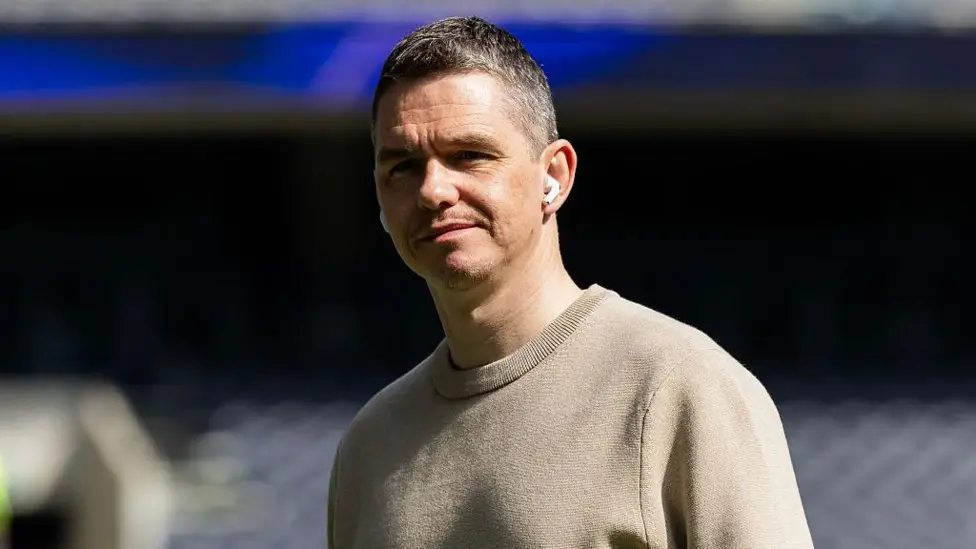
Manchester United Women are preparing for a new chapter after head coach Marc Skinner left his role just weeks before the start of the new Women’s Super League (WSL) season. The unexpected departure comes during a crucial period of pre-season preparations and leaves one of England’s leading women’s football clubs searching for new leadership ahead of another highly competitive domestic campaign.
Skinner’s exit marks the end of a significant era for Manchester United Women, during which the club established itself among the strongest teams in English football. His tenure included domestic cup success, qualification for European competition and consistent challenges near the top of the WSL standings.
The timing of the departure has inevitably raised questions about the club’s immediate plans, recruitment strategy and ambitions for the upcoming season, although officials have stressed their focus remains firmly on maintaining progress both domestically and in Europe.

Marc Skinner arrived at Manchester United with an established reputation following successful coaching spells in England and the United States.
Tasked with building a team capable of challenging the traditional powers of women’s football, he oversaw a period of considerable development.
Under his leadership, United strengthened their squad, improved their tactical identity and regularly competed against the country’s elite clubs.
Perhaps most importantly, the club established itself as a consistent contender in both league and cup competitions, reflecting significant progress in a relatively short period.
His departure therefore represents more than a routine managerial change; it marks the conclusion of a formative phase in the club’s growth.
Skinner’s time at Manchester United featured several notable achievements.
The team consistently qualified for European competition, strengthened its position among England’s leading women’s clubs and captured important domestic silverware.
His emphasis on organised defending, disciplined midfield play and attacking transitions helped United compete with long-established rivals.
Several players also developed significantly under his guidance, earning international recognition and becoming key figures for their national teams.
Supporters have credited Skinner with helping establish Manchester United Women as genuine contenders in English football.
Managerial changes immediately before the start of a new season inevitably create uncertainty.
Pre-season preparations are designed to develop tactical understanding, improve fitness and integrate new signings into established systems.
A coaching transition during this period requires players to adapt quickly to different methods and expectations.
Club officials are therefore expected to move swiftly in appointing a successor capable of maintaining continuity while preparing the squad for the opening weeks of the campaign.
Avoiding disruption will be essential if United hope to challenge for major honours this season.
Attention has already turned towards identifying Manchester United’s next manager.
The club is expected to consider candidates with experience in elite women’s football as well as coaches capable of continuing the team’s upward trajectory.
Officials are likely to prioritise tactical expertise, player development and experience managing high-performance environments.
The growing profile of the Women’s Super League has increased competition for leading coaches, making recruitment an increasingly strategic process.
Supporters will be watching closely as the club seeks a leader capable of building on Skinner’s achievements rather than beginning another long-term rebuilding project.
Despite the managerial change, Manchester United enter the new season with an experienced squad featuring numerous international players.
Several established leaders remain within the dressing room, providing stability during the transition.
Club executives believe the strength of the playing squad offers confidence that performances can remain competitive regardless of coaching changes.
Maintaining consistency will be particularly important during the early stages of the season, when teams often establish momentum that influences the remainder of the campaign.
The club’s investment in facilities, recruitment and player development also provides strong foundations for future success.
The managerial change comes as the Women’s Super League enjoys increasing popularity and commercial growth.
Attendances continue to rise, television audiences have expanded and clubs are investing more heavily in infrastructure and player recruitment.
Competition has become increasingly intense, with several clubs strengthening their squads during the transfer window.
Every managerial appointment therefore carries considerable importance.
Small tactical improvements or recruitment decisions can significantly influence league positions in such a competitive environment.
Manchester United’s next appointment will be viewed through that increasingly demanding lens.
Coaching changes inevitably affect players as they prepare for a new season.
Training methods, tactical systems and individual responsibilities may all change under a new manager.
Experienced professionals often adapt quickly, but integrating new ideas within limited preparation time presents challenges.
Leadership within the dressing room becomes particularly valuable during periods of transition.
Senior players are expected to help maintain standards while supporting younger teammates adjusting to new expectations.
Manchester United supporters have responded with a mixture of appreciation for Skinner’s contribution and curiosity regarding the club’s future direction.
Many fans acknowledged the progress achieved during his tenure while recognising that football clubs regularly experience periods of change.
Attention has rapidly shifted from reflecting on the past to considering how the team can continue competing for trophies.
Supporters remain hopeful that the next appointment will reinforce rather than interrupt the club’s long-term ambitions.
Manchester United are once again expected to compete near the top of the Women’s Super League.
Alongside domestic competition, ambitions remain high in cup tournaments and European football.
Maintaining consistency against established rivals will be essential if the club hopes to challenge for league honours.
Analysts believe the quality already present within the squad provides a strong platform for continued success.
However, effective leadership during the opening months of the season could prove decisive.
Club officials are expected to accelerate the recruitment process to minimise disruption before competitive fixtures begin.
The successful candidate will inherit both significant opportunities and considerable expectations.
Building upon recent progress while introducing fresh ideas represents a delicate balance.
Manchester United’s commitment to women’s football has grown substantially in recent years, and maintaining that momentum remains a priority.

The coming weeks will therefore play an important role in shaping the club’s immediate future.
Marc Skinner’s departure closes an important chapter in Manchester United Women’s recent history.
During his tenure, the club evolved into one of England’s leading teams, competing consistently for honours and establishing itself among the elite of the Women’s Super League.
Although his exit arrives at a challenging moment just before the new campaign begins, the foundations built over recent seasons provide reason for optimism.
The focus now turns to appointing a successor capable of maintaining the club’s upward trajectory and guiding Manchester United through another demanding season in one of the world’s fastest-growing women’s football competitions.
Related News:
 Football Regulator Contacts West Ham Over “Serious Allegations” Linked to Sullivan
 David Sullivan Barred from Contact with West Ham Women’s and Youth Teams Since 2023
 New Premier League Fixtures Set Stage for Thrilling Season
 Klopp Reveals Liverpool’s Bid to Sign Mbappe
 How All‑Time Great Casemiro Revived His Man Utd Career
 Is This Premier League Striker a Secret Maths Genius?
 He Was Once a Teen ‘Superstar’. Why Did James Van Der Beek Need Help to Pay His Medical Bills?
 England’s Brave New Era Runs Up Against Murrayfield Ghosts
 ALL GUNNS BLAZING: Arsenal vs Wigan LIVE SCORE – FA Cup Updates
 Managing Man Utd the ‘Ultimate Role’ – Carrick
 Can Chelsea Kick‑Start Faltering Palmer?
 Scotland World Cup Party in Boston Gets Green Light After Security Breakthrough
 Scotland Ranked Lowest in Europe in Key Metric
 Sunderland Stun Newcastle as Brobbey Strikes Late Winner
 The Living Heart of Manchester United: Bruno Fernandes
 Eddie Howe Faces Seven Game Test to Secure Newcastle Future
 Premier League Clubs Tense Over Regulator Costs
 Liam Rosenior Faces Mounting Pressure at Chelsea
 Premier League drama defines crucial weekend
 Arteta urges Arsenal to step up in Atlético semi-final
 Arteta Reinvents Emirates Stadium Into Football Fortress
 Champions at Last: Arsenal Conquer the Premier League
 Farewell to an Icon: Pep Guardiola to Exit Manchester City
 Man City Threaten Legal Action Over Haaland Real Madrid Shirt
 Southgate Calls for Different Approach to Boys
 Fans Bring Flags and Fire to World Cup Scenes
 11 EFL Stars Ready to Shine at World Cup
 Arsenal Trio Named on Player of the Year List
 Fans Invited to Share Scotland World Cup Stories
 Iran Team Arrives in Mexico Amid US Visa Dispute
 “My Drinking Days Are Over” — How to Enjoy an Alcohol-Free World Cup
 Scotland Branded “Unprofessional” in World Cup Fallout as England Build Momentum
 Kane Enters Ballon d’Or Debate After Bayern Form, but World Cup Seen as Decisive Factor
 Chinese Football Fans Embrace Referee as Unexpected World Cup Figure
 Referee Controversy Raises Questions Over FIFA’s Control of the World Cup
 Nike Charges Fans Most for World Cup Replica Shirts
 Saka Playing Through Pain As England World Cup Campaign Looms
 England Cruise Past Costa Rica as World Cup Warm-Up Sharpens Tuchel’s Vision
 Inside the Three Lions: Bellingham Reveals Euro 2024 Flaws
 Messi Equals World Cup Record In Masterclass Victory
 Tuchel’s England Mission Goes Beyond Football Success
 Historic Victory for Canada as They Defeat Nine-Man Qatar
 Heartbreak for Canada as Koné Suffers Horrific Injury
 Cape Verde Hold Uruguay in Dramatic World Cup Clash
 Great Stories, Little Jeopardy – Does the New World Cup Format Really Work?
 Pampered, Protected and Primed – So Why Didn’t Scotland’s Players Perform?
 Paraguay Shock Germany in Historic Penalty Shootout
 Morocco Beat Dutch in Wild World Cup Penalty Drama
 Tuchel Set to Retain Southgate’s Penalty Strategy as England Focus on Tournament Success
 Haaland Heroics Send Norway Into Historic Last 16 Knockout
 Kane Saves Tuchel as England Survive Dramatic Exit
 Pubs Granted Permission to Stay Open Until 5am for England’s World Cup Clash with Mexico
 Paul Seixas: French Cycling’s Teenage Hope at the Tour
 Trump Helps Clear Balogun for Belgium World Cup Clash
 Norway’s Stunning World Cup Victory Over Brazil
 Trump Helps Clear Balogun for Belgium World Cup Clash
 England’s 10 Men Hold Firm in World Cup Thriller
 Belgium Thrashes USA After Red Card Controversy
 Ronaldo Says Farewell to the World Cup Stage
 Balogun Drama Overshadows USA’s World Cup Exit
 Egyptian Fury After Argentina World Cup Heartbreak
 Mbappé Brilliance Leads France Into Semi-Finals
 Kane vs Haaland: Which Striker Would You Choose?
 De la Fuente’s Spain Eye History Through Unity
 Haaland’s Two Worlds Meet on Football’s Biggest Stage
 Rollercoaster Semi-Final Leaves Fans Breathless
 Bryne Backs Haaland Before England World Cup Clash
 Lamine Yamal’s Birthday: Football, Fame, and France
 Rice Poised for England Semi-Final Clash Against Argentina
 Spain Shock France to Reach World Cup Final
 Tuchel: England Ready for Historic Argentina Clash
 Argentina End England’s World Cup Dream With Semi-Final Victory
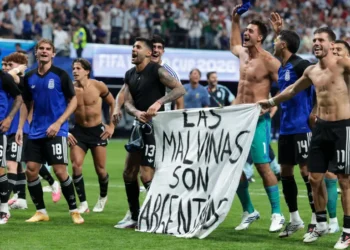 Argentina Face FIFA Investigation After Players Display Falklands Banner Following World Cup Victory
 Who Am I? Guess World Cup Star No 40 – The Mystery Player Captivating Football Fans
 Sir David Beckham Consoled by Victoria After Heartbreaking World Cup Defeat
 World Cup Rings for Winners as Trump Attendance Confirmed
 Thousands of Tickets Still Available for England v France Clash
 Sixteen Titles in Five Years: How Spain Built an Unrivalled Era of Football Dominance
 Zidane Confirmed as France Head Coach
 Zidane Confirmed as France Head Coach After Long Wait