Published: 18 June 2026. The English Chronicle Desk. The English Chronicle Online.
United States President Donald Trump has officially signed a dramatic fourteen-point peace agreement with Iran. This sudden diplomatic shift aims to reopen the heavily contested and vital Strait of Hormuz. The American administration claims this unexpected move successfully averts a catastrophic worldwide economic depression. However, the historic accord requires substantial political and financial concessions from the United States government. These major compromises have already triggered intense debate across international political landscapes this week.
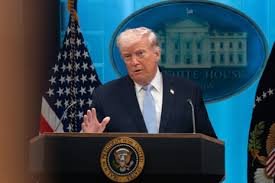
Donald Trump completely altered his characteristically aggressive rhetoric during an extraordinary public address on Wednesday. The president shifted swiftly from threatening military strikes to validating Iran’s civilian nuclear enrichment rights. Furthermore, he explicitly stated that Washington would not pressure Tehran regarding its ballistic missile programmes. He also acknowledged that the United States must return billions in frozen Iranian assets soon. This softer stance represents an incredible departure from previous American foreign policy regarding the regime.
These unexpected presidential concessions are currently sparking fierce outrage among prominent Israeli political leaders. Hardline figures within the Republican Party are also expressing deep anger over the signed memorandum. Conservative politicians had previously urged the administration to maintain maximum economic pressure on Tehran instead. Meanwhile, regional adversaries view the developing situation with a mixture of profound shock and anxiety. The sudden shift leaves long-term Western allies in the Middle East feeling increasingly isolated tonight.
Conversely, the prominent Hezbollah chief Naim Qassem loudly celebrated the agreement as a great victory. His enthusiastic endorsement will likely provide additional ammunition to Trump’s numerous domestic political critics. Opponents argue the deal directly strengthens hostile regional proxy forces throughout the wider Middle East. They fear the relaxation of pressure will embolden militant groups operating near Israeli borders. This public celebration highlights the complex and dangerous regional dynamics surrounding this diplomatic development.
Iranian President Masoud Pezeshkian officially signed the comprehensive document from Tehran on Wednesday afternoon. A more formal signing ceremony is currently scheduled to take place in Geneva this Friday. United States Vice President JD Vance will represent the administration during that upcoming European event. This dual-stage signing process underscores the urgent nature of the temporary sixty-day ceasefire agreement. Diplomats from both nations are working tirelessly to ensure the initial arrangements proceed smoothly.
Despite the peaceful agreement, Iran’s chief negotiator Mohammad Bagher Ghalibaf issued a scathing public statement. He proudly described the signed memorandum as a historic record of complete American strategic failure. Ghalibaf insisted that the global public will judge this outcome as a victory for Tehran. Such defiant rhetoric indicates that underlying tensions between the two nations remain incredibly high today. The Iranian government clearly intends to frame this deal as a major geopolitical triumph domestically.
President Trump vigorously defended his controversial diplomatic strategy during a press briefing later that day. He adamantly insisted that no previous American leader had ever treated Iran more harshly before. The president then argued that global financial markets completely approve of his latest diplomatic decision. He noted that global stock indices reacted positively to the news of the signed accord. According to his worldview, financial market stability remains the ultimate indicator of policy success.
Trump explained that a failure to reach an agreement would cause a global depression. He claimed the vital Strait of Hormuz would have remained permanently closed to international shipping. Commercial vessels face extreme dangers from flying rockets and floating maritime mines during active conflicts. The sudden suspension of oil shipments would have severely crippled energy supply chains worldwide. Therefore, the administration prioritized immediate maritime security over long-term geopolitical disagreements with the regime.
Senior administration officials stated that the deal effectively prevents Iran from acquiring a nuclear weapon. They highlighted a new proposal to discuss down-blending their substantial highly enriched uranium stockpile. The country currently possesses approximately four hundred and forty kilograms of this dangerous material. Trump expressed willingness to allow dilution operations inside Iran under strict international supervision. The International Atomic Energy Agency would closely monitor the entire dilution process to ensure compliance.
The Trump administration initially delayed releasing the full text of the official memorandum of understanding. Officials chose to dictate the fourteen points to journalists during a private background briefing instead. This briefing occurred just as Trump concluded his high-stakes meetings at the recent G7 summit. The temporary sixty-day ceasefire is intended to pave the way for permanent peace talks later. Negotiators require this immediate breathing room to hammer out more complex and lasting nuclear arrangements.
The agreement provides immediate and incredibly lucrative financial incentives directly to the Iranian government. Washington has agreed to lift the ongoing naval blockade on all major Iranian ports immediately. The United States will also issue vital waivers for shipping Iranian crude oil abroad. Furthermore, the deal outlines a path toward lifting all international economic sanctions against Tehran. These measures will undoubtedly inject billions of dollars back into the struggling Iranian national economy.
The plan also proposes a massive three-hundred-billion-dollar reconstruction fund for the war-torn nation. This ambitious fund is expected to be financed entirely by wealthy regional partners in the Gulf. However, Trump angrily rejected any suggestions that America would contribute financially to this package. He explicitly clarified that the United States would not invest even ten cents into Iran. Instead, payouts from neighboring Gulf states will remain entirely conditional upon Iran’s continued good behavior.
The comprehensive ceasefire agreement explicitly includes Lebanon, satisfying a central demand made by Iranian negotiators. The deal intends to restrain Israel from conducting further destructive military operations inside Lebanese territory. It contains a specific clause guaranteeing the long-term territorial integrity of the sovereign Lebanese nation. However, American officials refused to confirm if Israel must withdraw from its current buffer zone. In exchange, Tehran promises to restrain Hezbollah and other regional proxy forces from launching attacks.
The agreement ensures toll-free maritime passage through the crucial Strait of Hormuz for sixty days. However, negotiator Ghalibaf quickly clarified that Iran intends to charge fees after this period expires. He announced on state television that the waterway will never return to prewar conditions again. Iran firmly asserts its absolute sovereignty over the strait and expects payment for maritime services. This stance threatens to create fresh diplomatic friction once the initial sixty days run out.
Foreign policy expert Suzanne Maloney expressed deep skepticism regarding the administration’s chaotic negotiating style. She argued that hammering out complex nuclear details requires immense expertise the administration lacks. Maloney noted that Iran stands to gain massive financial rewards very quickly under this deal. Meanwhile, French President Emmanuel Macron strongly praised the accord, calling it a very good deal. He emphasized that G7 leaders support the move because it stabilizes the vulnerable global economy.
The G7 statement welcomed the opportunity to prevent Iran from acquiring dangerous nuclear weapons. However, Tehran will likely reject any European proposals regarding its domestic ballistic missile programmes. Trump defended his decision to return frozen assets by referencing the global dominance of the dollar. He argued that failing to return the funds would destroy international confidence in American currency. Meanwhile, global oil prices have already started to decline significantly following this major announcement.
Related News:
 Canada-China trade gains momentum in new strategic partnership
 India-EU Free Trade Deal Marks Historic Economic Shift
 Keir Starmer meets Xi to strengthen UK-China economic relations
 UK Experts Raise Alarm Over Machinery Export to Armenian Firm
 Caffè Nero Warns Coffee Prices May Rise Again
 Abramovich Chelsea Sale Cash Faces Jersey Probe
 Stocks rise as Trump offers Iran peace plan
 US Military Weighs Perilous Moves to Reopen Hormuz
 IMF Predicts Global Economic Crisis Due to Gulf Unrest
 Manila Transport Crisis: Fuel Costs Hit Breaking Point
 Trump Slams Europe as Transatlantic Tensions Boil Over
 Trump Issues Stark Warning After Strike On Iran’s Largest Bridge
 Middle East Conflict Sparks Global Food Price Surge
 Albanese Flies to Singapore to Bolster Fuel Security
 US and Iran Agree to Two-Week Provisional Ceasefire
 Norwegian Group Eyes South Yorkshire Steel Revival
 Ian Katz to Step Down as Channel 4 Content Chief
 Middle East Conflict Risks UK Food Supply Chains This Summer
 Cost of Conflict: UN Warns of Lost Lives in Iran War
 BP Profits Surge Amidst Middle East Conflict Crisis
 Ukraine Urges UK to Seize Russian Oil Tankers
 US Calls Australia Media Law “Foreign Extortion”
 Oil Prices Surge Above $120 Amid Iran Blockade Fears
 Europe’s AI Sector Faces Sovereignty Crisis Over US Deals
 Trump Offers EU Independence Day Deadline For Trade Deal
 US Cities See 42% Drop in Canadian Visits Under Trump 2.0
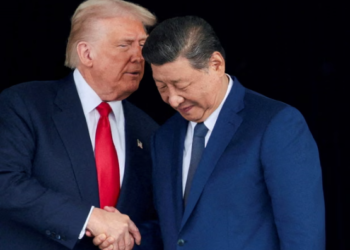 High Stakes in Beijing as Trump and Xi Meet Amid Global Turmoil
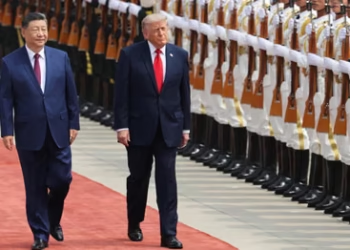 Trump and Xi Convene in Beijing for Historic High-Stakes Summit
 Big Tobacco Under Fire Over Controversial New Ad Campaign
 Rubles and Resilience: How Russia-China Border Towns Thrive
 UK Urged to Build EU Rejoin Consensus, Says Miliband
 Cash Registers Stall Japan’s Promised Food Tax Relief
 Trump Floats Fresh Tariffs on 60 Nations Over Forced Labour
 The Exploding Australian Black Market For Nicotine
 Japan Suffers Plastic Shortage Due to Middle East Crisis
 Steel Tensions Rise Between United Kingdom and European Union
 New York Consumer Watchdog Tackles Corporate Lawbreaking
 Levi’s Sues Globe Over Infringing Pocket Tabs
 BYD Aims for Global Car Supremacy Within Five Years
 Reeves Faces Setback as Labour May Miss Homes Target
 Trump’s UK Ambassador Urges North Sea Drilling to Strengthen US Ties
 Ryanair Chief UK Economy ‘Doomed’ Under Labour
 M&S Profits More Than Halve After Cyber-Attack
 Millionaires group urge Reeves to introduce wealth tax to ‘lift kids out of poverty’
 Starmer Says Labour’s Economic Plan Needs Years to Deliver
 US Senate rejects resolution limiting Trump military powers
 US Dollar Hits Four-Year Low Amid Market Turmoil
 UK New Car Discounts Near £6,000 as Prices Are Slashed
 BT Names New Openreach Chief Amid Major Fibre Expansion
 UK Job Vacancies Hit Five-Year Pandemic Low
 UK Youth Unemployment Surges Amid Tax Changes
 Strong Rebound for UK Housing Market Sees 6% More Homes
 Oil Prices Surge Above $100 Amid Iran War
 Charity Watchdog Takes Control of Learning Disability Care Home
 Spain Faces Backlash Over Xenophobic Chants in Egypt Draw
 Starmer visits Gulf as US and Iran agree ceasefire
 Green Light for Britain’s Electric Future in Somerset
 Pakistan’s Ambitious Bid for Middle East Peace
 Israeli Soldiers Jailed Over Vandalism of Lebanese Statue
 Prominent Voices Challenge Palestine Action Ban
 Lords Demand Larger Fiscal Buffers for UK
 UK Envoy Sparks Controversy Over Special Relationship Claims
 Capitalism ‘Suicidal’, Warns Petro at Climate Summit
 US to Escort Trapped Ships Through the Strait of Hormuz
 UK Electric Car Sales Surge Amid Rising Iran Conflict Fears
 US Awaits Iran Reply on New Ceasefire Proposal
 US and Mexico Face Heatwave as Floods Batter South Africa
 Putin Signals War End as Russian Momentum Stalls
 Romania’s Judicial Crisis: A System Under Siege
 Philippine Senator Flees After Days Under Senate Siege
 High Street Crisis: Fears Grow Over Post Office Closures
 Court Upholds Landmark Win for Transgender Rights
 ICC Arrest Warrant Threat Sparks West Bank Retaliation
 Oil Markets Face ‘Red Zone’ Threat Amid Iran Crisis
 Tony Abbott Returns as New Liberal Party President
 Belfast Approves Pilot Extension of Sunday Trading Hours
 Discontent grows around Putin amid war strain
 Trump Faces Legal Blow Over Global Tariffs
 UK Economy Suffers a Sharp Downturn as Iran Conflict Bites
 Tuchel’s England Mission Goes Beyond Football Success