Published: 04 June 2026. The English Chronicle Desk. The English Chronicle Online.
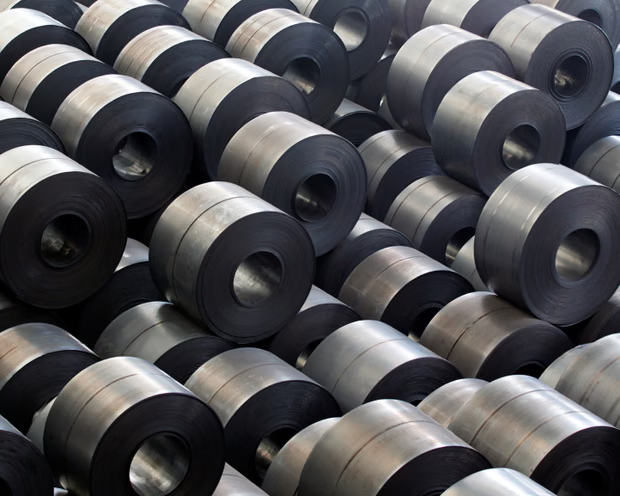
The British business secretary Peter Kyle travels to Brussels for urgent trade talks this Friday. He intends to confront European Union trade commissioner Maroš Šefčovič over restrictive new steel regulations. The upcoming discussions follow growing anxieties within the British manufacturing sector regarding European import caps. Industry leaders warn that the proposed changes could have devastating consequences for domestic steel producers. The European Union intends to slash tariff-free imports from non-EU nations by forty-seven percent soon. This sweeping reduction is scheduled to take effect officially on the first of July.
British officials argue that these strict measures will unfairly harm long-standing cross-Channel trading relationships. European manufacturing groups simultaneously express deep concerns about potential retaliatory measures from the British government. United Kingdom steel buyers represent a massive market for continental mills and European exporters. A trade dispute could severely disrupt supply chains for automotive and construction industries across Europe. Both sides previously operated under a unified trade framework before the post-Brexit transition concluded. The United Kingdom must now establish its independent quota and tariff regime this summer.
The European Steel Association has already lodged a formal complaint with the European Commission. Eurofer director general Axel Eggert expressed deep dissatisfaction with current British provisional trade quotas. His letter claims that Britain is setting import limits at extremely low historical levels. The European Union would receive only nine percent of its traditional hot coil imports. Tin mill allocations would drop to four percent under the proposed British framework. Furthermore, continental merchant bar shipments to the United Kingdom would plummet to three percent.
The proposed British restrictions would slash European exports of organic coated products by eighty percent. European shipments of reinforcement bar steel face a projected forty-five percent reduction across the Channel. Meanwhile, steel rail exports from continental factories would decline by thirty-eight percent under these rules. These defensive trade safeguards are designed to protect domestic markets from cheap foreign competition. Both traditional Western economies face significant pressure from high volumes of inexpensive Chinese steel.
The European Union plans to reduce foreign steel imports by nearly fifty percent overall. Concurrently, the United Kingdom proposes a sixty percent reduction in its foreign steel quotas. Analysts fear that these aggressive defensive strategies will cause massive collateral economic damage nationwide. Experts warn that global exporters might circumvent these restrictions through alternative manufacturing routes. Chinese producers frequently pivot from raw steel exports to shipping fully finished steel products.
Several independent nations, including Ukraine and Great Britain, are expressing extreme displeasure with Brussels. European sources acknowledge that lower tariff-free export limits are inevitable for all external partners. However, diplomats suggest that London will experience a greater share of the economic pain. One European diplomat stated that these new quotas will bring substantial costs to everyone. The British economy is expected to absorb slightly higher financial burdens from these changes.
British industry sources emphasize that their proposed sixty percent reduction remains highly flexible. The United Kingdom government can adjust these figures if the European Union offers reciprocity. In contrast, the European Commission caps its global import quota strictly at fifty percent. British executives fear that European officials are pursuing a purely rigid mathematical solution here. They argue that Brussels is simply trying to demonstrate strict adherence to bureaucratic rules.
Industry advocates warn that the European Union should favor its closest geopolitical allies instead. Reducing the British share of imports simply opens opportunities for non-European industrial competitors worldwide. A British steel executive questioned whether Brussels truly desires to empower distant manufacturing rivals. These complex regulatory problems emerge as grand hopes for a strategic trade alliance fade. Analysts previously envisioned a powerful cooperative steel club between Britain and the European Union.
This proposed alliance would have guaranteed tariff-free trade while countering unfair Asian market competition. However, international diplomatic support for this unified Western steel coalition has failed to materialize. European diplomats note that the United States has not engaged with this initiative quickly. Washington appears uninterested in actively assisting either the United Kingdom or the European Union. American trade officials have chosen to remain neutral regarding this proposed international steel club.
Peter Kyle will meet Maroš Šefčovič on Friday morning to defuse these escalating tensions. Axel Eggert hopes that the dramatic British reductions are merely a sophisticated negotiating tactic. He believes that a mutually beneficial settlement can still be reached before July deadlines. The Eurofer leader acknowledges that a zero reduction in British exports is completely impossible. The United Kingdom must accept a lower total quota than it previously enjoyed.
Nevertheless, Eggert strongly asserts that Great Britain deserves preferential treatment over other global rivals. The European and British manufacturing supply chains remain deeply interconnected after decades of integration. Factory managers on both sides of the Channel rely on seamless steel shipments daily. Any prolonged trade dispute would inevitably increase production costs for automobiles and major infrastructure.
The upcoming Friday meeting represents a critical test for post-Brexit diplomatic and economic relations. Peter Kyle must balance domestic industrial protection with the necessity of smooth continental trade. Meanwhile, European negotiators face pressure to protect their own factories without alienating key allies. The decisions made in Brussels this week will shape the European steel market. Thousands of industrial jobs depend on a balanced resolution to this complex tariff dispute.
Related News:
 UK Experts Raise Alarm Over Machinery Export to Armenian Firm
 Caffè Nero Warns Coffee Prices May Rise Again
 Middle East Conflict Risks UK Food Supply Chains This Summer
 BP Profits Surge Amidst Middle East Conflict Crisis
 UK Urged to Build EU Rejoin Consensus, Says Miliband
 EU Slashes Steel Quotas But Grants UK Favourable Rates
 Reeves Faces Setback as Labour May Miss Homes Target
 Trump’s UK Ambassador Urges North Sea Drilling to Strengthen US Ties
 M&S Profits More Than Halve After Cyber-Attack
 Tony Blair think tank warns Rachel Reeves must cut taxes if manifesto broken
 Millionaires group urge Reeves to introduce wealth tax to ‘lift kids out of poverty’
 Global markets drop amid tech sell-off and China slowdown
 Mossmorran Plant Closure Hits Cowdenbeath Hard
 Starmer Says Labour’s Economic Plan Needs Years to Deliver
 Virgin Media Fined £23.8m Over Telecare Safety Failures
 Rising Water Bills Lift Troubled Thames Back to Profit
 Starmer Faces Parliamentary Battles Over UK-EU ‘Reset’ Plan
 Phoenixism Costs UK Taxpayers Millions in Recruitment Sector
 British skier killed in La Plagne avalanche tragedy
 ScottishPower Tops List of Worst UK Energy Suppliers
 City & Guilds pay surge sparks backlash amid £22m cuts
 UK Government Borrowing Drops to £11.6bn in December
 AI job losses UK: Britain faces sharper employment shock
 India-EU Free Trade Deal Marks Historic Economic Shift
 UK economy struggles as growth stalls at 0.1% in late 2025
 UK Unemployment Rate Climbs to 5.2% Peak
 UK shelves £110m border project amid trade strain
 UK Inflation Surprise Sparks Early Rate Cut Hopes
 Reeves Must Back Defence Plan or Face Dismissal, Says Unite Chief
 Switching Energy Deal Can Save £200 as Price Cap Falls
 Rachel Reeves Faces Middle East Conflict Test
 Grocery Inflation Rises Amid War Fears
 Peak Greggs fears as profits tumble sharply
 UK suspends study visas for four nations to curb asylum
 Jordanian Arrested in Philippines Over Bondi Beach Terror Links
 BrewDog sold Highland estate for knockdown price after abandoning reforestation plans
 Ukraine war briefing: Zelenskyy offers help to Saudi Crown prince on combatting Iranian drones
 Abramovich Chelsea Sale Cash Faces Jersey Probe
 Starmer Praised for Stance on Trump and Iran Conflict
 UK Energy Reform Could Cut Bills by £200
 Rising Costs Force Families to Rethink Days Out
 Trump Slams Europe as Transatlantic Tensions Boil Over
 Trump Facing Backlash Over Firing of Cabinet Women
 US and Iran Agree to Two-Week Provisional Ceasefire
 Melania Trump Denies Ties to Epstein and Ghislaine Maxwell
 Aegon Sells Historic UK Arm to Standard Life for £2bn
 UK Staycations Rise as Travel Fears Grow
 Trump Starts $166bn Tariff Refund Process
 Prominent Voices Challenge Palestine Action Ban
 Oil Prices Surge Above $120 Amid Iran Blockade Fears
 Silent Tracks: Rail Line Without Passengers
 High Stakes in Beijing as Trump and Xi Meet Amid Global Turmoil
 Lotus Boss Pledges Future to Norfolk and Seeks State Support
 Fear and Betrayal: The Chilling Case of Kouri Richins
 Trump and Xi Convene in Beijing for Historic High-Stakes Summit
 Big Tobacco Under Fire Over Controversial New Ad Campaign
 UK Firms Freeze Spending as Iran Conflict Bites
 Rubles and Resilience: How Russia-China Border Towns Thrive
 Summer Shock: British Energy Bills Set for Grim July Hike
 Reeves to Fast-Track Clean Energy Amid Iran Crisis
 Tube Strike Brings Capital to a Standstill Over Shift Disputes
 Tube Strike Brings Capital to a Standstill Over Shift Disputes
 BP Stands Firm on Amanda Blanc Amid Boardroom Storm
 Teaching Machines Right From Wrong in the Digital Age
 UK House Prices Drop For Third Month Due To War Fears
 Top Chefs Back Andy Burnham to Save UK Hospitality Sector
 UK Steel Crisis: Jingye Demands Payout After Takeover
 Flutter to Cancel London Stock Exchange Share Listing
 AI Scams Push UK Investment Fraud Past £220m
 Thames Water Nationalisation Pushes Closer After Rescue Objected
 Russian Tanker Captain Remanded in UK Court After Channel Seizure
 Controversial London Property Show Sparks Legal Fury
 Andy Burnham Enlists Economic Heavyweights for Leadership Bid
 What Burnham in Number 10 Means for the Future of Britain
 Scouts Introduce Badges For AI And Digital Skills
 Rethinking the Blueprint for Youth Employment in Britain
 Sainsbury’s Boss Optimistic As Grocery Inflation Eases
 UK Households Suffer Squeeze As Disposable Incomes Drop
 Bank of England Eases Rules Despite Rising AI Risks
 BBC Faces Real Jeopardy as Licence Fee Income Declines