Published: 17 July 2026 | The English Chronicle Desk | The English Chronicle Online
China has criticised the UK government’s decision to bring British Steel into public ownership, warning that the move could damage investor confidence and raising concerns over the future relationship between the two countries on trade and business.
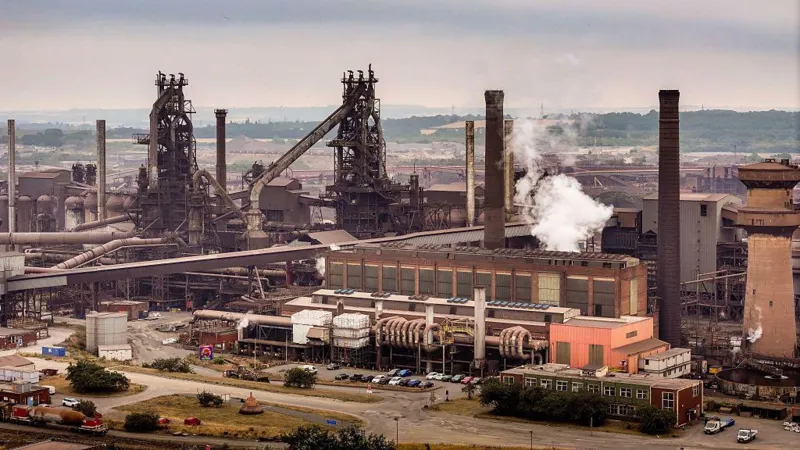
The nationalisation of British Steel was announced as the government moved to protect a strategically important industry, jobs and domestic steel production. Ministers argued that state intervention was necessary to safeguard the future of one of Britain’s key industrial assets.
However, the decision has attracted criticism from Beijing, which has questioned the treatment of Chinese investment and the wider implications for international companies operating in the UK.
The UK government’s decision to take British Steel into public ownership came after concerns grew over the future of the company and its ability to continue operating.

British Steel plays an important role in the UK’s industrial economy, supplying steel for major construction projects, infrastructure and manufacturing.
Officials argued that allowing the company to fail or significantly reduce production could create serious economic and strategic risks.
The government said intervention was needed to protect thousands of jobs and preserve domestic steel-making capability.
China has criticised the move, with officials expressing concern about how Chinese-linked businesses are treated in the UK.
The company had previously been owned by Chinese group Jingye, which acquired British Steel in 2020 after the firm faced financial difficulties.
Beijing has urged the UK to maintain an open investment environment and avoid policies that could discourage foreign companies from operating in Britain.
Chinese officials have suggested that government intervention could send a negative signal to international investors.
Steel production has long been considered a strategically important industry.
Steel is essential for construction, transport, defence, energy projects and manufacturing.
Many governments view domestic steel capacity as important for national resilience, particularly during periods of global uncertainty.
Supporters of nationalisation argue that relying heavily on overseas suppliers could create risks during economic crises or geopolitical tensions.
The UK government has said protecting British Steel is about securing the future of an industry that has played a major role in the country’s industrial history.
The future of British Steel has significant implications for workers and communities connected to the industry.
Steel plants provide employment not only directly but also through supply chains and local businesses.
Previous uncertainty over the company’s future created concerns among workers and their families.
The government has argued that public ownership will provide stability and allow time to develop a long-term plan for the company.
Trade unions have also welcomed efforts to protect jobs and maintain production.
The decision has reignited debate over the role of government in supporting major industries.
Supporters argue that strategic industries should not be left entirely to market forces, especially when thousands of jobs and national interests are involved.
They believe temporary government ownership can provide stability and protect important economic capabilities.
Critics, however, argue that nationalisation can become costly for taxpayers and that governments may struggle to manage commercial businesses effectively.
The debate reflects wider questions about how countries balance free markets with industrial security.
Chinese companies have invested in various sectors of the UK economy, including energy, manufacturing and infrastructure.
However, relations between London and Beijing have become increasingly complicated in recent years.
Concerns over national security, technology, trade practices and foreign ownership have influenced UK policy discussions.
The British government has sought to attract international investment while also increasing scrutiny of foreign involvement in sensitive industries.
The dispute comes amid wider challenges facing the global steel sector.
Steel producers around the world are dealing with rising energy costs, international competition and pressure to reduce carbon emissions.
Many countries are attempting to modernise their steel industries while investing in cleaner production methods.
The UK faces similar challenges, with questions over how British Steel can remain competitive while meeting environmental targets.
The government now faces the challenge of creating a sustainable future for British Steel.
Public ownership may provide short-term stability, but long-term success will depend on investment, modernisation and the ability to compete internationally.
Ministers are expected to consider options including upgrading facilities, improving efficiency and supporting greener steel production.
The future direction of the company will determine whether nationalisation becomes a temporary rescue measure or a longer-term industrial strategy.
China’s criticism highlights the broader economic relationship between Beijing and London.
While both countries have significant trade links, disagreements over investment and strategic industries have created tensions.
The British Steel decision could become part of wider discussions about how governments should handle foreign ownership of important assets.

It also reflects a growing global trend of countries placing greater emphasis on economic security and domestic production.
The nationalisation of British Steel marks a major intervention in the UK’s industrial policy.
For the British government, the priority is protecting jobs, maintaining steel production and securing the future of a vital industry.
For China, the decision raises concerns about the treatment of foreign investors and the wider business environment in Britain.
As the government develops its plans for British Steel, the debate over national ownership, foreign investment and economic security is likely to continue.
The future of the company will not only affect workers and communities but could also shape the UK’s approach to managing strategic industries in an increasingly competitive global economy.
Related News:
 UK Doubles Steel Tariffs to 50% to Protect Domestic Plants
 BBC News Faces Deep Cuts in 2,000 Job Plan
 “The Breaking Point”: Hospitality Leaders Warn of a ‘Sinking’ Industry Amidst Rising Operational Costs
 UK Pushes for New EU Goods Trade Deal
 Reeves Fights to Keep Treasury Role Amid Labour Turmoil
 Healey Says Treasury Undervalues Defence Spending
 David Lammy Faces Possible Legal Challenge Over Foreign Office Secondment Scheme
 Grant Shapps Cleared to Join Defence Startup Despite Ethical Concerns
 Chancellor Rachel Reeves Pushes for Sweeping Changes to Environmental Protections to Accelerate Development
 Starmer Urged to Champion Workers’ Rights Amid Low Public Awareness
 King Charles Earns Over £1 Million from Duchy Land Linked to Scrapped HS2 Project
 Senior Tories Condemn Badenoch’s Vow to Repeal Climate Change Act as Catastrophic
 Kemi Badenoch Unveils ‘Golden Rule’ to Halve Spending Cuts for Deficit Reduction at Tory Conference
 Lucy Powell urged ministers to reconsider costly legal case for Labour donor’s firm
 Rachel Reeves to lead UK trade push in Saudi Arabia amid rights debate
 Trump’s UK Ambassador Urges North Sea Drilling to Strengthen US Ties
 Rachel Reeves Set to Break Labour Pledge and Raise Income Tax
 MPs Press Rachel Reeves to Hike Gambling Taxes
 Millionaires group urge Reeves to introduce wealth tax to ‘lift kids out of poverty’
 PM Highlights UK Business at G20 in South Africa
 Starmer Says Labour’s Economic Plan Needs Years to Deliver
 China Dependence Threatens UK Energy Supply Chains and Jobs
 MPs warn AI financial risks threaten UK stability
 MPs warn AI financial risks threaten UK stability
 Labour Must Revive High Streets to Avoid Election Collapse
 Barclays drops Global Counsel after Mandelson link scrutiny
 Could Manchester Lead the UK’s Economic Revival?
 Robert Jenrick to Be Unveiled as Reform UK’s Treasury Spokesman, Reports Say
 Reform Plans to Keep UK’s Budget Watchdog in Office
 Jenrick: I’ll Back OBR but There’ll Be No More Cosy Consensus
 Another U-turn Ahead as Labour Reconsiders Youth Minimum Wage
 UK Sees Record £30.4bn Budget Surplus, Boosting Reeves’ Position
 Tories Would Scrap ‘Debt Trap’ of High‑Interest Student Loans, Says Kemi Badenoch
 Ministers Urged to Ban Crypto Political Donations
 MPs Backed by Phillipson as She Defends Student Loan Change; Average Repayments to Rise by £8 a Month
 Reeves Must Back Defence Plan or Face Dismissal, Says Unite Chief
 OBR Reform Row Deepens Before Spring Forecast
 Labour’s Employment Shake‑Up ‘Makes Britain Worse Than France’
 Irish economy grew strongly in 2025
 Reeves Faces Triple Threat as Markets Reel From Global Turmoil
 Cost of Living Crisis Returns to Centre Stage
 UK Fuel Tax Hike Plan to Be Kept Under Review Over Iran Conflict
 Wealthy Britons Flee Gulf War but Avoid UK Taxes
 UK Wage Growth Slows as Jobs Market Holds Firm
 UK Forecast to See Biggest Growth Hit from Iran War
 UK Forces Ready to Seize Russian Shadow Fleet Vessels
 ‘No Surprise’: Ramaphosa Downplays South Africa’s Exclusion from Emergency G7 Summit
 ‘Eye in the Sky’ Blinded: Photos Reveal Destroyed US Radar Jet at Saudi Base
 Starmer Launches Labour Local Election Campaign Under Shadow of ‘Bloodbath’ Predictions
 The 8 Million Dilemma: Why Britain’s Disability Safety Net is Facing a ‘2026 Reckoning’
 The ‘Peterborough Windfall’: Council Calculator Finds £84,800 in Unclaimed Support
 Fuel Duty Relief Plea Amid Middle East Oil Crisis
 Global Commerce Crisis: Cooper Demands Immediate, Toll-Free Access to Hormuz
 Policy Stand-Off: Streeting Denies Any ‘System Update’ to Resident Doctor Pay Deal
 Fuel Crisis Drives UK Inflation to Highest Level Since December
 “Jobs Will Go”: Rishi Sunak Warns AI is Already Eroding Entry-Level Opportunities
 Reform UK funding: mystery billionaire revealed
 “We Are Shielding Them”: UK Families Face £11 Billion Hit as Iran War Bills Surge
 The “Long Tail” of War: Minister Warns Economic Scarring Could Last Eight Months Post-Conflict
 “A Pint-Sized Crisis”: Publicans Warn of Industry ‘Carnage’ as Energy and Tax Hikes Loom
 High Street “Lawlessness”: Council Staff Under Attack from “Link-up” Gangs
 Reality Check on Reform: Minister Says Outright Abolition of Leasehold “Impossible”
 The $126 Spike: Oil Hits Four-Year High as Trump Weighs “Powerful” New Iran Strikes
 “A Medicine Desert”: Why the Battle for Basic Prescriptions is About to Intensify
 “A Royal Dram”: Trump Scraps Whisky Tariffs in Historic Gesture to Departing King
 “The Energy Levy”: Understanding the ‘Milestone’ Windfall Tax on Oil and Gas Giants
 Labour Faces Internal Pressure for Bold Economic Shift
 Labour Factions Propose Bold Tax Cuts Amid Leadership Storm
 Thames Water Rescue Package Hit by Downing Street Chaos
 “A Fragile Lull”: UK Inflation Dips to 2.8% Amid Warnings of a Renewed Climb
 UK Inflation and Global Conflict Drive Up April Borrowing
 Albanese Defends Tax Reforms Amid Emotional Speech
 UK Urged to Build EU Rejoin Consensus, Says Miliband
 UK rejects EV charging VAT cut amid Treasury clash
 MPs Say Defence Strategy Delays Risk Damaging Britain’s Reputation
 Extra £174m Set Aside as Costs Rise on Lower Thames Crossing Project
 Great Britain Faces £90bn Electricity Grid Rewire Bill
 Burnham Promises Relief on Cost of Living Crisis
 Labour MPs Urge Burnham to Revive UK Aid Target
 Burnham Set to Outline ‘New Path’ for Britain as He Prepares to Take Labour Leadership