Published: 6 July 2026 | The English Chronicle Desk | The English Chronicle Online
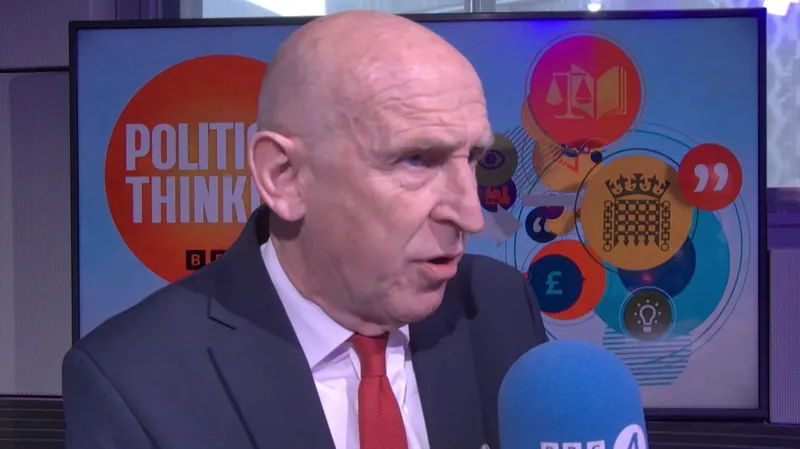
The UK government’s approach to defence spending has come under renewed scrutiny after Defence Secretary John Healey argued that the Treasury has traditionally viewed military expenditure as a financial burden rather than a powerful driver of economic growth and national prosperity.
Healey’s remarks have reignited a long-running debate over the role of defence investment in Britain’s economy, with supporters arguing that military spending generates skilled employment, technological innovation and industrial development, while critics continue to question whether increased defence budgets deliver sufficient economic returns compared with investment in public services.
His comments come as the UK government seeks to strengthen the country’s armed forces, expand domestic defence manufacturing and respond to an increasingly uncertain international security environment shaped by the war in Ukraine, rising geopolitical tensions and growing competition among major global powers.
Speaking about the government’s broader economic and security priorities, Healey suggested that traditional Treasury thinking has often treated defence as an unavoidable expense rather than recognising its wider contribution to innovation, exports and long-term economic resilience.

According to the Defence Secretary, investment in military capability should not be viewed solely through the lens of public expenditure.
Instead, he argued, spending on defence supports thousands of high-skilled jobs across the United Kingdom, strengthens advanced manufacturing, stimulates scientific research and contributes to regional economic development.
His comments reflect an increasingly prominent argument made by defence industry leaders and security analysts who contend that military investment produces benefits extending well beyond national security.
Modern defence programmes frequently involve cutting-edge research into aerospace engineering, artificial intelligence, cyber security, advanced materials and communications technology.
Many innovations originally developed for military purposes have later found widespread civilian applications, contributing to advances in transport, healthcare, computing and telecommunications.
Supporters therefore argue that defence procurement can function as an engine of industrial innovation.
The United Kingdom possesses one of the world’s largest defence industries, employing hundreds of thousands of people directly and indirectly through complex supply chains.
Major defence projects support shipbuilding, aircraft manufacturing, electronics production and engineering across numerous regions, particularly in Scotland, northern England, the Midlands and southwest England.
Industry representatives have long argued that stable government investment encourages companies to expand production capacity, recruit apprentices and invest in research that benefits both defence and commercial markets.
Healey suggested that recognising these wider economic effects should form part of future government thinking when assessing defence budgets.
He argued that defence expenditure should be considered alongside broader industrial strategy rather than treated as a separate area of public spending.
The debate comes at a time when European governments are increasing military investment following Russia’s full-scale invasion of Ukraine.
Many NATO members have announced significant increases in defence budgets, citing the need to modernise armed forces, replenish ammunition stockpiles and improve readiness against emerging security threats.
The United Kingdom has similarly committed to strengthening its military capabilities while supporting Ukraine through equipment, training and financial assistance.
These commitments have intensified pressure on government finances, forcing ministers to balance defence priorities against competing demands including healthcare, education, housing and social welfare.
The Treasury traditionally plays a central role in evaluating such spending decisions, seeking to maintain fiscal discipline while funding essential public services.
Economic analysts note that tensions between spending departments and finance ministries are common across many governments.
Departments responsible for defence, transport or infrastructure often argue that investment creates long-term economic benefits, while finance officials emphasise immediate budgetary constraints and debt sustainability.
Healey’s comments therefore reflect a broader policy debate rather than an entirely new disagreement.
Supporters of increased defence spending argue that recent geopolitical developments have fundamentally altered strategic priorities.
They contend that military preparedness is no longer simply a matter of national security but also one of economic resilience.
A strong domestic defence industry, they argue, reduces dependence on overseas suppliers, protects critical manufacturing capabilities and enhances Britain’s ability to respond quickly during international crises.
Recent disruptions to global supply chains have reinforced arguments favouring greater domestic production capacity across strategically important industries.
Defence manufacturers also point to export opportunities.
British defence companies supply equipment, aircraft, naval systems and advanced technologies to allied nations around the world.
These exports generate billions of pounds annually while supporting highly skilled employment and contributing to the UK’s balance of trade.
Industry leaders argue that sustained domestic procurement strengthens international competitiveness by providing manufacturers with stable production programmes that encourage further investment.
However, economists caution that defence spending should not automatically be regarded as the most effective route to economic growth.
Some researchers argue that investments in education, healthcare, transport infrastructure and scientific research may produce stronger long-term productivity gains depending on how public resources are allocated.
Others note that measuring the indirect economic benefits of defence expenditure remains challenging because many innovations emerge over extended periods.
Public finance specialists therefore emphasise the importance of rigorous cost-benefit analysis when evaluating major procurement programmes.
Opposition politicians have offered differing perspectives on the issue.
Some agree that defence represents an essential national investment requiring sustained financial support.
Others argue that while military capability is vital, governments must also ensure adequate funding for domestic priorities affecting everyday life.
Political analysts suggest that debates surrounding defence expenditure are likely to become increasingly significant as governments respond simultaneously to security challenges and economic pressures.
International developments continue shaping these discussions.
Across Europe, governments are reassessing military capabilities in response to evolving security threats, while NATO has encouraged members to increase defence investment to strengthen collective security.
The UK has repeatedly stated its intention to remain a leading contributor to the alliance, requiring continued investment in personnel, equipment and technological capability.
Healey’s remarks therefore reflect broader efforts to redefine how defence is understood within economic policymaking.
Rather than viewing military spending solely as a budgetary obligation, he argues it should be recognised as an investment supporting innovation, employment and industrial competitiveness.
Whether this perspective ultimately influences Treasury policy remains uncertain.

Government spending decisions continue to involve complex trade-offs between competing priorities, particularly during periods of fiscal constraint.
Nevertheless, the Defence Secretary’s comments have added fresh momentum to an important debate about the relationship between national security and economic development.
As Britain continues adapting to an increasingly complex global environment, the question of whether defence spending should be regarded primarily as a cost or as a catalyst for economic growth is likely to remain at the centre of political and economic discussions for years to come.
Related News:
 Reeves Blocking Spending Boost for Defence
 Minister Visits Leonardo After £1bn Deal Secured
 UK Doubles Steel Tariffs to 50% to Protect Domestic Plants
 BBC News Faces Deep Cuts in 2,000 Job Plan
 “The Breaking Point”: Hospitality Leaders Warn of a ‘Sinking’ Industry Amidst Rising Operational Costs
 UK Pushes for New EU Goods Trade Deal
 Reeves Fights to Keep Treasury Role Amid Labour Turmoil
 MPs Warn Defence Plan Delays Are Undermining UK Credibility
 MPs Say Defence Strategy Delays Risk Damaging Britain’s Reputation
 Chancellor Rachel Reeves Pushes for Sweeping Changes to Environmental Protections to Accelerate Development
 Senior Tories Condemn Badenoch’s Vow to Repeal Climate Change Act as Catastrophic
 Kemi Badenoch Unveils ‘Golden Rule’ to Halve Spending Cuts for Deficit Reduction at Tory Conference
 Lucy Powell urged ministers to reconsider costly legal case for Labour donor’s firm
 Trump’s UK Ambassador Urges North Sea Drilling to Strengthen US Ties
 Rachel Reeves Set to Break Labour Pledge and Raise Income Tax
 MPs Press Rachel Reeves to Hike Gambling Taxes
 Millionaires group urge Reeves to introduce wealth tax to ‘lift kids out of poverty’
 PM Highlights UK Business at G20 in South Africa
 Starmer Says Labour’s Economic Plan Needs Years to Deliver
 China Dependence Threatens UK Energy Supply Chains and Jobs
 MPs warn AI financial risks threaten UK stability
 MPs warn AI financial risks threaten UK stability
 Labour Must Revive High Streets to Avoid Election Collapse
 Could Manchester Lead the UK’s Economic Revival?
 Starmer Weighs Fast-Tracking Defence Boost
 Reform Plans to Keep UK’s Budget Watchdog in Office
 Jenrick: I’ll Back OBR but There’ll Be No More Cosy Consensus
 Another U-turn Ahead as Labour Reconsiders Youth Minimum Wage
 UK Sees Record £30.4bn Budget Surplus, Boosting Reeves’ Position
 Tories Would Scrap ‘Debt Trap’ of High‑Interest Student Loans, Says Kemi Badenoch
 Ministers Urged to Ban Crypto Political Donations
 MPs Backed by Phillipson as She Defends Student Loan Change; Average Repayments to Rise by £8 a Month
 Reeves Must Back Defence Plan or Face Dismissal, Says Unite Chief
 UK Will Allow US to Use Bases to Strike Iranian Missile Sites, PM Says
 Labour’s Employment Shake‑Up ‘Makes Britain Worse Than France’
 Cooper: Joining US Strikes on Iran ‘Not in Britain’s Interest’
 Minister Meets Crews Who Will ‘Take Out’ Iranian Drones
 UK Prepares Aircraft Carrier for Middle East Crisis
 UK–US Tensions Ease as Starmer and Trump Hold First Call Since Iran Row
 Labour Faces Backlash Over Conscription Warning
 UK Fuel Tax Hike Plan to Be Kept Under Review Over Iran Conflict
 UK Wage Growth Slows as Jobs Market Holds Firm
 UK Forecast to See Biggest Growth Hit from Iran War
 UK Forces Ready to Seize Russian Shadow Fleet Vessels
 ‘No Surprise’: Ramaphosa Downplays South Africa’s Exclusion from Emergency G7 Summit
 ‘Eye in the Sky’ Blinded: Photos Reveal Destroyed US Radar Jet at Saudi Base
 Starmer Launches Labour Local Election Campaign Under Shadow of ‘Bloodbath’ Predictions
 The 8 Million Dilemma: Why Britain’s Disability Safety Net is Facing a ‘2026 Reckoning’
 The ‘Peterborough Windfall’: Council Calculator Finds £84,800 in Unclaimed Support
 Fuel Duty Relief Plea Amid Middle East Oil Crisis
 Global Commerce Crisis: Cooper Demands Immediate, Toll-Free Access to Hormuz
 Policy Stand-Off: Streeting Denies Any ‘System Update’ to Resident Doctor Pay Deal
 Is Britain Ready? Experts Warn of ‘Bizarre’ Military Delay
 MoD Has Lost Track of Veteran Recall List, Says Adviser
 Fuel Crisis Drives UK Inflation to Highest Level Since December
 “Jobs Will Go”: Rishi Sunak Warns AI is Already Eroding Entry-Level Opportunities
 Reform UK funding: mystery billionaire revealed
 “We Are Shielding Them”: UK Families Face £11 Billion Hit as Iran War Bills Surge
 “A Pint-Sized Crisis”: Publicans Warn of Industry ‘Carnage’ as Energy and Tax Hikes Loom
 High Street “Lawlessness”: Council Staff Under Attack from “Link-up” Gangs
 Reality Check on Reform: Minister Says Outright Abolition of Leasehold “Impossible”
 The $126 Spike: Oil Hits Four-Year High as Trump Weighs “Powerful” New Iran Strikes
 “A Medicine Desert”: Why the Battle for Basic Prescriptions is About to Intensify
 “A Royal Dram”: Trump Scraps Whisky Tariffs in Historic Gesture to Departing King
 Trump likens US Navy actions to ‘pirates’
 “The Pivot to Pakistan”: Trump Pauses ‘Project Freedom’ in Hormuz Amid Iran Deal Hopes
 “The Strait Scramble”: Inside Trump’s ‘Project Freedom’ and the Hormuz Naval Escort
 “The Energy Levy”: Understanding the ‘Milestone’ Windfall Tax on Oil and Gas Giants
 Labour Faces Internal Pressure for Bold Economic Shift
 “A Fragile Lull”: UK Inflation Dips to 2.8% Amid Warnings of a Renewed Climb
 UK Inflation and Global Conflict Drive Up April Borrowing
 Albanese Defends Tax Reforms Amid Emotional Speech
 UK Urged to Build EU Rejoin Consensus, Says Miliband
 UK rejects EV charging VAT cut amid Treasury clash
 Discontent grows around Putin amid war strain
 UK Faces Most Dangerous Era, Military Chief Warns
 Royal Navy Mourns Devastating Helicopter Loss
 Extra £174m Set Aside as Costs Rise on Lower Thames Crossing Project
 Great Britain Faces £90bn Electricity Grid Rewire Bill
 Burnham Promises Relief on Cost of Living Crisis