Published: 20 July 2026 | The English Chronicle Desk | The English Chronicle Online
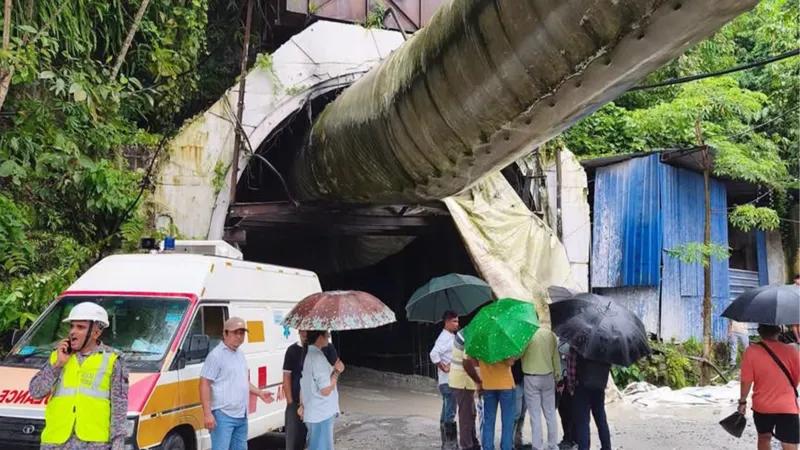
At least 12 workers have died after a tunnel collapsed at a construction site in India, triggering a major emergency response and raising renewed concerns about workplace safety standards in the country’s expanding infrastructure sector.
Rescue teams rushed to the site after the collapse, working through difficult conditions to search for trapped workers and recover victims. Officials said emergency personnel faced significant challenges because of unstable debris, restricted access and concerns that further sections of the tunnel could give way.
The tragedy has once again drawn attention to the risks faced by construction workers involved in large-scale infrastructure projects across India.
Emergency crews, including disaster response teams, engineers and local authorities, were deployed following reports of the tunnel collapse.

Rescuers used heavy equipment and specialised tools to clear rubble while attempting to reach workers who may have been trapped inside.
Officials said the priority was to safely remove debris while ensuring rescue personnel were not placed at additional risk.
Families of workers gathered near the site seeking information about their loved ones, as authorities continued providing updates.
The victims were workers involved in the tunnel construction project, which was part of India’s ongoing infrastructure expansion.
Many construction workers across the country are employed in challenging environments involving tunnels, bridges, roads and other major developments.
The incident has highlighted the dangers faced by workers who often operate in difficult conditions involving heavy machinery, underground spaces and complex engineering projects.
Authorities have promised support for affected families and announced that investigations would begin into the cause of the collapse.
Officials said a detailed investigation would be carried out to determine why the tunnel failed.
Experts are expected to examine several possible factors, including construction methods, geological conditions, safety procedures and maintenance practices.
Investigators will also review whether proper safety measures were in place before workers entered the tunnel.
The findings could determine whether any individuals or organisations should be held responsible.
India has invested heavily in infrastructure development in recent years, with major projects aimed at improving transport links, boosting economic growth and connecting remote areas.
Tunnel construction has become increasingly important as authorities develop highways, rail networks and mountain routes.
However, experts warn that rapid expansion must be matched with strong safety oversight.
Large construction projects often involve significant technical challenges, particularly in areas with difficult terrain.
The construction sector remains one of the most dangerous industries in India.
Workers frequently face risks including falls, equipment accidents, structural failures and exposure to hazardous conditions.
Labour rights groups have repeatedly called for stronger enforcement of safety regulations and better training for workers.
They argue that preventing accidents requires more than emergency responses after disasters occur.
Relatives of the deceased workers have called for answers and accountability following the tragedy.
Many families depend heavily on income from construction work and face severe financial hardship after losing a primary earner.
Community leaders have urged authorities to provide compensation and long-term support for affected families.
They have also called for measures to ensure similar incidents do not happen again.
Government officials expressed condolences to the families of those killed and said all necessary assistance would be provided.
Authorities said they would cooperate with investigators and review safety procedures at similar construction sites.
Officials stressed the importance of protecting workers while continuing infrastructure development.
The latest tunnel collapse follows several previous construction-related accidents in India that have raised concerns about safety practices.
Past incidents involving tunnel collapses, building failures and industrial accidents have often led to calls for improved regulation.
Safety experts say lessons from previous disasters must be applied consistently to prevent future tragedies.
They argue that stronger monitoring, better training and stricter enforcement can significantly reduce risks.
Labour experts say economic development should not come at the expense of worker safety.
They emphasise the need for proper protective equipment, regular inspections and emergency preparedness at construction sites.
Modern engineering projects require careful planning and risk assessment, particularly when workers operate underground.

Ensuring safe conditions is considered essential not only for protecting lives but also for maintaining public confidence in major infrastructure projects.
The tunnel collapse that killed 12 workers has highlighted the human cost of rapid infrastructure development and the urgent need for stronger safety measures.
As rescue operations conclude and investigations continue, attention will now focus on determining what caused the disaster and whether it could have been prevented.
For the families who lost loved ones, the tragedy represents an unimaginable loss. For authorities and the construction industry, it serves as another reminder that worker safety must remain at the centre of every major development project.
Related News:
 After the Landslide: Can India Reset Ties with BNP Bangladesh?
 China Strikes at Japan’s Core — Will PM Takaichi Back Down?
 Japan’s Lost “Tigers” Were Actually Lions, Study Reveals
 India Sentences Three Men to Death for Attack on Israeli Tourist and Hosts
 Japan Braces as Takaichi Begins New Term with Huge Mandate for Low‑Tax, Ultra‑Conservative Agenda
 South Korea’s Ex-President Faces Death Penalty in Insurrection Trial
 US and Indonesia Finalise Deal to Cut Tariffs to 19%
 Mystery Donor Gives Japanese City $3.6 Million in Gold Bars to Fix Water System
 Kim Jong Un Reappointed as Ruling Party Chief
 Major 7.1 Earthquake Strikes Off Malaysian Tourist Coast
 Brit Killed in Horror Bus Crash as 18 Others Die and 25 Injured
 Japan to Deploy Missiles on Island Near Taiwan by 2031
 German Chancellor Lands in Beijing for Inaugural China Trip
 Why Asian Firms Are Not Cheering Trump Tariff Ruling
 Why Asian Firms Are Not Cheering Trump Tariff Ruling
 Pakistan Strikes Afghanistan as PM Says Forces Ready to ‘Crush’ Taliban
 Nine Killed in Karachi Consulate Protest
 Could Kim’s Teen Daughter Become North Korea’s Next Leader?
 Rap Star May Beat Ex‑PM — What This Says About Nepal’s Gen Z
 China Removes Three Retired Generals From National Advisory Body
 The Little Town Making Nearly All of China’s Lanterns
 Nepal Holds First General Election Since Gen Z Protests Toppled Government
 Nepal Election 2026: When Will We Get the Results?
 Iran Drones Hit Azerbaijan Airport as War Widens
 ‘Holiday From Hell’ Leaves UK Couple Stranded in Thailand
 Fuel and Remittances: How Iran Conflict Hits India At Home
 Sri Lanka Takes Control of Second Iranian Vessel a Day After US Sub Attack
 Tiny Possum and Glider Thought Extinct for 6,000 Years Found in Remote West Papua
 Nepal election 2026: Rapper Balendra Shah on track to be next PM as his party heads for landslide
 Australia Urged to Shield Iranian Team After Anthem Protest
 China Moves to Enshrine ‘Ethnic Unity’ Law
 Gulf Oil Shock Sends Global Economic Ripples
 Nepal Election 2026: Balendra Shah’s Party Nears Historic Supermajority
 Bodies of Two Chinese Backpackers Found in Floodwaters
 China’s Biggest Political Meeting Ends — Key Takeaways
 Point-Blank Gunshot Misses Indian Politician
 Anti-Regime Iranians Turn Anger Toward Trump
 Pakistan Denies Air Strike on Afghanistan Hospital That ‘Killed 400 People’
 Dozens Killed After Afghanistan Rehab Centre Struck
 Nepal Gen Z Protests Succeed, Bangladesh Struggles
 A Bridge to Peace? Taiwan’s Opposition Leader Lands in China
 The ‘Pakistan Protocol’: How Islamabad Pulled the World Back from the Brink
 ‘No Gas, No Food’: LPG Shortage Triggers Reverse Migration in Indian Metros
 Southeast Asia Turns to Russia Amid Energy Crisis
 Escobar’s Hippos May Be Moved to India Zoo
 China Fireworks Factory Blast Kills 21 in Hunan
 Australia pushes Pacific security pact amid China tension
 “Human-Machine Coordination”: Robots Deployed as Death Toll in Liuyang Factory Blast Rises to 26
 BJP Sweeps West Bengal in Historic Breakthrough
 US Awaits Iran Reply on New Ceasefire Proposal
 One Nation Stuns Australia With Historic Farrer Win
 “The 9,500-Mile Chasm”: Trump Tells Taipei to ‘Cool It’—But Formal Independence Was Never the Island’s Goal
 “A Severe Disconnect”: Starbucks Korea Sacks CEO After ‘Nasty’ Tank Day Promotion Sparks National Outrage
 Hormuz Talks Near Critical Stage
 China mine blast death toll rises to 90
 Discontent grows around Putin amid war strain
 Trump-Netanyahu Call Fuels Iran Talk Crisis
 Israeli Strikes Kill 11 in Gaza City
 Everest Climber Recalls Guide’s Six-Day Survival
 Xi Jinping to Make Rare North Korea Visit
 Asia Prepares for Severe El Niño Threat
 Xi Arrives in North Korea for Rare Summit
 Families Grieve Beyond Air India Crash Victims
 Why Xi’s North Korea Visit Matters Now
 Deadly Earthquake Hits Philippines
 At Least 19 Killed After Powerful Earthquake Hits Southern Philippines
 Xi Jinping and Kim Jong Un Vow Stronger Cooperation During Second Day of Talks
 Man Accused of Murdering Mother-in-Law Using Poison-Laced Satay
 Reports of Fatalities as Women Join Rare Public Protest in Afghanistan
 Chinese Police Detain Man Following Outrage Over Alleged Dog Abuse Videos
 Millions Gather for Khamenei’s Six-Day State Funeral
 China Missile Test Raises Pacific Security Concerns
 Bangladesh Balances China Ties as India Relations Improve
 Punjab’s Anti-Sacrilege Law Triggers Political Debate
 Venezuela Quake Death Toll Surpasses 4,000
 Bangkok Bar Fire Kills 27, Leaves Eight Critically Injured
 US-Iran Exchange Fire as Hormuz Tensions Escalate
 China’s Economic Growth Slows, Missing Official Target
 China Detains US Scientist Linked to North Korea Nuclear Research
 Japan Relaxes Royal Succession Rules – But Ban on Female Emperors Remains