Published: 6 July 2026 | The English Chronicle Desk | The English Chronicle Online
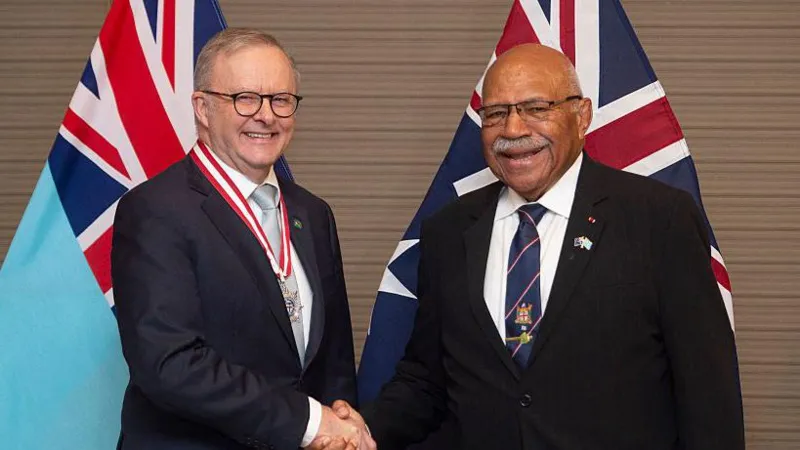
China has conducted a missile test in the Pacific Ocean just hours after Australia and Fiji signed a new security and defence cooperation agreement, a development that has intensified geopolitical tensions across the Indo-Pacific and prompted renewed scrutiny of Beijing’s growing military activities in the region.
The missile launch, which took place within hours of the landmark Australia-Fiji alliance being announced, has been widely interpreted by regional analysts as a reminder of the increasingly complex strategic competition unfolding across the Pacific. Although Chinese authorities described the test as part of a routine military programme, the timing has attracted considerable international attention and fuelled debate over the broader security implications for neighbouring countries.
Governments across the Indo-Pacific have been closely monitoring the latest developments as strategic rivalry between China and Western-aligned nations continues to shape regional diplomacy, defence planning and military cooperation.
According to Chinese officials, the missile test formed part of a scheduled exercise intended to evaluate the performance and reliability of the country’s weapons systems. Authorities stressed that the launch complied with international regulations and was not directed against any specific nation.

The Chinese military has regularly stated that missile testing represents a normal component of national defence preparedness and military modernisation. Beijing has repeatedly argued that every sovereign nation possesses the right to develop and maintain military capabilities necessary for national security.
However, the timing of the launch has inevitably drawn comparisons with the newly announced Australia-Fiji agreement, which seeks to strengthen defence cooperation, maritime security, disaster response and broader strategic collaboration between the two Pacific nations.
The agreement represents another significant step in Australia’s efforts to deepen security partnerships across the Pacific Islands at a time of increasing geopolitical competition.
Australian officials have consistently emphasised that cooperation with Pacific neighbours is intended to support regional stability, improve disaster preparedness and strengthen maritime surveillance rather than target any individual country.
The partnership includes closer defence coordination, expanded training opportunities, greater intelligence sharing and enhanced cooperation in responding to humanitarian emergencies and natural disasters, which frequently affect Pacific island nations.
Fiji occupies an important strategic position in the South Pacific and has increasingly become an important diplomatic partner for Australia, New Zealand and several Western allies seeking to reinforce regional engagement.
For many Pacific island governments, maintaining balanced relationships with major powers while protecting national sovereignty has become an increasingly delicate diplomatic challenge.
China has significantly expanded its economic, diplomatic and security presence throughout the Pacific over the past decade through infrastructure investment, development assistance, trade agreements and security cooperation.
These initiatives have strengthened Beijing’s influence but have also generated concern among some Western governments, which fear that expanding Chinese engagement could alter the region’s strategic balance.
The latest missile test has therefore been viewed by many analysts within the broader context of intensifying strategic competition rather than as an isolated military exercise.
Military experts note that missile testing serves multiple purposes beyond technical evaluation.
Such exercises allow armed forces to assess weapon performance, validate operational readiness and demonstrate technological capability. At the same time, they inevitably send political and strategic signals to both allies and competitors.
Although no official connection has been established between the missile launch and the Australia-Fiji agreement, the close timing has encouraged widespread speculation regarding Beijing’s broader messaging.
Chinese officials have rejected suggestions that the launch was intended as a response to regional diplomatic developments, maintaining that military testing follows established operational schedules.
Australia has not publicly linked the missile test directly to its agreement with Fiji, but government officials reiterated their commitment to maintaining a peaceful, stable and rules-based Indo-Pacific.
Canberra has consistently argued that regional security depends upon respect for international law, freedom of navigation and peaceful resolution of disputes.
Australian defence planners have increasingly focused on strengthening partnerships throughout the Pacific in response to evolving strategic conditions.
In recent years, Australia has expanded defence cooperation not only with Fiji but also with Papua New Guinea, Solomon Islands, Vanuatu and several other Pacific nations through training, infrastructure investment and maritime security programmes.
These initiatives complement broader partnerships involving the United States, Japan, New Zealand and other regional democracies.
For Pacific island countries themselves, security extends beyond traditional military concerns.
Climate change, rising sea levels, illegal fishing, natural disasters, organised crime and economic development remain among the most pressing priorities identified by regional governments.
Many Pacific leaders continue to emphasise that geopolitical competition should not overshadow these immediate challenges.
Fiji has repeatedly stated that its international partnerships are guided by national interests rather than alignment with any single global power.
Government officials have stressed that cooperation with Australia aims to strengthen national resilience while preserving Fiji’s independent foreign policy.
Meanwhile, China remains one of Fiji’s significant economic partners through trade, infrastructure financing and development cooperation.
The missile test has also drawn attention from defence analysts monitoring China’s rapidly expanding military capabilities.
Over the past two decades, the People’s Liberation Army has invested heavily in advanced missile technology, naval expansion, cyber capabilities, satellite systems and long-range precision weapons.
These modernisation efforts form part of China’s broader objective of transforming its armed forces into a technologically advanced military capable of protecting national interests across an increasingly wide geographical area.
Western governments have acknowledged China’s legitimate security interests while expressing concern about the pace of military expansion and the potential implications for regional stability.
Strategic analysts argue that transparency, communication and confidence-building measures remain essential to reducing the risk of misunderstanding during periods of heightened geopolitical competition.
The Indo-Pacific has become one of the world’s most strategically significant regions due to its vital shipping routes, growing economies and concentration of military power.
A substantial proportion of global trade passes through nearby maritime corridors, making regional stability critically important for international commerce.
Consequently, developments involving military exercises, defence agreements and diplomatic partnerships frequently attract global attention.
International observers have called for continued dialogue among regional powers to prevent unnecessary escalation.
Many experts argue that while military preparedness remains an accepted aspect of national defence policy, diplomatic engagement remains equally essential in maintaining long-term peace and stability.
Regional organisations have consistently encouraged countries to resolve differences through dialogue, respect international law and avoid actions that could increase tensions.

As strategic competition continues to evolve, governments throughout the Pacific are expected to maintain careful diplomatic balancing, strengthening partnerships while seeking constructive relations with all major powers.
The close succession of China’s missile test and the Australia-Fiji security agreement has once again highlighted the increasingly interconnected nature of military, diplomatic and economic developments across the Indo-Pacific.
Whether viewed as coincidence or strategic signalling, the events underscore the growing importance of the Pacific in global geopolitics.
For policymakers across the region, maintaining stability will require continued diplomatic engagement, responsible military conduct and sustained cooperation on shared challenges ranging from security and disaster response to economic development and climate resilience.
As China continues modernising its armed forces and regional nations expand their security partnerships, the Indo-Pacific is likely to remain at the centre of international strategic attention for years to come.
Related News:
 Japan Braces as Takaichi Begins New Term with Huge Mandate for Low‑Tax, Ultra‑Conservative Agenda
 Discontent grows around Putin amid war strain
 After the Landslide: Can India Reset Ties with BNP Bangladesh?
 Starmer Weighs Fast-Tracking Defence Boost
 Macron Rebuked in Franco-German Defence Row
 China Strikes at Japan’s Core — Will PM Takaichi Back Down?
 South Korea’s Ex-President Faces Death Penalty in Insurrection Trial
 Musk Cuts Starlink Access for Russian Forces – Giving Ukraine an Edge at the Front
 Kim Jong Un Reappointed as Ruling Party Chief
 The Taekwondo Teacher Tasked With Healing India’s Troubled State
 Japan to Deploy Missiles on Island Near Taiwan by 2031
 Nine Killed in Karachi Consulate Protest
 Could Kim’s Teen Daughter Become North Korea’s Next Leader?
 Rap Star May Beat Ex‑PM — What This Says About Nepal’s Gen Z
 UK Will Allow US to Use Bases to Strike Iranian Missile Sites, PM Says
 Cooper: Joining US Strikes on Iran ‘Not in Britain’s Interest’
 Trump’s Iran Endgame Unclear After Mixed Messaging on War Aims
 Nepal Leaders Call on Voters to Ensure Success of ‘Historic’ Election
 Nepal Holds First General Election Since Gen Z Protests Toppled Government
 Nepal Election 2026: When Will We Get the Results?
 Iran Drones Hit Azerbaijan Airport as War Widens
 Sri Lanka Takes Control of Second Iranian Vessel a Day After US Sub Attack
 Minister Meets Crews Who Will ‘Take Out’ Iranian Drones
 UK Prepares Aircraft Carrier for Middle East Crisis
 Nepal election 2026: Rapper Balendra Shah on track to be next PM as his party heads for landslide
 UK–US Tensions Ease as Starmer and Trump Hold First Call Since Iran Row
 China Moves to Enshrine ‘Ethnic Unity’ Law
 Gulf Oil Shock Sends Global Economic Ripples
 Nepal Election 2026: Balendra Shah’s Party Nears Historic Supermajority
 China’s Biggest Political Meeting Ends — Key Takeaways
 Point-Blank Gunshot Misses Indian Politician
 North Korea Fires Missiles Amid US-South Korea Drills
 Anti-Regime Iranians Turn Anger Toward Trump
 Pakistan Denies Air Strike on Afghanistan Hospital That ‘Killed 400 People’
 Nepal Gen Z Protests Succeed, Bangladesh Struggles
 A Bridge to Peace? Taiwan’s Opposition Leader Lands in China
 The ‘Pakistan Protocol’: How Islamabad Pulled the World Back from the Brink
 Victory or Compromise? Tehran’s Streets Erupt in Mixed Emotion Following Ceasefire
 RAF Typhoons scrambled amid Russian drone threat near Nato
 Southeast Asia Turns to Russia Amid Energy Crisis
 Trump orders US troop pullout from Germany
 Trump likens US Navy actions to ‘pirates’
 Fog of War: US Rejects Iranian Claims of Missile Strike on Navy Frigate
 Australia pushes Pacific security pact amid China tension
 BJP Sweeps West Bengal in Historic Breakthrough
 “Consolidation in Crisis”: Gen Assimi Goïta Assumes Defence Ministry After Coordinated Attacks Kill Predecessor
 “The Pivot to Pakistan”: Trump Pauses ‘Project Freedom’ in Hormuz Amid Iran Deal Hopes
 “The Strait Scramble”: Inside Trump’s ‘Project Freedom’ and the Hormuz Naval Escort
 “The New Silk Road”: India and Vietnam Forge Strategic Maritime Alliance to Counter Regional Volatility
 US Awaits Iran Reply on New Ceasefire Proposal
 One Nation Stuns Australia With Historic Farrer Win
 Putin Declares Russia Victory at Scaled Victory Day Parade
 Hormuz Talks Near Critical Stage
 Zelenskyy warns over Oreshnik threat as Kyiv hit
 Trump-Netanyahu Call Fuels Iran Talk Crisis
 Israeli Strikes Kill 11 in Gaza City
 Xi Jinping to Make Rare North Korea Visit
 UK Faces Most Dangerous Era, Military Chief Warns
 Royal Navy Mourns Devastating Helicopter Loss
 UK Faces Pressure Over Red Arrows Future
 Xi Arrives in North Korea for Rare Summit
 Why Xi’s North Korea Visit Matters Now
 Myanmar Rebels Face Growing Pressure as Military Expands Forced Recruitment Drive
 Millions Gather for Khamenei’s Six-Day State Funeral
 Yvette Cooper Signals Global Momentum Towards Gaza Peace Deal Amid Humanitarian Crisis
 Russia’s Latest Push to Win US Favors Shows Deep Desperation
 BBC to Apologise Over Edited Trump Speech Amid Backlash
 Greene Pushes Epstein Files Amid Trump Fallout
 Australian Families Leave Syrian Camp for Home
 Ukraine Negotiator Reveals What It Feels Like Facing Russia
 American Citizen Killed in Cuba Boat Shooting, U.S. Officials Say
 Iran’s Regime Still Intact — Coming Days Will Test Its Survival
 Finland Plans to Lift Decades‑Old Ban on Hosting Nuclear Weapons
 Trump Pressures Congress Over Save America Act
 Iran War Puts Trump at Political Risk Amid Rising Prices
 Queensland Protest Laws Spark Free Speech Backlash
 “An Endurance Test for the Mind”: British Couple Sentenced to 10 Years in Tehran
 “The Local Gavel”: Polls Open Across Hampshire and Isle of Wight in Delayed ‘Milestone’ Vote
 Israel, Lebanon Agree on Fragile Ceasefire Deal
 Israel Strikes Iran After Missile Attack