Published: 31 October 2026. The English Chronicle Desk. The English Chronicle Online
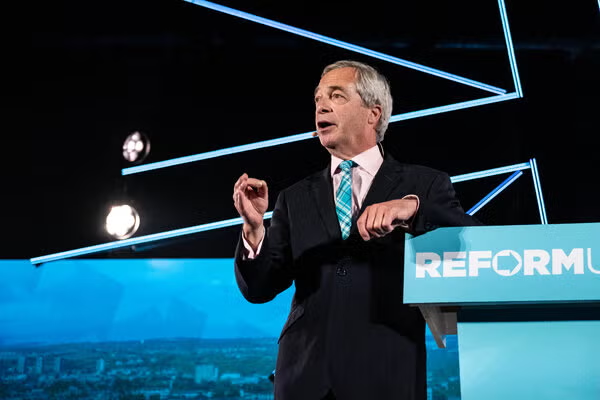
Nigel Farage has found yet another platform from which to promote his political worldview, with the launch of Reform UK’s newspaper, The Reformer, providing fresh material for satire over the party leader’s expanding role in British political life. Presented as a publication aimed at challenging what Reform portrays as the mainstream media establishment, the newspaper has also become the target of sharp criticism over its political messaging, particularly its treatment of immigration, race, culture and national identity.
The publication is closely associated with Farage, who has positioned himself at the centre of its operation. In a satirical examination of the newspaper, the publication’s editor and political commentator John Crace imagines Farage taking on an extraordinary range of roles, from editor-in-chief and agriculture writer to agony uncle, football correspondent, literary editor and crossword compiler.
The joke rests on the suggestion that The Reformer is less a conventional newspaper than an extension of Farage’s political personality, with virtually every story ultimately reflecting the Reform leader’s familiar themes.
The newspaper presents itself as an alternative voice for people who believe established media organisations ignore or suppress issues important to them. Its tone is deliberately populist, with claims that Britain has been damaged by immigration, political elites and institutions associated with the European Union.

In Crace’s satirical version, however, those themes are pushed to an absurd extreme. Immigration becomes the explanation for almost every social problem, while Farage appears to be the solution to almost every political question.
The satire also focuses on the way political rhetoric can turn complicated issues into simplistic narratives. Agricultural difficulties, welfare pressures, crime, transport problems and even football success are imagined as opportunities to reinforce the same political message.
One fictional article attributes a poor agricultural season to immigrants, mocking arguments that environmental problems can be explained primarily through migration. The exaggerated scenario is designed to expose what critics see as the dangers of reducing complex economic, environmental and social questions to questions of nationality.
Another imagined article takes aim at claims surrounding immigration and welfare, while a fictional consumer affairs feature uses racial stereotypes to lampoon anti-immigration rhetoric. The deliberately offensive language is presented as part of Crace’s satire rather than as factual reporting, with the purpose of highlighting how racial generalisations can enter political debate.
Farage’s prominence within the fictional newspaper becomes even more pronounced in the imagined interview section. There, he effectively interviews himself, presenting a caricature of a politician who is both the subject and author of his own political narrative.
The scene exaggerates the leader’s public image, portraying him as a politician increasingly confident in his prospects and ambitions. The fictional interview also references his political successes and his belief that Reform can become a major force in British politics.
The satire reflects a broader development in British politics: Reform UK has increasingly sought to establish itself not simply as a protest movement but as a serious political organisation capable of influencing national debate.
Farage has spent years building a political identity around opposition to immigration, criticism of the political establishment and demands for greater national sovereignty. His central role in the Brexit campaign helped establish him as one of the most recognisable figures in British populist politics.
The Reformer provides another mechanism through which that political identity can be communicated directly to supporters. Rather than relying exclusively on traditional broadcasters and newspapers, political organisations can increasingly create their own media ecosystems in which supporters encounter news, commentary and political messaging through a sympathetic editorial lens.
That development has consequences beyond Reform itself. Political newspapers and digital media platforms can help parties communicate without relying on conventional editorial filters. Supporters receive a mixture of political information, opinion and campaign messaging in a format that resembles traditional journalism.
Crace’s satire repeatedly blurs that boundary in order to make the political message look deliberately ridiculous.
The fictional football section, for example, transforms England striker Harry Kane’s international sporting achievement into a Brexit argument. In the parody, Farage claims responsibility for Kane’s success and suggests that Britain’s departure from the European Union somehow enabled an English footballer to reach the top.
The absurdity is intentional. Football is used as an example of how political movements can attempt to attach their preferred narrative to events that have little direct connection to their policies.
The imagined agony column takes a similar approach. A fictional reader complains about an unpleasant travel experience, poor airline service and lost luggage, while the satirical Farage responds by blaming foreign workers and offering an exaggerated political solution.
The section mocks both the language of grievance and the tendency to convert individual frustrations into broader arguments about national decline.
Other sections target political figures and personalities associated with the British right. The fictional “Racist of the Month” feature uses dark humour to criticise controversial public figures and recent legal or political disputes involving individuals associated with far-right or anti-establishment politics.
The satire also turns towards Farage himself, imagining a book review of a fictional memoir whose title deliberately evokes one of the most infamous political and historical works of the 20th century. The section references allegations surrounding Farage’s past comments and uses deliberately provocative humour to question his political image.
Another fictional feature imagines Farage discussing a pothole near his home. The grotesque joke again revolves around immigration and small boats, two subjects that have become central to Reform’s political messaging.
Transport complaints are similarly transformed into an opportunity to blame foreigners, with traffic congestion on the M6 presented in the parody as evidence of immigration rather than a complicated infrastructure and transport problem.
The television listings section completes the fictional newspaper’s portrait of a political media universe. Programmes from broadcasters associated with the political right are presented as natural viewing, while satirical descriptions of other programmes portray Reform figures as being surrounded by controversies involving racism, extremism and political donations.
Although the article is written as satire, its underlying subject is serious: the growing role of personality-driven political communication in Britain.
Farage has long been one of the country’s most effective political communicators, particularly at reaching voters who feel alienated from established parties and institutions. His ability to frame political questions around immigration, sovereignty and national identity has helped make him an influential figure far beyond the formal size of his party.
The launch of The Reformer represents another step in that communication strategy. A party newspaper can provide supporters with stories that reinforce shared political assumptions while giving the organisation greater control over how issues are presented.
Critics are likely to argue that such publications risk deepening political polarisation, particularly when complicated questions about immigration, race, economics and public services are presented through highly partisan narratives.
Supporters, however, are likely to view the publication differently, seeing it as an alternative to mainstream outlets they believe have failed to represent their concerns.
That tension is increasingly important in British politics. The traditional boundaries between political campaigning, journalism, commentary and social media are becoming less distinct, while political leaders are increasingly able to speak directly to their audiences.

For Farage, that environment offers an opportunity to strengthen his political brand and maintain control over the issues that dominate the conversation around Reform.
For critics such as Crace, it also offers an irresistible target for satire.
The imagined version of The Reformer ultimately presents Farage as a newspaper unto himself: editor, columnist, interviewer, sports writer, agony uncle and commentator, with every road leading back to the same political message.
Behind the jokes lies a genuine question about the future of British political communication. As parties increasingly build their own media platforms, voters will have more opportunities to consume information that reflects the worldview of the political organisations they support. Whether that strengthens democratic debate or makes political divisions harder to bridge will depend largely on how such platforms use their influence.
For now, The Reformer has given Farage another stage on which to present his politics. And in Crace’s telling, it is a stage on which he needs remarkably few supporting actors.
Related News:
 Jenrick Defends Farage Amid Fresh Reform Racism Claims
 RAF Barnham Protests Fuel Tensions in Norfolk Town
 Marina Hyde Finds Hope Amid Political Chaos
 Patriot Platform Raises Concern Across Britain
 Reform UK Receives Record £36m Donation From Crypto Billionaire
 Election Candidate Abuse Raises Alarm in England
 Lib Dems Prepare for Election Amid Reform Challenge
 Elif Eralp Emerges as Berlin’s Next Political Force
 Free Speech Emerges as Key UK Election Issue
 Dale Vince Plans New London-Wide News Operation
 Drumcree Talks Falter as Legal Challenge Deepens
 UK-France Returns Deal Faces Expiry as Talks Stall
 Green Party faces dispute over Zionism motion
 Hundreds of UK prisoners released early amid overcrowding
 Drumcree Talks End Without Agreement Ahead of Appeal
 Badenoch Raises Prospect of 2027 UK Election
 Holborn and St Pancras Vote Tests Labour and Greens
 Luton Residents Reject Claims of ‘No-Go Zones’
 Labour Wins Key London By-election as Greens Fall Short
 Burnham Rises as Farage and Polanski Face Setbacks
 Labour Beats Greens in Crucial London By-election
 UK Gaza Refugee Route Criticised Over False Hope Claims
 UK Greens Face Crisis Over Zionism and Extremism Row
 England and Wales Begin Second Wave of Early Prison Releases
 Farage Rejects Claims Reform Would Let Troops Shoot Migrants
 Essex Volunteer Accuses Reform Councillor of Nazi Remark
 King Charles Faces Calls for Slavery Reparations Talks
 Ministers Clash Over Mahmood’s Migration Reforms
 Kezia Dugdale Warns of Possible Reversal of Equal Rights Gains
 John Terry Faces Backlash Over Political Posts
 Barrister Criticises Trial After Suicide Case Verdict
 Immigration Judges Fear Pressure in Trump Era
 Farage and Reform UK Reshape British Politics
 Starmer Leadership Under Pressure After Setbacks
 UK Nations Brace for Potential Breakup Amid Reform Surge
 Three-Quarters of England’s Riverbanks Still Off Limits
 Westminster Council Threatens Charing Cross Soup Kitchen
 BBC Warned About Missing Clothes of Murder Victim
 Burnham unveils £65m drought aid for farmers
 Ghent Professors Questioned Cofnas Appointment
 British Museum Faces Questions Over Peter Thiel’s Private Bayeux Viewing
 Internal Exclusions Surge in England’s Schools
 Reform Faces Fresh Financial Controversy
 Councils spend £125m on illegal children’s care
 Europe’s democracies face a growing far-right threat
 Mahmood Warns Far Right Over Asylum Protests
 Disabled Travellers Seek Fairer UK Care Rules
 NHS Breast Care Review Finds Serious Patient Harm
 Democrat Says ICE Restricted Detention Camp Oversight
 UK Unveils Centre to Counter Foreign Disinformation
 UK Plans New Centre to Counter Information Warfare
 GP List Policy Risks Cutting Off Vulnerable Patients
 London Facial Recognition Trial Ends With False Alert
 UK University Strikes Spread as Financial Pressure Grows
 Burnham Opens Door to Possible UK Return to EU
 US bombers leave RAF Fairford after terror threat
 Gosport Protesters Clash With Police Over Migrant Rescue
 Royal Navy Sailor Charged With Alleged Spying
 India’s Youth Movement Alleges Mass Detentions Before Protest
 Gaza War Deepens India’s Strategic Ties With Israel
 British Military School Abuse Victims Denied Justice
 French Students Protest Poor Conditions in Paris Suburbs
 Greta Thunberg Backs French Students in School Protests
 Millions Face Tougher Medicaid Rules From January
 Ohio Airports Become Key Hubs for ICE Deportation Flights
 Farage Calls for Prosecution of Asylum Seeker Charities
 Gadi Eisenkot: Israel’s Anti-Netanyahu Challenger
 UK Bill Faces Warning Over Fayed Trafficking Victims
 Up to 20 English Maternity Units Face Possible Closure
 UK Pledges Stronger Protections for Disabled Air Passengers
 Middleton Revitalisation Blueprint for UK Towns
 Lula Supporters Make Final Push Ahead of Brazil Runoff
 Taylor Faces Backlash Over Response to Haines Attack
 UK Land Registry Plan Faces Opposition From Landowners
 Yvette Cooper Reverses NHS Patient Watchdog Abolition Plan
 Spain Mourns 68 Dead After High-Speed Train Crash
 Novaya Gazeta to Close After Russian Government Pressure
 MPs Urge UK to Write Off Most British Council Debt
King Charles Faces Reparations Protests at Antigua Summit
 Bedouin Women Drive Historic Arab Election Gains