Published: 14 October 2026. The English Chronicle Desk. The English Chronicle Online
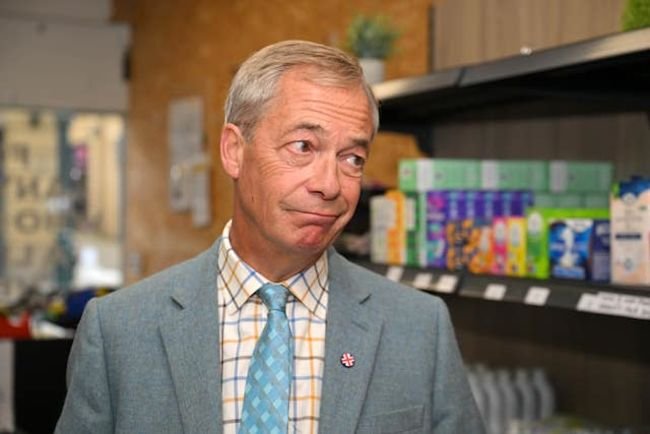
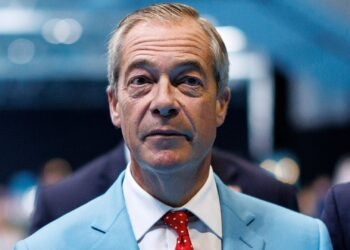
Reform UK leader Nigel Farage has called for charities and volunteers who help asylum seekers reach Britain to face possible criminal prosecution, intensifying an already divisive debate over migration, humanitarian assistance and the responsibilities of organisations operating across the English Channel. His remarks, made during an interview with a right-wing American political commentator, have raised questions about the potential consequences for rescue organisations and campaign groups that assist people arriving in the UK.
Farage did not identify specific charities that he believes should be prosecuted. However, he and other senior figures in Reform UK have previously criticised the Royal National Lifeboat Institution (RNLI), which rescues people in danger at sea, including asylum seekers attempting to cross the Channel in small boats. The charity has faced hostility over its rescue work, despite its wider lifesaving responsibilities.
The comments came during a conversation with American podcaster Benny Johnson, who asked Farage whether people and organisations facilitating the arrival of asylum seekers should face criminal penalties. Farage strongly supported the idea, accusing some non-governmental organisations and taxpayer-funded groups of helping criminal activity.

He characterised those organisations as politically motivated and accused them of opposing national borders and national identity. However, he did not provide specific evidence in the interview establishing that charities engaged in humanitarian rescue or assistance had committed criminal offences. His comments were political demands for tougher action rather than an announcement of any legal proceedings.
The distinction is important because assisting people in distress, providing humanitarian support and facilitating unlawful entry are not necessarily the same activity. Whether particular conduct constitutes an offence depends on the circumstances and the applicable law. A call for prosecution does not itself establish that an organisation has broken the law.
The debate comes amid continuing political pressure over irregular migration across the Channel. Small boats carrying asylum seekers have become a major issue in British politics, with disagreements over border enforcement, the asylum system, people-smuggling networks and the treatment of people arriving without prior permission.
Farage described the arrivals as an invasion and warned that some people entering the country could cause serious harm. He repeatedly raised concerns about Muslim asylum seekers and argued that migration could change British society in fundamental ways. His statements reflect Reform UK’s hard-line approach to immigration, which places border control and the reduction of irregular arrivals at the centre of its political message.
Such rhetoric has become a significant feature of the wider migration debate, but broad claims about asylum seekers should be distinguished from evidence concerning individuals or specific criminal networks. People arriving by small boat have different backgrounds and circumstances, and an asylum claim is a request for protection that must be assessed according to the relevant legal framework. Nationality or religious identity alone does not establish that an individual poses a security threat.
The RNLI has been a particular focus of political controversy because its lifeboat crews rescue people in danger regardless of their circumstances. The charity’s work includes responding to maritime emergencies involving a wide range of people, not solely asylum seekers. Its supporters argue that rescuing people from dangerous waters is a humanitarian responsibility, while critics have claimed that such operations may encourage further crossings.
Farage has previously described the RNLI as a “migrant taxi service”, a phrase that prompted criticism from supporters of the charity. Other Reform figures have also attacked the organisation. The controversy has extended beyond political argument, with the charity facing intimidation and concerns about the misuse of personal information belonging to supporters.
Footage has also circulated showing far-right protesters verbally abusing RNLI crews as people were brought ashore. Such incidents illustrate how the migration debate can move beyond disagreements over government policy and affect individuals carrying out emergency work.
For rescue organisations, the central issue is the responsibility to respond when lives are in danger at sea. Channel crossings can expose passengers to overcrowded vessels, inadequate equipment, changing weather and dangerous water conditions. A failure to assist people facing immediate danger can have potentially fatal consequences.
At the same time, governments have responsibilities to enforce immigration law and investigate people-smuggling operations. These objectives need not be treated as mutually exclusive: authorities can pursue criminal networks while maintaining the distinction between organised trafficking, individual migration decisions and emergency humanitarian assistance.
Farage’s proposal to prosecute charities has also drawn attention because of the wider implications for civil society. Non-governmental organisations frequently provide legal advice, accommodation, food, medical assistance and other support to asylum seekers. If broad accusations of criminal complicity were translated into investigations or new legal restrictions, organisations could face uncertainty about which forms of assistance might expose them to prosecution.
The legal position would depend on the conduct involved and any relevant evidence. A charity providing food or emergency accommodation is not automatically engaging in unlawful activity simply because its beneficiaries are asylum seekers. Equally, any organisation suspected of knowingly participating in criminal conduct could be investigated under applicable laws. The essential question is whether there is evidence of an offence, rather than whether an organisation supports a politically controversial group.
The dispute has echoes of earlier controversies in Europe over government efforts to restrict organisations working with migrants. Hungary, under former prime minister Viktor Orbán, pursued measures targeting some organisations and media groups accused of advancing foreign interests or supporting migration. Critics argued that such approaches risked placing pressure on independent civil society and limiting legitimate humanitarian work.
The comparison does not mean that the legal or political circumstances in Britain are identical. It highlights, however, the broader tension that can arise when governments or political movements seek to use criminal law against organisations whose activities they oppose.
During the interview, Farage also made repeated references to Muslim migration and suggested that changes in immigration policy could threaten established cultural values. He drew comparisons with the United States, arguing that European countries such as Britain and France faced more serious migration challenges. He warned that a future American administration that failed to pursue a sufficiently restrictive approach could allow the country’s cultural identity to change.
Farage further claimed that political speech in the United States could become illegal within five to ten years if migration was not addressed, suggesting that a future government might ban the podcast on grounds of hate speech. The comments reflected his broader argument that immigration and free expression are linked political concerns. They were predictions about a possible future, not evidence that such a ban had been proposed.
The interview also touched on a separate security issue involving five British nationals who were arrested near RAF Fairford in September and later released on bail. Farage speculated that they might have been conducting a preliminary operation for a terrorist attack against British forces. The information presented in the interview did not establish that this allegation had been proven, and the status of an investigation or release on bail should not be treated as evidence of guilt.
He used the case to argue that Britain was experiencing what he called “two-tier policing”, claiming that some people faced detention for controversial statements while others accused of more serious conduct were released on bail. Such comparisons are politically contentious, and decisions about bail and charging depend on the circumstances and evidence in each case. An arrest or accusation does not amount to a criminal conviction.
Farage has previously attracted criticism for the tone and content of interviews with right-wing American media figures. Some Jewish organisations have criticised comments he made in other US interviews, arguing that certain remarks drew on conspiracy theories or tropes associated with the far right and antisemitism. His latest appearance again illustrated how his message can be delivered to an audience beyond Britain, where debates about immigration, national identity and political speech often overlap.
A Reform UK spokesperson responded to the latest controversy by saying Farage’s comments spoke for themselves, without offering further clarification about which charities might face prosecution or what specific activities the party believes should be criminalised.
The lack of detail leaves important questions unanswered. It is unclear whether Farage is advocating changes to existing legislation, more aggressive enforcement of current offences or prosecution in cases where authorities already have evidence of criminal conduct. Without a clearer definition of the organisations and activities he has in mind, the practical implications of his proposal remain uncertain.
For charities and volunteers, the controversy reinforces the importance of clear legal standards and the ability to carry out lawful humanitarian work without intimidation. For policymakers, it presents the challenge of addressing public concern over irregular migration while protecting emergency rescue services, maintaining due process and ensuring that criminal allegations are supported by evidence.

The debate is likely to remain politically charged as parties compete over immigration policy and the future of the UK’s asylum system. Farage’s remarks place humanitarian organisations directly within that argument, raising questions about where political opposition to migration should end and the responsibilities of charities, volunteers and rescue crews should begin.
Ultimately, any decision to prosecute an organisation must rest on applicable law and evidence of specific conduct, rather than political disagreement with its mission. The challenge for Britain is to enforce its borders and investigate genuine criminal activity without undermining the humanitarian principles that protect people in danger or treating all asylum seekers and those who assist them as a single category.
Related News:
 Murder Probe Continues After Arrest Release
 Patriot Platform Raises Concern Across Britain
 Reform UK Receives Record £36m Donation From Crypto Billionaire
 Election Candidate Abuse Raises Alarm in England
 UK Pauses Chagos Deal Amid US Opposition
 Free Speech Emerges as Key UK Election Issue
 Drumcree Talks Falter as Legal Challenge Deepens
 UK-France Returns Deal Faces Expiry as Talks Stall
 Hundreds of UK prisoners released early amid overcrowding
 Drumcree Talks End Without Agreement Ahead of Appeal
 Badenoch Raises Prospect of 2027 UK Election
 Royal Navy Sailor Charged With Alleged Spying
 England and Wales Begin Second Wave of Early Prison Releases
 Farage Rejects Claims Reform Would Let Troops Shoot Migrants
 UK Urges Interpol to Reject Argentina’s Falklands Arrest Requests
 French Taxi Driver Cleared in David Lammy Theft Case After Fare Dispute
 Palace to reinstate hyphen in Andrew’s surname
 Major Rent Reform Ends No-Fault Evictions in England
 Peers Flood Assisted Dying Bill with 942 Amendments
 UK Unveils Fast-Track Deportation and Asylum Overhaul
 UK Asylum Overhaul Sparks Debate Over Human Rights and Deportations
 UK Asylum Reforms: Temporary Refugee Status and Faster Deportations
 Mahmood Defends Tough Overhaul of UK Asylum System
 Westminster Advances Legacy Bill Amid Criticism
 Peers Get Extra Time to Debate Assisted Dying Bill
 Tim Walz urges Trump to withdraw federal agents immediately
 UK and EU Signal Fresh Push for Defence Cooperation Talks
 Civil Service Pay: Union Urges Ministers to End ‘Barking Mad’ Limits
 Proposed Law Leaves Gap for Children of Convicted Paedophiles
 City & Guilds Sale Sparks Fees and Pay Uproar
 Crackdown Backfires on UK Climate Protesters
 Cartel crackdown raises fears of fresh violence
 Barrister Criticises Trial After Suicide Case Verdict
 Immigration Judges Fear Pressure in Trump Era
 Westminster Council Threatens Charing Cross Soup Kitchen
 BBC Warned About Missing Clothes of Murder Victim
 Unions Warn Labour Over Zero-Hours Contract Reforms
 RAF Barnham Protests Fuel Tensions in Norfolk Town
 Internal Exclusions Surge in England’s Schools
 Reform Faces Fresh Financial Controversy
 UK plans tougher Israel stance with settlement trade ban
 Councils spend £125m on illegal children’s care
 Europe’s democracies face a growing far-right threat
 New Mexico Takes Facebook to Trial Over Data Scandal
 Israel Accused of Undermining Palestinian Life
 Mahmood Warns Far Right Over Asylum Protests
 Disabled Travellers Seek Fairer UK Care Rules
 NHS Breast Care Review Finds Serious Patient Harm
 Harrods Faces Dispute Over Fayed Abuse Compensation
 Lib Dems Prepare for Election Amid Reform Challenge
 Reform UK Faces Internal Debate Over £72m Spending
 US Networks Suspend Trump White House Pool Coverage
 Democrat Says ICE Restricted Detention Camp Oversight
 UK Unveils Centre to Counter Foreign Disinformation
 King Refers Jamaica Slavery Petition to Privy Council
 UK Plans New Centre to Counter Information Warfare
 Elif Eralp Emerges as Berlin’s Next Political Force
 Republican Senator Questions Trump Ad Spending
 London Facial Recognition Trial Ends With False Alert
 UK University Strikes Spread as Financial Pressure Grows
 Burnham Opens Door to Possible UK Return to EU
 Green Party faces dispute over Zionism motion
 Musk’s DOGE Sparks Turmoil Inside US Government
 US bombers leave RAF Fairford after terror threat
 Latin America women fear rollback of rights
 Gosport Protesters Clash With Police Over Migrant Rescue
 Andrew Mountbatten-Windsor Challenges Police Raids
 Palace Rejects Funding Andrew’s Police Legal Challenge
 UK Mission in East Jerusalem to Remain Open
 Luton Residents Reject Claims of ‘No-Go Zones’
 Trump Says He Deserves Nobel Peace Prize
 Sri Lanka Ex-First Lady Arrested Over Donation Probe
 Delhi Tightens Security Ahead of Election Protest
 British Military School Abuse Victims Denied Justice
 UK Greens Face Crisis Over Zionism and Extremism Row
 Brazil Court Scandal Threatens Lula as Bolsonaros Rise
 Ohio Airports Become Key Hubs for ICE Deportation Flights
 India’s Voter Roll Crisis Sparks Nationwide Protests
 Ukrainian Soldier Faces Trial Over Nord Stream Blast
 Judge Blocks Trump White House Media Ban