Published: 08 October 2026. The English Chronicle Desk. The English Chronicle Online.
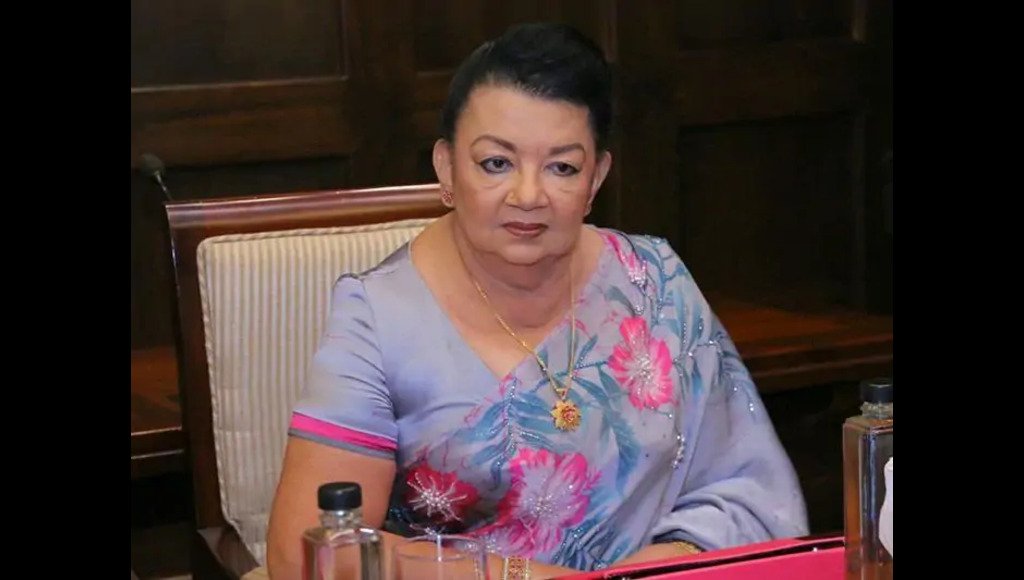
Sri Lanka’s former first lady Shiranthi Rajapaksa has been arrested by the country’s anti-corruption authorities over allegations involving the misuse of donated funds intended to support a children’s hospital.
Rajapaksa, 73, was arrested at her residence in Colombo on Wednesday, two days after returning to Sri Lanka from Singapore, where she had been receiving medical treatment. She was subsequently brought before a court in the capital as investigators continued their inquiry into money collected by a charity associated with her.
The case centres on more than 10 million Sri Lankan rupees, equivalent to roughly US$30,300, which the charity Siriliya Saviya reportedly collected for the purchase of a specialised scanner for Colombo’s Lady Ridgeway Hospital for Children.

Investigators have questioned how the funds were handled after officials said the hospital had already received a similar scanner as a donation from the Chinese government. The circumstances surrounding the money and its intended use have become the focus of the corruption investigation.
Rajapaksa has denied wrongdoing and rejected allegations that the donated funds were misappropriated. Her position is that the money was not stolen or improperly used.
Her arrest followed an attempt to obtain protection from detention through the courts. After returning from Singapore on Monday, Rajapaksa had sought legal intervention to prevent her arrest. However, the court scheduled the hearing of that application for 12 October, leaving investigators able to proceed with the arrest before the matter was heard.
The development marks another legal challenge involving a prominent member of the Rajapaksa family, which dominated Sri Lankan politics for many years.
Shiranthi Rajapaksa is the wife of former president Mahinda Rajapaksa, who served as Sri Lanka’s president from 2005 to 2015. During his years in power, members of the Rajapaksa family occupied several influential political positions and exercised considerable influence over the country’s government.
The family’s political standing was strengthened by the military defeat of the Tamil Tiger rebels in 2009, which brought an end to nearly three decades of civil war. Mahinda Rajapaksa was widely celebrated by supporters for ending the conflict, although his government also faced longstanding criticism over allegations concerning human rights and governance.
The family’s political fortunes changed dramatically more than a decade later.
Sri Lanka experienced its worst economic crisis in decades in 2022, with soaring inflation and severe shortages of fuel, food and medicines. Public anger intensified as people struggled with shortages and deteriorating economic conditions.
Large demonstrations eventually forced Gotabaya Rajapaksa, Mahinda Rajapaksa’s younger brother and then president, to leave office. The political upheaval weakened the family’s once-dominant position and brought renewed public attention to questions surrounding the management of state resources and allegations of corruption.
The latest case involving Shiranthi Rajapaksa is centred on a relatively specific financial transaction, but it has attracted wider attention because of her connection to the former ruling family.
The money under investigation was reportedly raised through Siriliya Saviya, a charitable organisation associated with Rajapaksa. Investigators are examining whether the funds were handled in accordance with their stated purpose after the proposed medical equipment was reportedly provided through another source.
Officials have not suggested that the existence of the donated scanner alone establishes that any crime occurred. The central issue is how the money collected for the equipment was managed and whether any individual improperly benefited from it.
Rajapaksa’s representatives have rejected allegations of financial wrongdoing. Mahinda Rajapaksa’s spokesman, Manoj Gamage, has also defended the family’s position, saying the money remains safely held in the charity’s bank account and that no fraud took place.
That assertion is likely to be considered as the investigation progresses.
The case highlights the scrutiny facing charitable organisations when significant amounts of money are collected for specific public purposes. Where funds are raised to purchase medical equipment, donors and authorities may seek assurances that the money is either spent as promised or appropriately accounted for if the original requirement is later met through another source.
The involvement of a former first lady has added a political dimension to the investigation, although the allegations themselves concern the management of charitable funds rather than a current government position.
Rajapaksa’s arrest also illustrates the increasingly difficult legal environment faced by members of Sri Lanka’s former political establishment. Authorities have intensified efforts to investigate alleged corruption and financial misconduct involving individuals connected to previous administrations, particularly as the country continues to deal with the political and economic consequences of its 2022 crisis.
However, an arrest does not establish guilt. The allegations against Rajapaksa remain subject to investigation and judicial proceedings, and she retains the right to challenge the accusations.
Her decision to seek legal protection before her arrest indicates that the case had already entered a contested legal phase. The scheduled 12 October hearing could provide further information about her legal position and the arguments being made on her behalf.
The authorities’ case will ultimately depend on documentary evidence, financial records, witness accounts and other material collected during the investigation. Establishing whether the funds were unlawfully diverted will require more than demonstrating that the equipment originally intended to be purchased was obtained from another source.
For Sri Lanka, the case comes at a time when public demands for transparency and accountability remain closely connected to the country’s recent political history. The economic collapse of 2022 generated widespread debate about governance, public finances and the responsibilities of political leaders and their families.
The Rajapaksa family remains one of the most recognisable political dynasties in Sri Lanka. Its rise and subsequent decline have closely mirrored the country’s turbulent political trajectory over the past two decades.
Mahinda Rajapaksa’s presidency was defined by the end of the civil war and his family’s strong political influence. Years later, the economic crisis and mass protests fundamentally changed public attitudes towards the political establishment associated with the family.
The investigation involving Shiranthi Rajapaksa therefore carries significance beyond the specific amount of money at its centre. It is also being watched as another test of Sri Lanka’s efforts to address allegations of corruption and strengthen accountability among politically connected figures.

For the former first lady, the immediate priority will be navigating the legal proceedings and responding to investigators’ allegations. Her defence maintains that there was no misappropriation of the funds, while authorities are continuing to examine the circumstances surrounding the charity’s finances.
The next court proceedings are expected to provide greater clarity about the allegations, the evidence available to investigators and whether Rajapaksa will remain subject to restrictions as the case develops.
Until the judicial process reaches a conclusion, the allegations against her remain unproven.
Related News:
 Cartel crackdown raises fears of fresh violence
 Murder Probe Continues After Arrest Release
 Pradhan Resigns Amid Protests
 Israeli Strike in Southern Lebanon Kills Seven
 Patriot Platform Raises Concern Across Britain
 Israel Accused of Undermining Palestinian Life
 Democrat Says ICE Restricted Detention Camp Oversight
 Japan PM Backs International Criminal Court
 Hundreds of UK prisoners released early amid overcrowding
 Drumcree Talks End Without Agreement Ahead of Appeal
 Latin America women fear rollback of rights
 Flydubai Co-Pilot Studied in Australia Before Attack
 Delhi Freezes Promotion of Police Officer After Allegations
 Royal Navy Sailor Charged With Alleged Spying
 NSW Police Bid Delays Inquiry Into Sydney Protest
 French Taxi Driver Cleared in David Lammy Theft Case After Fare Dispute
 Met Police Culture Makes Racial Harm ‘Inevitable’
 Remaining rebel Labour MPs have whip restored
 South African Detained After Neo-Nazi Rally in Australia
 Trump Signs Bill Releasing Justice Department Files on Epstein
 Prevent Failings Exposed After Southport Attack
 Ben Roberts-Smith Denies War Crime Allegations in First Statement
 US Charges Sinaloa Governor in Major Cartel Case
 US states redraw maps after voting rights ruling
 US ‘Narco Boat’ Strikes Draw Global Outcry
 Barrister Criticises Trial After Suicide Case Verdict
 Immigration Judges Fear Pressure in Trump Era
 Gunman Killed After White House Security Shootout
 New Footage Revives Peter Falconio Mystery
 Westminster Council Threatens Charing Cross Soup Kitchen
 BBC Warned About Missing Clothes of Murder Victim
 Cambridge Professor Jason Arday Found Dead at Home
 Nepal-Tibet Flood Death Toll Rises as 2,478 Remain Missing
 Ukraine Villagers Demand Answers After Deadly Arms Depot Strike
 Survivor Sues Musk’s xAI Over AI Abuse Images
 Nepal Flood Survivors Face Unimaginable Loss
 Nepal Tunnel Rescue Offers Hope Amid Flood Devastation
 UN expert urges UK to rethink Israel policy
 Councils spend £125m on illegal children’s care
 New Mexico Takes Facebook to Trial Over Data Scandal
 Fugitive Developer Rants at NSW Corruption Inquiry
 Piddington Votes for Symbolic Independence Over Asylum Plan
 Texas Charges Seven Noncitizens in Voting Crackdown
 ICAC Examines Greenwood Payments and Nassif Links
 Yemen War Displaces 125,000 as Fighting Intensifies
 Iran School Strike Raises War Crimes Questions, UN Says
 Mahmood Warns Far Right Over Asylum Protests
 Saudi Pact Raises Risk of Pakistan Entering War
 Harrods Faces Dispute Over Fayed Abuse Compensation
 US Deportation Deals Send Migrants to Unfamiliar Countries
 US Networks Suspend Trump White House Pool Coverage
 King Refers Jamaica Slavery Petition to Privy Council
 UK Pauses Chagos Deal Amid US Opposition
 Ukraine and Russia Escalate Long-Range Drone War
 Nepal PM calls deadly flood a global climate warning
 Republican Senator Questions Trump Ad Spending
 Free Speech Emerges as Key UK Election Issue
 Cornell Fraternity Assault Investigation Reopened
 South Korea-Ukraine Row Erupts Over North Korean POWs
 London Facial Recognition Trial Ends With False Alert
 French Student Protests Escalate Into Violent Clashes
 Israel-bound Plane Lands in Saudi Arabia After Cockpit Fight
 Drumcree Talks Falter as Legal Challenge Deepens
 UK-France Returns Deal Faces Expiry as Talks Stall
 Pilot Recalls Fight to Save Flydubai Passengers
 Badenoch Raises Prospect of 2027 UK Election
 French School Protests Escalate as 400 Schools Close
 New Prosecutor Takes Over Cornell Assault Case
 Musk’s DOGE Sparks Turmoil Inside US Government
 Germany Pledges €1bn Military Aid to Ukraine
 Gosport Protesters Clash With Police Over Migrant Rescue
 Andrew Mountbatten-Windsor Challenges Police Raids
 Palace Rejects Funding Andrew’s Police Legal Challenge
 Former German Intelligence Chief Arrested Over Espionage
 France Braces for Major Student Protest Mobilisation
 Okinawa US Troops Face Curfew After Murder Case
 Detective Breaks Down Recalling Double Murder Scene
 Botstein Quits Bard Amid Epstein Investigation Calls
 Luton Residents Reject Claims of ‘No-Go Zones’
 Trump Says He Deserves Nobel Peace Prize