Published: 06 October 2026. The English Chronicle Desk. The English Chronicle Online.
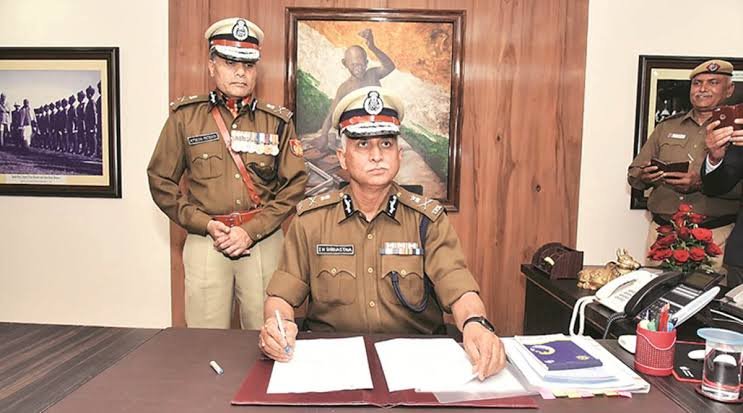
The Delhi government has temporarily suspended the promotion of a senior police officer accused of sexually harassing female journalists during opposition protests in the Indian capital, following growing criticism over the decision to elevate him while complaints against him remain unresolved.
The officer, Assistant Commissioner of Police Vivek Bhagat, was among a group of Delhi police officials whose promotions were announced this week. Bhagat was due to be promoted from assistant commissioner to deputy commissioner, despite allegations made by three female journalists who said they were sexually harassed by police personnel while covering political demonstrations.
The decision has triggered questions about accountability within the Delhi police and the handling of complaints involving women journalists. The controversy has also intensified a wider political dispute surrounding police action during demonstrations against the Election Commission’s Special Intensive Revision process and calls for the resignation of Chief Election Commissioner Gyanesh Kumar.

Opposition parties have been staging demonstrations since 2 October, with protesters attempting to march towards Jantar Mantar. Tensions have repeatedly risen between demonstrators and police as officers attempted to control the gatherings.
The allegations involving the journalists reportedly emerged after three women went to cover one of the demonstrations on Saturday. They accused several police officials of inappropriate and sexually harassing behaviour, with Bhagat identified as one of the officers facing allegations.
The journalists subsequently attempted to file a First Information Report against the police personnel involved. However, they said they were unable to register the complaint at the police station.
Police officials reportedly told the journalists that the allegations were being examined by the crime branch and that an investigation would take place before any decision was made about registering an FIR.
That response has itself become a major point of controversy. Critics have argued that allegations of sexual offences against women require immediate and appropriate legal action and that an internal preliminary process should not be used to delay the formal registration of a complaint where the law requires one.
Against that background, news of Bhagat’s promotion caused further anger among activists and opposition figures.
A Delhi police notification issued on Monday said that Bhagat and 11 other officers had been promoted. The announcement meant that Bhagat would move from the rank of assistant commissioner to deputy commissioner while allegations concerning his conduct during the protests remained unresolved.
The Delhi government subsequently intervened.
In a message issued late Monday night and early Tuesday, the government said Bhagat’s promotion order had been placed on hold. Officials explained that the decision to promote the group of 12 officers had actually been taken earlier, on 25 September, before the protests and allegations that became the focus of public attention.
The formal promotion order was issued on 5 October.
The government also indicated that Bhagat himself had not accepted the promotion. According to the explanation provided, the officer had informed authorities that he did not wish to take up the promotion until the allegations of sexual harassment involving female journalists had been resolved.
The government said the remaining promotions would be dealt with separately in accordance with his stated position.
Although the explanation has provided some clarification about the timing of the promotion decision, the controversy has not subsided. Critics continue to question why an officer facing serious allegations was included in the promotion process and why the journalists were unable to immediately register their complaints.
The dispute has unfolded alongside continuing protests in New Delhi, creating an increasingly tense environment around the handling of opposition demonstrations.
On Monday, as protesters gathered outside a police station, one of the female journalists who had made allegations against police officers was reportedly detained along with other demonstrators. They were later released.
Opposition and activist groups have accused the Delhi police of failing to treat the complaints seriously and of placing additional pressure on the women who attempted to pursue them.
The Cockroach Janata Party, or CJP, has strongly criticised the police response. Party representatives have alleged that the journalists tried to approach police officials accompanied by legal counsel but were not given an adequate opportunity to formally submit their complaints.
CJP leader Saurav Das, accompanied by Communist Party of India (Marxist) leader Brinda Karat, reportedly went to Parliament Street police station in an attempt to file a complaint against Bhagat. According to the group, the FIR was still not registered.
The allegations have become part of a wider political argument about the independence and accountability of Delhi’s police force. Critics point out that Delhi Police operates under the Union government rather than the elected Delhi administration, making the issue particularly sensitive when allegations concern policing during political protests.
CJP leader Ratna Singh has also condemned the police response. She alleged that authorities were refusing to register complaints from the women while taking action against the complainants themselves, including detentions and attempts to seize their mobile phones.
She argued that the women had spent a considerable amount of time waiting outside the police station while asking authorities to formally accept their allegations against the assistant commissioner.
The police have reportedly disputed claims circulating on social media concerning harassment of women during the protests, describing some of the allegations as unfounded or false. The competing accounts have made the issue increasingly difficult to separate from the wider political confrontation surrounding the demonstrations.
For the journalists involved, however, the central issue remains whether their complaints will receive a formal and impartial investigation.
The controversy has also attracted national political attention.
Congress leader Rahul Gandhi has criticised the handling of the allegations and called for action against the police personnel accused of harassment. He has pointed out that Delhi Police falls under the authority of the Union Ministry of Home Affairs and argued that Home Minister Amit Shah should respond publicly to the allegations.
Gandhi has also called for an FIR to be registered against the officers concerned, saying that formal legal action should come before other considerations.
The issue is particularly sensitive because journalists covering public demonstrations rely on access to police-controlled areas and often work in difficult and crowded environments. Allegations that members of the police force sexually harassed journalists therefore raise questions not only about individual conduct but also about the broader conditions under which the media operates.
Women’s safety at political demonstrations has become an increasingly important issue in India, where journalists and activists regularly cover large protests involving significant police deployments.
The controversy also raises questions about institutional accountability. When allegations are made against law enforcement personnel, complainants may face additional difficulties because the officials responsible for receiving complaints can belong to the same institution as those being accused.
That is why calls for an impartial investigation have become central to the political debate.
The Delhi government’s decision to suspend Bhagat’s promotion temporarily may ease some of the immediate criticism, but it does not resolve the underlying allegations. The outcome will ultimately depend on whether the complaints are formally recorded, independently investigated and addressed through the appropriate legal process.
The political tensions surrounding the demonstrations are also expected to continue.
CJP has announced plans to launch what it calls the “Jantar Mantar 2.0” movement from 10 October. The organisation says any location where police attempt to prevent demonstrators from gathering could effectively become a new focal point for the protest.
That threat suggests that confrontation between protesters and authorities could intensify in the coming days, increasing the importance of clear procedures for protecting journalists and handling allegations of misconduct.
For the Delhi government and police authorities, the controversy represents a difficult test of credibility. A decision to promote an officer facing allegations of sexual harassment can easily create the perception that institutional advancement is being prioritised over accountability, even when the promotion decision itself was made before the allegations emerged.
At the same time, the allegations remain allegations and require a fair investigation rather than political judgment. Establishing the facts through an independent and transparent process will be essential if public confidence is to be restored.

The dispute therefore extends beyond one police officer or one promotion order. It has become a wider test of how authorities respond when allegations of sexual misconduct are made against law enforcement personnel, particularly when those making the allegations are journalists performing their professional duties.
As political demonstrations continue in New Delhi, pressure is likely to remain on authorities to clarify what happened, ensure that complaints are properly handled and demonstrate that women journalists can carry out their work without intimidation or harassment.
The temporary suspension of Bhagat’s promotion may have addressed one immediate point of public anger. But the larger question remains whether the institutions responsible for maintaining public order can also demonstrate transparency, accountability and equal protection under the law.
Related News:
 Police Suspect Help in Missing Alice Springs Girl Case
 Immigration Judges Fear Pressure in Trump Era
 Five Years of Taliban Rule Leave Afghanistan in Crisis
 Nepal Flood Survivors Face Unimaginable Loss
 Nepal Tunnel Rescue Offers Hope Amid Flood Devastation
 China’s MeToo Movement Finds New Ways to Survive
 Nepal PM calls deadly flood a global climate warning
 Fayed Survivors Demand Inquiry Into Medical Regulator
 Almost Half of Fayed Accusers May Be Trafficking Victims
 Latin America women fear rollback of rights
 Undercover officer deceived women with ‘grotesque and cruel’ lies, spycops inquiry told
 UK may ban protests amid rising antisemitism fears
 Florida Surgeon ‘Devastated’ Over Fatal Surgery Error
 Barrister Criticises Trial After Suicide Case Verdict
 China mine blast death toll rises to 90
 Victim says non-custodial rape sentence ‘rock in my face’
 New Footage Revives Peter Falconio Mystery
 Westminster Council Threatens Charing Cross Soup Kitchen
 BBC Warned About Missing Clothes of Murder Victim
 Israeli Strike in Southern Lebanon Kills Seven
 Cambridge Professor Jason Arday Found Dead at Home
 Nepal-Tibet Flood Death Toll Rises as 2,478 Remain Missing
 Internal Exclusions Surge in England’s Schools
 Survivor Sues Musk’s xAI Over AI Abuse Images
 Argentina Orders Return of Nazi-Looted Painting
 Councils spend £125m on illegal children’s care
 Patriot Platform Raises Concern Across Britain
 Reform UK Receives Record £36m Donation From Crypto Billionaire
 Israel Accused of Undermining Palestinian Life
 Election Candidate Abuse Raises Alarm in England
 Gaza Strike Kills Child and Paramedic
 Texas Transfers Raise Fears for Migrant Children
 NHS Breast Care Review Finds Serious Patient Harm
 Saudi Pact Raises Risk of Pakistan Entering War
 Harrods Faces Dispute Over Fayed Abuse Compensation
 Clancy Defense Seeks Inquiry Into Lone Juror
 Democrat Says ICE Restricted Detention Camp Oversight
 Japan PM Backs International Criminal Court
 King Refers Jamaica Slavery Petition to Privy Council
 Court Says Judge Should Not Have Heard Case From Bed
 Judge orders Trump to restore access for three media outlets
 Paris child pickpocketing gang leader jailed for eight years
 Ukraine and Russia Escalate Long-Range Drone War
 Yemen fighting forces children out of school and into work
 Free Speech Emerges as Key UK Election Issue
 Tennessee Set to Execute Woman After Clemency Denied
 Cornell Fraternity Assault Investigation Reopened
 London Facial Recognition Trial Ends With False Alert
 Israel-bound Plane Lands in Saudi Arabia After Cockpit Fight
 UK University Strikes Spread as Financial Pressure Grows
 Drumcree Talks Falter as Legal Challenge Deepens
 UK-France Returns Deal Faces Expiry as Talks Stall
 Tennessee Execution Fails After Two Lethal Doses
 Crowborough Divided Over New Asylum Seeker Camp
 Hundreds of UK prisoners released early amid overcrowding
 Drumcree Talks End Without Agreement Ahead of Appeal
 Banned Health Coach Faces UK Events Criticism
 Pilot Recalls Fight to Save Flydubai Passengers
 Badenoch Raises Prospect of 2027 UK Election
 New Prosecutor Takes Over Cornell Assault Case
 Flydubai Co-Pilot Studied in Australia Before Attack
 Ben Roberts-Smith Denies War Crime Allegations in First Statement
 Greens Face Internal Row Over Antisemitism Claims
 Maldives Cave Diving Tragedy Raises Safety Alarm
 British Museum Faces Questions Over Peter Thiel’s Private Bayeux Viewing
 Ukraine Villagers Demand Answers After Deadly Arms Depot Strike
 Abusive ex used Tesla to control and harass former partner
 New Mexico Takes Facebook to Trial Over Data Scandal
 Man Arrested in Mississippi Woman’s Death
 Royal Crown Branded Enslaved Africans in Britain’s Slave Trade
 UK Retailers Accused of Breaking Refund Laws
 Turkey LGBTQ Crackdown Expands With New Arrests
 Mahmood Warns Far Right Over Asylum Protests
 US Networks Suspend Trump White House Pool Coverage
 Republican Senator Questions Trump Ad Spending
 Pelicot Trial Play Comes to London for One Night
 Burnham Opens Door to Possible UK Return to EU
 French School Protests Escalate as 400 Schools Close
 Yemen government launches offensive against Houthis
 Gosport Protesters Clash With Police Over Migrant Rescue