Published: 28 September 2026. The English Chronicle Desk. The English Chronicle Online
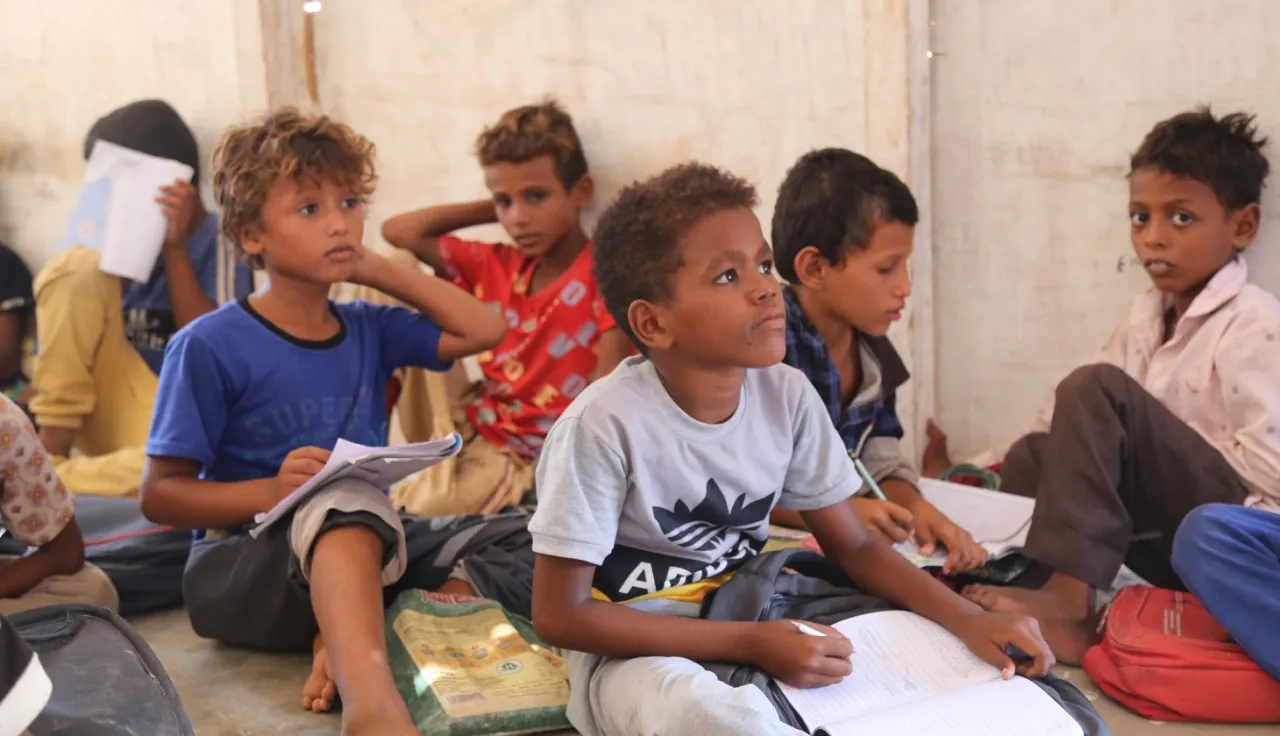
For 13-year-old Muneer Farie, school once represented a path towards a different future. Every morning, he attended classes in his village in Yemen’s Taiz governorate, while afternoons were spent helping his father feed the family’s livestock. The boy, from a farming family, dreamed of becoming the first teacher among his relatives.
That routine has now disappeared.
Renewed fighting in southwestern Yemen has driven Muneer and his family from their home, forcing the teenager to exchange his schoolbooks for goods he can sell in local markets. His experience reflects a wider crisis facing thousands of Yemeni children as renewed hostilities disrupt education, displace families and push households already struggling with poverty towards desperate survival measures.
The latest escalation has shattered several years of relative calm along many Yemeni frontlines. Fighting between the Iran-aligned Houthi movement and Saudi-backed Yemeni government forces has intensified across parts of western and southwestern Yemen, with Taiz among the areas experiencing some of the most serious consequences.
More than 130,000 people have been displaced by the renewed fighting since the beginning of September, according to recent UN estimates. Earlier in the escalation, UNICEF reported that more than 57,000 children were among those displaced in just two weeks. The fighting has also interrupted education and essential services across several affected areas.

For families such as Muneer’s, the numbers translate into a sudden and painful change in everyday life.
As clashes approached his village in al-Wazeyah district, the sound of explosions and gunfire began to intrude into his classroom. What had initially seemed like distant fighting gradually became an immediate threat. His family eventually gathered their livestock and the belongings they could carry before fleeing early in the morning.
They travelled southwest towards a displacement camp in al-Shimayateen, Taiz. They arrived with little money and few of the basic necessities needed to begin life in an unfamiliar place.
The consequences quickly became apparent. Muneer and his brother began selling socks and other inexpensive goods around markets close to the displacement camp. Instead of spending afternoons preparing for lessons or helping his father with livestock, he now works to help his family obtain food, water and other essentials.
His temporary home is a small tent shared with his parents and five siblings. The crowded shelter offers little privacy or comfort, particularly during humid nights.
“Studying is important, but not in a situation like this where we are struggling to get enough food, water and other necessities,” Muneer said. “For now, I will keep working until the war ends.”
His father, Ghaleb Farie, has been forced to depend on his sons’ earnings as the family tries to survive displacement. Like many parents caught between insecurity and poverty, he hopes the move will be temporary and that the family will eventually return home.
But every new arrival at the camp makes that hope more difficult to sustain.
The disruption to education extends far beyond one family. Yemen’s prolonged conflict had already left millions of children vulnerable to interrupted schooling, poverty and displacement. The latest escalation is adding another layer of uncertainty to a generation that has spent much of its childhood living with war.
UNICEF said renewed hostilities had disrupted education in several areas, with 243 schools closed or suspending learning and more than 137,000 students affected in the period covered by its September assessment. Health services have also been disrupted, with 26 UNICEF-supported health facilities reporting interruptions.
For children who remain in their communities, the danger is not necessarily removed by staying home.
At Musaab Ibn Umayr school in Taiz, principal Abdulwasea Abdu tried to keep classes operating for as long as possible. The school provided children with something resembling normal life despite the fighting around them.
That effort ended after a missile landed nearby and exploded within sight of students.
The incident caused widespread panic, with children crying and screaming as explosions shook the area. Some students displayed signs of psychological distress following the blast. The school was subsequently forced to close, leaving more than 600 pupils without access to classes.
For Abdu, reopening the school is dependent on the security situation. Fighting has been reported on several sides of the area, making it difficult for teachers and pupils to safely return.
The danger is that a temporary interruption can become permanent.
When children remain outside school for weeks or months, families facing severe financial pressure may have little choice but to depend on their labour. Displacement can also make returning to education more difficult because children lose contact with teachers, families struggle to afford supplies and transportation, and schools themselves may be damaged or inaccessible.
The situation has already been observed elsewhere in Yemen. Children from poor and displaced households have increasingly been drawn into informal work, collecting recyclable materials, selling inexpensive goods or helping their families with basic income-generating activities. Recent reporting from Taiz has highlighted how children are being pulled away from education as households struggle to meet everyday needs.
The economic consequences of the fighting are making the problem even more difficult.
One of the major roads connecting the Houthi-controlled port of Mocha with government-controlled Taiz has been disrupted. The route is particularly important because it is one of the few roads in the region capable of handling large trucks and passenger buses.
When transport routes become inaccessible, the consequences quickly spread beyond the battlefield. Goods become harder and more expensive to move, markets receive fewer supplies and families have to spend more money on basic necessities.
For displaced households with little or no income, even modest increases in food prices can have serious consequences.
Essam Nabil, a 56-year-old carpenter in Taiz city, said residents were increasingly feeling the economic pressure. Families that previously managed to buy meat and other relatively expensive foods were beginning to rely on cheaper alternatives as the price and availability of goods deteriorated.
For families living in camps, the pressure is particularly severe because displacement often means losing access to homes, farms, livestock and employment at the same time.
The disruption also affects people travelling between Yemen and neighbouring countries. Roads that once provided direct routes have become inaccessible or unsafe, forcing travellers to take longer and more expensive journeys.
Asaad, a Yemeni expatriate working in Saudi Arabia, said the situation reminded him of the early years of the conflict, when blocked roads forced travellers to make lengthy detours through Aden before continuing towards Saudi Arabia.
The renewed fighting therefore represents more than a military confrontation over territory. It is altering the ordinary routines of millions of people, from how families obtain food and water to whether children can attend school and whether workers can reach their jobs.

The humanitarian consequences are becoming increasingly visible. UN agencies have warned that displacement is continuing to rise, while aid operations face difficulties reaching people in areas affected by fighting. UNHCR said more than 130,000 people had already fled their homes since the beginning of September, with further displacement possible if hostilities continue.
Children are among those carrying the heaviest burden.
For Muneer, the immediate priority is no longer a classroom, an examination or a future teaching career. It is helping his family survive another day in a displacement camp.
His story illustrates how quickly conflict can transform a child’s ambitions. A boy who once divided his time between education and helping with livestock is now working in markets because his family has lost the security that made schooling possible.
Across Taiz and other affected parts of Yemen, many families face similar choices. When fighting removes homes, disrupts markets and cuts access to schools, education becomes increasingly difficult to protect.
For children who have already spent years growing up amid war, another interruption could carry consequences long after the guns fall silent.
Related News:
 Gaza Strike Kills Child and Paramedic
 NHS Safety Fears as Nurses Cover Doctor Gaps
 Police Suspect Help in Missing Alice Springs Girl Case
 China Fireworks Factory Blast Kills 21 in Hunan
 China mine blast death toll rises to 90
 Victim says non-custodial rape sentence ‘rock in my face’
 Dreyfus Statue Finally Gets Permanent Paris Home
 Pradhan Resigns Amid Protests
 Israeli Strike in Southern Lebanon Kills Seven
 Cambridge Professor Jason Arday Found Dead at Home
 Five Years of Taliban Rule Leave Afghanistan in Crisis
 Councils spend £125m on illegal children’s care
 Miliband Rejects Chief Rabbi’s West Bank Warning
 Israel Accused of Undermining Palestinian Life
 Texas Transfers Raise Fears for Migrant Children
 Saudi Pact Raises Risk of Pakistan Entering War
 South Africa’s Femicide Crisis Deepens
 Clancy Defense Seeks Inquiry Into Lone Juror
 Japan PM Backs International Criminal Court
 King Refers Jamaica Slavery Petition to Privy Council
 Paris child pickpocketing gang leader jailed for eight years
 Ukraine and Russia Escalate Long-Range Drone War
 UK University Faces Counter-Terror Probe Over China Pressure
 Ex-Harvard President Pauses Teaching Over Epstein Emails
 Kingsbury stabbing probe led by counter-terror police
 Sydney Teacher Arrested in Teenage Grooming Investigation
 UN Warns Israeli Death Penalty Bill Could Be a War Crime
 M&S Demands Urgent Action on Rising Violent Retail Crime
 Melania Trump Epstein remarks spark survivor backlash
 Exhibition Revisits Life of 18th-Century Black Court Figure
 Fraudsters Target Runners Ahead of London Marathon
 Canadian astronaut French words ease language row
 Two Children Die in Wolverhampton House Fire Tragedy
 Escobar’s Hippos May Be Moved to India Zoo
 Aid Crisis Grows as Hormuz War Disrupts Supply
 Older Than Dinosaurs: Secrets of Mayfly Dance Revealed
 Two Dead in Adelaide Airport Plane Crash Fire
 Australian Activists Detained as Gaza Aid Flotilla Intercepted
 Barrister Criticises Trial After Suicide Case Verdict
 Immigration Judges Fear Pressure in Trump Era
 Tractor Breakdown Tests Lincolnshire Farmers
 Plea for Mercy: The Battle to Bring Ahmed al-Doush Home
 Former ICC prosecutor condemns US sanctions
 Thailand Tightens Visa Rules to Curb Tourist Misbehavior
 British Teens in EU Face Soaring UK University Fees
 New Footage Revives Peter Falconio Mystery
 Ukraine Creates Long-Range Strike Command
 UK Schools Struggle as Classrooms Top 40C
 Houthis Strike Saudi Arabia as Middle East Tensions Rise
 Westminster Council Threatens Charing Cross Soup Kitchen
 BBC Warned About Missing Clothes of Murder Victim
 Ukraine Villagers Demand Answers After Deadly Arms Depot Strike
 Internal Exclusions Surge in England’s Schools
 Survivor Sues Musk’s xAI Over AI Abuse Images
 Nepal Flood Survivors Face Unimaginable Loss
 Daughter Finds Bones in Parents’ Burned-Out Car
 Nepal Tunnel Rescue Offers Hope Amid Flood Devastation
 Masked Protesters Bring Dover Port Traffic to Standstill
 UN expert urges UK to rethink Israel policy
 Typhoon Saudel Triggers Mass Evacuations in China
 Abusive ex used Tesla to control and harass former partner
 Turning Point USA Faces Crisis After Kirk Killing
 Saudi Arabia Shuts Oil Pipeline After Drone Attack
 Nearly 50,000 Flee as Houthis Advance in Yemen
 Patriot Platform Raises Concern Across Britain
 Man Arrested in Mississippi Woman’s Death
 Royal Crown Branded Enslaved Africans in Britain’s Slave Trade

 Yemen War Displaces 125,000 as Fighting Intensifies
 Mahmood Warns Far Right Over Asylum Protests
 Harrods Faces Dispute Over Fayed Abuse Compensation
 Patrick Clancy speaks publicly about children’s deaths
 Headteachers Warn New Ofsted System Is Harming Wellbeing
 Labour Apprenticeship Scheme Faces Slow Start
 Briton Faces Cyprus Court Over Son’s Fatal Fall
 UK Reviews Hague Child Abduction Cases Involving Abuse
 Democrat Says ICE Restricted Detention Camp Oversight
 Greece Pushes for Parthenon Marbles Reunification
 Nepal PM calls deadly flood a global climate warning
 Saudi intercepts Houthi missiles as oil fears grow