Published: 23 September 2026. The English Chronicle Desk. The English Chronicle Online.
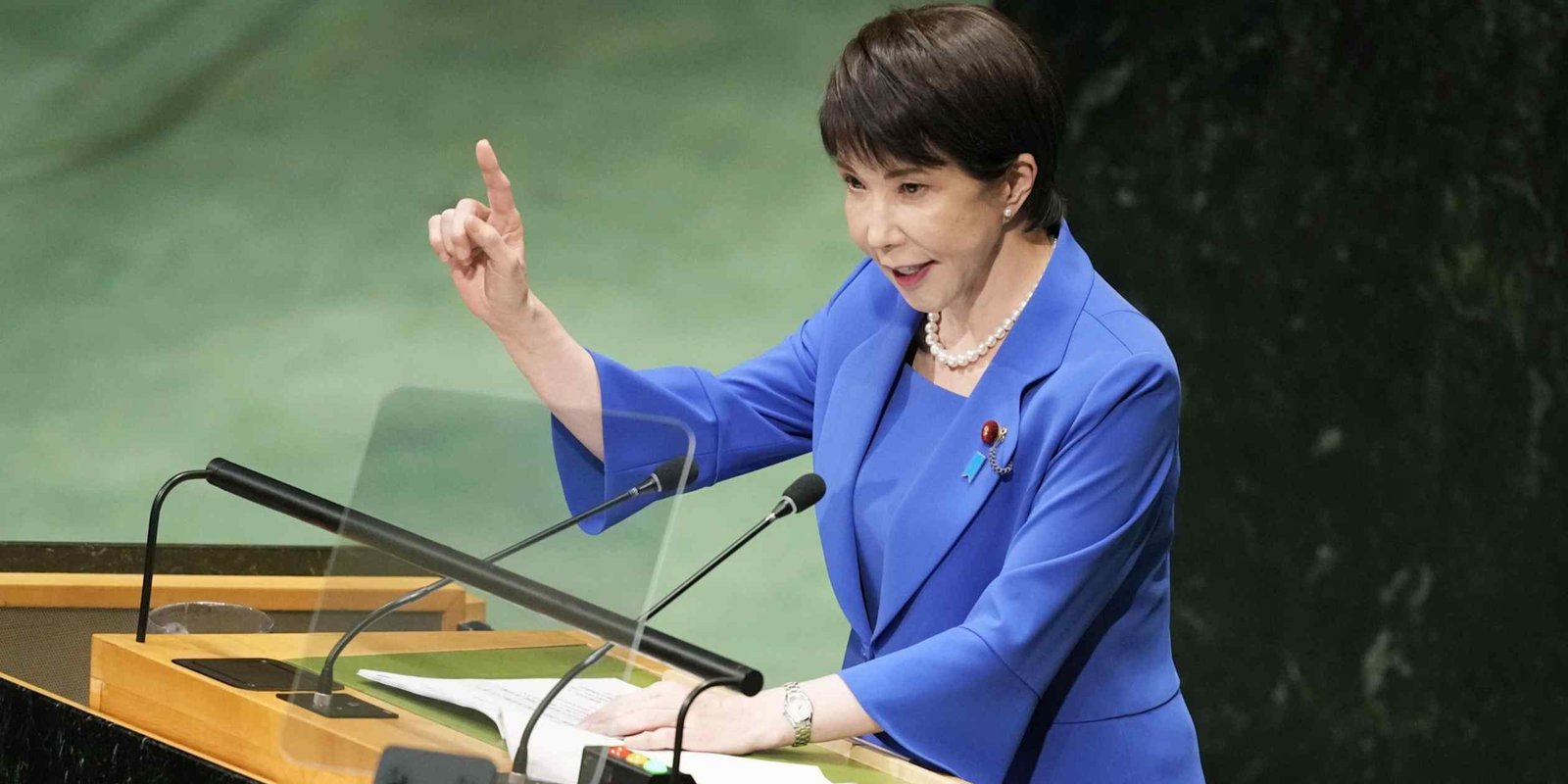
Japan’s Prime Minister Sanae Takaichi has reaffirmed her country’s “consistent support” for the International Criminal Court (ICC), following renewed criticism of the institution by US President Donald Trump and growing pressure within Japan for the government to defend the court more publicly.
Speaking at the United Nations General Assembly in New York on Tuesday, Takaichi linked Japan’s support for the ICC to the country’s postwar commitment to international law and multilateral cooperation. She said Japan had placed particular emphasis on the rule of law in resolving international conflicts and that this approach was reflected in its backing for international organisations, including the ICC.
Her remarks came at a politically sensitive moment for Japan and the court. The ICC has faced increasingly hostile rhetoric from the Trump administration, which has imposed sanctions against the institution and targeted individuals associated with its work. The pressure has intensified as the court continues investigations and legal proceedings involving alleged international crimes.
Trump used his own address to the UN General Assembly on Tuesday to launch another direct attack on the ICC. He described the court as an “out-of-control institution” and called on countries that are members of the organisation to withdraw from it.

“The United States is equally opposed to the out-of-control institution known as the international criminal court,” Trump said. He urged ICC member states to leave what he described as a “rogue institution”.
The US administration’s position has been reinforced by Secretary of State Marco Rubio, who has argued that the ICC should be dismantled and described the court as an unacceptable threat to US sovereignty.
The confrontation has placed Japan in a particularly delicate position because Tomoko Akane, the current president of the ICC, is Japanese. Akane has headed the court since 2024 and has become a prominent figure in the institution’s response to growing political pressure.
Japanese lawmakers from across the political spectrum have urged Takaichi’s government to take a stronger public position in support of the ICC. Their calls followed the US decision to impose sanctions against the court and came amid criticism that Japan had initially responded too cautiously.
A cross-party group of Japanese MPs has called on the prime minister to press Washington to withdraw its sanctions. The group has also urged the Japanese government to use international forums to defend the role of the court.
Former Japanese defence minister Gen Nakatani was among those calling for a stronger response. He argued that the UN General Assembly provides an important platform for countries to communicate their positions to the international community. He said Japan should use Takaichi’s address and diplomatic contacts with other countries to protect the ICC.
The court has been targeted by Washington partly because of its investigations and actions involving matters connected with Israel and the United States. The ICC issued an arrest warrant for Israeli Prime Minister Benjamin Netanyahu, while it has also continued an investigation into alleged war crimes involving US troops in Afghanistan.
The developments have created a complicated diplomatic environment for Tokyo. Japan is a close US ally and depends heavily on its security relationship with Washington, particularly as tensions rise across the Asia-Pacific region. At the same time, Tokyo has repeatedly emphasised the importance of international rules and multilateral institutions in maintaining global stability.
Takaichi’s latest comments appear to reflect an attempt to maintain that position without turning the issue into a direct confrontation with the Trump administration. Although she expressed support for the ICC, she did not directly criticise the US president during her UN speech.
The cautious approach is particularly significant because Japan is simultaneously seeking close cooperation with Washington on security issues involving China and Taiwan. Tensions have increased around the Taiwan Strait and the East and South China Seas, where Chinese military activity remains a major concern for Japanese policymakers.
Takaichi has reaffirmed Japan’s commitment to democratic Taiwan while also raising concerns about Chinese military activity in waters and areas surrounding Japan. Tokyo is closely watching the relationship between Washington and Beijing, particularly as Trump prepares to discuss trade and other issues with Chinese President Xi Jinping.
Japanese officials are reportedly concerned that Taiwan could become part of wider negotiations between Washington and Beijing. The United States is legally committed to providing Taiwan with the means to defend itself, while China considers Taiwan part of its territory and has repeatedly stated that it seeks reunification, including through force if necessary.
Against this wider strategic background, Takaichi’s decision to publicly reaffirm support for the ICC carries diplomatic significance. Japan must balance its alliance with the United States against its stated commitment to the international rules-based order.
The prime minister also revealed that she had discussed the ICC directly with Trump during conversations on the sidelines of the UN General Assembly. According to Takaichi, the two leaders had a “candid exchange” on the issue.
Her latest position marks a shift from some of her earlier comments. When Washington initially announced its sanctions against the ICC in August, Takaichi described the measures as “very unfortunate”. She subsequently went further, saying that the sanctions were incompatible with Japan’s position regarding the court’s work.
The pressure on Japan has been particularly visible because of Akane’s position as ICC president. Her leadership has made the issue more closely connected to Japan’s own international image and its commitment to international justice.
Akane herself has rejected suggestions that sanctions could force the court to abandon its work. Following the announcement of the US measures in August, she said the ICC would not be intimidated and maintained that the pursuit of justice should continue.
The dispute highlights a broader disagreement over the role and authority of international criminal justice. Supporters of the ICC argue that international institutions are necessary for investigating and prosecuting serious crimes when national legal systems are unwilling or unable to act. Critics, including the Trump administration, have raised concerns about jurisdiction, national sovereignty and the potential for the court to interfere in the affairs of states that do not accept its authority.
Japan’s position is therefore being closely watched not only because of its alliance with the United States but also because of its broader role in international diplomacy. Tokyo has sought to present itself as a supporter of international law and multilateral institutions while maintaining strong strategic and economic ties with Washington.
Takaichi’s UN remarks indicate that Japan intends to continue supporting the ICC, although her government has so far avoided turning the disagreement into an open dispute with the United States.

The prime minister’s comments also demonstrate the difficult diplomatic calculations facing Japan as global tensions deepen. The country is attempting to strengthen cooperation with the United States over regional security while simultaneously maintaining its commitment to international institutions and legal mechanisms designed to address alleged violations of international law.
For the ICC, Japan’s continued support carries particular symbolic importance. The court is facing pressure from Washington at a time when its authority and independence are being debated internationally. With a Japanese national at its helm, Tokyo’s public position is being examined closely both inside Japan and abroad.
Takaichi’s reaffirmation does not resolve the wider dispute between Washington and the ICC, but it establishes a clearer position for Japan. Her government appears intent on preserving its support for the court while avoiding direct confrontation with the United States on an issue that has become increasingly contentious in international diplomacy.
As the debate continues, Japan’s approach could remain an important test of how countries attempt to balance strategic alliances with commitments to international law. The issue is likely to remain prominent as governments assess the future role of the ICC and the wider international system for addressing allegations of war crimes and other serious violations.
Related News:
 China mine blast death toll rises to 90
 Israeli Strike in Southern Lebanon Kills Seven
 UN expert urges UK to rethink Israel policy
 Miliband Rejects Chief Rabbi’s West Bank Warning
 Israel Accused of Undermining Palestinian Life
 Saudi Pact Raises Risk of Pakistan Entering War
 Files Link Andrew to Epstein Dinner After Prison Release
 Emails Show Epstein Funded Mandelson’s Husband After Jail
 Cartel crackdown raises fears of fresh violence
 Judge halts deportation of Yemeni refugees in US
 US judge dismisses Kilmar Abrego Garcia indictment
 Ebola outbreak in DRC overwhelms health system as cases surge
 Former ICC prosecutor condemns US sanctions
 Gunman Killed After White House Security Shootout
 Irish Gangland Figure Fails in Dublin Election Bid
 New Footage Revives Peter Falconio Mystery
 Ukraine Creates Long-Range Strike Command
 Dreyfus Statue Finally Gets Permanent Paris Home
 Pradhan Resigns Amid Protests
 Taliban global ties grow as rights fears mount
 Five Years of Taliban Rule Leave Afghanistan in Crisis
 US immigration arrests hit record high in July
 Ukraine Villagers Demand Answers After Deadly Arms Depot Strike
 Argentina Orders Return of Nazi-Looted Painting
 Texas Transfers Raise Fears for Migrant Children
 Jailed Georgian Opposition Leaders Warn UK of Iranian Links to Ruling Party
 French Taxi Driver Cleared in David Lammy Theft Case After Fare Dispute
 UK University Faces Counter-Terror Probe Over China Pressure
 Just Stop Oil Protesters Convicted Amid Climate Defence Row
China-critical UK academics face ‘extremely heavy’ pressure from Beijing
Just Stop Oil Protesters Convicted Amid Climate Defence Row
China-critical UK academics face ‘extremely heavy’ pressure from Beijing
 Ukraine-Russia war latest: Putin’s troops exploit bad weather to force Kyiv withdrawal from multiple towns
 US Justice Department Files Lawsuit Against California Over Partisan Voting Maps
 Oklahoma Governor Grants Last-Minute Clemency to Death Row Inmate
 Greene Pushes Epstein Files Amid Trump Fallout
 Trump Deploys DHS to Charlotte in Major Arrest Operation
 South African Detained After Neo-Nazi Rally in Australia
 Venezuela Threatens Nobel Winner Machado with Fugitive Status
 Trump Envoy to Discuss Ukraine Peace at Kremlin
 Video shows Israeli troops kill Palestinians after surrender
 Chinese & Japanese Boats Clash Near Disputed Islands
 Iran Leader Blames Protesters, Says They Serve Trump
 UK and EU Signal Fresh Push for Defence Cooperation Talks
 Thousands Protest ICE Operations in Nationwide US Day of Action
 Thousands Protest ICE in New York Against Trump Deportation Campaign
 Report Says Pezzullo Acted ‘Recklessly’ in Dealings
 Hungary election: Orbán faces biggest test amid scandal
 Suspected Plot Targets Pipeline Before Hungary Vote
 Ben Roberts-Smith Denies War Crime Allegations in First Statement
 Learner Driver Charged After Expo Tragedy
 OpenAI CEO Apologizes After Canada Shooting Case
 Southeast Asia Turns to Russia Amid Energy Crisis
 Activists allege abuse after Gaza flotilla seizure
 China Fireworks Factory Blast Kills 21 in Hunan
 Trump warns Iran as Middle East tensions surge again
 US ‘Narco Boat’ Strikes Draw Global Outcry
 Afghan Families Left in Limbo Face Risk of Deportation
 Trump Announces 3-Day Russia–Ukraine Ceasefire Deal
 US Awaits Iran Reply on New Ceasefire Proposal
 Immigration Judges Fear Pressure in Trump Era
 US green card applicants must apply from abroad, DHS says
 Hormuz Talks Near Critical Stage
 Discontent grows around Putin amid war strain
 Millions Gather for Khamenei’s Six-Day State Funeral
 Le Pen’s Popularity Holds Despite Conviction
 Houthis Strike Saudi Arabia as Middle East Tensions Rise
 Survivor Sues Musk’s xAI Over AI Abuse Images
 UK plans tougher Israel stance with settlement trade ban
 Abusive ex used Tesla to control and harass former partner
 Sweden Election Hangs on Far-Right Breakthrough
 Saudi Arabia Shuts Oil Pipeline After Drone Attack
 Royal Crown Branded Enslaved Africans in Britain’s Slave Trade
 Fugitive Developer Rants at NSW Corruption Inquiry

 Yemen War Displaces 125,000 as Fighting Intensifies
 Mahmood Warns Far Right Over Asylum Protests
 Harrods Faces Dispute Over Fayed Abuse Compensation
 British Columbia Sues OpenAI Over School Shooting
 US Networks Suspend Trump White House Pool Coverage
 Clancy Defense Seeks Inquiry Into Lone Juror
 Democrat Says ICE Restricted Detention Camp Oversight