Published: 16 September 2026. The English Chronicle Desk. The English Chronicle Online
People defending forests, rivers and Indigenous territories are facing continuing threats of violence, intimidation and murder, with communities in several countries increasingly organising local protection groups as criminal networks move deeper into environmentally sensitive areas. A new assessment cited by the independent watchdog Global Witness says 124 land and environmental defenders were killed in 2025, equivalent to roughly one death every three days.
The figures highlight the dangers faced by people attempting to protect land and natural resources from illegal logging, mining, drug trafficking and other forms of environmental exploitation. According to the assessment, Latin America accounted for 85% of the documented deaths, with Colombia, Brazil and Honduras recording the highest numbers in the region. The Philippines was identified as the country in Asia with the highest number of documented killings in the same period.
Global Witness has documented killings and disappearances of land and environmental defenders for more than a decade. Its methodology involves collecting and cross-checking information from local, national and regional organisations, although the organisation cautions that its figures are likely to underestimate the actual scale of violence because many incidents occur in remote areas, conflict zones or countries where reliable information is difficult to obtain.
The organisation’s previous annual reporting documented at least 146 land and environmental defenders killed or disappeared in 2024, bringing the total recorded since 2012 to 2,253 at that point. Global Witness said Latin America continued to account for the overwhelming majority of documented cases.

The latest figures cited in the report show that violence remained concentrated in countries where environmental protection intersects with land disputes, organised crime and competition over natural resources. Colombia recorded 39 killings in 2025, according to the figures supplied, followed by Brazil with 26 and Honduras with 12. The Philippines recorded 12 killings.
The pattern reflects the complicated relationship between environmental protection and criminal activity. Forests and remote territories can provide routes and operating areas for illegal mining, logging and drug trafficking networks. Communities attempting to prevent those activities may consequently find themselves confronting groups with significant financial interests in controlling territory.
Global Witness has previously documented links between violence against defenders and industries including mining, logging, agribusiness and other forms of resource extraction. Its research says defenders can face not only lethal attacks but also criminalisation, harassment, intimidation and online abuse.
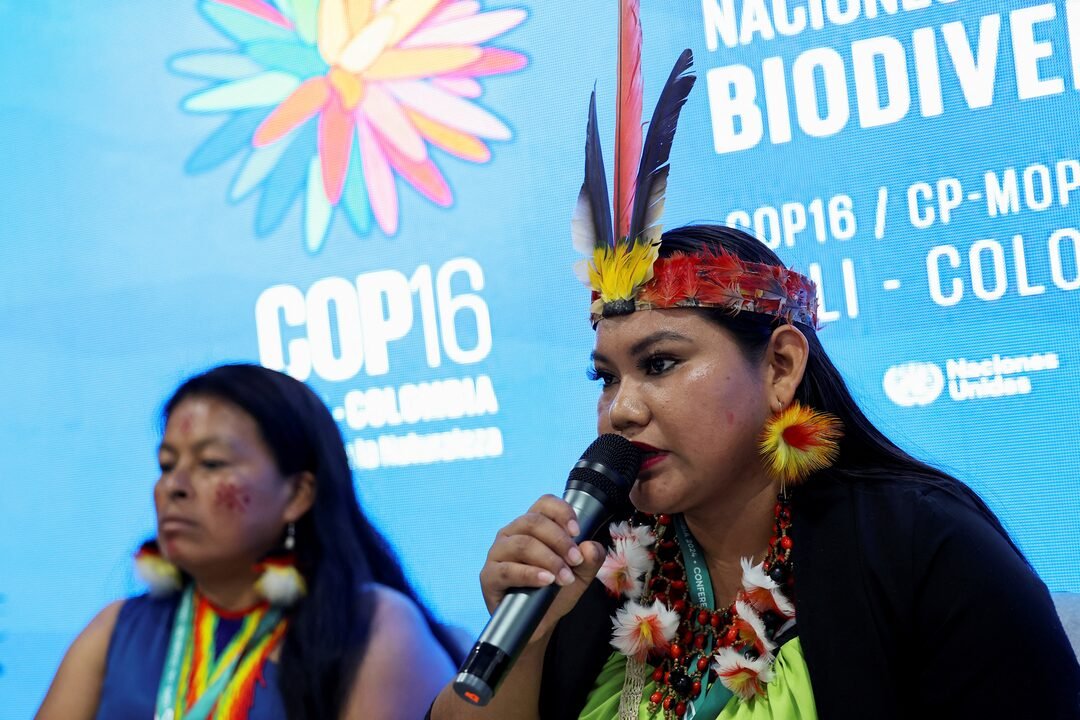
Indigenous peoples and rural communities are particularly exposed. The material supplied for the latest report says almost three-quarters of the people killed in 2025 were Indigenous people or small-scale farmers who had been defending their land. Such communities can face pressure when criminal organisations, illegal resource operators or other outside groups attempt to establish control over territory.
One example highlighted is the Kakataibo Indigenous Guard in Peru’s Amazon region. According to the report, six community leaders have been killed since 2020 amid increasing incursions into their forest territory. The community organisation began with several dozen recruits in 2022 and has since expanded to more than 150 volunteers operating across 10 bases.
The emergence of such community organisations reflects the security concerns faced by people living in remote areas where state protection may be limited. Communities have sought ways to monitor their territories and raise alerts when unfamiliar groups enter their lands. Similar Indigenous protection organisations have existed in parts of Colombia and Brazil for years.
However, the increasing risks faced by people involved in territorial protection have also resulted in deaths among Indigenous guards themselves. According to the report cited, seven Indigenous guards were killed in 2025, with organised crime linked to at least five of those cases.
The situation is particularly serious in areas where drug-trafficking networks overlap with Indigenous territories. Along parts of the Peru-Brazil border, forest communities have reported increasing pressure from criminal groups. Indigenous leaders in the Brazilian state of Amazonas have previously called for greater government protection after armed men entered communities in circumstances that residents interpreted as threatening.
The Ucayali basin in Peru has also experienced significant changes associated with coca cultivation. The report cited by the Guardian says coca production increased by 600% between 2019 and 2023 in the region. Expansion of cultivation can generate demand for additional roads and trails, which can in turn facilitate movement through forest areas and increase pressure on communities attempting to protect their territories.
Corruption can further complicate the situation. Environmental and Indigenous defenders may find themselves confronting criminal organisations while also operating in areas where local institutions have limited resources or where officials are alleged to have links with traffickers. These conditions can make it more difficult for communities to obtain effective protection through formal institutions.
The consequences extend beyond individual communities. Forests and rivers protected by Indigenous and local communities often contain important ecosystems and biodiversity. When illegal roads, mining sites, logging operations or other activities expand into these areas, environmental damage can occur alongside the loss of land and traditional livelihoods.
Global Witness describes land and environmental defenders as people who take peaceful action to protect human rights, land and the environment. Its methodology includes cases where there is a reasonable suspected connection between a person’s activism and their killing or disappearance. The organisation also warns that its database provides only a partial picture because many cases remain undocumented.
The violence has also been accompanied by non-lethal forms of pressure. Environmental defenders can face arrest, legal proceedings, surveillance, threats, public smears and online harassment. Global Witness has reported that criminalisation is increasingly being used against defenders in parts of Asia. Its research covering India, Indonesia, the Philippines and Vietnam documented hundreds of arrests or detentions between 2018 and 2024 connected with land and environmental activism.
The issue is therefore broader than the number of people killed each year. Violence can discourage communities from reporting environmental destruction, participating in public debate or challenging activities that threaten their land. When defenders are intimidated or silenced, information about illegal activities can become harder for authorities, journalists and international organisations to obtain.
Global Witness has called for governments to protect defenders and to work with communities rather than increasing the pressures they face. Its research argues that better documentation of attacks and stronger mechanisms for protecting people who defend land and environmental rights are necessary to address the problem.
The organisation’s long-term data demonstrates that the problem has persisted across successive years. Its reporting recorded more than 2,200 killings or disappearances between 2012 and 2024, while acknowledging that the true number is likely higher because of gaps in reporting and verification.
The concentration of killings in Latin America has also remained a recurring feature of the data. In its 2024 reporting, Global Witness documented 117 defender killings in Latin America, representing 82% of the global total for that year. Colombia recorded 48 cases, the highest national figure in that dataset.
The continuing threats demonstrate how environmental protection can become inseparable from questions of land rights, Indigenous sovereignty, organised crime and public security. In remote territories, communities may be among the first to detect illegal deforestation, mining or other environmental damage, but that role can expose them to considerable personal risk.
For governments, the challenge is to provide effective protection without further marginalising the communities that are already working to safeguard their territories. This includes investigating attacks, strengthening the rule of law, protecting Indigenous land rights and ensuring that environmental defenders can report illegal activity without facing retaliation.

The figures also underline the wider environmental consequences of violence against defenders. When people protecting forests and rivers are threatened or killed, the impact is not limited to their families and communities. It can also affect the ability to monitor deforestation, pollution, illegal extraction and other forms of environmental destruction.
Global Witness has described land and environmental defenders as important sources of information about what is happening on the ground. Its research argues that protecting these individuals and communities is therefore closely connected to protecting ecosystems and addressing environmental and climate-related challenges.
As criminal networks continue to operate across borders and natural-resource conflicts intensify in some regions, Indigenous and rural communities are likely to remain exposed to competing pressures over land and resources. The latest figures provide another indication of the human cost of those conflicts and the difficulties faced by people seeking to protect the places where they live.
The central concern for governments and international organisations is now how to ensure that communities defending forests, rivers and traditional territories can carry out that work without facing violence or intimidation. For the people living in some of the world’s most environmentally important regions, protecting their land has increasingly become a struggle that carries profound personal and community risks.
Related News:
 Israeli Strike in Southern Lebanon Kills Seven
 Daughter Finds Bones in Parents’ Burned-Out Car
 China mine blast death toll rises to 90
 Ebola outbreak in DRC overwhelms health system as cases surge
 New Footage Revives Peter Falconio Mystery
 Five Years of Taliban Rule Leave Afghanistan in Crisis
 Nepal-Tibet Flood Death Toll Rises as 2,478 Remain Missing
 Ukraine Villagers Demand Answers After Deadly Arms Depot Strike
 Nepal Flood Survivors Face Unimaginable Loss
 Argentina Orders Return of Nazi-Looted Painting
 Nepal Tunnel Rescue Offers Hope Amid Flood Devastation
 Nepal seeks $20m climate compensation after deadly floods
 Royal Crown Branded Enslaved Africans in Britain’s Slave Trade
 Israel Accused of Undermining Palestinian Life
 Emails Show Epstein Funded Mandelson’s Husband After Jail
 Anti-Regime Iranians Turn Anger Toward Trump
 Ben Roberts-Smith Denies War Crime Allegations in First Statement
 Chornobyl Still at Risk 40 Years After Disaster
 Escobar’s Hippos May Be Moved to India Zoo
 Capitalism ‘Suicidal’, Warns Petro at Climate Summit
 Police Suspect Help in Missing Alice Springs Girl Case
 Cartel crackdown raises fears of fresh violence
 China Fireworks Factory Blast Kills 21 in Hunan
 US ‘Narco Boat’ Strikes Draw Global Outcry
 Search Intensifies for Missing Hiker on WA Bibbulmun Track
 Maldives Cave Diving Tragedy Raises Safety Alarm
 Hope for mountain bongos returns to Kenya
 Ukraine Creates Long-Range Strike Command
 Dreyfus Statue Finally Gets Permanent Paris Home
 Venezuela Quake Death Toll Surpasses 4,000
 Taliban global ties grow as rights fears mount
 Powerful 7.7-Magnitude Earthquake Hits Eastern Indonesia
 Wildfires rage across Europe as hundreds arrested in France
 Vietnam Youth Rally Behind Hanoi ‘Justice Tree’
 Heavy Casualties Feared as Flash Flood Sweeps Nepal-Tibet Border
 US immigration arrests hit record high in July
 Australia Races to Find Tourists Missing in Nepal
 Nepal Flood Death Toll Tops 300 as Second Flood Feared
 Nepal Rescuers Race to Save Hundreds Trapped Underground
 Nepal Flood Death Toll Tops 1,000 as Tunnel Search Intensifies
 UN Warns Record El Niño Could Supercharge Global Heat
 Survivor Sues Musk’s xAI Over AI Abuse Images
 UN expert urges UK to rethink Israel policy
 Typhoon Saudel Triggers Mass Evacuations in China
 Family of British man found dead in Grenada urges UK-Grenada police cooperation
 Miliband Rejects Chief Rabbi’s West Bank Warning
 Australia’s Indigenous Population Was Far Larger Before Colonisation
 Fugitive Developer Rants at NSW Corruption Inquiry
 Northern Ireland Family of Three Shot Dead in Maguiresbridge Home Incident
 Seventeen Dead as Russia Targets Ukrainian Prison in Devastating Airstrike
 Channel Crossings Surge: Over 1,000 People Arrive in the UK in Small Boats in a Single Day
 WW2 Pilot’s Long-Lost Crash Site Unearthed in Essex
 Indian authorities demolish Kashmir home linked to Red Fort blast
 Greene Pushes Epstein Files Amid Trump Fallout
 Deadly Russian Strikes Hit Western Ukraine, 20 Killed in Ternopil
 Two National Guard Soldiers Critically Injured Near White House
 ‘Extinct’ Antelope Returns to Sahara, Bringing Hope
 American Mother Extradited From UK to U.S. on Murder Charges
 Half the World’s Largest Cities Face Rising Water Stress
 SA Police Intensify Search in Gus Lamont Case
 El Mencho Killed as Mexico Faces Violence
 Ocean Warming Drives Massive Marine Life Loss, Study Warns
 Greenpeace $345m Ruling Sparks Appeal Battle
 Kelly Wilkinson Inquest Reveals Bail Failure
 Extreme Weather: Europe Shivers as Cyclone Narelle Hits
 Tropical Cyclone Narelle Batters the Western Australian Coast
 Fugitive Dezi Freeman Killed in Rural Victoria Shootout
 Trump Announces 3-Day Russia–Ukraine Ceasefire Deal
 Barrister Criticises Trial After Suicide Case Verdict
 UK Faces Mass Water Shortages by 2055, Lords Warn
 Olympus Awaits Unesco Heritage Recognition
 Houthis Strike Saudi Arabia as Middle East Tensions Rise
 Nepal-Tibet Flood Leaves 270 Dead and 1,400 Missing
 Ghent Professors Questioned Cofnas Appointment
 Families Fly to Nepal in Search of 33 Missing Britons
 Trump Calls Iran War ‘Small Potatoes’ Despite US Deaths
 Abusive ex used Tesla to control and harass former partner
 Philippines Ferry Fire: 84 Still Missing After Blaze
 Man Arrested in Mississippi Woman’s Death
 Heathrow Expansion Faces New Climate Conditions Over CO₂