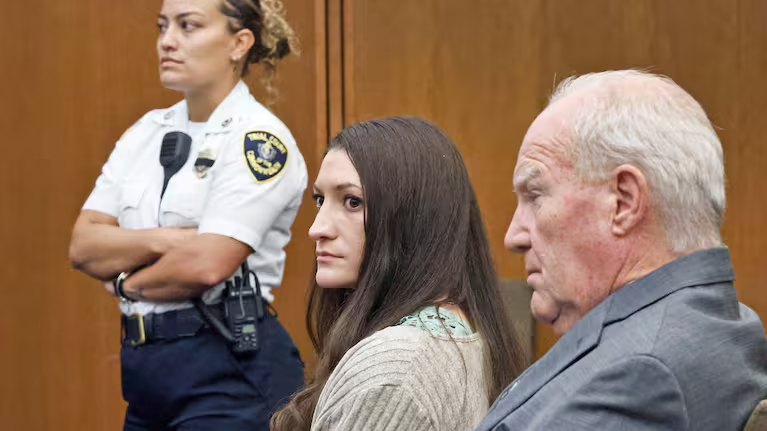
Published: 22 September 2026. The English Chronicle Desk. The English Chronicle Online.
Lawyers representing Lindsay Clancy have asked a Massachusetts judge to investigate the conduct of the lone juror who opposed the other 11 members of the jury during deliberations over the deaths of Clancy’s three young children.
In a motion filed on Friday and made public on Monday, Clancy’s defence team asked the court to question juror Michael Desronvil about several issues that the lawyers say could have affected the jury’s deliberations. Among the matters raised were an alleged use of a mobile phone during jury discussions, information Desronvil provided in a questionnaire before the trial and statements he made when jurors were questioned by the judge shortly before the trial concluded.
The request comes after the judge declared a mistrial on 4 September when the jury reported that it could not reach a unanimous verdict despite spending several days attempting to resolve their differences. The jury was divided over whether Clancy should be held criminally responsible for the deaths of her three children.
Eleven jurors were reportedly prepared to find Clancy not criminally responsible, while Desronvil maintained a position supporting the prosecution’s case. The majority of the jurors believed Clancy had been experiencing postpartum psychosis, a rare and severe psychiatric condition that can occur following childbirth. Prosecutors argued that she understood her actions when she killed her children.

The disagreement prevented the jury from reaching the unanimous verdict required for the criminal case to proceed to a conclusion. The resulting mistrial left Clancy’s legal status unresolved and opened the possibility of further court proceedings.
Clancy’s lawyers are now seeking records that they say could help determine whether Desronvil violated rules governing jury service. In particular, defence attorney Kevin Reddington asked the court to obtain records of calls and text messages allegedly made by Desronvil between 8am and 4.30pm on each day the jury was deliberating.
The request is based on an allegation that Desronvil may have used a cellphone during deliberations. Mobile-phone use by jurors during deliberations is prohibited under Massachusetts rules. The defence argues that examining relevant phone records could help determine whether the alleged conduct occurred.
However, Desronvil has not been accused of wrongdoing in connection with his jury service. The motion from Clancy’s lawyers represents an allegation and request for judicial investigation, rather than a finding that the juror actually violated any rules.
The defence has also questioned whether Desronvil was completely truthful when answering a questionnaire completed by prospective jurors before the trial. Lawyers are asking the judge to examine his responses alongside statements he made during the proceedings to determine whether there were inconsistencies that should be investigated.
A further issue concerns comments made by jurors during the final stages of the trial. According to the defence motion, the jury foreperson complained to the judge that one juror was refusing to listen to the law concerning reasonable doubt. The defence argues that the judge should have considered replacing the holdout juror with an alternate rather than declaring a mistrial.
In a separate motion filed on Monday, Clancy’s lawyers asked the judge to dismiss the criminal case rather than allow prosecutors to conduct another trial. Their argument is that the mistrial should not have been declared in the first place and that the circumstances surrounding the jury’s disagreement provide grounds for ending the prosecution.
The request presents the court with a significant procedural question. If a judge determines that the mistrial was improperly declared, the defence argues that a new trial should not automatically follow. Prosecutors, however, have not publicly indicated whether they intend to seek another trial.
The Plymouth County district attorney’s office, led by Timothy Cruz, declined to comment on the defence motions. The lack of a prosecutorial decision means that the future course of the case remains uncertain.
Clancy remains charged with murder and is being held in a psychiatric hospital while the criminal proceedings remain unresolved. The charges stem from the deaths of her three children, whose killings have received extensive attention because of the legal questions surrounding her mental state at the time of the incident.
The central issue at trial was not disputed simply as a question of whether Clancy caused the children’s deaths. Rather, the proceedings focused heavily on her state of mind and whether she could be held criminally responsible for her actions.
The defence maintained that Clancy was suffering from postpartum psychosis when the children were killed. The condition can involve severe disturbances in perception, thinking and behaviour following childbirth. The prosecution’s position was that Clancy understood what she was doing and should therefore be held responsible under criminal law.
That disagreement was ultimately reflected in the jury’s division. Eleven jurors reached a position favouring the defence’s argument regarding criminal responsibility, while Desronvil remained aligned with the prosecution’s interpretation of the evidence.
The role of the lone juror has become a major focus of the post-mistrial proceedings. Other jurors reportedly complained that Desronvil was unwilling to change his position and was inflexible in his conclusion that Clancy was guilty. Such disagreement, by itself, does not establish misconduct, as jurors are entitled to reach different conclusions about evidence and legal responsibility.
Desronvil has publicly defended his position. In a statement issued through his lawyer, Edward Paltzik, he said he had no doubts that Clancy understood what she was doing when she killed her children. His statement followed the declaration of the mistrial and came as attention increasingly focused on the jury’s inability to reach a unanimous decision.
The defence’s latest motions therefore seek to move the discussion from the substance of Desronvil’s conclusion to the conduct of the deliberations themselves. If the court agrees to investigate the allegations, it could examine whether any improper phone use occurred, whether Desronvil’s pretrial questionnaire contained inaccurate information and whether his conduct during deliberations complied with judicial instructions.
Jury deliberations are generally protected from extensive outside scrutiny because courts seek to preserve the independence and confidentiality of jurors as they discuss evidence. Allegations of misconduct can nevertheless prompt judicial review when there is a specific basis for believing that rules may have been violated.
The defence will have to establish the legal basis for obtaining the requested records and demonstrate why the alleged issues are relevant to the mistrial or to the possibility of another trial. The court will ultimately decide whether the allegations justify further inquiry.
The case also illustrates the difficult position created when a criminal jury cannot reach a unanimous verdict. A mistrial does not necessarily resolve the underlying charges, and prosecutors may in some circumstances seek a new trial. At the same time, the defence can challenge the circumstances surrounding the mistrial and argue that continuing the prosecution would be improper.

For Clancy, the uncertainty means that the criminal case remains unresolved. She continues to face murder charges while her lawyers seek dismissal and investigate the conduct of the juror who prevented a unanimous verdict.
For the families involved, the legal process follows the deaths of three young children and a trial that ended without a final determination of criminal responsibility. The proceedings have already brought intense scrutiny to postpartum psychosis, the legal treatment of severe psychiatric conditions and the standards governing criminal responsibility.
The next stage will depend on how the judge responds to the defence motions and whether prosecutors decide to pursue another trial. The court may first have to determine whether the allegations concerning Desronvil warrant investigation and whether the mistrial itself was properly declared.
Until those questions are resolved, no final criminal verdict has been reached against Clancy. The allegations concerning the juror remain matters for judicial consideration, while Desronvil continues to maintain that he reached his conclusion based on his understanding of the evidence and that Clancy knew what she was doing when the children were killed.
Related News:
 Texas Transfers Raise Fears for Migrant Children
 Police Suspect Help in Missing Alice Springs Girl Case
 Immigration Judges Fear Pressure in Trump Era
 US judge dismisses Kilmar Abrego Garcia indictment
 Victim says non-custodial rape sentence ‘rock in my face’
 Armed Suspect Attacks Ohio Governor Candidate
 Memphis Questions National Guard Crime Surge
 Patrick Clancy speaks publicly about children’s deaths
 Files Link Andrew to Epstein Dinner After Prison Release
 Undercover officer deceived women with ‘grotesque and cruel’ lies, spycops inquiry told
 Melania Trump Epstein remarks spark survivor backlash
 Swalwell Faces Pressure to Quit Governor Race
 Harmeet Dhillon Faces Scrutiny in DOJ Role Debate
 US Labor Department in turmoil after secretary resigns
 Trump DOJ Targets James Comey Again
 Judge Blocks Trump Bid for Arizona Voter Data
 US Court Weighs Fate of TPS for Migrants
 FBI Links Brown University Shooting to Long-Term Grievances
 Judge halts deportation of Yemeni refugees in US
 UK may ban protests amid rising antisemitism fears
 Florida Surgeon ‘Devastated’ Over Fatal Surgery Error
 Barrister Criticises Trial After Suicide Case Verdict
 US green card applicants must apply from abroad, DHS says
 China mine blast death toll rises to 90
 Ebola outbreak in DRC overwhelms health system as cases surge
 Trump’s Revenge Drive Deepens GOP Divide
 Former ICC prosecutor condemns US sanctions
 Gunman Killed After White House Security Shootout
 New Footage Revives Peter Falconio Mystery
 Dreyfus Statue Finally Gets Permanent Paris Home
 Teen Charged After Layla Jeffery Found Dead
 Trump Orders Signs Criticising Smithsonian Museum
 Westminster Council Threatens Charing Cross Soup Kitchen
 BBC Warned About Missing Clothes of Murder Victim
 Cambridge Professor Jason Arday Found Dead at Home
 Survivor Sues Musk’s xAI Over AI Abuse Images
 Argentina Orders Return of Nazi-Looted Painting
 UN expert urges UK to rethink Israel policy
 Ministers Condemn Far-Right Unrest in Portsmouth
 Councils spend £125m on illegal children’s care
 Abusive ex used Tesla to control and harass former partner
 Turning Point USA Faces Crisis After Kirk Killing
 Miliband Rejects Chief Rabbi’s West Bank Warning
 Patriot Platform Raises Concern Across Britain
 Man Arrested in Mississippi Woman’s Death
 Israel Accused of Undermining Palestinian Life
 UK Urged to Probe US Diplomat Case
 Texas Charges Seven Noncitizens in Voting Crackdown
 Survivor Seeks Closure After Priest Dies in Prison
 Gaza Strike Kills Child and Paramedic
 Mahmood Warns Far Right Over Asylum Protests
 South Africa’s Femicide Crisis Deepens
 Harrods Faces Dispute Over Fayed Abuse Compensation
 ICE Shooting in Austin Sparks Calls for Transparency
 French Taxi Driver Cleared in David Lammy Theft Case After Fare Dispute
 Just Stop Oil Protesters Convicted Amid Climate Defence Row
 Serial Rapist and Former Cop Found Guilty Again
 Man Denies Stealing Bronze Age Gold from Museum
 Runaway Driver Caught by DNA Evidence
 Two National Guard Soldiers Critically Injured Near White House
 US National Guard Member Killed in DC Shooting
 American Mother Extradited From UK to U.S. on Murder Charges
 Partial US Government Shutdown Hits Homeland Security Funding
 Thousands Protest ICE Operations in Nationwide US Day of Action
 Utah Woman Found Guilty of Poisoning Husband for Inheritance
 M&S Demands Urgent Action on Rising Violent Retail Crime
 Ben Roberts-Smith Denies War Crime Allegations in First Statement
 Learner Driver Charged After Expo Tragedy
 Louisiana Tragedy: Eight Children Die in Mass Shooting
 Greens Face Internal Row Over Antisemitism Claims
 US ‘Narco Boat’ Strikes Draw Global Outcry
 Trump’s Mount Rushmore Speech: A Divisive Anniversary
 Florida Executes One of Its Oldest Death Row Prisoners
 Ukraine Villagers Demand Answers After Deadly Arms Depot Strike
 Trump gives $45,000 holiday gifts to White House aides
 New Mexico Takes Facebook to Trial Over Data Scandal
 Royal Crown Branded Enslaved Africans in Britain’s Slave Trade
 UK Retailers Accused of Breaking Refund Laws
 British Columbia Sues OpenAI Over School Shooting
 US Networks Suspend Trump White House Pool Coverage