Published: 22 September 2026. The English Chronicle Desk. The English Chronicle Online.
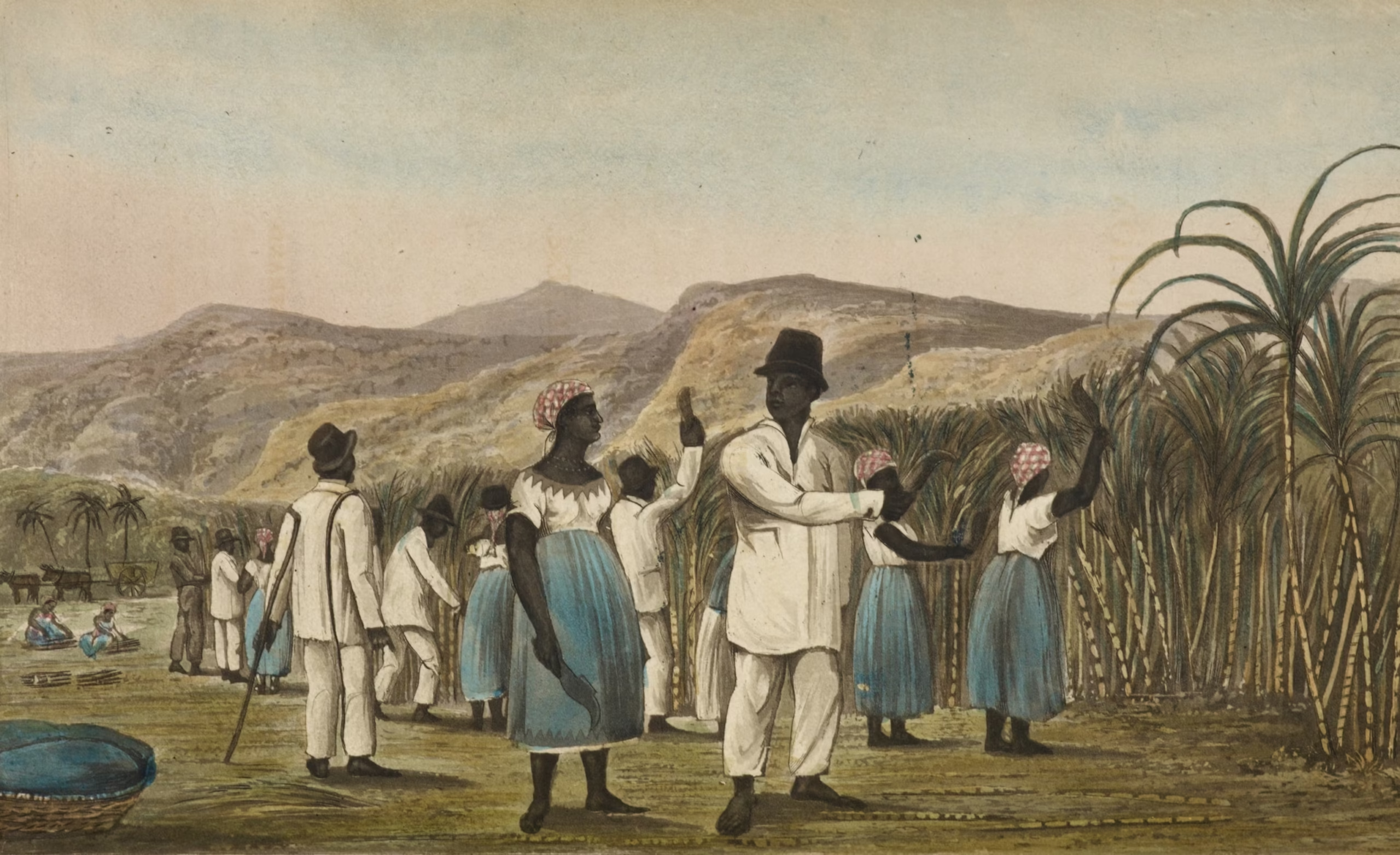
Nearly four million records documenting the lives of enslaved people across 20 former British colonies have become searchable online, creating a new opportunity for descendants of enslaved communities to investigate family histories that have remained difficult to trace for generations.
The collection contains about 300,000 pages of historical records covering enslaved people in former British colonial territories between 1813 and 1840. The material includes records from places such as Jamaica, Barbados, the Bahamas, Trinidad, Mauritius and the Cape of Good Hope in southern Africa.
The documents have been digitised and indexed by genealogy company Ancestry in partnership with the Centre for the Study of the Legacies of British Slavery at University College London. Their publication in searchable form is expected to make an important historical archive more accessible to descendants, researchers and members of the wider African and African-Caribbean diasporas.
The records were originally created for a very different purpose. Following Britain’s abolition of the transatlantic slave trade in 1807, the government introduced registration systems intended to monitor enslaved populations and prevent the illegal trafficking of enslaved people.
The resulting documents recorded people as part of a system in which enslaved individuals were legally treated as property. Yet centuries later, those same records can provide descendants with information about the people behind the historical statistics.

The registers contain names, ages, physical descriptions, family relationships, births, deaths and transfers of ownership. Some entries also recorded whether an enslaved person had been born in Africa or was classified as Creole, meaning someone born in the Caribbean.
The level of detail varies between records and colonies, but researchers say some entries can provide remarkably precise information. In certain cases, the documents can help identify the age or even approximate birth date of an enslaved child and establish relationships between parents and children.
Nicka Sewell-Smith, a professional genealogist and senior story producer at Ancestry, said the historical purpose of the records contrasts sharply with the way they can now be used.
The documents were created to count and monitor enslaved people, but descendants can use them to reconstruct family histories and restore personal identities that were obscured by the institution of slavery.
For people researching ancestors whose lives were documented during the final decades of British enslavement, the digitisation removes one of the major practical obstacles: access.
Many of the original records are held within archival collections in London. Researchers previously had to know which collections to consult and how to navigate historical documents, often requiring considerable time and specialist knowledge.
The searchable database means that descendants can instead begin with a name and explore connected records. That could allow researchers to trace family members across different years and, in some cases, across several generations.
Prof Matthew J Smith, director of the Centre for the Study of the Legacies of British Slavery at UCL, described the registers as one of the most systematic archival collections available for understanding enslavement in the British Caribbean and wider British colonial world.
For historians, the importance of the collection extends beyond individual family trees. The records can help reveal how slavery operated at the level of individual communities and households, showing relationships and life events that can otherwise disappear behind broader historical accounts.
Researchers have already been using the material to examine families in Jamaica. Smith said some families could be traced across six generations through careful comparison of the records.
Such research can be painstaking because names, spellings and descriptions were not always recorded consistently. Researchers may also have to compare the registers with church records, estate documents, census material and other historical sources to establish connections with confidence.
Nevertheless, the newly searchable collection provides another major source of evidence for descendants attempting to understand how their families experienced slavery and survived its consequences.
The release comes at a time when historians and researchers are increasingly examining the experiences of enslaved people themselves rather than focusing predominantly on slave owners, traders and colonial institutions.
The historical record of British slavery has often been discussed through the economic structures that supported the system and the individuals who participated in or benefited from it. The newly accessible registers provide a different perspective by placing individual enslaved people and their families more visibly within the historical record.
Smith said that seeing people’s names, ages and family relationships can change the way the history of slavery is understood. Instead of viewing enslavement solely through statistics and institutions, researchers can begin to identify individual lives, families and communities.
The collection is also significant because the descendants of enslaved people are now spread far beyond the territories in which the original records were created.
The forced movement of Africans through the transatlantic slave trade and subsequent migration has created extensive communities across North America, Latin America, the Caribbean, Britain and other parts of the world.
For descendants living far from the Caribbean or former British colonies, establishing a connection to an ancestor documented in the registers can be particularly difficult. A searchable digital collection could make it easier for researchers in different countries to begin identifying possible links.
Sewell-Smith said the archive could help create greater connections across the African diaspora by enabling people to identify shared family histories and understand how different communities became connected through migration and enslavement.
The historical records also illustrate the complexity of identity under slavery. Some documents contain classifications relating to colour, age and birthplace, reflecting the administrative systems used by colonial authorities. Such terminology is itself part of the history of slavery and must be interpreted in the context in which the records were produced.
Researchers therefore caution that archival documents should not simply be read as neutral descriptions of the people they recorded. The registers were produced by colonial authorities for administrative purposes and reflected the legal and social structures of the period.
At the same time, their survival provides descendants with rare evidence about people whose personal histories were often poorly documented elsewhere.
The newly digitised material forms part of a broader effort to examine Britain’s historical involvement in slavery. Recent research into British slave traders has also sought to identify the people and financial networks involved in the transatlantic trafficking of enslaved Africans.
Together, such projects are expanding the historical record in two directions: documenting the institutions and individuals responsible for maintaining the system while also recovering information about the people who endured it.
For descendants, the latter can have a deeply personal significance. A name recorded in an old register can become the starting point for reconstructing a family story that may otherwise have been lost.
Researchers say the full potential of the collection will only become apparent as more people use it and connect its records with material held in other archives.
A single entry may provide a name and age, while another record could reveal a parent, child, birthplace or later change in status. When combined across years, those details can help establish family connections and reveal patterns of movement and survival.
The process remains complex and does not guarantee that every descendant will be able to establish a complete family tree. Historical records can contain gaps, inconsistent spellings and incomplete information, particularly because enslaved people were often documented according to the interests of colonial administrators rather than their own perspectives.

Even so, researchers involved in the project believe the collection offers an important new resource.
The archive is free to search for anyone who creates an account, allowing descendants and researchers around the world to begin exploring the records without needing to travel to Britain or have specialist archival experience.
The development represents a significant change in access to historical information. Records once created as instruments of colonial administration can now be examined by the descendants of the people they documented, offering new opportunities to reconstruct family histories and understand the human consequences of slavery.
As researchers continue to connect these documents with other sources, the archive could contribute to a more detailed understanding of individual lives, families and communities affected by British enslavement.
For millions of people across the African and African-Caribbean diasporas, the significance may ultimately be found not only in the scale of the collection but in the individual names contained within it. Each entry represents a person who lived within a historical system, and for some descendants, that record may provide a rare link to an ancestor whose story has survived across generations.
Related News:
 Undercover officer deceived women with ‘grotesque and cruel’ lies, spycops inquiry told
 Walsall Rapist Jailed After Hate-Filled Online Trail
 Two Children Die in Wolverhampton House Fire Tragedy
 Barrister Criticises Trial After Suicide Case Verdict
 Westminster Council Threatens Charing Cross Soup Kitchen
 BBC Warned About Missing Clothes of Murder Victim
 Cambridge Professor Jason Arday Found Dead at Home
 RAF Barnham Protests Fuel Tensions in Norfolk Town
 British Museum Faces Questions Over Peter Thiel’s Private Bayeux Viewing
 Internal Exclusions Surge in England’s Schools
 Councils spend £125m on illegal children’s care
 Patriot Platform Raises Concern Across Britain
 Reform UK Receives Record £36m Donation From Crypto Billionaire
 Election Candidate Abuse Raises Alarm in England
 Slave-Trade Wealth Embedded in Britain’s Financial System
 NHS Breast Care Review Finds Serious Patient Harm
 Lib Dems Prepare for Election Amid Reform Challenge
 UK Banks Maintain £100 Contactless Limit Despite FCA Rule Change
 Rising Costs Force Families to Rethink Days Out
 Archbishop Prays for Middle East Peace in First Easter Sermon
 Storm Dave Disrupts Travel but Conditions Set to Ease
 Prevent Failings Exposed After Southport Attack
 Kezia Dugdale Warns of Possible Reversal of Equal Rights Gains
 Synagogue Arson Attempt Sparks Security Fears
 City & Guilds Sale Sparks Fees and Pay Uproar
 NHS Safety Fears as Nurses Cover Doctor Gaps
 Black Forest Tragedy Remembered 90 Years On
 Reform UK funding: mystery billionaire revealed
 John Terry Faces Backlash Over Political Posts
 Greens Face Internal Row Over Antisemitism Claims
 Koh-i-noor Diamond Row Reignites Colonial Debate
 Florida Surgeon ‘Devastated’ Over Fatal Surgery Error
 Immigration Judges Fear Pressure in Trump Era
 Tractor Breakdown Tests Lincolnshire Farmers
 Labour Members Turn Against Starmer Leadership
 Britons Build Emergency Supplies Amid Rising Fears
 Sycamore Gap Artwork Chosen After Public Vote
 Victim says non-custodial rape sentence ‘rock in my face’
 Farage and Reform UK Reshape British Politics
 Starmer Leadership Under Pressure After Setbacks
 UK Nations Brace for Potential Breakup Amid Reform Surge
 Cornwall Van Dwellers Face Eviction in Housing Crisis
 British Teens in EU Face Soaring UK University Fees
 UK Schools Struggle as Classrooms Top 40C
 London Tube Heat Reaches Dangerous Levels
 Three-Quarters of England’s Riverbanks Still Off Limits
 Is America Ready for an AOC Presidential Run?
 London’s 2026 ‘Great Stink’ Raises Sewer Concerns
 Burnham unveils £65m drought aid for farmers
 Queue row erupts on Wales’ highest mountain
 Ghent Professors Questioned Cofnas Appointment
 UK Households Could Save £173 on Fixed Energy Deals
 Nepal Flood Survivors Face Unimaginable Loss
 Green Leader Targets Starmer’s Former Seat
 Daughter Finds Bones in Parents’ Burned-Out Car
 UK Subsidence Claims Surge After Record-Breaking Summer
 Reform Faces Fresh Financial Controversy
 Nepal Tunnel Rescue Offers Hope Amid Flood Devastation
 Masked Protesters Bring Dover Port Traffic to Standstill
 Typhoon Saudel Triggers Mass Evacuations in China
 UK House Prices Fall as Mortgage Rates Rise
 Europe’s democracies face a growing far-right threat
 Pavlohrad Strike Kills Five, Injures 67
 Man Arrested in Mississippi Woman’s Death
 Royal Crown Branded Enslaved Africans in Britain’s Slave Trade
 Thames Water Revises Oxfordshire Mega-Reservoir Plan
 UK Retailers Accused of Breaking Refund Laws
 Piddington Votes for Symbolic Independence Over Asylum Plan
 Seven Women’s Deaths Renew South Africa Femicide Anger
 Nature Access Gaps Expose Inequality Across England
 Gaza Strike Kills Child and Paramedic
 Mahmood Warns Far Right Over Asylum Protests
 Disabled Travellers Seek Fairer UK Care Rules
 South Africa’s Femicide Crisis Deepens
 UK Rent Gap Puts Low-Income Families Under Pressure
 Harrods Faces Dispute Over Fayed Abuse Compensation
 Headteachers Warn New Ofsted System Is Harming Wellbeing
 Labour Apprenticeship Scheme Faces Slow Start
 Briton Faces Cyprus Court Over Son’s Fatal Fall
 UK Reviews Hague Child Abduction Cases Involving Abuse