Published: 12 September 2026. The English Chronicle Desk. The English Chronicle Online.
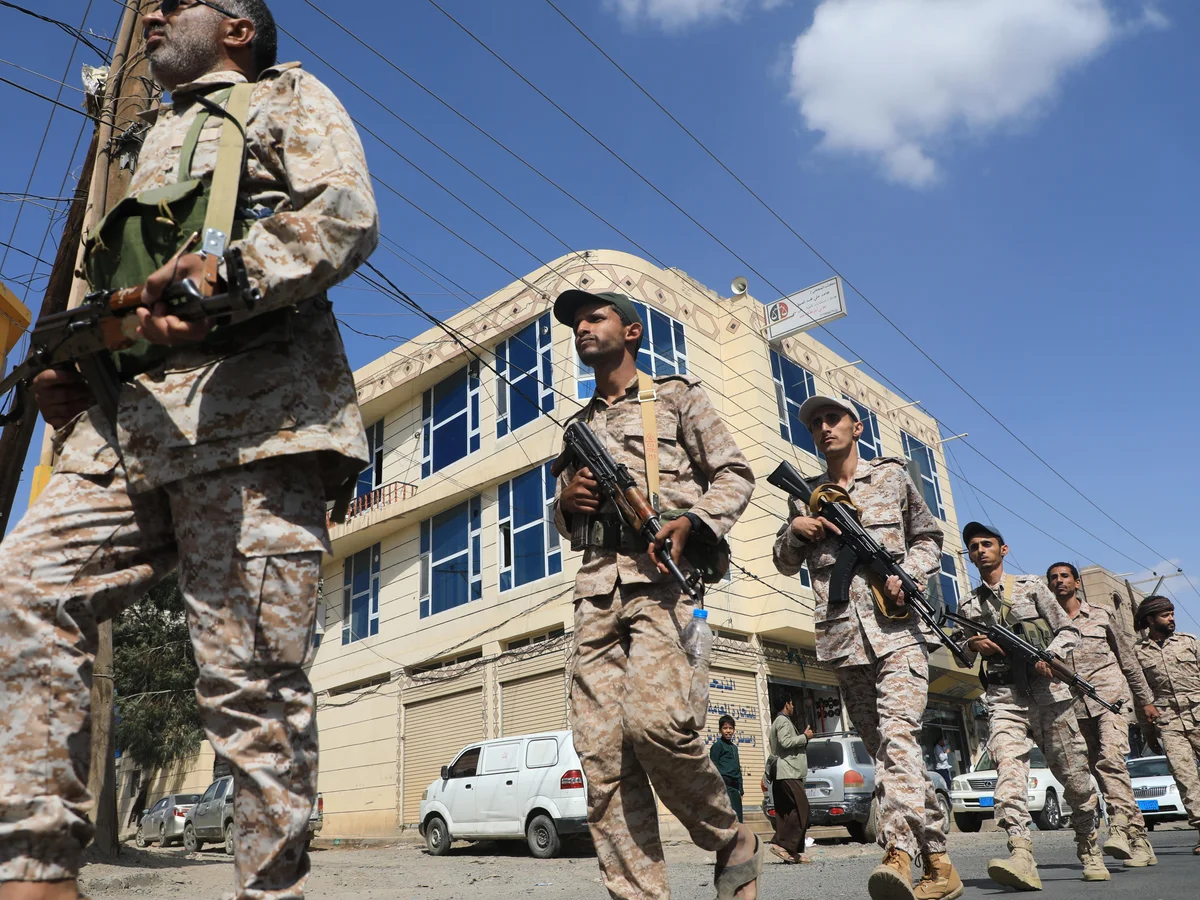
Nearly 50,000 civilians have been displaced by a rapid advance by Houthi forces along Yemen’s western Red Sea coast, according to humanitarian workers, as renewed fighting threatens to push the war-torn country into another prolonged period of conflict.
The sudden offensive has emptied entire villages, separated families and left communities close to frontline areas struggling to obtain food, water and medical assistance. Humanitarian organisations say the latest displacement is placing additional pressure on a population that has already endured years of war, economic collapse and repeated displacement.
The United Nations International Organization for Migration said on Friday that about 46,000 people had been displaced across the governorates of Taiz and Hodeidah. The affected areas stretch from mountainous terrain towards the arid coastal plains of western Yemen, where many residents have already experienced displacement more than once.
The latest fighting follows a rapid territorial advance by the Iran-backed Houthi movement. Houthi forces have captured a series of towns and strategic locations along the Red Sea coast from forces aligned with Yemen’s internationally backed government, which has received support from the United States and Saudi Arabia.

Hundreds of people are reported to have been killed during the latest escalation, raising fears that Yemen could once again descend into a full-scale civil war. Previous fighting devastated the country, killed large numbers of people and pushed millions towards the brink of famine.
Joe Lowry, a spokesperson for the International Organization for Migration in the Middle East and North Africa, said the scale of displacement was increasing rapidly. Aid workers have reported seeing large numbers of residents leaving affected communities carrying whatever belongings they could transport.
The fighting has disrupted major roads and communications infrastructure, while telephone networks have reportedly stopped functioning in some areas. For families attempting to escape the fighting, the lack of reliable transportation and communications has made an already dangerous situation even more difficult.
Humanitarian agencies say the immediate needs include emergency accommodation, food, drinking water, healthcare, financial assistance, household supplies and protection services. Many people fleeing the frontline have reportedly arrived with very few possessions after leaving their homes suddenly because of shelling and advancing forces.
Aid organisations have also warned that access to affected areas is changing rapidly. As frontlines shift and roads become inaccessible, humanitarian workers have been forced to repeatedly reassess where they can safely operate and how assistance can reach displaced communities.
The offensive has been particularly striking because of the speed with which Houthi forces have advanced. The capture of the strategic port city of Mocha has been among the most significant developments. The city has historical importance because of its association with the global coffee trade and is also strategically positioned along Yemen’s Red Sea coastline.
Residents who escaped Mocha described scenes of panic and destruction. One resident who left during the night described the atmosphere as catastrophic, while others said some fleeing families faced looting by criminal gangs as they attempted to reach safer areas.
Some civilians managed to escape using motorcycles and other vehicles, but many families were separated during the chaos. Others remained trapped in areas where fighting had intensified, unable to determine whether roads leading to government-controlled territory were safe.
The humanitarian consequences are occurring against a backdrop of growing international competition over Yemen’s strategic coastline. Houthi forces have expanded their presence in areas close to the Bab al-Mandab Strait, one of the world’s most important maritime passages.
The Bab al-Mandab is a narrow waterway connecting the Red Sea with the Gulf of Aden and providing a critical maritime link between Europe and Asia. Control over the surrounding coastline and islands could provide the Houthis with greater strategic leverage over international shipping.
The potential consequences extend far beyond Yemen. If the strait were closed or became too dangerous for commercial vessels, ships travelling between Europe and Asia could be forced to take longer routes around the southern tip of Africa. Such diversions would add thousands of nautical miles to some journeys and increase fuel, insurance and transportation costs.
The possibility of prolonged disruption has already contributed to pressure on global energy markets. Oil prices have risen above $100 a barrel after previously trading closer to $80, reflecting concerns over supply routes and escalating geopolitical tensions across the Middle East.
The latest fighting represents the most serious violence in Yemen since the United Nations-brokered truce of 2022 brought a period of relative calm. Although the conflict never fully ended, the reduction in large-scale fighting allowed many communities to experience several years without the intensity of violence seen during the earlier stages of the war.
That period now appears increasingly fragile.
Hans Grundberg, the UN special envoy for Yemen, told an emergency meeting of the Security Council that the country had entered a more dangerous phase. He warned that the renewed fighting could develop into a prolonged and expanding conflict while also pulling Yemen deeper into wider regional tensions.
Yemen has long been caught between competing regional interests. Saudi Arabia, Iran and the United Arab Emirates have all played significant roles in the country’s conflict, while armed groups and local militias have accumulated considerable influence.
The Houthi movement has received support from Iran and has become one of the most powerful armed actors in Yemen. Saudi Arabia has backed the Yemeni government, while the United States has also taken military action in response to regional threats. These competing interests have made a lasting political settlement increasingly difficult.
Analysts have also criticised the international response to Yemen for focusing too heavily on security and military threats while giving insufficient attention to diplomacy, economic development and the underlying political causes of the conflict.
The United States spent years conducting counterterrorism operations against al-Qaida militants in Yemen, but the Houthi insurgency received comparatively less international attention until the movement captured the capital, Sana’a, in 2014.
Since then, Yemen has become a major arena for regional competition. The latest escalation has intensified those concerns because of its proximity to important international shipping routes and the broader conflict involving Iran and other regional powers.
The humanitarian situation is already extremely severe. A recent United Nations assessment warned that Yemen, a country of roughly 40 million people, is experiencing a worsening malnutrition crisis, with around half of the population facing acute food insecurity.
Years of fighting have destroyed livelihoods, weakened public institutions and damaged infrastructure. Economic deterioration, repeated displacement and climate-related shocks have further reduced the ability of households to cope with new emergencies.
Humanitarian organisations are also struggling with declining financial support and operational restrictions. As the number of displaced people rises, aid agencies face the difficult task of expanding assistance at precisely the moment when access to affected areas is becoming more complicated.
For civilians fleeing the latest fighting, the geopolitical significance of the Bab al-Mandab Strait is far removed from their immediate concerns. Families are primarily trying to find safety, food, clean water and somewhere to sleep.
Near the town of Khokha, displaced residents have sought refuge in makeshift camps constructed from basic materials. Some have arrived with little more than the clothes and possessions they were able to carry during their escape.
Mohammed Khudairi, who fled the fighting, described the situation as a catastrophe and said attacks were continuing. He said his family had managed to escape but that other people remained trapped in areas affected by the fighting.

The continuing advance of Houthi forces could therefore have consequences on two separate but closely connected levels. Inside Yemen, it threatens to deepen displacement and humanitarian suffering while potentially reigniting a broader civil war. Internationally, it raises the possibility of further disruption to one of the world’s most important trade and energy corridors.
The central concern for diplomats and humanitarian organisations is whether the latest escalation can be contained before the conflict becomes significantly more difficult to resolve. Years of relative calm had created an opportunity for political negotiations and humanitarian recovery, but the renewed offensive risks undoing much of that progress.
For Yemen’s civilians, the immediate reality is another wave of uncertainty. Families who have already been forced from their homes once or twice are now facing the possibility of displacement again, while communities near the frontline remain exposed to shelling, airstrikes and rapidly shifting territorial control.
The international community faces mounting pressure to prevent the renewed violence from becoming permanent. Without a renewed diplomatic effort and sustained humanitarian assistance, the latest fighting could transform Yemen’s long-running on-and-off conflict into a much more entrenched war, with consequences reaching from the country’s poorest communities to global shipping lanes and energy markets.
Related News:
 Houthis Strike Saudi Arabia as Middle East Tensions Rise
 Global order shifts amid Trump-era turmoil
 Australia pushes Pacific security pact amid China tension
 Middle East Crisis Escalates as Oil Routes Shake Markets
 Tensions Emerge in Netanyahu-Trump Alliance
 Discontent grows around Putin amid war strain
 Former ICC prosecutor condemns US sanctions
 Taliban global ties grow as rights fears mount
 Seoul proposes historic peace talks to replace Korean War armistice
 Trump Calls Strait of Hormuz ‘American Territory’
 Trump Faces Iran War Crisis Before Midterm Vote
 Former Diplomats Urge UK and France to Act on Palestine
 Saudi Arabia Shuts Oil Pipeline After Drone Attack
 Shock US Raid: Maduro Pleads Not Guilty in Manhattan Court
 Machado Trump medal gesture reshapes Venezuela power struggle
 Trump Receives Machado’s Nobel Medal in White House Meeting
 Iran unrest slows under brutal crackdown and global tensions
 US Considers Asylum for British Jews Amid Rising Antisemitism
 Russia Strikes Kyiv and Kharkiv as Peace Talks Enter Day Two
 Thousands Protest ICE Operations in Nationwide US Day of Action
 Epstein Files Reveal Trump Officials’ Emails with Financier
 Thousands Protest ICE in New York Against Trump Deportation Campaign
 Middle East Flights Halted After Iran Strikes
Nine Killed in Karachi Consulate Protest
Middle East Flights Halted After Iran Strikes
Nine Killed in Karachi Consulate Protest
 UK Prepares Aircraft Carrier for Middle East Crisis
 Mojtaba Khamenei Chosen as Iran’s New Supreme Leader
 Tehran Oil Depot Strikes Darken City With Toxic Smoke
 Mojtaba Khamenei Supporters Rally as Iranians Fear Repression
 Iran Defiance Grows Amid US-Israel War Pressure
 Hormuz Crisis Sparks Global Oil Market Fears
 Iranian Exile Factions Seek US Backing for Iran’s Future
 Injured Mojtaba Khamenei Elevated as Iran Leader
 Yvette Cooper: UK Must Follow Principles, Not US Pressure
 Trump Iran War Stance Hardens as Conflict Widens
 Ghalibaf Iran: Survivor Emerges in Shifting Power Game
 Saudi Arabia Urging US to Keep Up Iran Attacks
 Netanyahu Vows Continued Lebanon Strikes Amid Peace Talks
 Iran Crisis Tests Trump’s Global Leadership
 US and Iran Pursue Extension of Ceasefire via Pakistan
 Southeast Asia Turns to Russia Amid Energy Crisis
 US Calls Australia Media Law “Foreign Extortion”
 Oil Prices Surge Above $120 Amid Iran Blockade Fears
 Trump orders US troop pullout from Germany
 Activists allege abuse after Gaza flotilla seizure
 Trump likens US Navy actions to ‘pirates’
 BJP Sweeps West Bengal in Historic Breakthrough
 Indiana Republicans Defy Trump in Key Vote Test
 US Awaits Iran Reply on New Ceasefire Proposal
 One Nation Stuns Australia With Historic Farrer Win
 Putin Declares Russia Victory at Scaled Victory Day Parade
 Netanyahu Calls Early Election Amid Coalition Turmoil
 Israeli Strikes in Lebanon Kill 10 Amid Ceasefire Strain
 Hormuz Talks Near Critical Stage
 Zelenskyy warns over Oreshnik threat as Kyiv hit
 Hunger increasingly weaponised in global conflicts
 Trump Claims Iran Peace Deal Near Completion
 Iran To Propose New Shipping Fees In Strait Of Hormuz
 Trump’s Iran Legacy Hangs on Tehran Deal
 Grief and Devotion Amidst the Rubble of Nabatieh
 High Drama in Tehran Over Secret Nuclear Letters
 Iran Prepares for Massive Six-Day Funeral for Khamenei
 Millions Gather for Khamenei’s Six-Day State Funeral
 Iran Mourns: Millions at Khamenei’s Final Procession
 Venezuela Quake Death Toll Surpasses 4,000
 Israeli Strike in Southern Lebanon Kills Seven
 Five Years of Taliban Rule Leave Afghanistan in Crisis
 Russian Missiles Intensify Pressure on Kyiv
 Trump announces major US oil deal with Venezuela
 Trump Hardens Canada Trade Stance as Talks Stall
 Trump Calls Iran War ‘Small Potatoes’ Despite US Deaths
 UN expert urges UK to rethink Israel policy
 Susan Sarandon Says Palestine Stand Costs Roles
 Miliband Rejects Chief Rabbi’s West Bank Warning
 North Korea Expands Uranium Facility at Yongbyon
 BBC to Apologise Over Edited Trump Speech Amid Backlash
 Air Canada CEO Faces Outcry Over Recent Language Misstep
 Relationship with Trump may be beyond repair, Starmer warned
 Trump’s Six-Week Iranian War: The High Cost of Ignorance
 Investigation Into Anti-Trump Motives After Gala Shooting
 Trump Rejects Tehran Peace Plan as Regional Truce Crumbles