Published: 29 September 2026. The English Chronicle Desk. The English Chronicle Online
A four-hour stage production inspired by the landmark rape trial involving Gisèle Pelicot is set to come to London for a single performance this November, bringing a theatrical reconstruction of one of France’s most closely watched criminal cases to the UK capital.
The production, titled “The Pelicot Trial: Tribute to Gisèle Pelicot”, will be staged at London County Hall, a venue already associated with courtroom drama through its long-running connection with Agatha Christie’s “Witness for the Prosecution”. The London performance is being presented by the Young Vic and is expected to feature a large ensemble of well-known actors.
The full cast has not yet been announced, but Nadia Fall, artistic director and co-chief executive of the Young Vic, said the production could involve about 27 actors. Because the London performance will take place only once, organisers are able to invite performers who might not otherwise be available for a conventional long theatrical run.
Fall said she first encountered the production in French and described the experience as deeply emotional and difficult to watch. She was particularly struck by its emphasis on witnessing and testimony rather than conventional theatrical storytelling.

The production was created by Swiss director and playwright Milo Rau and Servane Dècle. Rather than presenting the case through a traditional drama with fictionalised scenes, costumes and elaborate sets, the creators have built the work around material from the actual proceedings.
The play draws extensively on what was said in court during the trial. Journalists who covered the proceedings provided Rau and Dècle with thousands of pages of notes and material, helping the creators reconstruct the testimony and atmosphere surrounding the case.
Rau has become known for bringing real legal cases to the stage. His previous work has included theatrical treatments of the trial of members of the Russian punk group Pussy Riot and the proceedings surrounding former Romanian leader Nicolae Ceaușescu.
The Pelicot case presented a different and particularly sensitive challenge because it involved sexual violence, questions about consent and the experiences of a woman who deliberately chose to make her identity public.
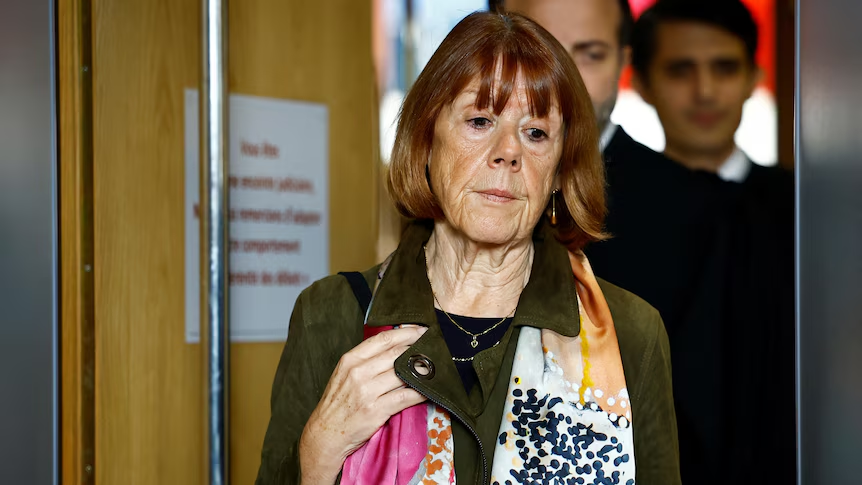
Gisèle Pelicot became internationally recognised after deciding to waive her legal right to anonymity during the proceedings against her former husband, Dominique Pelicot. The decision meant that the trial could be followed publicly rather than being conducted behind restrictions designed to protect her identity.
Dominique Pelicot was accused of drugging his former wife over a period of years and arranging for other men to sexually assault her while she was unconscious. In December 2024, he was sentenced to 20 years in prison, while all 51 men tried alongside him were found guilty.
Pelicot’s decision to allow her identity to be made public became one of the defining features of the case. She argued that the shame associated with sexual violence should fall on those accused of committing such acts rather than on victims.
Her stance attracted international attention and turned the proceedings into a wider discussion about sexual violence, consent, victimhood and the treatment of women within legal systems and society.
For the creators of the stage production, that wider significance is central to the work. Rau has described the production as more than a conventional theatrical performance, characterising it as a public act of reflection on the issues exposed by the trial.
The play has already been presented in several countries and languages, including in Avignon, the French city where the trial took place, and New York. It has reportedly travelled to at least 15 countries, with audiences encountering the story through different languages and cultural settings.
Rau said the response across different countries demonstrated how widely the themes of the case could resonate. Although the proceedings were rooted in a specific French legal and social context, the questions surrounding sexual violence and attitudes towards victims have a much broader relevance.
The London production will follow the same basic approach, presenting the facts and testimony from the trial rather than turning the case into a conventional fictional narrative.
Dècle said audiences have generally remained for the full four-hour performance, although spectators are allowed to leave and return if they find the material difficult. The length of the production is part of its approach to testimony, allowing the audience to spend an extended period confronting the evidence and words that emerged during the proceedings.
Gisèle Pelicot herself has attended a performance. She watched the production in New York, where she responded positively to the portrayal by the actress playing her.
Her involvement in the theatrical project is significant because the production is not simply based on a distant historical event. It deals with a case involving a living survivor who has publicly participated in discussions surrounding its legacy.
The decision to bring the production to London also reflects the continuing international interest in Pelicot’s story. The trial generated widespread attention in France and beyond, while Pelicot’s public decision to reject anonymity turned her into a prominent figure in discussions about the social response to sexual violence.
Fall said the Young Vic’s interest in presenting the production was connected to its focus on testimony and witnessing. She described Pelicot’s public stance as representing resilience and courage and said the story had significance beyond the specific criminal proceedings.
However, the production’s organisers have also acknowledged that it is difficult material. The four-hour format and the reliance on testimony rather than conventional dramatic devices mean that audiences are confronted directly with the seriousness of the case.
That approach raises different questions from those associated with a traditional theatrical adaptation. Instead of creating fictional dialogue or imagining private moments, the production asks audiences to engage with a record of events and statements presented during the trial.
The creators believe that approach can encourage audiences to think more deeply about the wider social circumstances surrounding sexual violence. Rau said the trial became, in his interpretation, a reflection on society and patriarchal structures rather than only a legal proceeding involving individual defendants.
Dècle also expressed a desire to see more men attend the production. She argued that understanding the backgrounds and behaviour of the men involved could form an important part of examining how sexual violence occurs and how society responds to it.
The audience so far has reportedly been predominantly female, creating another dimension to the discussion around the production. Its organisers hope that the London performance will attract a broad audience rather than being viewed solely as a work aimed at women.
The production comes at a time when theatre makers are increasingly exploring real events, court cases and documentary material as a way of examining difficult questions. Such productions can give audiences an opportunity to consider events through testimony and evidence while also raising questions about the responsibilities involved in representing real people and traumatic experiences.
In the case of the Pelicot trial, that responsibility is especially significant because of the personal experiences at the centre of the proceedings. The production therefore relies heavily on the factual record of the case and the testimony that emerged during the court process.
The London performance will also take place in a venue with a strong association with courtroom storytelling. London County Hall is home to the stage presentation of “Witness for the Prosecution”, making it an appropriate setting for a production centred on a real trial.
For the Young Vic, staging the play for one night allows it to bring an internationally recognised piece to London without committing to a conventional long-term run. It also creates an opportunity to assemble a large group of actors for a single collective performance.

Fall expects significant interest in the event, particularly because of the limited opportunity to see the production in London. The final cast is expected to be announced before tickets become available.
For Rau and Dècle, however, the London appearance is part of a much larger journey. They have taken the production to audiences in different countries and languages, maintaining the central focus on the testimony and events that emerged from the French proceedings.
Their stated aim is to keep the conversation surrounding Pelicot’s case alive. The trial may have ended in court, but the questions it raised about sexual violence, consent, responsibility and social attitudes continue to be discussed.
The London performance will therefore serve not only as a theatrical event but also as another opportunity for audiences to engage with the testimony and wider issues associated with one of the most closely followed criminal trials of recent years.
Related News:
 Victim says non-custodial rape sentence ‘rock in my face’
 Dreyfus Statue Finally Gets Permanent Paris Home
 King Refers Jamaica Slavery Petition to Privy Council
 Fayed Survivors Demand Inquiry Into Medical Regulator
 Undercover officer deceived women with ‘grotesque and cruel’ lies, spycops inquiry told
 NHS Safety Fears as Nurses Cover Doctor Gaps
 Walsall Rapist Jailed After Hate-Filled Online Trail
 Two Children Die in Wolverhampton House Fire Tragedy
 Police Suspect Help in Missing Alice Springs Girl Case
 UK may ban protests amid rising antisemitism fears
 Barrister Criticises Trial After Suicide Case Verdict
 Whistler’s Mother and why its fame frustrated artist
 Sycamore Gap Artwork Chosen After Public Vote
 Westminster Council Threatens Charing Cross Soup Kitchen
 BBC Warned About Missing Clothes of Murder Victim
 Cambridge Professor Jason Arday Found Dead at Home
 British Museum Faces Questions Over Peter Thiel’s Private Bayeux Viewing
 Daughter Finds Bones in Parents’ Burned-Out Car
 Argentina Orders Return of Nazi-Looted Painting
 Masked Protesters Bring Dover Port Traffic to Standstill
 UN expert urges UK to rethink Israel policy
 Ministers Condemn Far-Right Unrest in Portsmouth
 Councils spend £125m on illegal children’s care
 Family of British man found dead in Grenada urges UK-Grenada police cooperation
 Miliband Rejects Chief Rabbi’s West Bank Warning
 Patriot Platform Raises Concern Across Britain
 Royal Crown Branded Enslaved Africans in Britain’s Slave Trade
 Gaza Strike Kills Child and Paramedic
 Texas Transfers Raise Fears for Migrant Children
 Mahmood Warns Far Right Over Asylum Protests
 South Africa’s Femicide Crisis Deepens
 Harrods Faces Dispute Over Fayed Abuse Compensation
 Clancy Defense Seeks Inquiry Into Lone Juror
 Briton Faces Cyprus Court Over Son’s Fatal Fall
 UK Reviews Hague Child Abduction Cases Involving Abuse
 Far-Right Activist Slashes Dinghy in Channel
 Roman Finds Reveal Bath’s Suburban Past
 Paris child pickpocketing gang leader jailed for eight years
 Greece Pushes for Parthenon Marbles Reunification
 Far-Right Activist Arrested After Channel Dinghy Incident
 Yemen fighting forces children out of school and into work
 Portadown protest ends after tense Orange Order standoff
 Three Die in Channel Crossing Attempt Near France
 Tennessee Set to Execute Woman After Clemency Denied
 London Facial Recognition Trial Ends With False Alert
 Paedophile Singer Ian Watkins Dies After Prison Attack
 Peterborough Mosques Tighten Security After Attack
 Kate Winslet to Narrate Film Highlighting King’s Environmental Mission
 French Taxi Driver Cleared in David Lammy Theft Case After Fare Dispute
 UK Bans Fake Numbers: Scammers Lose Their Trick
 Criminal Gangs Pose as Truckers to Hijack UK Supply Chains
 Mother Watches in Horror as Teen Daughter Dies on Tracks
 Serial Rapist and Former Cop Found Guilty Again
 Inside the Helpline Protecting Missing Children in the UK
 Most Tories Expect to Support a Farage-Led Government
 Met Police Vetting Failures Let Serial Rapists Remain
 School vetting failure exposed by London abuse case
 John Lithgow criticises Rowling stance in trans debate
 Rising Costs Force Families to Rethink Days Out
 Scott Mills Sacked by BBC Over Personal Conduct Claims
 M&S Demands Urgent Action on Rising Violent Retail Crime
 Greens Face Internal Row Over Antisemitism Claims
 Cannes filmmakers split over AI’s role in cinema
 Farage and Reform UK Reshape British Politics
 Shocking Zoo Incident Sparks Attempted Murder Probe
 Guarding Justice: The Henry Nowak Case and Police Accountability
 British Teens in EU Face Soaring UK University Fees
 Kylian Mbappé Slams Paraguayan Senator Over Racist Attack
 New Footage Revives Peter Falconio Mystery
 UK Schools Struggle as Classrooms Top 40C
 Burnham unveils £65m drought aid for farmers
 Queue row erupts on Wales’ highest mountain
 Ukraine Villagers Demand Answers After Deadly Arms Depot Strike
 Bayeux Tapestry Revives Franco-British Ties
 Abusive ex used Tesla to control and harass former partner
 Man Arrested in Mississippi Woman’s Death
 UK Retailers Accused of Breaking Refund Laws
 UK Rent Gap Puts Low-Income Families Under Pressure
 Democrat Says ICE Restricted Detention Camp Oversight
 Frome Community Loses Bid for Major Regeneration Site