Published: 24 September 2026. The English Chronicle Desk. The English Chronicle Online.
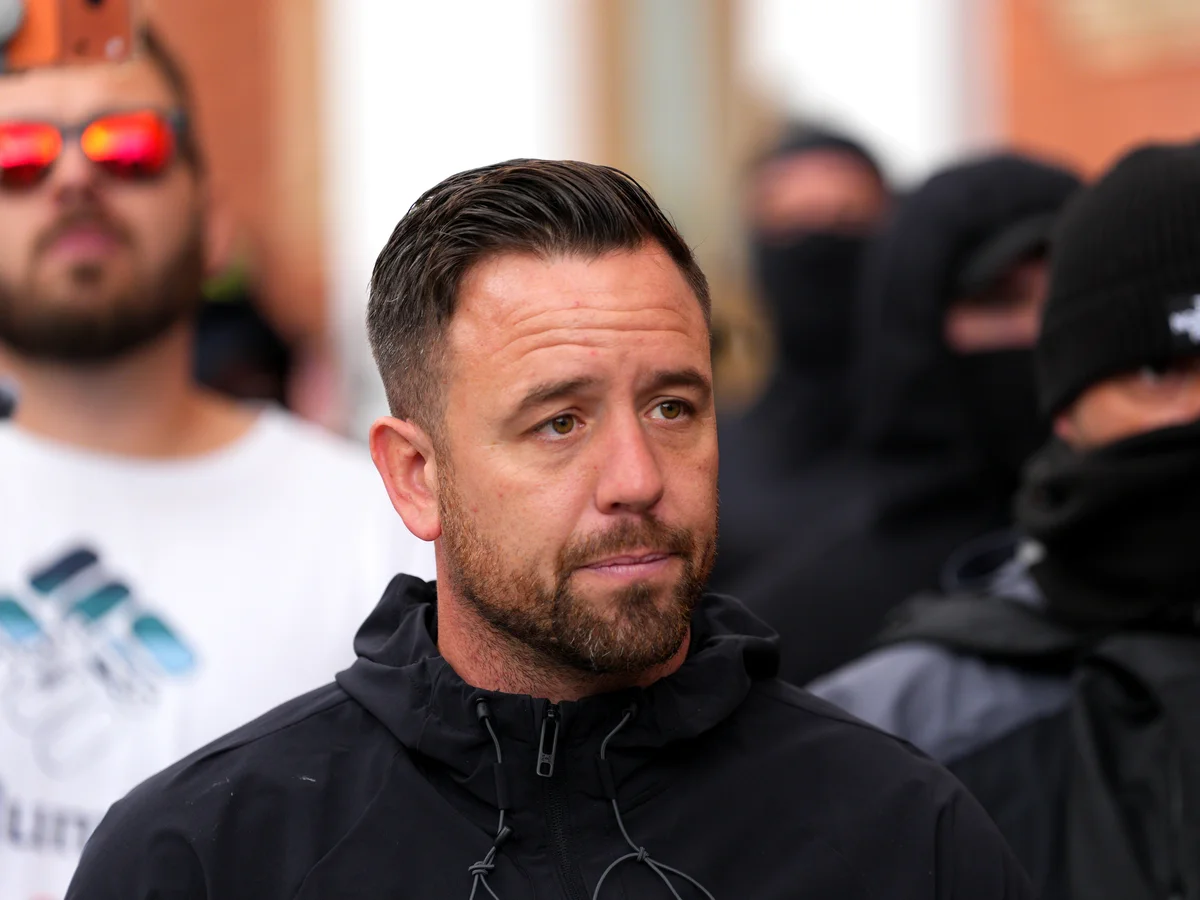
A 37-year-old far-right activist has been arrested by police after allegedly filming himself slashing the side of a small migrant dinghy in the English Channel while a rescuer was reportedly on board, prompting an investigation into whether the incident endangered a person’s life.
Daniel Thomas, who is also known as Danny Tommo, was taken into custody on Wednesday night on suspicion of a number of offences connected with the incident. Police said the investigation includes allegations of criminal damage with intent to endanger life, as well as offences relating to the safety of ships, structures and individuals.
The arrest follows an incident earlier this week in which Thomas allegedly travelled out into the Channel and recorded footage of himself damaging a dinghy. The vessel was reportedly being used in the context of a migrant crossing, while a rescuer was present on board. The circumstances have led police to examine whether the act created a direct risk to the people involved.
Hampshire and Isle of Wight Constabulary said the man, who was described as having no fixed abode, was arrested on suspicion of offences under the Aviation and Maritime Security Act 1990 and the Merchant Shipping Act 1995. The investigation is examining whether the alleged actions amounted to criminal damage and whether they endangered life or the safety of a vessel or individuals.

Police said the man was suspected of offences including destroying or damaging ships or fixed platforms or endangering their safety under section 11 of the Aviation and Maritime Security Act 1990. Officers also referred to suspected criminal damage, criminal damage with intent to endanger life and conduct endangering ships, structures or individuals under section 58 of the Merchant Shipping Act 1995.
The arrest marks a significant development in a case that has attracted attention because of the political and highly contentious nature of the Channel migration debate. Small boats carrying migrants across the Channel have become one of the most prominent issues in British immigration politics, while activist groups on both sides of the debate have increasingly organised demonstrations and campaigns.
Thomas has become a prominent figure within Britain’s far-right and anti-migration protest movement. During the summer, he helped bring together several nationalist protest organisations under the Patriot Platform umbrella. The movement has subsequently been associated with demonstrations focused on immigration and Channel crossings.
Earlier in September, Thomas was involved in anti-immigration demonstrations in Dover and Portsmouth. Some participants at those events were reported to have worn masks, reflecting the increasingly confrontational atmosphere surrounding protests over migration.
The latest incident has raised questions about the boundaries between political activism, protest and conduct that may put other people at risk. While campaigners can express opposition to government migration policy and the arrival of small boats, any action involving vessels in busy or potentially hazardous maritime areas can create additional safety concerns.
The Channel is one of the world’s busiest shipping areas, with commercial vessels, ferries, fishing boats, rescue craft and other maritime traffic operating in the same broad waters. Small inflatable boats carrying migrants have frequently required assistance because of overcrowding, inadequate equipment, weather conditions and mechanical problems.
In such circumstances, damage to a small vessel can have potentially serious consequences. A dinghy that loses buoyancy or becomes unstable in open water can present an immediate danger to anyone aboard. This is one reason police have treated the allegation as potentially involving offences connected with endangering life rather than investigating it solely as ordinary property damage.
Thomas appeared to anticipate his arrest. A video uploaded to his YouTube platform reportedly showed officers detaining him at what appeared to be a garage on Wednesday night. During the footage, an officer told him that he had been involved in criminal damage that had recklessly endangered someone’s life.
Thomas responded that he understood and said he had known the arrest was coming.
The footage provides an account of the arrest itself, but the underlying allegations remain subject to investigation. An arrest does not establish that a criminal offence has been committed, and the evidence gathered by investigators will ultimately determine whether prosecutors bring charges.
The police investigation is expected to examine the circumstances in which the dinghy was damaged, who was aboard the vessel, the extent of the damage and whether the alleged conduct created a foreseeable risk to life. Investigators may also examine video footage and other material associated with the incident as part of establishing what happened.
The case comes amid heightened political debate over the government’s approach to people attempting to cross the Channel in small boats. Successive British governments have faced pressure to reduce irregular migration across the water, while charities and humanitarian organisations have emphasised the dangers faced by people making the crossing.
The number of attempted Channel crossings has made the issue a persistent feature of British political debate. The crossings frequently involve fragile inflatable boats that may be heavily loaded and poorly suited to the conditions found in one of Europe’s busiest stretches of water.
The presence of activist groups near areas associated with Channel crossings has also generated concern among authorities and community organisations. Protests can attract large crowds and competing groups, while tensions can rise rapidly when immigration becomes the central issue.
Thomas’s activities have placed him among a growing network of nationalist activists seeking to mobilise opposition to immigration. Through Patriot Platform, he has attempted to coordinate groups that have previously operated separately. His public profile has also grown through online videos and social-media activity.
The latest arrest could therefore have consequences beyond the individual investigation, particularly because of the activist’s role in organising protests and his use of online platforms to publicise his activities.
For law enforcement, however, the immediate focus is the alleged conduct at sea and the potential safety implications. Maritime offences can involve serious legal consequences where actions are alleged to have endangered vessels or people. The police references to specific provisions of maritime and security legislation indicate that investigators are examining the incident within that broader legal framework.
The case also highlights the complicated environment in which rescue operations take place in the Channel. Search-and-rescue crews may have to respond quickly when small boats encounter difficulties, sometimes in poor weather and amid substantial maritime traffic. Any interference with a vessel or rescue operation can potentially complicate efforts to protect people at sea.
Environmental and maritime safety considerations may also form part of the investigation depending on the circumstances of the incident. Authorities will need to establish whether the damaged dinghy was still operational, whether it was in immediate danger of sinking or capsizing and what steps were required to ensure the safety of those aboard.
The incident has already generated debate online, with supporters and opponents of Thomas expressing sharply different views about his actions. However, the legal process will be concerned with evidence rather than political affiliation. Investigators will have to establish the facts of the incident before decisions are made about any potential prosecution.
The arrest also illustrates how Britain’s migration dispute increasingly extends beyond parliament and organised political campaigning into direct confrontations involving activists, migrants and maritime authorities. As small-boat crossings continue to be a politically sensitive issue, incidents involving protest groups and vessels are likely to attract significant public attention.

For now, Thomas remains in police custody in connection with the allegations. Police have not established through the arrest alone that he committed the offences under investigation. Any further action will depend on the evidence collected by investigators and the subsequent decisions of the relevant authorities.
The investigation therefore leaves several important questions unresolved, including the precise circumstances surrounding the damage to the dinghy, the nature of the rescue operation and the extent to which the alleged actions affected the safety of people at sea. Those details are expected to become clearer as the investigation progresses.
The case has nevertheless placed a renewed spotlight on the increasingly charged atmosphere surrounding migration across the English Channel. It demonstrates how disputes over immigration policy can intersect with public protest, online activism and maritime safety, creating situations in which political confrontation can have consequences far beyond demonstrations and speeches.
As police continue examining the evidence, the incident is likely to remain closely watched by both migration campaigners and opponents of irregular Channel crossings. The outcome of the investigation will determine whether the allegations result in further legal proceedings, while the broader debate over immigration and Channel crossings continues to shape political and public discussion across Britain.
Related News:
 Ministers Condemn Far-Right Unrest in Portsmouth
 Patriot Platform Raises Concern Across Britain
 Mahmood Warns Far Right Over Asylum Protests
 UK Reviews Hague Child Abduction Cases Involving Abuse
 King Refers Jamaica Slavery Petition to Privy Council
 It’s time to come clean on the China spy case
 French Taxi Driver Cleared in David Lammy Theft Case After Fare Dispute
 Met Police Culture Makes Racial Harm ‘Inevitable’
 Remaining rebel Labour MPs have whip restored
 Undercover officer deceived women with ‘grotesque and cruel’ lies, spycops inquiry told
 Mass Arrests at London Palestine Protest Spark Debate
 NHS Safety Fears as Nurses Cover Doctor Gaps
 UK may ban protests amid rising antisemitism fears
 Barrister Criticises Trial After Suicide Case Verdict
 Victim says non-custodial rape sentence ‘rock in my face’
 Murder Probe Continues After Arrest Release
 Westminster Council Threatens Charing Cross Soup Kitchen
 BBC Warned About Missing Clothes of Murder Victim
 Cambridge Professor Jason Arday Found Dead at Home
 Masked Protesters Bring Dover Port Traffic to Standstill
 UN expert urges UK to rethink Israel policy
 Armed Suspect Attacks Ohio Governor Candidate
 Councils spend £125m on illegal children’s care
 Miliband Rejects Chief Rabbi’s West Bank Warning
 Reform UK Receives Record £36m Donation From Crypto Billionaire
 Election Candidate Abuse Raises Alarm in England
 UK Urged to Probe US Diplomat Case
 Lisa Nandy Calls for Tougher Action on Social Media Doxxing
 Piddington Votes for Symbolic Independence Over Asylum Plan
 Texas Transfers Raise Fears for Migrant Children
 Memphis Questions National Guard Crime Surge
 Disabled Travellers Seek Fairer UK Care Rules
 Briton Faces Cyprus Court Over Son’s Fatal Fall
 Democrat Says ICE Restricted Detention Camp Oversight
 Far-Right Activist Slashes Dinghy in Channel
 Tasers Introduced in UK Prisons to Combat Rising Violence and Protect Staff
 Police Advised to Disclose Ethnicity of Suspects in High-Profile Cases
 Jailed Georgian Opposition Leaders Warn UK of Iranian Links to Ruling Party
 FBI Director Kash Patel Defends Girlfriend Amid Government Jet Claims
 Just Stop Oil Protesters Convicted Amid Climate Defence Row
 Boris Johnson accused of undermining BBC leadership
 ‘Reckless’ cuts to victims’ services will cost more than they save
 Major Rent Reform Ends No-Fault Evictions in England
 Peers Flood Assisted Dying Bill with 942 Amendments
 UK Asylum Overhaul Sparks Debate Over Human Rights and Deportations
 UK Candidate Moved to Safe House After Election Threats
 South African Detained After Neo-Nazi Rally in Australia
 Serial Rapist and Former Cop Found Guilty Again
 Most Tories Expect to Support a Farage-Led Government
 Peers Get Extra Time to Debate Assisted Dying Bill
 ‘It’s a Complete Scandal’: Aristocrat’s Fight for Prison Children
 Tim Walz urges Trump to withdraw federal agents immediately
 UK and EU Signal Fresh Push for Defence Cooperation Talks
 Civil Service Pay: Union Urges Ministers to End ‘Barking Mad’ Limits
 Proposed Law Leaves Gap for Children of Convicted Paedophiles
 Melania Trump Epstein remarks spark survivor backlash
 Kezia Dugdale Warns of Possible Reversal of Equal Rights Gains
 Synagogue Arson Attempt Sparks Security Fears
 Crackdown Backfires on UK Climate Protesters
 John Terry Faces Backlash Over Political Posts
 Greens Face Internal Row Over Antisemitism Claims
 Immigration Judges Fear Pressure in Trump Era
 Farage and Reform UK Reshape British Politics
 Starmer Leadership Under Pressure After Setbacks
 UK Nations Brace for Potential Breakup Amid Reform Surge
 Le Pen’s Popularity Holds Despite Conviction
 Three-Quarters of England’s Riverbanks Still Off Limits
 Burnham unveils £65m drought aid for farmers
 Unions Warn Labour Over Zero-Hours Contract Reforms
 RAF Barnham Protests Fuel Tensions in Norfolk Town
 Internal Exclusions Surge in England’s Schools
 UK plans tougher Israel stance with settlement trade ban
 Israel Accused of Undermining Palestinian Life
 UK Retailers Accused of Breaking Refund Laws
 Texas Charges Seven Noncitizens in Voting Crackdown
 Harrods Faces Dispute Over Fayed Abuse Compensation
 Lib Dems Prepare for Election Amid Reform Challenge
 Reform UK Faces Internal Debate Over £72m Spending
 Clancy Defense Seeks Inquiry Into Lone Juror
 Japan PM Backs International Criminal Court