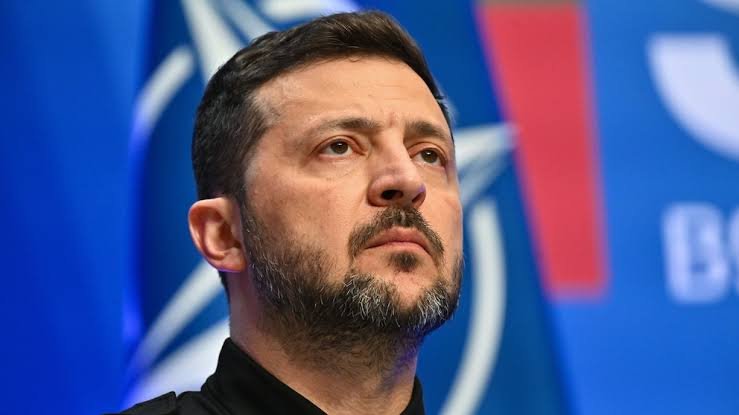
Ukrainian President Volodymyr Zelenskyy has expressed cautious optimism about the possibility of securing a breakthrough in efforts to end the war with Russia before the end of 2026, as diplomatic activity intensifies following US-brokered negotiations in Abu Dhabi. With American presidential envoys preparing to meet Russian President Vladimir Putin in Moscow, Kyiv believes a potentially important opportunity has emerged to move towards a negotiated settlement after years of devastating conflict.
Zelenskyy’s remarks came as he arrived in Ireland ahead of discussions with US representatives Steve Witkoff and Jared Kushner on Thursday. The two American envoys were expected to travel to Dublin after completing their meeting with Putin, where they would brief the Ukrainian president on Moscow’s position and the prospects for further negotiations.
Speaking about the diplomatic developments, Zelenskyy said there was a genuine opportunity for progress because the participants involved in the negotiations appeared interested in reaching an agreement before 2027. He emphasised that the American representatives needed to obtain concrete proposals from the Russian leadership rather than relying on general expressions of willingness to negotiate.

The Ukrainian president said he hoped Witkoff and Kushner would return with specific information from their discussions with Putin. His comments reflected Kyiv’s desire to understand whether Moscow was prepared to make meaningful concessions that could help end the fighting.
The Moscow meeting represents another significant stage in Washington’s diplomatic efforts to bring the two countries closer to a possible settlement. Putin’s representative Kirill Dmitriev welcomed the American envoys when they arrived at a Moscow airport on Thursday morning, signalling the continuation of direct diplomatic engagement between the Russian and American sides.
The latest diplomatic activity follows two days of negotiations between Russian and Ukrainian delegations in Abu Dhabi, marking the first US-brokered talks between the two sides since February. Although the discussions did not produce a major breakthrough on a comprehensive peace agreement, both countries reported progress on humanitarian issues, particularly arrangements for a prisoner exchange.
The negotiations resulted in an agreement described as the largest prisoner exchange of the war. The development offered a rare positive outcome in a conflict that has caused enormous human suffering, widespread displacement and extensive destruction of infrastructure in both countries.
For families waiting for information about relatives captured during the fighting, prisoner exchanges represent an important humanitarian development. Returning detained soldiers can provide relief to families who have spent months or years uncertain about the fate of their loved ones. Although such arrangements do not resolve the underlying political and military disputes, they can help create limited areas of cooperation between opposing sides.
Ukraine’s delegation reportedly described the discussions as productive in certain areas, particularly concerning security guarantees for the country after the war. A senior Ukrainian representative said the Russian delegation had arrived with very strict instructions, making negotiations difficult, but added that significant progress had been achieved on the question of future security arrangements.
The Ukrainian side expressed hope that the diplomatic momentum could lead to a possible solution before the end of the year. However, the details of any proposed agreement and the extent to which Moscow might accept Ukraine’s security requirements remained uncertain.
Kushner acknowledged that there was little trust between the Russian and Ukrainian sides but described the Abu Dhabi discussions as a positive first step. His assessment reflected the difficulty of conducting negotiations between countries that have remained locked in a prolonged military confrontation and continue to disagree over fundamental political and territorial issues.
Zelenskyy has repeatedly stressed that Ukraine wants an end to the war but cannot accept an agreement that leaves the country exposed to future aggression. Speaking alongside Irish Prime Minister Micheál Martin on Wednesday, he said Kyiv would continue making every possible effort to achieve results before the end of 2026.
He also indicated that the outcome would depend significantly on the format and substance of the discussions between American and Russian representatives. Washington’s ability to obtain concrete commitments from Moscow could therefore become an important factor in determining whether the current diplomatic initiative develops into a broader peace process.
The negotiations have also attracted considerable attention from European governments and NATO, which remain concerned about the long-term security implications of the conflict. NATO Secretary-General Mark Rutte said the discussions in Abu Dhabi had demonstrated that the United States, Ukraine and European countries were united in their approach to the negotiations.
Rutte nevertheless emphasised that Russia needed to demonstrate a genuine willingness to cooperate. His remarks suggested that Western governments were waiting for Moscow to show whether it was prepared to move beyond diplomatic statements and participate in a meaningful process aimed at ending the conflict.
While diplomatic efforts have intensified, military operations have continued on several fronts. Russia and Ukraine exchanged attacks on their respective capitals during the early hours of Thursday, demonstrating how difficult it remains to separate diplomatic developments from the realities of the battlefield.
Explosions were reportedly heard in Kyiv, although the extent of damage in the Ukrainian capital was not immediately clear. Russia’s defence ministry said its forces had struck a munitions warehouse in Kyiv and facilities in the surrounding region, alongside military and energy infrastructure elsewhere in Ukraine.
The Russian military also reported an attack on a cargo vessel travelling towards ports in Ukraine’s Odesa region. Meanwhile, Moscow’s mayor, Sergei Sobyanin, said Russian air defence systems had intercepted five drones heading towards the Russian capital.
The attacks came after a deadly Russian assault on a market in the Odesa region of southern Ukraine. According to local authorities, three people were killed and 11 others injured. Residential buildings were also damaged, adding to concerns about the continuing risks faced by civilians living in areas exposed to repeated military operations.
The conflict has increasingly extended to strategic infrastructure far from the immediate front lines. On Wednesday, a drone attack caused a fire in the port area of Ust-Luga on Russia’s north-western Baltic Sea coast, injuring three workers, according to regional governor Aleksandr Drozdenko.
Ukraine subsequently acknowledged launching the attack. Its general staff said the strike had targeted the port’s oil infrastructure and caused significant damage to a network of fuel storage tanks. According to Ukraine’s preliminary assessment, five tanks had been damaged, while the regional governor also reported that a power station had been disconnected.
The attack highlights the continuing importance of energy and transport infrastructure in the wider conflict. Ports, fuel storage facilities and electricity installations are essential to military logistics and economic activity, making them strategically significant targets. However, strikes against such facilities also increase the risk of fires, environmental damage and wider disruption to civilian and commercial operations.
Another development attracting attention involved the capture of an Indonesian national by Ukrainian forces. Ukraine said it had captured its first Indonesian prisoner of war amid what it described as an increase in Russian recruitment from the Southeast Asian country.
The 49-year-old man, originally from Java, was reportedly taken to Ukraine’s Zaporizhzhia region to participate in a Russian assault. According to information provided by Ukraine’s state-run I Want to Live project, his group came under drone attack, after which he managed to reach territory controlled by Ukrainian forces and was captured.
The case has raised questions about the recruitment of foreign nationals into Russia’s military operations and the extent to which individuals from other countries are becoming involved in the conflict. The circumstances surrounding the man’s recruitment and his legal status will remain important considerations as the case develops.
Meanwhile, the human cost of the fighting was again highlighted by reports of a Ukrainian drone strike that killed an employee of the Russian-controlled Zaporizhzhia nuclear power plant. The plant’s Russian management said the employee was killed at his home in south-eastern Ukraine.
According to the management, the incident marked the 15th death of an employee associated with the facility since April. The development has renewed concerns about the safety of people working at or connected with one of Europe’s most strategically sensitive nuclear installations.
The Zaporizhzhia nuclear power plant has remained a major concern throughout the war because of the potential consequences of military activity around nuclear infrastructure. Any damage to essential systems or threats to personnel could create risks extending beyond the immediate conflict zone.
Taken together, these developments illustrate the complicated situation facing diplomatic negotiators. While the Abu Dhabi discussions have produced progress on prisoner exchanges and some security-related issues, military attacks continue to cause casualties and damage infrastructure. The gap between diplomatic optimism and battlefield realities remains substantial.
For Zelenskyy, the immediate priority is to determine whether the United States can secure meaningful commitments from Putin that could form the foundation of a lasting agreement. Ukraine wants concrete assurances about its future security, while Russia’s position on the central issues of the conflict remains a major obstacle.

The involvement of Washington, particularly through Witkoff and Kushner, has created renewed diplomatic momentum. However, the success of the initiative will depend on whether the parties can overcome deep disagreements and agree on arrangements that are acceptable and enforceable.
As the American envoys meet Putin and prepare to brief Zelenskyy, international attention is focused on whether the latest diplomatic opening can produce tangible results. The prospect of progress before the end of 2026 has generated cautious hope, but a lasting peace will require more than prisoner exchanges and positive statements.
For millions of people affected by the war, the ultimate measure of diplomatic success will be an end to the violence, the return of prisoners, the protection of civilians and credible guarantees that another conflict will not follow. Whether the current negotiations can deliver those outcomes remains uncertain, but the coming discussions could prove important in determining the next stage of the war.
Related News:
 Ceasefire Standoff Deepens in Ukraine War
 UN expert urges UK to rethink Israel policy
 Europe’s democracies face a growing far-right threat
 UK Pauses Chagos Deal Amid US Opposition
 Elif Eralp Emerges as Berlin’s Next Political Force
 Drumcree Talks Falter as Legal Challenge Deepens
 UK-France Returns Deal Faces Expiry as Talks Stall
 Germany Pledges €1bn Military Aid to Ukraine
 EU Divisions Deepen Over Israel Policy
 Farage Rejects Claims Reform Would Let Troops Shoot Migrants
 UK Urges Interpol to Reject Argentina’s Falklands Arrest Requests
 Ukrainian Soldier Faces Trial Over Nord Stream Blast
 Milan Braces for Unrest as Debate Intensifies Over Lost Generation
 Ukraine Peace Talks Set to Resume in November
 Serbia’s Student Victory Sparks a ‘Smell of Freedom’
 US Pushes for Final Russia-Ukraine Peace Deal
 UK and EU Signal Fresh Push for Defence Cooperation Talks
 Hungary election: Orbán faces biggest test amid scandal
 Cartel crackdown raises fears of fresh violence
 US states redraw maps after voting rights ruling
 Former ICC prosecutor condemns US sanctions
 Deadly Russian Air Raids Strike Across Ukraine
 Israeli Strike in Southern Lebanon Kills Seven
 Russian Missiles Intensify Pressure on Kyiv
 Ukraine Villagers Demand Answers After Deadly Arms Depot Strike
 Bayeux Tapestry Revives Franco-British Ties
 Reform Faces Fresh Financial Controversy
 UK plans tougher Israel stance with settlement trade ban
 Israel Accused of Undermining Palestinian Life
 Saudi Pact Raises Risk of Pakistan Entering War
 Lib Dems Prepare for Election Amid Reform Challenge
 US Networks Suspend Trump White House Pool Coverage
 King Refers Jamaica Slavery Petition to Privy Council
 UK Plans New Centre to Counter Information Warfare
 Russia Targets Ukraine’s Digital Economy With Strikes
 Republican Senator Questions Trump Ad Spending
 Free Speech Emerges as Key UK Election Issue
 French Student Protests Escalate Into Violent Clashes
 Burnham Opens Door to Possible UK Return to EU
 Green Party faces dispute over Zionism motion
 Badenoch Raises Prospect of 2027 UK Election
 French School Protests Escalate as 400 Schools Close
 US bombers leave RAF Fairford after terror threat
 Latin America women fear rollback of rights
 Ukraine claims strikes have crippled Russia’s oil refining
 Former German Intelligence Chief Arrested Over Espionage
 France Braces for Major Student Protest Mobilisation
 UK Mission in East Jerusalem to Remain Open
 Royal Navy Sailor Charged With Alleged Spying
 France Urges UK to Consider Returning to EU
 Trump Says He Deserves Nobel Peace Prize
 Israel Promotes Film Challenging Controversial Gaza Documentary
 Controversial Vaccine Trial Approved in Guinea-Bissau
 French Students Protest Poor Conditions in Paris Suburbs
 UK Greens Face Crisis Over Zionism and Extremism Row
 Brazil Court Scandal Threatens Lula as Bolsonaros Rise
 Greta Thunberg Backs French Students in School Protests
 Ohio Airports Become Key Hubs for ICE Deportation Flights
 England and Wales Begin Second Wave of Early Prison Releases
 India’s Voter Roll Crisis Sparks Nationwide Protests
 Judge Blocks Trump White House Media Ban
 Farage Calls for Prosecution of Asylum Seeker Charities
 Gadi Eisenkot: Israel’s Anti-Netanyahu Challenger
 Serbia Leader Linked to Controversial Trump Tower Plan
 French Police Face Scrutiny Over Injured Teenagers
 Trump Slams Ukraine Strikes as Russia Ceasefire Collapses
 UK Could Rejoin EU Through a Switzerland Plus Deal
 Macron Condemns Violence as France Faces 2,400 Arrests
 Massive Student-Led Movement Marches in Belgrade Ahead of Serbian Vote
 Spain Mourns 68 Dead After High-Speed Train Crash
 Novaya Gazeta to Close After Russian Government Pressure
 Riot Police Deployed as Poland Court Row Escalates
 King Charles Faces Reparations Protests at Antigua Summit
 Bedouin Women Drive Historic Arab Election Gains
 Hungary to Reveal Names of Communist-Era Informants
 Exiled Journalists Defy Putin’s Growing Media Crackdown
 Paraguay President Impeached and Arrested After Banking Crisis
 EU Citizens Sue Home Office Over UK Residency Rights
 Knesset Speaker Race Could Decide Netanyahu’s Future
 US Moves Aircraft From UK Base Amid Iran Threat