Published: 15 October 2026. The English Chronicle Desk. The English Chronicle Online.
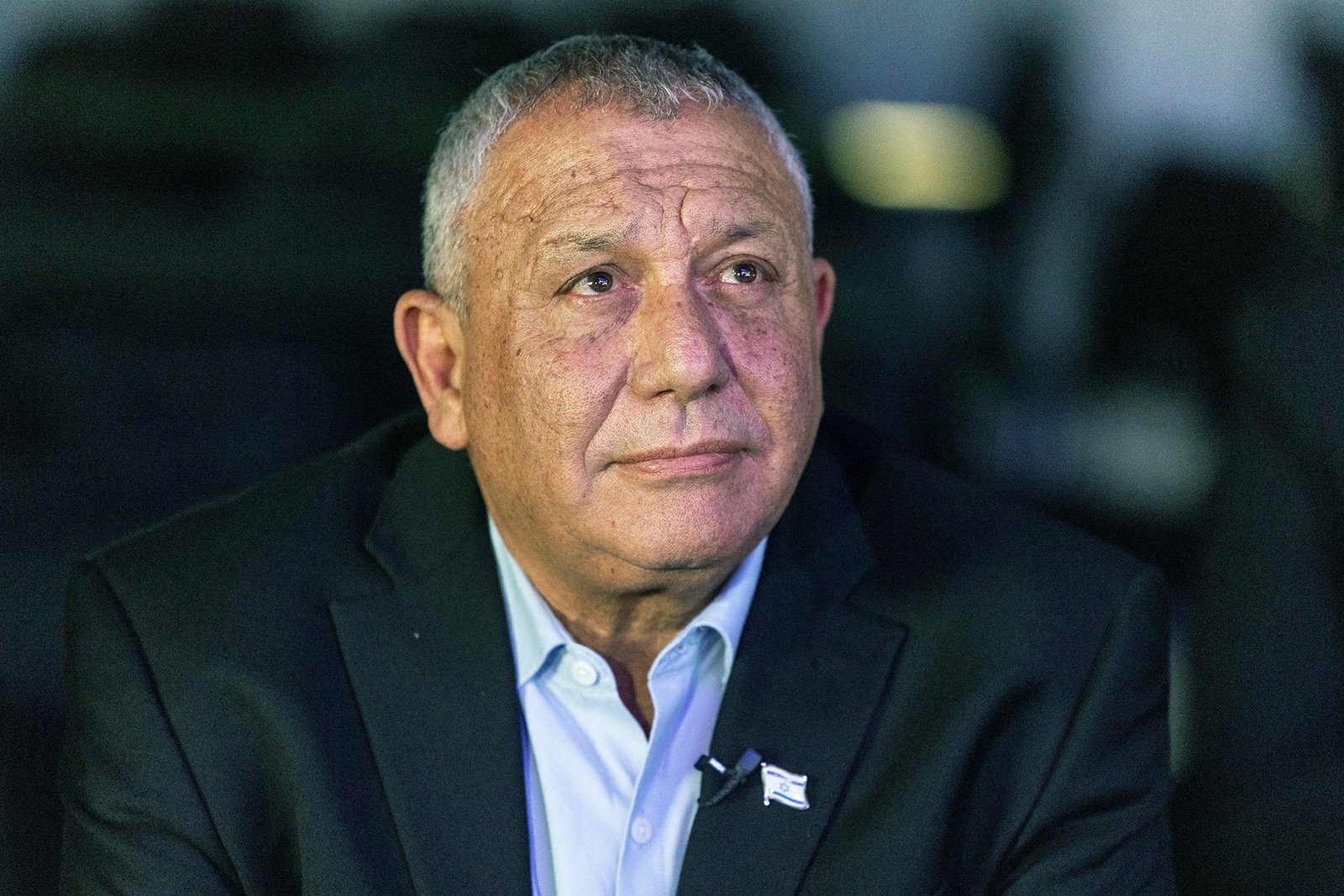
Gadi Eisenkot has emerged as one of the most closely watched figures in Israel’s election campaign, presenting voters with an alternative to Prime Minister Benjamin Netanyahu that is built less around ideological transformation than around personal character, military experience and a promise of more restrained government.
The former Israeli military chief of staff has been described by supporters and political observers as almost the opposite of Netanyahu in style. Where Netanyahu is highly polished, media-conscious and politically combative, Eisenkot is widely portrayed as modest, direct and somewhat unpolished. His supporters see those qualities as evidence of authenticity at a time when Israeli politics has been marked by bitter rivalries, political manoeuvring and prolonged controversy.
Yet beneath that contrast lies a more complicated political picture. Eisenkot has become an attractive figure for Israelis who want a change from Netanyahu, but on some of the most consequential questions facing the country, particularly the future of the Palestinians and Israeli settlements in the occupied West Bank, he has deliberately avoided committing himself to a clear alternative.

Eisenkot entered politics only four years ago after a long military career. His party, Yashar, takes its name from a Hebrew word associated with being straight, honest or direct, reflecting the image that his political campaign has attempted to build around him.
His appeal is closely connected to his personal background. Unlike Netanyahu, whose family background includes an academic father and a long history in Israel’s political establishment, Eisenkot was born into a Mizrahi Jewish family from Morocco and grew up in a more working-class environment. He entered the army as an infantryman and gradually rose through the ranks before eventually becoming Israel’s chief of staff.
That journey has helped create an image of a politician who is closer to ordinary Israelis. Political analyst Dahlia Scheindlin has argued that his relatively modest background contributes significantly to the perception that he is more connected to the wider population.
For voters exhausted by political drama, that image may be as important as specific policy proposals. Eisenkot is frequently described as empathetic, straightforward and professional, while his military background has helped reinforce an impression that he is disciplined and less interested in political theatrics.
His campaign has also focused heavily on accountability over the failures surrounding the Hamas attack of 7 October 2023. Eisenkot supports a full investigation into the intelligence and security failures that allowed the devastating attack to take place, an issue that remains politically sensitive and emotionally powerful across Israel.
On domestic politics, he has also supported ending exemptions from military service for ultra-Orthodox Israelis. The issue has become one of the most divisive questions in Israeli society, particularly as the country continues to face demands on its military during prolonged periods of conflict.
However, Eisenkot’s position becomes considerably less straightforward when the discussion turns to the Israeli-Palestinian conflict.
He has declined to endorse the two-state solution in explicit terms, despite the idea remaining central to international diplomatic efforts aimed at resolving the conflict. During the campaign, Eisenkot argued that the conflict had become deeply rooted in religious and national identities and that anyone believing an agreement could be reached immediately was seriously mistaken.
That position has left him open to criticism from those seeking a fundamental change in Israel’s approach to the Palestinians. While he presents himself as an alternative to Netanyahu, opponents question whether an Eisenkot government would actually pursue a substantially different strategy on the conflict.
His position on Israeli settlements in the occupied West Bank is similarly complicated. Eisenkot opposes the planned E1 settlement development, which critics say could make the creation of a viable Palestinian state more difficult. At the same time, however, he has not rejected Israeli settlement in the West Bank altogether.
One of the clearest differences between Eisenkot and Netanyahu concerns control over the occupied West Bank. Eisenkot has strongly criticised the decision to place far-right politician Bezalel Smotrich in charge of significant aspects of West Bank administration.
He has said he would reverse that arrangement and restore the army’s role in overseeing the territory. Such a move could mark a significant change in tone and administration, particularly amid international criticism of settler violence and growing concern over conditions faced by Palestinians in the West Bank.
But political analysts caution against interpreting this as evidence that Eisenkot is preparing to pursue a comprehensive peace initiative.
Professor Yossi Mekelberg of Chatham House has described the approach associated with Eisenkot and his allies as one focused primarily on better management of the country rather than a fundamental change in its direction. In that interpretation, Eisenkot could offer Israelis a government that functions more professionally and attracts less international criticism without necessarily resolving the central Israeli-Palestinian dispute.
His military background also makes it difficult to classify him as a traditional dove.
As commander of Israel’s northern front during the 2006 Lebanon war, Eisenkot was associated with the military strategy later known as the Dahiya doctrine, which involved the use of overwhelming force against areas considered to be supporting hostile armed groups. The doctrine has been heavily criticised because of its implications for civilian infrastructure and casualties.
His approach to the Gaza war has nevertheless demonstrated a degree of military realism. Eisenkot previously argued that Israel was unlikely to achieve “total victory” over Hamas and urged greater attention to the lives of Israeli hostages held in Gaza.
His position on the hostages has a deeply personal dimension. His son, Gal Meir Eisenkot, died from wounds sustained during an operation in Gaza in late 2023 while Israeli forces were attempting to recover the bodies of hostages.
The experience has shaped perceptions of Eisenkot as a politician who understands the human cost of war, although it has not transformed him into an opponent of military force. His criticism of Netanyahu has instead focused partly on how military power should be used and what strategic objectives Israel can realistically achieve.
Eisenkot has also criticised Netanyahu’s call for Israel to become a “super-Sparta”, warning against a vision of the country becoming increasingly militarised and defined by its ability to intimidate its neighbours.
If Eisenkot were to become prime minister, observers expect one of his earliest challenges would be addressing settler violence in the West Bank. A stronger response could improve Israel’s strained relationships with foreign governments and reduce some of the international pressure surrounding the country.
But analysts remain uncertain about whether he would take a second step towards addressing the wider Palestinian question.
That uncertainty is central to the debate over his candidacy. For many voters, Eisenkot represents a chance to restore professionalism, stability and normality after years of political conflict. For others, the absence of a clear programme for resolving the Israeli-Palestinian conflict means that replacing Netanyahu may change the tone of government without fundamentally changing its policies.
His ability to build a governing coalition could also determine how much freedom he would actually have. Even if his party performs strongly enough to lead coalition negotiations, Israel’s fragmented political system means that any government he forms could depend on partners with very different priorities.
That could force Eisenkot to compromise on issues ranging from settlements and religion to security policy and relations with the Palestinians.
For supporters, however, the appeal may be precisely that he promises less drama rather than a political revolution. After years dominated by Netanyahu’s highly personalised leadership, corruption allegations, coalition crises and bitter political disputes, some Israelis may simply want a government that appears quieter and more predictable.
Former diplomat Shai Bazak has suggested that Eisenkot’s less charismatic personality could actually become an advantage. After a dominant political leader, voters may deliberately choose someone who appears less theatrical because they want stability and relief from constant political confrontation.
That helps explain the unusual nature of Eisenkot’s campaign. Much of his popularity is rooted not in a sweeping ideological programme but in the qualities voters believe he represents: honesty, restraint, professionalism and concern for ordinary people.
Yet that image carries its own risk. Political analyst Scheindlin has warned that voters may be projecting their hopes onto Eisenkot, imagining that he will restore normality, professionalism and social stability simply because of his personality and military background.

The central question, therefore, is not whether Eisenkot is different from Netanyahu. In style, character and political presentation, the differences are considerable. The harder question is how far those differences would translate into changes in policy.
An Eisenkot government could potentially bring a less confrontational tone, stronger action against settler violence, greater emphasis on institutional accountability and a different approach to Israel’s relations with the international community.
But on the defining issue of the Israeli-Palestinian conflict, he has so far maintained considerable ambiguity.
That leaves Eisenkot occupying an unusual position in Israel’s election campaign: a leading opposition figure who offers a clear contrast with Netanyahu in personality and political style, while leaving voters with significant uncertainty over how far he would actually change the country’s direction.
Related News:
 Delhi Braces for Youth Protests Over Voter Roll Dispute
 Five Years of Taliban Rule Leave Afghanistan in Crisis
 Drumcree Talks Falter as Legal Challenge Deepens
 UK-France Returns Deal Faces Expiry as Talks Stall
 Latin America women fear rollback of rights
 India’s Youth Movement Alleges Mass Detentions Before Protest
 Gaza War Deepens India’s Strategic Ties With Israel
 Controversial Vaccine Trial Approved in Guinea-Bissau
 Trump Attacks Norway After Nobel Peace Prize Snub
 Delhi Detains Protest Leaders as Youth Rally Escalates
 PTI Announces Swabi Rally Ahead of Long March Plans
 Ohio Airports Become Key Hubs for ICE Deportation Flights
 Farage Rejects Claims Reform Would Let Troops Shoot Migrants
 India’s Voter Roll Crisis Sparks Nationwide Protests
 Cartel crackdown raises fears of fresh violence
 US states redraw maps after voting rights ruling
 Immigration Judges Fear Pressure in Trump Era
 Le Pen’s Popularity Holds Despite Conviction
 Israeli Strike in Southern Lebanon Kills Seven
 Is America Ready for an AOC Presidential Run?
 Nepal Flood Survivors Face Unimaginable Loss
 Nepal Tunnel Rescue Offers Hope Amid Flood Devastation
 Patriot Platform Raises Concern Across Britain
 Reform UK Receives Record £36m Donation From Crypto Billionaire
 Israel Accused of Undermining Palestinian Life
 Election Candidate Abuse Raises Alarm in England
 Amnesty Finds Coordinated Abuses in Iran Protest Crackdown
 Turkey LGBTQ Crackdown Expands With New Arrests
 Yemen War Displaces 125,000 as Fighting Intensifies
 Iran School Strike Raises War Crimes Questions, UN Says
 Saudi Pact Raises Risk of Pakistan Entering War
 Lib Dems Prepare for Election Amid Reform Challenge
 China’s MeToo Movement Finds New Ways to Survive
 US Networks Suspend Trump White House Pool Coverage
 Democrat Says ICE Restricted Detention Camp Oversight
 Japan PM Backs International Criminal Court
 King Refers Jamaica Slavery Petition to Privy Council
 UK Pauses Chagos Deal Amid US Opposition
 Judge orders Trump to restore access for three media outlets
 Elif Eralp Emerges as Berlin’s Next Political Force
 Nepal PM calls deadly flood a global climate warning
 Republican Senator Questions Trump Ad Spending
 Free Speech Emerges as Key UK Election Issue
 French Student Protests Escalate Into Violent Clashes
 Israel-bound Plane Lands in Saudi Arabia After Cockpit Fight
 Trump Ads Trigger Fight Over Taxpayer Money
 Burnham Opens Door to Possible UK Return to EU
 Green Party faces dispute over Zionism motion
 Hundreds of UK prisoners released early amid overcrowding
 Drumcree Talks End Without Agreement Ahead of Appeal
 Badenoch Raises Prospect of 2027 UK Election
 French School Protests Escalate as 400 Schools Close
 Germany Pledges €1bn Military Aid to Ukraine
 Tanker Attacked Near Qatar as Hormuz Tensions Escalate
 NSW Police Bid Delays Inquiry Into Sydney Protest
 Trump Says He Deserves Nobel Peace Prize
 Sri Lanka Ex-First Lady Arrested Over Donation Probe
 ICE Agent Shoots Man in New York as Child Escapes Harm
 Israel Promotes Film Challenging Controversial Gaza Documentary
 Turkey Rules Out Troops in Saudi Arabia’s Houthi Conflict
 Bolsonaro Gains Key Endorsement Ahead of Brazil Runoff
 Delhi Tightens Security Ahead of Election Protest
 Navi Pillay Wins Nobel Peace Prize for Justice
 UAE Says Co-Pilot Planned Suicide Attack on Israel
 Premier League Faces a Crisis of Trust After City Verdict
 UK Gaza Refugee Route Criticised Over False Hope Claims
 French Students Protest Poor Conditions in Paris Suburbs
 UK Greens Face Crisis Over Zionism and Extremism Row
 Delhi Closes Metro Stations Ahead of Election Protest
 Pakistan Suspends PTI Government Amid Political Crisis
 Ten US Midterm Races That Could Defy Expectations
 Brazil Court Scandal Threatens Lula as Bolsonaros Rise
 Greta Thunberg Backs French Students in School Protests
 Millions Face Tougher Medicaid Rules From January
 England and Wales Begin Second Wave of Early Prison Releases
 UK Urges Interpol to Reject Argentina’s Falklands Arrest Requests
 Ukrainian Soldier Faces Trial Over Nord Stream Blast
 Judge Blocks Trump White House Media Ban
 Camera Discovery Triggers Navy Ship Investigation
 Brazil Cuts Working Week to 40 Hours in Lula Election Boost