Published: 12 October 2026. The English Chronicle Desk. The English Chronicle Online
Pakistan has declared a state of emergency in the north-western province of Khyber Pakhtunkhwa and suspended its provincial government, sharply escalating an already tense confrontation with imprisoned former prime minister Imran Khan’s Pakistan Tehreek-e-Insaf party. PTI has condemned the decision as an attempt to remove its elected administration under the cover of an emergency, warning that the move could trigger further instability and political unrest.
President Asif Ali Zardari announced the emergency on Sunday following a federal government decision to intervene in the province, which borders Afghanistan and has experienced a growing number of militant attacks. Islamabad said provincial authorities had failed to take adequate action against Islamist militants and argued that the worsening security situation required direct federal intervention.
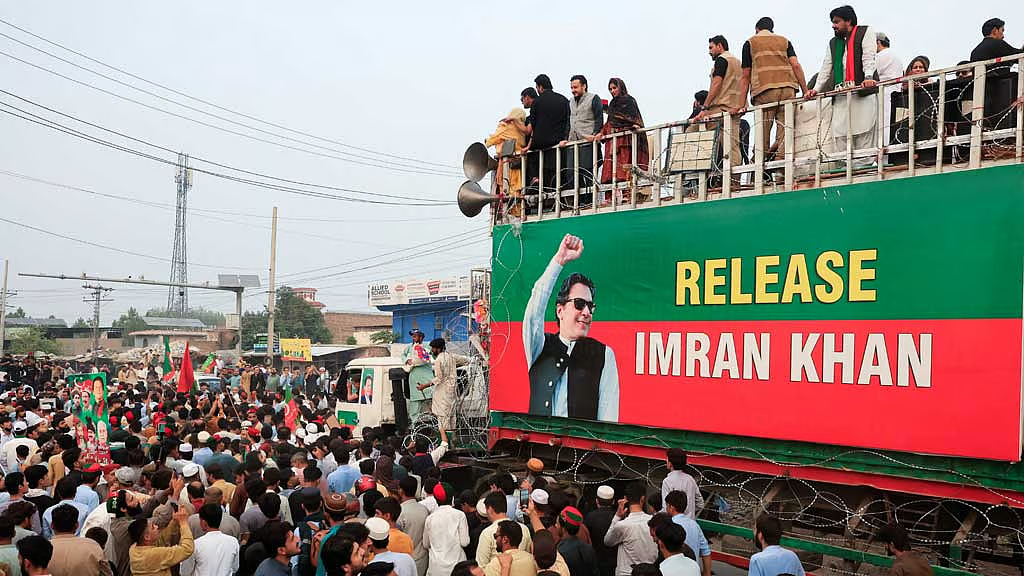
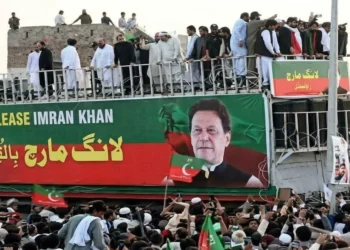
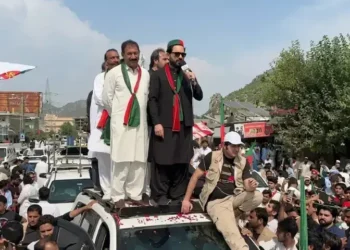
The decision represents one of the most serious developments in the political confrontation between PTI and the federal government in recent months. It also comes only a week after supporters of Khan gathered in Khyber Pakhtunkhwa with plans to march towards Islamabad to demand the former prime minister’s release. Hundreds of activists and three of Khan’s sisters were detained before the planned demonstration, in what PTI described as one of the strongest crackdowns on its supporters in years.

Zulfikar Bukhari, an aide to Khan and PTI spokesperson, strongly criticised the emergency declaration, describing it as “more of a coup disguised as emergency”. He warned that the decision could encourage further bloodshed and instability and accused the government of using security concerns as a pretext to prevent political mobilisation by Khan’s supporters.
The federal government, however, has defended the move on security grounds. Pakistan’s constitution allows the authorities to intervene in provincial administration under certain emergency circumstances. Law Minister Azam Nazeer Tarar said a provincial governor would take charge of Khyber Pakhtunkhwa, initially for six months, although the arrangement could continue for longer if the authorities considered it necessary.
The interior ministry also said troops would be deployed in the province. The move effectively places a region governed by PTI under direct federal oversight at a moment when tensions between Khan’s supporters and Islamabad are already exceptionally high.
The government and military have accused PTI’s provincial administration of failing to contain militant violence. PTI rejects the accusation and argues that the federal government has failed to provide the province with adequate funding, equipment and resources to confront the security threat.
The disagreement comes against the backdrop of a deteriorating security environment in Pakistan’s north-west. Khyber Pakhtunkhwa has experienced repeated militant attacks, with authorities struggling to prevent violence in areas close to the Afghan border. Islamabad has increasingly linked the security situation to militant networks operating from or receiving support in Afghanistan, allegations that have further complicated relations between the two countries.
Restrictions have reportedly been placed on the movements of Sohail Afridi, who had previously been in charge of the province, according to one of his close aides. The development further demonstrates the extent to which the emergency declaration has changed the political and administrative situation inside Khyber Pakhtunkhwa.
The political implications are particularly significant because PTI-backed candidates won the largest number of seats in Pakistan’s 2024 general election, although Khan’s party was unable to form the federal government. PTI ultimately established a provincial government in Khyber Pakhtunkhwa, making the region an important centre of political support for the former prime minister.
Khan, a former international cricket star who served as Pakistan’s prime minister before being removed from office, remains one of the country’s most influential political figures despite being imprisoned. His supporters maintain that the political and legal actions against him are part of a wider campaign designed to prevent his return to power. Pakistan’s military has denied allegations that it manipulated the election against him.
Khan faces several legal cases involving allegations ranging from state gifts to incitement to violence and an accusation concerning an unlawful marriage. Most of his convictions have either been suspended or overturned, although appeals remain pending. Khan denies wrongdoing and has repeatedly described the cases against him as politically motivated.
The latest emergency declaration has also drawn criticism from outside PTI. Maulana Fazlur Rehman, leader of the Jamiat Ulema-e-Islam-Fazl and a political figure involved in attempts to mediate between the government and PTI, condemned the decision. He described the imposition of emergency rule as an attack on democratic principles and warned against using extraordinary powers to resolve political disputes.
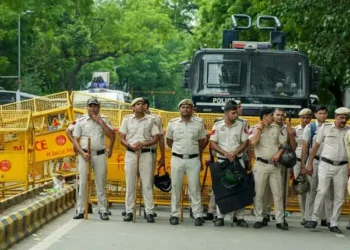
The government’s actions in Islamabad have reinforced the sense of an impending confrontation. Tens of thousands of security personnel have reportedly been deployed in the capital, while large shipping containers have been positioned along roads to prevent protesters from reaching parliament and other sensitive locations.
The security preparations follow the failed attempt by Khan supporters to march towards Islamabad last week. The authorities have treated the protests as a major security challenge, while PTI has framed them as part of a broader struggle for political rights and the release of its imprisoned leader.
The confrontation has placed pressure on political leaders to find a way out of the crisis. Fazlur Rehman’s mediation efforts had raised the possibility of dialogue between PTI and the federal government, but the emergency declaration could make negotiations more difficult. The opposition party may now view the suspension of its provincial government as evidence that political space is narrowing further.
Prime Minister Shehbaz Sharif defended the federal intervention during a cabinet meeting, saying that security forces and civilians had been under attack for two years. He argued that the government could not simply stand by while violence continued and said stronger action was necessary to protect citizens and state institutions.
President Zardari declared the emergency on the advice of the prime minister after the federal cabinet approved the move, according to the president’s office. The constitutional procedure gives the federal government a legal basis for intervention, but the political consequences of using that authority are likely to remain deeply contested.
The crisis also has an important regional dimension. Islamabad has repeatedly accused Afghanistan of allowing militants to operate from its territory and launch attacks inside Pakistan. Pakistani authorities have also accused PTI of sympathising with the Taliban government in Kabul and its domestic affiliates. Both PTI and Afghanistan reject the allegations.
The dispute over militancy is therefore intertwined with Pakistan’s internal political divisions. While the federal government argues that extraordinary security measures are necessary to protect the country, PTI supporters fear that security concerns are being used to weaken an elected provincial government and restrict their political activities.
The situation also places Pakistan’s civilian institutions under considerable pressure. The country has a long history of political instability, military influence and disputes between elected governments and opposition movements. The latest confrontation risks deepening public distrust if political disagreements increasingly become intertwined with emergency powers and security operations.
For ordinary residents of Khyber Pakhtunkhwa, the political struggle is occurring alongside genuine concerns about safety. Communities in the province have repeatedly experienced militant violence and the consequences of instability. Families affected by attacks are likely to prioritise security, while others may worry that expanded military operations and political restrictions could create additional disruption.
The challenge for Islamabad will therefore be to demonstrate that the emergency measures are genuinely directed at restoring security rather than permanently weakening the province’s elected political leadership. For PTI, the immediate challenge is to maintain political mobilisation without provoking further confrontation with security forces.
The suspension of the provincial government could also influence the future of Pakistan’s political system. If the emergency becomes prolonged, questions are likely to arise over the limits of federal authority and the constitutional protections afforded to provincial governments. The dispute could eventually become the subject of legal and political challenges, particularly if PTI contests the necessity or proportionality of the intervention.

The coming weeks will be crucial. The federal government faces the difficult task of confronting militant violence while preventing the political crisis from developing into wider unrest. PTI, meanwhile, must decide how aggressively to challenge the emergency while protecting its supporters from further arrests and confrontation.
What began as a dispute over Imran Khan’s imprisonment and the political future of his party has now developed into a broader confrontation over provincial autonomy, security policy and democratic governance. The suspension of Khyber Pakhtunkhwa’s PTI-led government marks a major escalation, and whether Pakistan’s political leadership can return to negotiation may determine whether the country moves towards stability or another prolonged period of confrontation.
Related News:
 Delhi Braces for Youth Protests Over Voter Roll Dispute
 Delhi Detains Protest Leaders as Youth Rally Escalates
 Delhi Closes Metro Stations Ahead of Election Protest
 Delhi Freezes Promotion of Police Officer After Allegations
 Sri Lanka Ex-First Lady Arrested Over Donation Probe
 India’s Youth Movement Alleges Mass Detentions Before Protest
 Pakistan Lawyers Back PTI Long March and Demands
 Delhi Tightens Security Ahead of Election Protest
 PTI Announces Swabi Rally Ahead of Long March Plans
 Judge Blocks Trump Bid for Arizona Voter Data
 US Court Weighs Fate of TPS for Migrants
 UK may ban protests amid rising antisemitism fears
 Immigration Judges Fear Pressure in Trump Era
 Trump’s Revenge Drive Deepens GOP Divide
 Le Pen’s Popularity Holds Despite Conviction
 Trump Orders Signs Criticising Smithsonian Museum
 Pradhan Resigns Amid Protests
 Five Years of Taliban Rule Leave Afghanistan in Crisis
 Nepal Flood Survivors Face Unimaginable Loss
 Judge Allows Pentagon Firings at Stars and Stripes
 Marina Hyde Finds Hope Amid Political Chaos
 Nepal Tunnel Rescue Offers Hope Amid Flood Devastation
 Armed Suspect Attacks Ohio Governor Candidate
 Ministers Condemn Far-Right Unrest in Portsmouth
 Patriot Platform Raises Concern Across Britain
 Reform UK Receives Record £36m Donation From Crypto Billionaire
 Election Candidate Abuse Raises Alarm in England
 Texas Transfers Raise Fears for Migrant Children
 Memphis Questions National Guard Crime Surge
 Mahmood Warns Far Right Over Asylum Protests
 Disabled Travellers Seek Fairer UK Care Rules
 Saudi Pact Raises Risk of Pakistan Entering War
 China’s MeToo Movement Finds New Ways to Survive
 Trump and Mamdani Hold Cordial Gracie Mansion Meeting
 UK Reviews Hague Child Abduction Cases Involving Abuse
 Democrat Says ICE Restricted Detention Camp Oversight
 Japan PM Backs International Criminal Court
 King Refers Jamaica Slavery Petition to Privy Council
 Judge orders Trump to restore access for three media outlets
 Far-Right Activist Arrested After Channel Dinghy Incident
 Nepal PM calls deadly flood a global climate warning
 Portadown protest ends after tense Orange Order standoff
 Trump Asked Xi About Buying US Weapons
 Free Speech Emerges as Key UK Election Issue
 South Korea-Ukraine Row Erupts Over North Korean POWs
 French Student Protests Escalate Into Violent Clashes
 Israel-bound Plane Lands in Saudi Arabia After Cockpit Fight
 Burnham Opens Door to Possible UK Return to EU
 Drumcree Talks Falter as Legal Challenge Deepens
 UK-France Returns Deal Faces Expiry as Talks Stall
 Hundreds of UK prisoners released early amid overcrowding
 Drumcree Talks End Without Agreement Ahead of Appeal
 Pilot Recalls Fight to Save Flydubai Passengers
 Badenoch Raises Prospect of 2027 UK Election
 French School Protests Escalate as 400 Schools Close
 Latin America women fear rollback of rights
 Pacific Climate Summit Draws Limited Global Leaders
 Gosport Protesters Clash With Police Over Migrant Rescue
 Tanker Attacked Near Qatar as Hormuz Tensions Escalate
 Botstein Quits Bard Amid Epstein Investigation Calls
 Holborn and St Pancras Vote Tests Labour and Greens
 NSW Police Bid Delays Inquiry Into Sydney Protest
 ICE Agent Shoots Man in New York as Child Escapes Harm
 Labour Wins Key London By-election as Greens Fall Short
 US Senate Debates Turn Bitter as Midterms Near
 Gaza War Deepens India’s Strategic Ties With Israel
 Turkey Rules Out Troops in Saudi Arabia’s Houthi Conflict
 South Africa Withdraws Directive on Asylum Applications
 Burnham Rises as Farage and Polanski Face Setbacks
 Labour Beats Greens in Crucial London By-election
 Navi Pillay Wins Nobel Peace Prize for Justice
 US Execution Livestream Plan Sparks Global Outrage
 Controversial Vaccine Trial Approved in Guinea-Bissau
 Trump Attacks Norway After Nobel Peace Prize Snub
 Recruitment Boss Accused of Leading Doxxing Campaign
 Australia grants Asio powers to designate hate groups under new laws
 Unions Warn Labour Over Zero-Hours Contract Reforms
 Trump gives $45,000 holiday gifts to White House aides
 London Facial Recognition Trial Ends With False Alert
 Yemen government launches offensive against Houthis