Published: 12 October 2026. The English Chronicle Desk. The English Chronicle Online
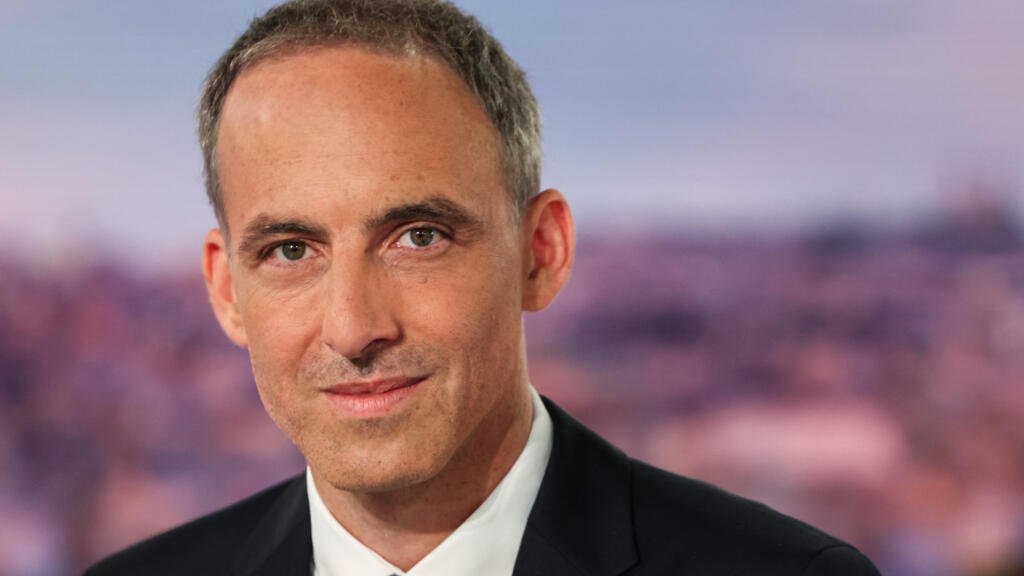
French social democrat Raphaël Glucksmann has called on the country’s centre-left to wage an “existential battle” to prevent the far right from winning the 2027 presidential election, presenting his candidacy as an opportunity to rebuild a divided political movement and challenge Marine Le Pen’s growing influence.
Glucksmann, a member of the European Parliament and founder of the small political party Place Publique, was selected as the social democratic candidate following a decisive victory in a centre-left primary organised by the Socialist Party. His designation marks a significant change in the party’s approach to the next presidential contest, as it prepares to support a candidate from outside its traditional leadership rather than fielding its own nominee.
Speaking on Monday in his first interview since his selection was announced on Sunday night, Glucksmann warned that France was entering a historic political period. He argued that the possibility of a far-right victory required the centre-left to abandon pessimism and rebuild its confidence in its ability to govern.

“We’ve got to rid our hearts of the spirit of defeat,” he said, urging supporters to believe that a successful campaign remained possible despite the movement’s difficult position in opinion polls.
Glucksmann described the forthcoming presidential contest as likely to be exceptionally bitter, warning that the 2027 campaign would be unlike any France had previously experienced. He said it would be intolerable for the centre-left to approach the election without believing it could win, and argued that social democracy could once again become a source of political pride.
His challenge comes at a time when the French centre-left is struggling to regain influence after successive electoral setbacks. The Socialist Party suffered heavy defeats in the previous two presidential elections, while divisions between moderate social democrats and more radical left-wing movements have weakened the broader opposition to the far right.
Opinion polls currently place Glucksmann well behind Le Pen, who remains a leading contender for the presidency. The social democrat is also trailing Édouard Philippe, the former prime minister under President Emmanuel Macron, as well as radical-left politician Jean-Luc Mélenchon.
Glucksmann’s support has been estimated at between 9% and 14%, leaving him with a substantial gap to close before the election. The figures underline the scale of the task facing his campaign, particularly as the French left remains divided over its leadership, economic priorities and approach to alliances.
The selection of Glucksmann is nevertheless politically significant. For the first time since the Socialist Party was founded in 1969, the party will not put forward a separate presidential candidate of its own. Instead, it is backing a figure whose political identity is closely associated with a more reformist and pro-European version of social democracy.
Although Glucksmann has cooperated with the Socialists in previous elections, including through joint electoral lists, he has developed a profile distinct from the party’s traditional political establishment. He presents himself as an essayist and intellectual rather than a conventional career politician, arguing that political leadership requires the ability to explain complex national and international challenges rather than rely on familiar slogans.
His candidacy reflects an attempt to unite moderate left-wing voters who have become disillusioned with the traditional Socialist Party while also appealing to people who previously supported Macron. However, the strategy carries risks. Critics on the left argue that Glucksmann’s politics are too centrist to offer a convincing alternative to the president’s record or to Mélenchon’s more radical programme.
The relationship between Glucksmann and Mélenchon could prove particularly important. Mélenchon’s party, La France Insoumise, boycotted the Socialist primary and has positioned itself as the dominant force on the divided left. Glucksmann, however, has refused to work with the radical-left leader, making it more difficult to establish a unified electoral front.
Without cooperation between the centre-left and radical left, votes could be split among competing candidates, potentially strengthening the position of the far right. The challenge is therefore not simply to increase Glucksmann’s personal popularity but to determine whether the wider left can agree on a common strategy before voters go to the polls.
Glucksmann has made clear that he believes the centre-left must recover a stronger sense of purpose. He has expressed concern that social democrats have lost working-class voters and acknowledged that rebuilding their trust will require more than a change of leadership.
He said he loses sleep over the movement’s failure to maintain its historic connection with working people. For him, restoring that relationship will require a renewed political programme capable of addressing economic insecurity, environmental concerns and the frustrations of voters who feel increasingly distant from mainstream institutions.
Environmental policy is expected to play a central role in that effort. Glucksmann has criticised Macron’s record on climate change, arguing that the French president wasted a decade by failing to take sufficiently decisive action on the climate emergency.
The criticism places climate policy at the centre of Glucksmann’s attempt to distinguish himself from the outgoing president. It also offers a potential route for the centre-left to reconnect with younger voters and those who believe established political parties have not responded adequately to environmental threats.
Yet the challenge will be to translate those concerns into a programme that also addresses the daily pressures facing working households. The centre-left must persuade voters that environmental action can be combined with economic security, reliable public services and a credible response to the cost of living.
Glucksmann’s political background gives him a different profile from many of France’s established politicians. Aged 46, he has been a member of the European Parliament since 2019 and is known for his strong support for European cooperation and Ukraine. His political interests have frequently extended beyond domestic affairs, including work intended to raise awareness of the aftermath of the genocide in Rwanda.
He has also served as an adviser to Mikheil Saakashvili, the former president of Georgia who became a prominent opponent of Moscow. These international experiences have helped establish Glucksmann as a politician focused on European security, democratic values and the defence of countries confronting Russian influence.
His strongly pro-European outlook could appeal to voters who want France to remain influential within the European Union and maintain support for Ukraine. However, the same emphasis may not automatically win over voters more concerned with domestic economic pressures, immigration or dissatisfaction with the political establishment.
Glucksmann has also faced criticism that his background as an intellectual associated with Parisian political circles makes it difficult for him to understand the concerns of ordinary workers. He has rejected the suggestion that his intellectual identity should be treated as a weakness.
In an interview with the French newspaper Libération, he argued that his background would help him explain the political moment more clearly rather than resort to simplified campaign slogans. His challenge will be to demonstrate that this approach can connect with voters beyond the educated urban constituencies that have traditionally been more receptive to his politics.
The personal circumstances surrounding his candidacy have also attracted attention. His partner, Léa Salamé, is a prominent presenter of the French public broadcaster’s flagship evening news programme. She has stepped down from presenting the news while Glucksmann conducts his presidential campaign, a move that reflects the need to avoid questions about potential conflicts between her professional role and his political ambitions.
As the campaign develops, Glucksmann will need to transform his primary victory into a broader national movement. Winning the support of the Socialist Party’s political machinery gives him an important organisational advantage, but it does not guarantee that centre-left voters will unite behind him or that he can close the gap with his leading rivals.
The stakes extend beyond the future of the Socialist Party. A presidential victory for the far right would represent a major shift in French politics and could influence the direction of the European Union, immigration policy, relations with Ukraine and France’s approach to international affairs.

For Glucksmann, the immediate task is to persuade supporters that defeat is not inevitable. He wants the centre-left to recover its confidence, rebuild its relationship with working-class voters and offer a political alternative that is both socially credible and environmentally ambitious.
Whether that message can overcome the left’s internal divisions remains uncertain. With Le Pen ahead in the polls and Mélenchon competing for many of the same voters, Glucksmann faces a demanding campaign that will test both his political appeal and his ability to build alliances.
His call for an existential battle captures the urgency he believes the moment demands. But turning that warning into electoral success will require a clear programme, sustained organisation and a convincing answer to the question of why French voters should choose social democracy over its increasingly powerful rivals.
Related News:
 EU weighs response amid Greenland tariff crisis with Trump
 EU Says US Ties Have Suffered ‘Big Blow’ After Greenland Crisis
 Italian Town Buys Mussolini Villa to Keep Away Fascist Fans
 Hungary election: Orbán faces biggest test amid scandal
 Global order shifts amid Trump-era turmoil
 Ceasefire Standoff Deepens in Ukraine War
 France Faces Record Presidential Crowded Race Amid Far-Right Surge
 Norway Doubles Down on Oil and Gas for Europe Energy Security
 Putin Declares Russia Victory at Scaled Victory Day Parade
 Zelenskyy warns over Oreshnik threat as Kyiv hit
 Former ICC prosecutor condemns US sanctions
 Irish Gangland Figure Fails in Dublin Election Bid
 Deadly Russian Air Raids Strike Across Ukraine
 Le Pen to Run for President Despite Embezzlement Conviction
 Russian Missiles Intensify Pressure on Kyiv
 Ukraine Villagers Demand Answers After Deadly Arms Depot Strike
 Bayeux Tapestry Revives Franco-British Ties
 AfD election surge leaves Magdeburg residents deeply uneasy
 Europe’s democracies face a growing far-right threat
 Sweden Election Hangs on Far-Right Breakthrough
 Germany’s Far Right Surge Puts Merz Under Pressure
 Macron and Carney deepen France-Canada ties
 Elif Eralp Emerges as Berlin’s Next Political Force
 Russia Targets Ukraine’s Digital Economy With Strikes
 National Rally makes historic gains in French Senate
 Madrid Tent Camp Grows as Spain Housing Crisis Deepens
 French Student Protests Escalate Into Violent Clashes
 Ukraine’s New FP-7 Missile Makes Combat Debut
 French School Protests Escalate as 400 Schools Close
 Bosnia’s Young People Look Beyond Election Hope
 Germany Pledges €1bn Military Aid to Ukraine
 Spain Sets Snap Election as Housing Crisis Deepens
 Ukraine claims strikes have crippled Russia’s oil refining
 Lithuania Offers to Fund Permanent US Military Base
 Former German Intelligence Chief Arrested Over Espionage
 France Schools Protests Draw 250,000 as Police Clash
 EU-China Talks Target Surge in Hybrid Car Imports
 Tanker Ablaze After Drone Strike Near Sochi
 France Suspends Stun Grenades After Student Injury
 France Urges UK to Consider Returning to EU
 French Student Protests Grow Despite Government Pledge
 France Promises 3,000 Teachers as Student Protests Grow
 EU Divisions Deepen Over Israel Policy
 France Faces Debt Crisis as Protests and Markets Clash
 French Students Protest Poor Conditions in Paris Suburbs
 BBC to Apologise Over Edited Trump Speech Amid Backlash
 Britain deploys RAF specialists to assist Belgium with drone threats
 Greene Pushes Epstein Files Amid Trump Fallout
 December Run-Off in Chile as Election Produces No Winner
 Canada Passes Carney’s First Budget in Tight Parliamentary Vote
 Shadow Fleet at Sea: Europe’s Battle Against Illicit Oil Shipping
 Georgians Defy Government Crackdown After Year of Protests
 Trump Policies Boost China’s Global Rise, Survey Finds
 Pentagon Signals Reduced Role in Deterring North Korea
 UK and US Drop in Global Corruption Index Rankings
 Canberra Poster Seizure Sparks Free Speech Row
 Evo Morales Returns After Mysterious Absence
 Jacinda Ardern Moves To Australia Following Her US Fellowships
 Jacinda Ardern Move Sparks Kiwi Reflection
 Nick Greiner Warns Over Election Review Fallout
 Injured Mojtaba Khamenei Elevated as Iran Leader
 Gordon Brown urges court for crimes against children
 Oil Prices Jump After Trump Claims Iran Oil Hub Destroyed
 Pakistan Targets Militant Hideouts in Afghanistan
 Air Canada CEO Faces Outcry Over Recent Language Misstep
 Relationship with Trump may be beyond repair, Starmer warned
 Trump Brokers Landmark Lebanon Ceasefire Amid Regional Hopes
 UK Stands Firm on Falklands Amid US Rift
 Oil Prices Surge Above $120 Amid Iran Blockade Fears
 Trump orders US troop pullout from Germany
 Trump Announces 3-Day Russia–Ukraine Ceasefire Deal
 Pope Meets Families in Italy Toxic Waste Zone
 Farage and Reform UK Reshape British Politics
 Meta Under Fire: The Battle Over Addictive Social Media Design
 England and Norway Fans Turn Miami Into World Cup Carnival
 Republican Senator Questions Trump Ad Spending
 Lula Warns of Bolsonaro Family Return as Brazil Votes
 South Korea Probes Fuel Shipments to Russia
 Trump’s Russian Diesel Deal Sparks Ukraine Fury
 Trump Names Katie Zachariah as Next White House Press Secretary