Published: 12 October 2026. The English Chronicle Desk. The English Chronicle Online
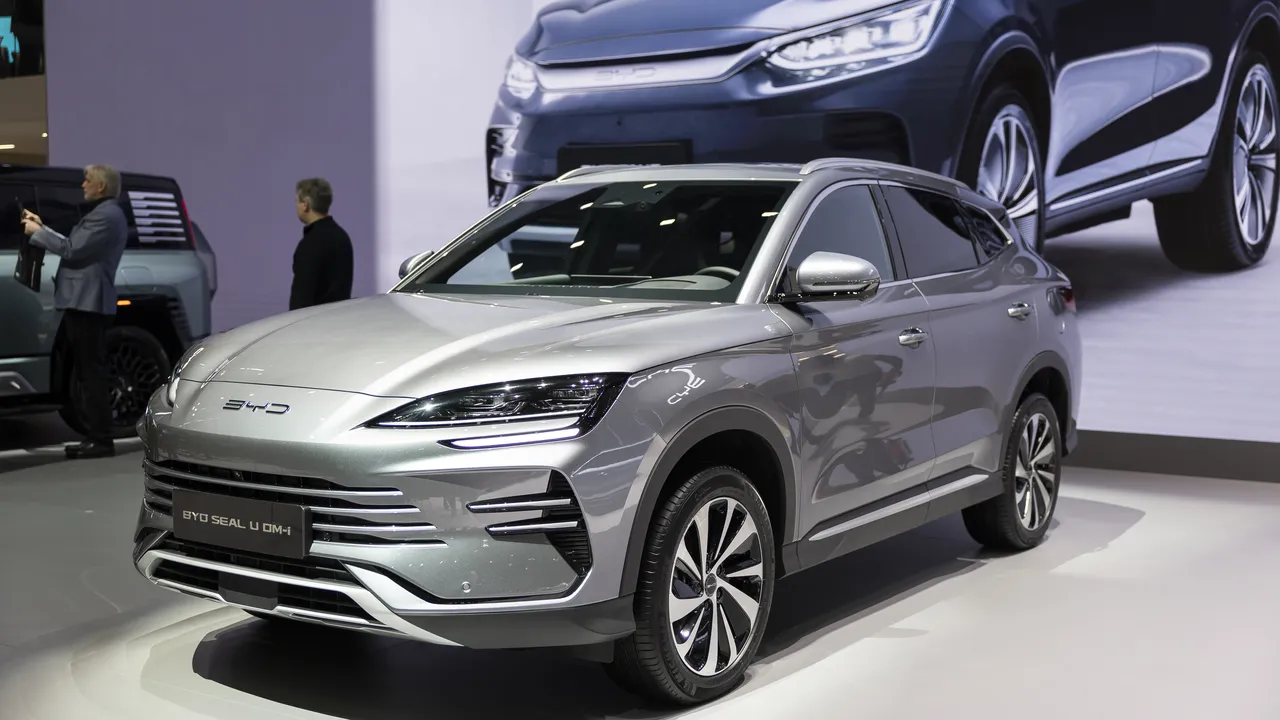
The European Union has agreed to limit imports of hybrid electric vehicles from China to 350,000 cars annually, marking a significant shift in its trade policy as Brussels seeks to protect European manufacturing, address an expanding trade imbalance and respond to concerns about industrial decline. The restriction, expected to take effect in December, forms part of a broader agreement between the EU and China designed to manage tensions over vehicle exports and other traded goods.
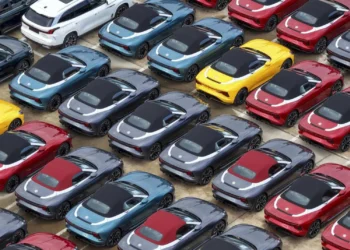
The European Commission confirmed the annual quota following negotiations between the two sides. Chinese-made battery and plug-in hybrid vehicles have gained ground in the European market over the past two years, with around 800,000 vehicles expected to be sold this year. The new limit is intended to reduce China’s share of the EU hybrid vehicle market from approximately 6% to around 3%, according to the agreement’s projections.
The decision represents an important development in the economic relationship between the world’s largest trading blocs. European policymakers are increasingly concerned that the rapid growth of Chinese imports is putting pressure on domestic manufacturers, threatening industrial employment and deepening the EU’s trade deficit with China. The new arrangement suggests Brussels is becoming more willing to restrict imports when it believes that the scale or speed of competition poses risks to its industrial base.

Under the agreement, the EU will use safeguard measures permitted by the World Trade Organization (WTO) to introduce the quota. This mechanism can be implemented more quickly than conventional anti-dumping procedures, which generally require detailed investigations into whether imports are being sold unfairly and causing harm to domestic industries.
The quota is designed to control the volume of vehicles entering the European market rather than impose an additional tariff on every imported car. Vehicles arriving above the permitted annual limit will not automatically face new tariffs under the arrangement, but they will remain blocked in European port customs facilities. This could create practical challenges for exporters, importers and shipping companies if shipments exceed the available quota.
The distinction is important because the arrangement focuses on the number of vehicles that can enter the market rather than directly increasing the tax burden on each car. However, exporters will need to manage their shipments carefully, while European importers may have to adjust purchasing schedules and delivery expectations to avoid vehicles being held at ports.
The agreement also distinguishes between vehicles manufactured in China and those assembled within the European Union. Chinese vehicles assembled in EU member states, including Hungary and potentially Spain in the future, will not be covered by the import quota. By contrast, vehicles produced in China by European companies will remain subject to the restrictions.
That provision could influence future investment decisions across the automotive industry. Manufacturers may examine whether expanding production within the EU would help them maintain access to European customers without being affected by limits on imported vehicles. At the same time, the exemption for locally assembled cars could encourage companies to reconsider where they manufacture vehicles and how they organise their supply chains.
The arrangement comes as European manufacturers face intense competition in the transition towards electric and hybrid mobility. Chinese automotive companies have expanded their presence through competitive pricing, growing production capacity and investment in new vehicle technologies. Their products have attracted customers looking for alternatives to traditional petrol and diesel vehicles, increasing pressure on established European carmakers.
European officials have become more concerned that the growth of imports could weaken domestic production and employment, particularly in regions where automotive manufacturing remains central to the local economy. Car factories support extensive networks of component suppliers, logistics businesses, engineering specialists and service providers. A prolonged decline in domestic production could therefore affect employment well beyond vehicle assembly plants.
The EU’s decision reflects a wider reassessment of how to maintain industrial competitiveness while continuing to participate in global trade. For years, the bloc’s approach to its trade imbalance with China focused substantially on encouraging European exports and increasing access to the Chinese market. Officials now appear increasingly concerned that expanding exports alone may not be enough to address the scale of the imbalance.
The EU is currently running a trade deficit with China of approximately £1bn a day, equivalent to around €1.18bn, according to figures cited in the report. That gap has become a major political and economic concern, particularly as European industries confront higher costs, changing global demand and growing competition from overseas manufacturers.
Officials have described the policy shift as a significant change in approach, driven partly by fears of deindustrialisation and job losses in Europe’s industrial heartlands. Instead of relying primarily on efforts to sell more European products to China, Brussels is placing greater emphasis on monitoring import volumes and responding when it believes that particular sectors are under pressure.
The vehicle quota is only one part of the wider agreement reached between the two sides. China has also agreed to remove certain tariffs on automotive parts and halve duties on selected European products, including footwear, olive oil and ice cream. These concessions could provide some relief to European exporters seeking access to Chinese consumers, although the overall economic effect will depend on the value of trade covered and the practical implementation of the commitments.
European officials have stressed that the arrangement has China’s support and does not mark the end of negotiations over trade. Discussions are expected to continue on other products, including chemicals, renewable energy equipment and furniture. The willingness of both sides to continue dialogue suggests that the agreement is intended to manage immediate tensions while leaving room for further negotiations.
Nevertheless, the deal comes amid broader European efforts to reduce strategic dependence on foreign suppliers. Last month, the EU sought feedback on proposed rules that could require companies to diversify their supply chains. Separately, proposed Made in Europe legislation could give domestic production a more prominent role in public procurement decisions.
These initiatives reflect concerns that excessive dependence on a limited number of suppliers could leave European industries vulnerable to political disputes, export restrictions or sudden shortages. Diversifying supply chains may improve resilience, but it can also increase costs for businesses and complicate international manufacturing arrangements.
The debate is expected to intensify as European leaders consider further measures to protect the bloc’s economic interests. On Thursday, EU leaders are due to discuss a French-German proposal for a new instrument, informally described as a “kill switch”, that would allow Brussels to restrict access to the single market for certain goods following a harmful event. Such a measure could become relevant if another country imposed restrictions on strategically important materials, including rare earth elements used in technology and automotive manufacturing.
The proposal highlights the growing connection between trade policy, industrial strategy and economic security. Rare earth materials and other specialised components are essential to several advanced industries, including electric vehicles, electronics and renewable energy systems. Disruptions to their supply can affect production across multiple sectors, making access to critical resources a significant concern for policymakers.
However, restrictions on imports also carry potential risks. European consumers could face fewer choices if the range of available vehicles narrows, while manufacturers that rely on components or production facilities in China may have to reconsider their operations. Trade measures can also prompt retaliation or create uncertainty for companies that depend on stable cross-border rules.
For the automotive industry, the new quota will require careful planning. Chinese exporters will need to account for the annual limit, European distributors will have to monitor available import capacity, and manufacturers with factories inside the EU may reassess the balance between exporting finished vehicles and producing them locally. The exemption for EU-assembled vehicles could make local manufacturing more attractive, although investment decisions will also depend on labour costs, infrastructure, supply networks and customer demand.
The arrangement also presents a test of whether targeted trade safeguards can protect European industrial capacity without escalating economic tensions with China. The WTO framework provides a mechanism for implementing the restriction, but its longer-term effects will depend on how the quota operates, whether trade flows adjust and how both sides respond to changing market conditions.

Ultimately, the agreement signals a more assertive European approach to managing competition in strategic industries. Brussels is seeking to preserve domestic manufacturing while maintaining commercial relations with China and negotiating concessions for European exporters. Balancing those objectives will remain difficult as the global automotive market shifts towards electrification and competition intensifies.
With the quota due to begin in December, the coming months will reveal how quickly exporters and manufacturers adapt. For European policymakers, the challenge is to protect jobs and industrial capacity without undermining consumer choice or the benefits of international trade. For China, the agreement introduces a new constraint on vehicle exports to one of its most important overseas markets, while leaving the door open for continued negotiations over the wider economic relationship.
Related News:
 Chinese Hybrid Car Surge Raises EU Auto Industry Concerns
 Firmus Abandons Major ASX Listing Amid Investor Doubts
 Oil nears $100 as Saudi attacks shake markets
 Thames Water Revises Oxfordshire Mega-Reservoir Plan
 UK Productivity Improves as Bank Weighs Interest Rates
 UK Trade Losses Grow Without EU Product Deal
 Why Americans Feel Ripped Off by Rising Prices
 Poundland Rescue Bid Could Protect 11,000 Jobs
 Bank Chief Calls for Power to Intervene in AI
 UK Diesel Reaches £2 as Inflation Surges Across Europe
 Minister Rejects Fears of UK Diesel Shortage
 Informa Agrees £2.24bn Deal to Buy Clarion
 Asos Investigates Hack Claims After Customer Alerts
 EU-China Talks Target Surge in Hybrid Car Imports
 IMF Warns Governments Over Rising Debt Burdens
 Tesco Raises Profit Forecast as Consumer Confidence Holds
 Ministers Push ATO to Reconsider Credit Card Ban
 Australia Delays Tax Credit Card Payment Ban After Backlash
 UK rejects EV charging VAT cut amid Treasury clash
 UK firms accused of ‘AI washing’ boom
 Firms on both sides fear damage from US-Canada trade war
 UK Risks Falling Behind in AI Race
 Dutch Bank Moves 86 Tonnes of Gold to London
 UK House Prices Fall as Mortgage Rates Rise
 Billionaire Chris Rokos poised to leave UK
 JPMorgan Boss Warns Against UK Bank Tax Rise
 John Lewis Losses Widen to £124m as Confidence Falls
 AI CEOs Call for Slower Development
 Oil Prices Surge as Saudi Pipeline Closure Deepens Crisis
 Anthropic Backs $31.9bn Queensland Data Centre
 Next Raises Profit Forecast After Strong Summer Sales
 Japan Raises Rates to 31-Year High
 UK Retail Sales Rebound as Consumers Spend More
 Nvidia chief rejects AI extinction fears
 UK Borrowing Hits £18.3bn Ahead of Budget
 Thinktank Calls for Abolition of UK State Pension
 MPs Defend UK Economic Watchdog Against Critics
 Trump gives Xi red-carpet welcome as trade truce extends
 AO Acquires Jessops in Camera Retail Expansion
 Saudi intercepts Houthi missiles as oil fears grow
 TalkTalk Races to Sell Arms as Administration Looms
 Should Savers Lock Into 5.25% Fixed Rates?
 Beaverbrooks Boss Calls for Relief on Business Costs
 UK Diesel Prices Hit Record High Amid Iran Conflict
 Ukraine Faces $45m Hourly Cost From Missile Alerts
 UK house price growth slows as mortgage rates rise
 UK borrowing costs surge as global bond sell-off deepens
 Boots Sale Nears as Weston Family Eyes $9bn Deal
 BBC Three and Scotland Face Online-Only Future
 French Debt Fears Put Euro Markets Under Pressure
 UK Assures Public Over Diesel Supply
 Feeld Founders Receive Record Dividend as Sales Rise
 UK Faces Calls to Review Bank Failure Bets
 UK Weighs Chinese Car Tariffs Amid EU Trade Push
 BT Agrees £400m TalkTalk Rescue Deal
 Samsung Heads for Record Profit as AI Chip Demand Surges
 Shell Refineries Set for Record Refining Profits
 Japan Beer Giants Face Cartel Probe
 Google Maps Brings Live Fuel Prices to UK Drivers
 Oil Shock Sends Markets Lower as Middle East Risks Grow
 France Faces Debt Crisis as Protests and Markets Clash
 IFS Warns UK Budget Faces £35bn Spending Gap
 UK Van Drivers Face £2.5bn Diesel Cost Surge
 Albanese Rejects Gas Export Tax Push
 London Launches First Self-Driving Taxis
 UK Cost Squeeze Deepens as Mortgages and Gas Rise
 Swedish Mining Push Puts Sami Land Rights Under Pressure
 UK Retailers Accused of Breaking Refund Laws
 UK Pay Growth Slows to 3.9% as Rate Decision Nears
 Entain Plans 400 Job Cuts After Profit Update
 OpenAI Reveals Six Cases of Concerning AI Behaviour
 Tom Watson Takes Senior Role at Palantir
 UK Rent Gap Puts Low-Income Families Under Pressure
 Calls Grow to Expand UK National Wealth Fund
 Xi urges Trump to avoid US-China military conflict
 Sheikh Tahnoon and the UAE’s AI Ambitions
 Healey urged to act as UK energy bills rise 4%
 North Sea Strike Threatens UK Fuel Supplies
 UK house prices stall as mortgage costs rise
 UK Water Firms Earn Millions From Industrial Wastewater