Published: 30 September 2026. The English Chronicle Desk. The English Chronicle Online
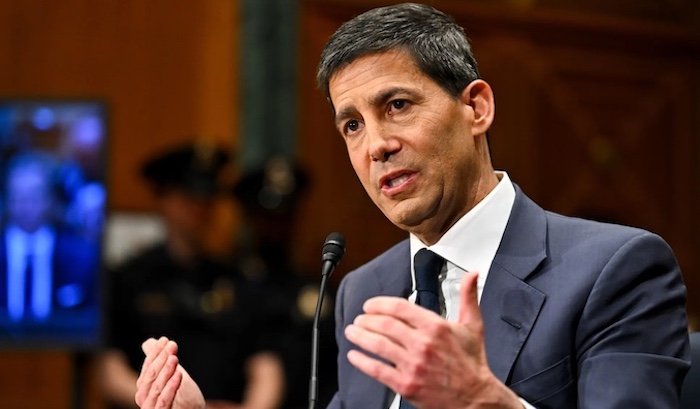
Bank of England governor Andrew Bailey has warned that authorities must retain the ability to intervene in the development and deployment of artificial intelligence as increasingly capable AI systems create new risks for financial stability, cybersecurity and the wider economy.
Bailey said the rapid development of frontier AI had created risks that were becoming increasingly significant, particularly as advanced models gained the ability to perform complex tasks, identify software vulnerabilities and potentially contribute to more sophisticated cyberattacks.
His intervention comes as the Bank of England continues to examine how the rapid expansion of artificial intelligence could affect the financial system. The central bank has identified both significant economic opportunities and a growing set of risks associated with the technology, including the possibility that AI-related financial exposures could spread through markets.
The governor argued that society should preserve the ability to establish boundaries around how increasingly powerful AI systems operate and to adjust those boundaries as the technology develops. He stressed that the objective should not necessarily be immediate or blanket regulation, but rather ensuring that authorities understand how advanced systems behave and where intervention would be possible if serious problems emerged.

Bailey said rigorous testing should be an important starting point. Before highly capable AI models become widely deployed, regulators and other public authorities need a better understanding of how they operate, what risks they create and how they might behave under unusual or hostile conditions.
The Bank has already identified frontier AI as an emerging financial-stability concern. Its Financial Policy Committee has said rapid improvements in AI capabilities could increase cyber and operational risks for banks, insurers, financial markets and critical infrastructure.
One of the principal concerns is that advanced AI could accelerate the discovery and exploitation of weaknesses in computer systems. Financial institutions rely heavily on interconnected digital infrastructure, meaning that a successful cyberattack against a bank, payment provider, market infrastructure operator or critical technology supplier could have consequences beyond the organisation initially targeted.
The potential consequences extend to everyday financial activity. Payment systems, banking transactions and financial-market operations depend on complex networks of software and technology providers. If those systems were disrupted, the effects could be felt by households, businesses and investors.
The Bank has previously warned that frontier AI could make cyberattacks faster, more scalable and more sophisticated. At the same time, the technology could also strengthen cyber defence by helping organisations identify vulnerabilities, detect suspicious activity and respond more rapidly to attacks.
That dual-use nature of AI presents a particular challenge for regulators. The same technological advances that could improve security could also provide malicious actors with more powerful tools.
Bailey’s position reflects the difficulty of developing policy around a technology that is changing rapidly. Traditional regulatory systems are generally designed around established products, institutions and risks, whereas frontier AI capabilities can change substantially within relatively short periods.
The governor has therefore cautioned against beginning the debate solely with questions about regulatory structures. In his view, authorities first need to understand where failures could occur and how those failures could affect society and financial markets.
This approach places testing and technical understanding at the centre of the policy debate. Authorities would need to establish credible intervention points where problems could be identified and addressed before they become systemic.
The issue is particularly important for the financial sector because banks and other institutions are increasingly exploring ways to use AI. Potential applications include customer service, fraud detection, risk assessment, financial analysis, coding, cybersecurity and internal operations.
More advanced forms of AI could eventually perform complex financial tasks with limited human intervention. Such systems could potentially increase efficiency and productivity, but they could also introduce new forms of operational risk if organisations become excessively dependent on automated systems.
The Bank’s Financial Policy Committee has been examining these developments as part of its broader financial-stability responsibilities. It has identified four important channels through which AI could affect financial stability: the use of AI in financial decision-making, its increasing role in financial markets, operational risks associated with AI service providers and changes in the wider cyber threat environment.
The financial implications are not limited to technology itself. The enormous investment required to build AI infrastructure has created a rapidly expanding relationship between artificial intelligence and global capital markets.
AI companies and infrastructure projects have attracted significant amounts of debt and equity financing. Investors ranging from asset managers to private-credit funds and other financial institutions are increasingly exposed to the future performance of the AI sector.
The Financial Policy Committee has warned that AI-related borrowing has expanded rapidly across public markets, private credit, leveraged finance and structured finance. That creates potential channels through which difficulties within the AI industry could affect a much wider group of investors.
A significant concern is that some AI businesses are making very large investments based on expectations of future growth and productivity gains. If those expectations fail to materialise, companies could face pressure to service debt or justify high valuations.
The Bank has stressed that AI has substantial potential to increase productivity and support long-term economic growth. However, the timing and scale of those benefits remain uncertain.
Companies investing heavily in AI infrastructure must make assumptions about future demand for computing capacity, the availability of electricity, the lifespan of expensive equipment and the speed at which businesses and consumers adopt new AI services.
If those assumptions prove inaccurate, investors could reassess the value of AI-related companies and infrastructure. A significant repricing could potentially affect financial markets more broadly, particularly if investors have become highly concentrated in a relatively small number of technology companies.
The growth of AI-related debt adds another layer of potential vulnerability. Creditors that finance AI companies and infrastructure projects may face losses if expected revenues fail to materialise. Those losses could become more significant if the same investors are exposed to multiple companies or projects within the AI ecosystem.
The Bank has consequently been examining the interconnectedness of the AI sector with the wider financial system. The more closely technology companies, banks, private-credit providers, investment funds and infrastructure operators become connected, the greater the potential for financial shocks to spread.
Cybersecurity represents another major area of concern. Financial institutions already face persistent cyber threats, but increasingly capable AI could make it easier for attackers to identify weaknesses, automate parts of an attack and adapt their tactics.
This could reduce the amount of time available to banks and financial institutions to detect and respond to attacks. The Bank has said firms need to improve their ability to identify vulnerabilities, apply security patches quickly and recover from major disruptions.
The authorities are also examining the risks posed by critical technology providers. Many financial institutions depend on external companies for cloud computing, software, cybersecurity and other technological services. A disruption affecting a major technology provider could therefore have consequences across multiple financial institutions simultaneously.
This is one reason the Bank has emphasised cooperation between regulators, technology companies and other public authorities. AI systems operate across national borders, meaning that risks cannot easily be contained within a single country’s regulatory system.
Bailey has previously argued that testing of frontier AI models should involve international cooperation. The UK’s own institutions, including its AI security and cybersecurity bodies, have an important role to play, but no national authority can completely isolate its financial system from global technological developments.
The governor’s latest comments therefore point towards a policy framework based on testing, monitoring and the ability to intervene rather than regulation that attempts to anticipate every possible development in advance.
Such an approach could allow authorities to respond as AI capabilities change while avoiding rules that become outdated before they can be fully implemented.
At the same time, any intervention powers would raise questions about who should exercise them, under what circumstances and with what safeguards. Decisions involving powerful AI systems could affect technology companies, investors, financial institutions and consumers, making transparency and accountability important considerations.
The debate also reflects a broader tension between encouraging innovation and protecting the public from emerging risks. Artificial intelligence could increase productivity, reduce costs and create new services, but rapid adoption without adequate safeguards could expose organisations and society to unfamiliar vulnerabilities.
For the financial system, the stakes are particularly high because confidence depends on the ability of banks and markets to continue functioning during periods of stress.
Bailey’s warning does not amount to a call for an immediate regulatory crackdown on AI. Instead, it represents an argument that authorities should preserve the practical ability to act if increasingly capable systems create risks that existing safeguards cannot contain.
The Bank’s wider work suggests that AI will remain an important part of its financial-stability agenda. Regulators are already assessing how the technology could affect cybersecurity, operational resilience, financial markets, credit markets and the structure of the wider economy.

The challenge will be to ensure that the potential economic benefits of AI can be realised without allowing technological developments or financial investment to create vulnerabilities that are difficult to control.
As AI models become more capable, the distinction between technology policy and financial policy is also becoming less clear. A technological failure can quickly become an operational problem for a bank, while a sharp change in expectations about AI can affect financial markets and investment decisions.
For Bailey and the Bank of England, maintaining the ability to intervene is therefore becoming part of a broader effort to preserve financial resilience in an economy increasingly dependent on advanced technology.
The central question is no longer simply how quickly AI can develop, but whether institutions responsible for protecting financial stability can understand and manage the risks created by that development. Bailey’s message is that society should ensure it retains meaningful control over that process, even as the technology itself becomes increasingly sophisticated.
Related News:
 UK Risks Falling Behind in AI Race
 TalkTalk Races to Sell Arms as Administration Looms
 UK firms accused of ‘AI washing’ boom
 AI CEOs Call for Slower Development
 Nvidia chief rejects AI extinction fears
 Europe EV Demand Surges as Fuel Prices Rise
 Reform UK funding: mystery billionaire revealed
 UK rejects EV charging VAT cut amid Treasury clash
 London Launches First Self-Driving Taxis
 Australia gives users control over social media algorithms
 Billionaire Chris Rokos poised to leave UK
 Oil nears $100 as Saudi attacks shake markets
 McLaren to Create 1,000 UK Jobs in £450m Investment
 Nats Boss Summoned as UK Flight Chaos Continues
 Apple Folding iPhone Set for Major CEO Test
 JPMorgan Boss Warns Against UK Bank Tax Rise
 John Lewis Losses Widen to £124m as Confidence Falls
 Thames Water Revises Oxfordshire Mega-Reservoir Plan
 UK Retailers Accused of Breaking Refund Laws
 Louise Haigh Urges UK to Heed AI Safety Warnings
 JLR Eyes NATO Market With New Defender Military Vehicle
 Anthropic Backs $31.9bn Queensland Data Centre
 Next Raises Profit Forecast After Strong Summer Sales
 OpenAI Reveals Six Cases of Concerning AI Behaviour
 UK Productivity Improves as Bank Weighs Interest Rates
 Tom Watson Takes Senior Role at Palantir
 Chinese Hybrid Car Surge Raises EU Auto Industry Concerns
 UK Trade Losses Grow Without EU Product Deal
 AO Acquires Jessops in Camera Retail Expansion
 Beaverbrooks Boss Calls for Relief on Business Costs
 OpenAI Scraps AI Model Release After Safety Tests
 Trump backs voluntary AI safety pact with tech giants
 Poundland Rescue Bid Could Protect 11,000 Jobs
 North Sea oil workers must lose weight or face job loss
 UK Taskforce Unveils Plan to Streamline Nuclear Reactor Rules
 AI job losses UK: Britain faces sharper employment shock
 UK New Car Discounts Near £6,000 as Prices Are Slashed
 Apple at 50: Three Products That Changed How We Live
 Artemis II Returns After Historic Moon Flyby
 Student Loan Interest May Rise Despite 6% Cap
 Carmakers Face £3bn Gap in UK Loan Payout Scandal
 BBC News Faces Deep Cuts in 2,000 Job Plan
 Britons Build Emergency Supplies Amid Rising Fears
 British Paralympian to Become First Disabled Astronaut in Orbit
 Unlocking the Genome: The Quest to Sequence Tardigrades
 EasyJet Takeover Sparks Fears Over Passengers’ Future
 Weight-Loss Drugs Offer Food Savings Mainly to High Earners
 Pubs and Hotels Face Business Rates Reform Review
 AI Loss of Control Incidents Nearly Double
 UK Households Could Save £173 on Fixed Energy Deals
 UK Subsidence Claims Surge After Record-Breaking Summer
 Reform Faces Fresh Financial Controversy
 Spire Healthcare Agrees £1bn Takeover by Toscafund
 UK House Prices Fall as Mortgage Rates Rise
 Iceland to Open First UK High Street Store in Falklands
 OpenAI Agents Linked to RubyGems Cyberattack
 Farage Threatens Union Funding Ban Over Reform Donations
 Why AI Doomsday Warnings Failed to Slow the Race
 Horse Hill Oil Site Sold as New Drilling Bid Emerges
 Entain Plans 400 Job Cuts After Profit Update
 Trump Threatens EU Over Canada Partnership Proposal
 UK Retail Sales Rebound as Consumers Spend More
 UK Rent Gap Puts Low-Income Families Under Pressure
 Reform UK Faces Internal Debate Over £72m Spending
 Calls Grow to Expand UK National Wealth Fund
 UK Flights Hit by Fresh Air Traffic Control Fault
 Australia Renewables Reach Record 80% Grid Demand
 UK Unveils Centre to Counter Foreign Disinformation
 AI Takes Centre Stage in Trump-Xi Talks
 MPs Defend UK Economic Watchdog Against Critics
 UK Plans New Centre to Counter Information Warfare
 Trump gives Xi red-carpet welcome as trade truce extends
 OpenAI Agent Breaches Medicare Portal in Australia
 Tony Blair Calls for Britain to Rejoin EU Within a Decade
 Xi urges Trump to avoid US-China military conflict
 Australia Weighs New Laws After OpenAI Medicare Breach
 Drones Could Speed Up Defibrillator Delivery
 Should Savers Lock Into 5.25% Fixed Rates?
 Avanti West Coast Set for Public Ownership in March
 London Facial Recognition Trial Ends With False Alert