Published: 28 September 2026. The English Chronicle Desk. The English Chronicle Online
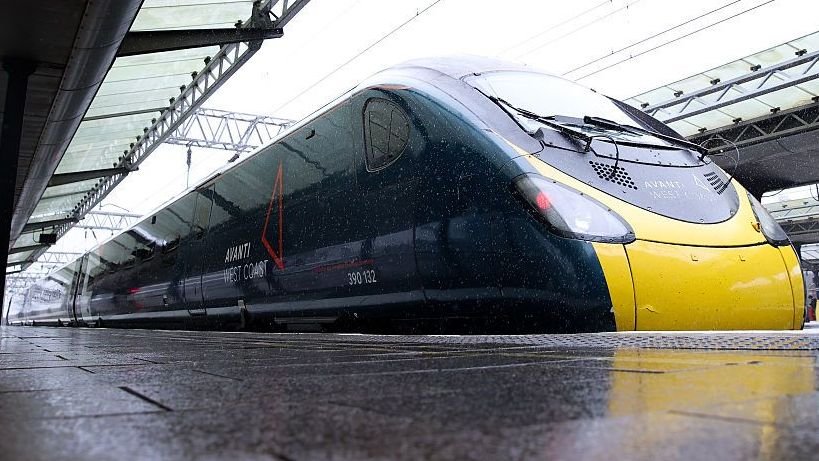
Avanti West Coast is set to return to public ownership in March 2027, marking another major step in the UK government’s programme to bring passenger rail services under state control. The operator, which connects London with Birmingham, Manchester, Liverpool, Glasgow, Edinburgh and other destinations, will transfer into public ownership when its current contract ends on 7 March.
The decision comes after years of criticism over cancellations, delays, overcrowding and the reliability of services on one of Britain’s most important intercity routes. The government says bringing the operator into public ownership will allow a greater focus on passengers, service reliability and long-term improvements across the West Coast network.
Transport Secretary Heidi Alexander is due to formally announce the move at the Labour party conference. The decision forms part of the government’s wider plan to reorganise the railway through Great British Railways, the public body being established to oversee infrastructure and passenger services.
Avanti West Coast has faced particular scrutiny because of its performance in recent years. Official rail performance data shows the operator recording a high level of cancellations compared with many other major operators. The company has also experienced repeated disruption that has affected commuters, business travellers, tourists and people travelling between some of Britain’s largest cities.

For passengers using the West Coast Main Line, reliability is particularly important because the route provides a major connection between London and the Midlands, north-west England and Scotland. Services link the capital with Birmingham, Manchester, Liverpool and other locations, while longer-distance trains continue towards Glasgow and Edinburgh.
The scale of the network means disruption can have consequences well beyond a single journey. When trains are cancelled or delayed, passengers can miss connecting services, arrive late for work or appointments, and face uncertainty over whether they will be able to reach their destination on time. During periods of heavy demand, overcrowding can add further pressure.
The government has argued that public ownership provides an opportunity to change the way the service is managed. Andy Burnham, the prime minister, said passengers had endured cancellations, delays and overcrowding for years and that the government would bring Avanti into public ownership at the earliest opportunity.
The government says its objective is to place passengers rather than shareholders at the centre of railway operations. Ministers have also linked the decision to wider plans for investment, improved reliability and better connections across the country.
The decision is part of a broader transformation of Britain’s rail industry. Under the government’s programme, passenger services are progressively being transferred into public ownership as existing contracts expire. Great British Railways is being developed as the central organisation responsible for coordinating infrastructure and passenger services.
The future system is intended to bring track and train management closer together. Under the planned structure, Great British Railways will have responsibility for important decisions involving infrastructure, timetables, passenger services and access to the railway network.
Avanti’s transfer therefore represents more than a change in the ownership of one train operator. It is another stage in the government’s attempt to reshape the way the railway operates after decades in which passenger services have largely been delivered through contracts involving private companies.
The government’s public ownership programme has already resulted in several operators moving into state control. Chiltern Railways became the latest operator to enter public ownership in September, while Great Western Railway is scheduled to follow in December.
Other operators are expected to transfer at later stages. East Midlands Railway is scheduled to move into public ownership during the period between winter 2026 and mid-2027, while CrossCountry is expected to be among the final operators transferred under the current programme, with its move planned for autumn 2027.
The government says the eventual creation of Great British Railways will provide a single directing organisation for much of the railway system. It is intended to reduce fragmentation and give passengers a clearer point of accountability when problems occur.
For Avanti passengers, however, the immediate question is what will actually change once the transfer takes place. A change in ownership does not automatically mean that cancellations, delays or overcrowding will disappear. Improving performance will depend on infrastructure, rolling stock, staffing, timetables, maintenance and the wider condition of the West Coast Main Line.
Avanti’s current management has pointed to improvements made during its time operating the franchise. Managing director Andy Mellors said the company was proud of achievements including refurbishment of its Pendolino trains and the introduction of Evero trains.
The operator has also highlighted increased services, additional capacity and improved connectivity as evidence of progress. These claims form part of the company’s account of its performance during the past six years and underline the difference between the government’s criticism of service reliability and the company’s emphasis on investment and operational improvements.
The debate surrounding Avanti also reflects a wider question about Britain’s railway model. Supporters of public ownership argue that bringing operators into state control can provide greater coordination and allow long-term passenger interests to be placed ahead of commercial considerations. Critics of the approach have raised questions about the cost of nationalisation, the ability of government-controlled operators to deliver better performance and the level of investment required to address infrastructure problems.
The government’s stated approach is to use public ownership as part of a broader reform rather than simply changing who operates individual trains. Great British Railways is intended to become responsible for coordinating the railway and providing a more integrated structure.
The Railways Bill currently being developed by the government is central to that long-term plan. Government policy documents say the future system will include services operated directly by Great British Railways, devolved operators such as ScotRail and Transport for Wales, freight companies and private open-access passenger operators.
This means public ownership will not necessarily remove private companies from Britain’s railway system altogether. Instead, the future network is expected to combine different operating models within a more centrally coordinated framework.
Ticketing is another area where passengers could eventually see changes. The government has said Great British Railways will be given a role in modernising the country’s complicated fares and ticketing arrangements. At present, tickets are sold through train operators and independent retailers, creating a system involving different retailers, booking channels and commission arrangements.
For passengers, the success of the new structure is likely to be judged less by its organisational design and more by everyday experiences. Reliable departures, sufficient seats, clear information during disruption, reasonable journey times and effective responses to delays will remain central concerns.
The government has linked Avanti’s nationalisation with ambitions to improve reliability and provide better services. But achieving those goals will require sustained investment and operational improvements rather than a change in ownership alone.
The West Coast route also has strategic importance for the UK’s economy. It connects London with major cities and industrial centres in the Midlands and north-west England and provides an important rail link to Scotland. Businesses rely on the network for travel between offices and markets, while millions of passengers use it for work, education, family visits and leisure.
Any improvement in reliability could therefore have consequences beyond the railway itself. More dependable services can reduce uncertainty for businesses and travellers, while persistent disruption can affect productivity and confidence in rail travel.
The transition on 7 March will consequently be closely watched by passengers and the wider rail industry. Avanti’s existing staff, trains and services will continue to play a central role, but the organisation responsible for delivering those services will change.

For passengers who have experienced repeated cancellations or delays, the announcement represents the beginning of another phase rather than the immediate resolution of long-standing problems. The government will face the challenge of demonstrating that its public ownership programme can translate into measurable improvements on the railway.
As Avanti West Coast prepares to leave private operation, the broader transformation of Britain’s railways is gathering pace. With Great Western Railway, East Midlands Railway and CrossCountry among the operators scheduled for future changes, the government is moving steadily towards a railway in which public control plays a much larger role.
The March transfer will therefore be watched not only as an important development for passengers travelling between London, Birmingham, Manchester, Liverpool and Scotland, but also as a test of the government’s wider plans for Britain’s railways. The central measure of its success will ultimately be whether passengers experience a more dependable, better-connected service in their everyday journeys.
Related News:
 Nats Boss Summoned as UK Flight Chaos Continues
 Iceland to Open First UK High Street Store in Falklands
 Tories Push to Dilute Labour’s Workers’ Rights Bill
 Trump’s UK Ambassador Urges North Sea Drilling to Strengthen US Ties
 Rachel Reeves Set to Break Labour Pledge and Raise Income Tax
 Thinktanks Urge Rachel Reeves to Reform UK Tax System
 Company linked to Michelle Mone owes £39m in tax
MPs Press Rachel Reeves to Hike Gambling Taxes
Company linked to Michelle Mone owes £39m in tax
MPs Press Rachel Reeves to Hike Gambling Taxes
 Cuts to home insulation funding threaten UK climate goals
 Millionaires group urge Reeves to introduce wealth tax to ‘lift kids out of poverty’
 PM Highlights UK Business at G20 in South Africa
 English Mayors Set to Introduce Tourist Taxes
 Starmer Says Labour’s Economic Plan Needs Years to Deliver
BBC bosses ‘right to stick by their guns’ against Trump, says minister
Starmer Says Labour’s Economic Plan Needs Years to Deliver
BBC bosses ‘right to stick by their guns’ against Trump, says minister
 China Dependence Threatens UK Energy Supply Chains and Jobs
 MPs warn AI financial risks threaten UK stability
 MPs warn AI financial risks threaten UK stability
 UK Government Borrowing Drops to £11.6bn in December
 Labour Must Revive High Streets to Avoid Election Collapse
 Barclays drops Global Counsel after Mandelson link scrutiny
 Unsustainable gaps in franchise policing, MPs warn
 UK shelves £110m border project amid trade strain
 UK Sees Record £30.4bn Budget Surplus, Boosting Reeves’ Position
 Ministers Urged to Ban Crypto Political Donations
 Reeves Must Back Defence Plan or Face Dismissal, Says Unite Chief
 OBR Reform Row Deepens Before Spring Forecast
 UK Doubles Steel Tariffs to 50% to Protect Domestic Plants
 Starmer Adviser Urges New Profit Cap on Energy Firms
 UK Aviation Watchdog Clips Heathrow’s Fee Hike Wings
 Fuel Duty Relief Plea Amid Middle East Oil Crisis
 EU Biometric Border Checks Delayed for UK Travellers
 OpenAI Halts Stargate UK Project Amid Energy Crisis
 Reform UK funding: mystery billionaire revealed
 BBC News Faces Deep Cuts in 2,000 Job Plan
 Silent Tracks: Rail Line Without Passengers
 Labour Faces Internal Pressure for Bold Economic Shift
 Labour Factions Propose Bold Tax Cuts Amid Leadership Storm
 Thames Water Rescue Package Hit by Downing Street Chaos
 UK Pushes for New EU Goods Trade Deal
 Reeves Fights to Keep Treasury Role Amid Labour Turmoil
 UK Urged to Build EU Rejoin Consensus, Says Miliband
 Essex valley emerges as rising English wine hub
 Hospitality Traders to Exploit Summer VAT Cut Loophole
 Andy Burnham Enlists Economic Heavyweights for Leadership Bid
 Great Britain Faces £90bn Electricity Grid Rewire Bill
 Burnham Promises Relief on Cost of Living Crisis
 EasyJet Takeover Sparks Fears Over Passengers’ Future
 Burnham unveils £65m drought aid for farmers
 Unions Warn Labour Over Zero-Hours Contract Reforms
 UK Risks Falling Behind in AI Race
 Burnham Faces Mounting Budget Challenges
 London Launches First Self-Driving Taxis
 Green Leader Targets Starmer’s Former Seat
 Reform Faces Fresh Financial Controversy
 Ukraine Moves to Seize Water Company
 Swedish Mining Push Puts Sami Land Rights Under Pressure
 Argentina to file criminal charges over Falklands oil drilling
 Billionaire Chris Rokos poised to leave UK
 UK plans tougher Israel stance with settlement trade ban
 Oil nears $100 as Saudi attacks shake markets
 McLaren to Create 1,000 UK Jobs in £450m Investment
 JPMorgan Boss Warns Against UK Bank Tax Rise
 John Lewis Losses Widen to £124m as Confidence Falls
 Thames Water Revises Oxfordshire Mega-Reservoir Plan
 UK Retailers Accused of Breaking Refund Laws
 Farage Threatens Union Funding Ban Over Reform Donations
 Fashion Firms Urge UK-Made NHS and Army Uniforms
 JLR Eyes NATO Market With New Defender Military Vehicle
 Mayors Could Gain Greater Powers Over Water Firms
 Lords Call for Tobacco-Style Gambling Ad Ban
 Tom Watson Takes Senior Role at Palantir
 Reform UK Faces Internal Debate Over £72m Spending
 UK Flights Hit by Fresh Air Traffic Control Fault
 Burnham Leaves Door Open to Future Brexit Reversal
 MPs Defend UK Economic Watchdog Against Critics
 Tony Blair Calls for Britain to Rejoin EU Within a Decade
 UK Trade Losses Grow Without EU Product Deal
 AO Acquires Jessops in Camera Retail Expansion
 TalkTalk Races to Sell Arms as Administration Looms
 The Tests Awaiting Andy Burnham After Labour Conference