Published: 26 September 2026. The English Chronicle Desk. The English Chronicle Online
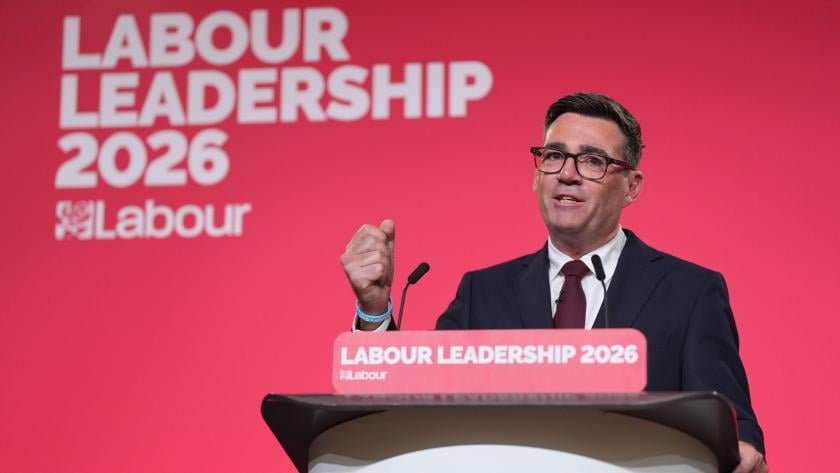
Andy Burnham heads into the Labour party conference in Liverpool with a political message centred on hope and optimism, but the period immediately afterwards is likely to bring a series of difficult decisions across the economy, welfare, energy, public services, migration and foreign policy. The contrast between the tone of the conference and the pressures facing the government could become one of the defining features of Burnham’s early months as prime minister.
Burnham entered Downing Street in July and has since sought to establish a distinct political direction, combining higher public investment and greater state involvement in essential services with commitments to fiscal discipline. His first major international engagement, including meetings with US President Donald Trump at the United Nations, has also placed foreign policy questions higher on his agenda. Their meeting was described by both sides as constructive, although significant differences remain, particularly over the future of the Chagos Islands.
The immediate domestic challenge is the government’s first budget under Chancellor John Healey, scheduled for 28 October. The fiscal position has become more difficult as higher borrowing and debt-servicing costs have reduced the room available to the Treasury. Recent figures showed public-sector borrowing above expectations, while the government’s fiscal headroom has fallen substantially compared with earlier forecasts.
That leaves Healey facing competing demands. The government has commitments involving housing, social care, defence and public services, while Burnham has also pledged not to increase the main rates of income tax, VAT, corporation tax or social-security contributions. The combination limits the number of straightforward options available to raise additional revenue. Reuters has reported that wealth and property taxation are among the areas being considered as ministers search for ways to balance spending ambitions with fiscal rules.

Energy costs could add another complication. Global energy markets have remained under pressure amid the conflict involving Iran, creating a difficult backdrop for household finances and inflation. The government will have to consider how much support can be provided to households facing higher energy bills while maintaining control over public spending.
The relationship with the European Union is another major issue awaiting the government after conference season. Burnham has inherited efforts to improve Britain’s trading relationship with the bloc and reduce some of the practical barriers that emerged following Brexit. The government is seeking closer cooperation with European partners, although disputes over procurement rules and other areas of economic policy remain unresolved.
Any progress in the relationship with Brussels could have political consequences inside Labour as well. Some Labour voters who favour closer European integration have remained dissatisfied with the post-Brexit settlement, while other voters and parts of the political spectrum continue to place greater emphasis on national control over regulation and immigration. Burnham will therefore have to navigate both the economic and political dimensions of the EU relationship.
Another immediate test will come in the Holborn and St Pancras by-election, where Labour candidate Sagal Abdi-Wali faces Green Party leader Zack Polanski. The contest has attracted particular attention because the constituency was previously represented by former Labour leader Keir Starmer and has traditionally been a strong Labour seat.
The campaign is also being watched as an indication of how successfully Labour can compete with the Greens among progressive voters. The result, however, will provide information about one constituency at one point in time rather than a definitive measure of national political opinion. The Greens have made the contest a significant campaign target, with Polanski playing a prominent role in their effort to expand the party’s parliamentary presence.
Energy policy presents another difficult balance. Burnham’s government has indicated that it is prepared to consider new oil and gas activity under existing North Sea licences, a position that has already attracted criticism from environmental organisations and some sections of the Labour movement.
Decisions involving fields such as Jackdaw and Rosebank could therefore become politically significant. Supporters of continued North Sea production argue that domestic energy supplies can contribute to energy security and economic stability, while environmental campaigners maintain that further fossil-fuel development conflicts with efforts to reduce greenhouse-gas emissions.
The government will also face international scrutiny over its climate commitments at the Cop31 climate conference in Turkey in November. Burnham is expected to use the event to explain how his government intends to balance energy security, economic pressures and the UK’s legally established net-zero objectives.
Welfare reform is likely to be even more politically sensitive. The government has been reviewing Personal Independence Payment, or PIP, after a comprehensive review found significant problems with the existing system. The Timms Review said PIP was no longer working as intended and highlighted concerns about both the benefit’s design and the experience of claimants. The review is due to feed into recommendations for reform later this year.
The challenge for Burnham will be to determine whether reforms can encourage employment and improve the operation of the system without creating uncertainty for disabled people who rely on financial support. The government will also have to consider the financial consequences of any changes at a time when the Treasury is already facing tight constraints.
Public ownership and control of essential services represent another important part of Burnham’s political agenda. One of the most difficult cases is Thames Water, which has faced severe financial pressure and carries substantial debt. The government may have to decide how to respond if the company’s financial position deteriorates further.
Potential state intervention would involve complicated questions over public finances, creditors, infrastructure investment and the future ownership of the water sector. Full nationalisation could require significant public resources, while allowing the existing ownership structure to continue would leave ministers facing pressure over the management of an essential public service.
Migration will provide another politically sensitive test. The government is working on changes to the immigration and settlement system, including proposals that could lengthen the period some migrants must wait before qualifying for settled status. Ministers are also considering changes to the enforcement of removal orders.
The proposals have attracted competing arguments over immigration control, fairness, integration and the rights of people who are already living in Britain. Applying new requirements to people who have already entered the country could prove particularly contentious, making the final details and implementation of the policy important.
The Chagos Islands provide Burnham with a separate challenge on the international stage. Britain has agreed a framework under which sovereignty over the Chagos archipelago would pass to Mauritius while the UK retains long-term use of the Diego Garcia military base. The arrangement has faced opposition from the Trump administration, which has questioned whether transferring sovereignty is in the strategic interests of Britain and the United States.
Burnham has said he wants to resolve the dispute while maintaining the strategic importance of Diego Garcia and Britain’s relationship with both Mauritius and the United States. The issue is complicated because the agreement negotiated by the previous government has not yet completed the full parliamentary process required for implementation.

The challenge for Burnham is therefore not limited to one difficult decision. His government must demonstrate that its promises can be reconciled with the economic constraints facing the Treasury, while also managing disagreements within Labour and pressure from voters, opposition parties, business groups, unions, environmental organisations and campaigners.
The Labour conference provides an opportunity for Burnham to set the tone and explain the political direction of his government. But once the conference ends, decisions will have to be made on budgets, welfare, energy, migration, public services and international commitments.
The months ahead will consequently provide a clearer indication of how Burnham intends to translate his political programme into government policy. The central question will be how much of the agenda announced in the early months of his premiership can be delivered while the government faces tighter finances, competing political demands and a rapidly changing international environment.
Related News:
 Tories Push to Dilute Labour’s Workers’ Rights Bill
 Trump’s UK Ambassador Urges North Sea Drilling to Strengthen US Ties
 Rachel Reeves Set to Break Labour Pledge and Raise Income Tax
 Thinktanks Urge Rachel Reeves to Reform UK Tax System
 Company linked to Michelle Mone owes £39m in tax
MPs Press Rachel Reeves to Hike Gambling Taxes
Company linked to Michelle Mone owes £39m in tax
MPs Press Rachel Reeves to Hike Gambling Taxes
 Cuts to home insulation funding threaten UK climate goals
 Millionaires group urge Reeves to introduce wealth tax to ‘lift kids out of poverty’
 PM Highlights UK Business at G20 in South Africa
 English Mayors Set to Introduce Tourist Taxes
 Starmer Says Labour’s Economic Plan Needs Years to Deliver
BBC bosses ‘right to stick by their guns’ against Trump, says minister
Starmer Says Labour’s Economic Plan Needs Years to Deliver
BBC bosses ‘right to stick by their guns’ against Trump, says minister
 China Dependence Threatens UK Energy Supply Chains and Jobs
 MPs warn AI financial risks threaten UK stability
 MPs warn AI financial risks threaten UK stability
 UK Government Borrowing Drops to £11.6bn in December
 Labour Must Revive High Streets to Avoid Election Collapse
 Barclays drops Global Counsel after Mandelson link scrutiny
 Unsustainable gaps in franchise policing, MPs warn
 UK shelves £110m border project amid trade strain
 UK Sees Record £30.4bn Budget Surplus, Boosting Reeves’ Position
 Ministers Urged to Ban Crypto Political Donations
 Reeves Must Back Defence Plan or Face Dismissal, Says Unite Chief
 OBR Reform Row Deepens Before Spring Forecast
 UK Doubles Steel Tariffs to 50% to Protect Domestic Plants
 Starmer Adviser Urges New Profit Cap on Energy Firms
 Fuel Duty Relief Plea Amid Middle East Oil Crisis
 OpenAI Halts Stargate UK Project Amid Energy Crisis
 Reform UK funding: mystery billionaire revealed
 BBC News Faces Deep Cuts in 2,000 Job Plan
 Silent Tracks: Rail Line Without Passengers
 Labour Faces Internal Pressure for Bold Economic Shift
 Labour Factions Propose Bold Tax Cuts Amid Leadership Storm
 Thames Water Rescue Package Hit by Downing Street Chaos
 UK Pushes for New EU Goods Trade Deal
 Reeves Fights to Keep Treasury Role Amid Labour Turmoil
 UK Urged to Build EU Rejoin Consensus, Says Miliband
 UK Supply Chains Face Major Risks From Global Instability
 Hospitality Traders to Exploit Summer VAT Cut Loophole
 Andy Burnham Enlists Economic Heavyweights for Leadership Bid
 Great Britain Faces £90bn Electricity Grid Rewire Bill
 Burnham Promises Relief on Cost of Living Crisis
 Burnham unveils £65m drought aid for farmers
 Unions Warn Labour Over Zero-Hours Contract Reforms
 Burnham Faces Mounting Budget Challenges
 Green Leader Targets Starmer’s Former Seat
 Reform Faces Fresh Financial Controversy
 Argentina to file criminal charges over Falklands oil drilling
 UK plans tougher Israel stance with settlement trade ban
 Reform Faces Questions Over £72m Donations
 Tom Watson Takes Senior Role at Palantir
 Reform UK Faces Internal Debate Over £72m Spending
 Burnham Leaves Door Open to Future Brexit Reversal
 Thinktank Calls for Abolition of UK State Pension
 MPs Defend UK Economic Watchdog Against Critics
 Tony Blair Calls for Britain to Rejoin EU Within a Decade
 Reeves Faces Setback as Labour May Miss Homes Target
 Reeves rejects £1bn plea for NHS redundancy payouts
 PM Condemns Leaks, Vows Loyalty to Ministers and Stability
 Starmer Faces Parliamentary Battles Over UK-EU ‘Reset’ Plan
 ScottishPower Tops List of Worst UK Energy Suppliers
 Artificial intelligence will cost jobs, admits Liz Kendall
 UK Unemployment Rate Climbs to 5.2% Peak
 Wales Approves Assisted Dying Bill Consent
 Asylum Seekers to Work After Year-Long Wait
 Inquiry into HMRC child benefit errors launched by NAO
 Rising Costs Force Families to Rethink Days Out
 Relationship with Trump may be beyond repair, Starmer warned
 UK Government Poised to Revive Stalled Hillsborough Law
 Welsh Labour Faces Potential Historic Election Defeat
 Major test for Labour as polls open in Great Britain
 Keir Starmer Struggles to Secure His Grip on Downing Street
 Farage Faces Standards Probe Over Cash Property Purchase
 Tube Strike Brings Capital to a Standstill Over Shift Disputes
 Makerfield Voters Demand Real Change as Election Looms
 EU Slashes Steel Quotas But Grants UK Favourable Rates
 Trump Faces Backlash Over $2bn Earnings Since Return
 Burnham Pledges New Era of Open Debate for Labour MPs
 Bayeux Tapestry Revives Franco-British Ties
 North Sea Firms Urge Early End to Windfall Tax