Published: 25 September 2026. The English Chronicle Desk. The English Chronicle Online
Chinese President Xi Jinping has called for sustained dialogue, military communication and greater cooperation with the United States as a way of preventing the increasingly competitive relationship between Washington and Beijing from developing into a military confrontation.
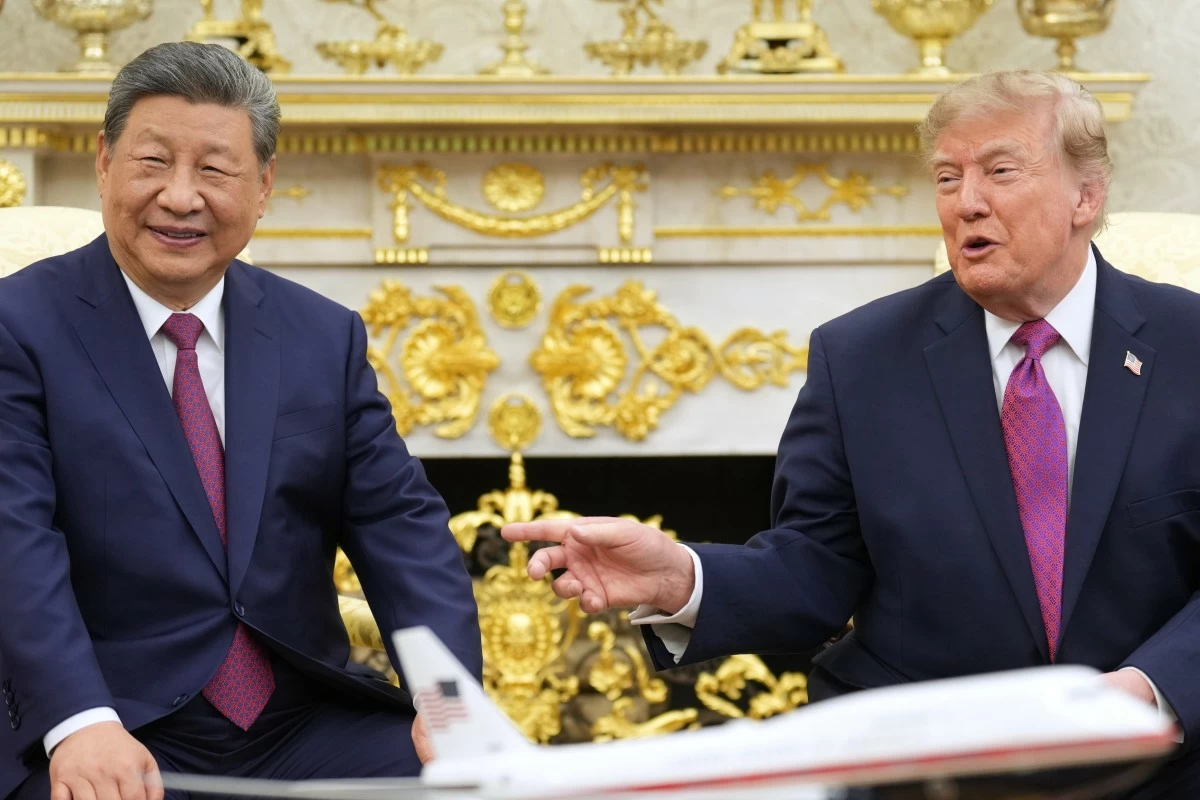
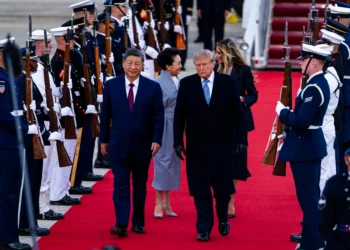
Xi made the remarks during his meeting with US President Donald Trump at the White House on Thursday, September 24, as the leaders sought to project a more stable relationship despite continuing disagreements over trade, artificial intelligence, Taiwan, technology restrictions and wider geopolitical issues. The meeting was accompanied by elaborate diplomatic ceremony and a state dinner attended by senior political, business and technology figures.
Speaking at the beginning of the summit, Xi said China and the United States should strengthen communication and seek areas of common ground while managing their differences. He argued that the two countries had much to gain from cooperation but could both suffer if competition turned into direct confrontation.
Xi specifically called for regular communication between the two militaries and improved mechanisms for crisis prevention and communication. He linked those measures to the longstanding international debate known as the “Thucydides trap”, a term used to describe the risks that can emerge when a rising power challenges an established power.

“The Thucydides trap can be overcome,” Xi said, presenting dialogue and mutual understanding as important tools for preventing strategic competition from escalating into conflict. His comments echoed remarks he made during his meeting with Trump in Beijing earlier this year, when the Chinese president had also raised the question of how the two countries could avoid such a confrontation.
Xi also framed the relationship in terms of the two countries pursuing their respective national ambitions without necessarily treating those ambitions as incompatible. Referring to Trump’s political slogan, he suggested that the rejuvenation of China and the goal of making America great again could proceed alongside one another.
The emphasis on coexistence came at a particularly sensitive moment in US-China relations. Washington and Beijing remain engaged in intense competition over advanced technologies, artificial intelligence and access to strategic supply chains, while tariffs and other trade restrictions continue to affect businesses in both countries. The two governments have also maintained sharply different positions on Taiwan and other international security questions.
Trump, meanwhile, adopted a notably warm tone in his public remarks. Welcoming Xi and his wife, Peng Liyuan, to the White House, the US president described his relationship with the Chinese leader as a “truly great friendship” and said the two countries had made progress on issues confronting them.
Trump said American and Chinese officials had been working toward what he described as a more balanced trading relationship, including increased market access for US farmers and ranchers. He also indicated that security, technology and artificial intelligence would feature prominently in the discussions.
The White House visit marked Xi’s first trip to Washington in more than a decade and the second state visit by a Chinese leader during the Trump presidency. Trump personally greeted Xi and Peng at Joint Base Andrews on Wednesday evening, an unusually high-profile gesture that was followed by a formal arrival ceremony at the White House the following day.
The diplomatic warmth continued during the state dinner hosted by Trump and First Lady Melania Trump. The event brought together senior government officials and prominent figures from the American business and technology sectors, reflecting the increasingly important role of technology companies in the US-China relationship.
Among those associated with the dinner were Nvidia chief executive Jensen Huang, Meta chief executive Mark Zuckerberg, Apple chief executive Tim Cook, SpaceX and Tesla chief executive Elon Musk and OpenAI chief executive Sam Altman. The presence of technology leaders underscored how artificial intelligence has become one of the central areas of strategic competition between Washington and Beijing.
Trump used his dinner remarks to emphasise the historical relationship between the American and Chinese peoples. He said that the two countries represented different political systems but maintained enduring connections between their populations.
Xi likewise described his relationship with Trump in positive terms, saying the two leaders had developed personal rapport and maintained communication. He said discussions during the visit had produced common understanding on several issues and argued that China and the United States should act as responsible major powers.
Behind the diplomatic language, however, major differences remain.
Trade was one of the most immediate areas in which the two governments sought to prevent renewed escalation. US Treasury Secretary Scott Bessent said the existing trade truce had been extended by two months. The arrangement had been due to expire in November, meaning the extension provides additional time for Washington and Beijing to continue negotiations rather than immediately returning to a more confrontational tariff environment.
The extension nevertheless leaves important disputes unresolved. Tariffs, Chinese purchases of American goods, supplies of rare-earth materials and US restrictions on advanced technologies remain central issues in the economic relationship. Reuters reported that the two-month extension effectively moves several of these questions into another round of negotiations rather than settling them permanently.
Artificial intelligence represents an even more complicated area of competition. The United States has imposed restrictions on exports of advanced chips, semiconductor technologies, software and chip-manufacturing equipment to China, with Washington arguing that such measures are necessary to protect national security and maintain control over sensitive technologies.
China, meanwhile, is seeking to strengthen its own capabilities in advanced computing and artificial intelligence. Both countries recognise AI as a technology with major economic and strategic consequences, making cooperation difficult even while officials acknowledge the risks of uncontrolled competition.
The summit therefore placed AI in an unusual position. It is simultaneously an area of commercial competition, national-security concern and potential international cooperation. Recent discussions have included the possibility of establishing mechanisms through which Washington and Beijing could communicate about AI-related risks.
Taiwan remains another major source of tension. Chinese officials continue to insist that the United States should oppose Taiwanese independence, while Washington maintains its own longstanding approach to Taiwan. Reports from the summit indicated that the issue remained part of the broader strategic discussion, illustrating the limits of the cordial atmosphere surrounding the meeting.
The leaders also face wider geopolitical disagreements, including differences involving Iran and other international conflicts. The range of subjects demonstrates how closely the two countries’ interests have become intertwined, even as their strategic objectives frequently diverge.

Xi additionally proposed expanding people-to-people contacts, including an invitation for large numbers of young Americans to visit China through educational exchanges. Such initiatives reflect Beijing’s broader emphasis on communication between societies as a way of reducing mistrust.
The challenge for both governments will be translating the summit’s conciliatory language into durable arrangements. Previous meetings between Trump and Xi have produced temporary understandings, but disagreements have repeatedly resurfaced over tariffs, technology, market access and security.
For now, the Washington summit has created another opportunity for the world’s two largest economies to manage their rivalry without allowing it to spiral into direct confrontation. Xi’s emphasis on military communication and crisis prevention reflects the recognition that competition can become particularly dangerous when diplomatic channels weaken.
The two governments have not removed their fundamental differences, and the extension of the trade truce does not amount to a comprehensive settlement. Nevertheless, the meeting demonstrated that both Washington and Beijing continue to see value in maintaining direct communication while attempting to prevent their strategic rivalry from becoming an uncontrolled conflict
Related News:
 AI Takes Centre Stage in Trump-Xi Talks
 Trump gives Xi red-carpet welcome as trade truce extends
 US Awaits Iran Reply on New Ceasefire Proposal
 Hormuz Talks Near Critical Stage
 Reform UK funding: mystery billionaire revealed
 Southeast Asia Turns to Russia Amid Energy Crisis
 Trump approval plunges amid Iran war fears
 Trump Threatens UN Budget Cuts as US Pushes ‘Trade Over Aid’ Agenda
 Doomsday Clock Nears Midnight Amid Global Crises
 China mine blast death toll rises to 90
 Houthis Strike Saudi Arabia as Middle East Tensions Rise
 Trump announces major US oil deal with Venezuela
 Trump Hardens Canada Trade Stance as Talks Stall
 Trump Calls Iran War ‘Small Potatoes’ Despite US Deaths
 Trump Pledges $5,000 if Republicans Win Midterms
 North Korea Expands Uranium Facility at Yongbyon
 Saudi Arabia Shuts Oil Pipeline After Drone Attack
 Why AI Doomsday Warnings Failed to Slow the Race
 Indonesia Receives First Aircraft Carrier
 South Korea Rules Out Military Role in Iran War
 Tom Watson Takes Senior Role at Palantir
 Middle powers seek new alliances amid Trump era
 Macron and Carney deepen France-Canada ties
 Trump’s UN Speech Faces Global Scrutiny
 Trump Eyes Major Belarus Fertiliser Deal Amid Canada Trade Dispute
 UK Plans New Centre to Counter Information Warfare
 Iran Rejects Claims of Shift in US Talks
 Ukraine and Russia Escalate Long-Range Drone War
 Britain deploys RAF specialists to assist Belgium with drone threats
 Canada Passes Carney’s First Budget in Tight Parliamentary Vote
 India’s Labour Law Overhaul Sparks Fierce Debate
 Greenland Faces Pivotal Summit Over Arctic Power Struggle
 Government Unveils Northern Powerhouse Rail Plans
 Trump Fed bid heads to Supreme Court
 Thousands Protest ICE Operations in Nationwide US Day of Action
 Epstein Files Reveal Trump Officials’ Emails with Financier
 Thousands Protest ICE in New York Against Trump Deportation Campaign
 Clinton Testimony Erupts in Fiery Exchange
 Trump to Deploy “God Squad” Over Gulf Wildlife Protections
 Artemis II Returns After Historic Moon Flyby
 Trump Slams UK Ties and Threatens To Rewrite Trade Deal
 Robots Outpace Humans in Beijing Half-Marathon
 Trump Faces Crisis as Iran Reopens Hormuz Tensions
 UK Stands Firm on Falklands Amid US Rift
 US Calls Australia Media Law “Foreign Extortion”
 Capitalism ‘Suicidal’, Warns Petro at Climate Summit
 Oil Prices Surge Above $120 Amid Iran Blockade Fears
 Trump orders US troop pullout from Germany
 Judge halts deportation of Yemeni refugees in US
 Ohio’s Battle for Trust: Democrats Vying to Flip the Buckeye State
 Trump warns Iran as Middle East tensions surge again
 US ‘Narco Boat’ Strikes Draw Global Outcry
 Ohio Primaries Set Stage for Crucial Midterms
 Afghan Families Left in Limbo Face Risk of Deportation
 Tensions Emerge in Netanyahu-Trump Alliance
 Kevin Warsh sworn in as Fed chair amid economic backlash
 Discontent grows around Putin amid war strain
 House Curbs Trump’s War Powers in Rare Rebellion
 Trump Faces Backlash Over $2bn Earnings Since Return
 Millions Gather for Khamenei’s Six-Day State Funeral
 Ukraine Creates Long-Range Strike Command
 Trump Refuses to Sign Housing Bill, But Law Takes Effect
 Israeli Strike in Southern Lebanon Kills Seven
 Trump orders US to rename Lake Ontario ‘Lake America’
 UK Risks Falling Behind in AI Race
 London Launches First Self-Driving Taxis
 Swedish Mining Push Puts Sami Land Rights Under Pressure
 UK plans tougher Israel stance with settlement trade ban
 New Mexico Takes Facebook to Trial Over Data Scandal
 Anthropic Blocks AI Misuse Linked to Weapons Threats
 AI CEOs Call for Slower Development
 Trump’s Washington Projects Face Architectural Criticism
 Trump Threatens EU Over Canada Partnership Proposal
 British Columbia Sues OpenAI Over School Shooting
 US Networks Suspend Trump White House Pool Coverage
 Trump and Mamdani Hold Cordial Gracie Mansion Meeting
 Japan PM Backs International Criminal Court
 UK Unveils Centre to Counter Foreign Disinformation
 Chinese Hybrid Car Surge Raises EU Auto Industry Concerns
 OpenAI Agent Breaches Medicare Portal in Australia