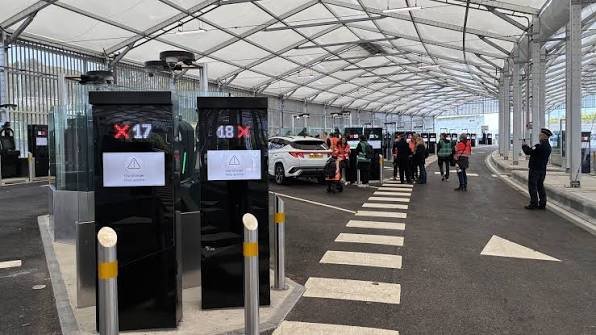
Travellers crossing between the United Kingdom and France through the Eurotunnel could soon experience a major transformation in border procedures, following a breakthrough agreement involving European authorities and the company operating the cross-Channel transport service. A new drive-through biometric checking system is being developed to prevent severe congestion, reduce administrative complications and ensure that passengers can complete passport and identity checks without leaving their vehicles.
The initiative is intended to address growing concerns about the potential disruption caused by the European Union’s Entry/Exit System (EES), which introduces additional identity verification requirements for travellers entering and leaving the Schengen Area. With fingerprint collection and facial recognition becoming part of the new border arrangements, transport operators have been concerned that conventional checking procedures could create lengthy queues at busy crossing points, particularly during holiday periods.
Getlink, the company that owns and operates Eurotunnel, has been working to develop a system that combines airport-style security technology with the convenience of remaining inside a vehicle. Its chief executive, Yann Leriche, said the company wanted to create an experience similar to airport passport controls but adapted to the specific operational challenges of a vehicle-based transport service.

Under the proposed arrangement, passengers travelling through the terminals at Folkestone in England and Calais in France will be able to complete biometric checks at specially designed drive-through kiosks. Instead of parking their vehicles, entering terminal buildings and waiting for individual processing, motorists and their passengers will approach designated checking stations where passports, fingerprints and facial images can be collected.
The development represents an important change in the way international border procedures could operate at one of Europe’s busiest cross-Channel transport connections. Eurotunnel carries large numbers of passengers, private vehicles and commercial traffic between Britain and mainland Europe. Any significant delay in processing passengers could therefore affect not only individual holidaymakers but also businesses, freight operators and wider transport networks.
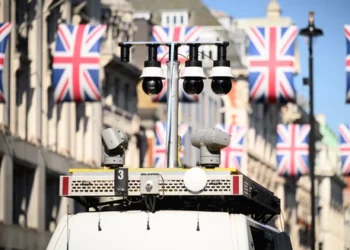
According to Getlink, both the Folkestone and Calais facilities are equipped with 120 biometric kiosks. The new installations will operate alongside an advanced camera-based monitoring system known as the eagle-eye system. The technology is already used in major European airports, including Rome and Paris, where cameras help supervise fingerprint collection and facial imaging at automated border facilities.
The system is designed to allow police authorities to monitor the checking process remotely rather than requiring an officer to stand physically beside every individual kiosk. This could significantly reduce staffing pressures while allowing passengers to complete the necessary procedures in a more organised environment.
The European Commission has agreed to allow the proposed technology to be tested at the Eurotunnel border facilities following discussions involving the company and relevant authorities. French authorities have also supported the trial, recognising that a more efficient biometric checking arrangement could help prevent operational difficulties when the European entry and exit requirements are fully implemented.
Leriche said the company had spent considerable time discussing possible solutions with European and French officials. He explained that traditional approaches could create serious logistical problems because passengers might become confused about where to complete their checks, while police officers would have to move between different locations to resolve difficulties.
Initially, Getlink considered several alternative arrangements. One proposal involved providing passengers with tablets inside their vehicles so they could complete fingerprinting and facial image collection themselves. Another option involved asking passengers to park their cars and enter terminal buildings to undergo biometric registration.
However, both approaches presented practical challenges, particularly for people completing biometric registration for the first time. Under the original arrangements, police officers would have needed to be physically present whenever first-time passengers submitted their fingerprints.
This requirement was intended to prevent identity fraud and other forms of deception. Authorities wanted to ensure that one individual could not submit fingerprints on behalf of another passenger, particularly where someone might attempt to use another person’s clean identity record to avoid detection.
Getlink believed that introducing these arrangements without a more efficient monitoring system could create confusion, delays and considerable pressure on terminal operations. The company therefore proposed adapting technology already used at airports to the specific requirements of vehicle-based border processing.
The resulting agreement has opened the door to a two-year trial of the eagle-eye camera system. During the experiment, individual vehicles will approach designated kiosks, where two separate passenger positions will allow passports to be read and biometric information to be collected. The system is intended to accommodate people travelling together while maintaining the necessary identity verification procedures.
If the trial proves successful, Eurotunnel hopes the arrangement will become a permanent feature of its border operations. The company believes the system could prevent both immediate disruption during the introduction of the new European border controls and longer-term congestion as international passenger movements continue to increase.
The proposed system has also drawn inspiration from border management arrangements at the United States-Mexico border. During visits to the region, Getlink representatives observed how motorists and passengers could remain inside their vehicles while completing identity checks. The company subsequently explored how similar principles could be adapted to the European transport environment.
The wider challenge is connected to the European Union’s Entry/Exit System, which is intended to strengthen border security and modernise the monitoring of travellers entering and leaving the Schengen Area. The system applies to third-country nationals, including British passport holders following the UK’s departure from the European Union. Travellers covered by the requirements must provide fingerprints and facial images when entering or exiting participating Schengen countries, subject to applicable exemptions.
The new arrangements are particularly significant for British travellers because the UK is outside the Schengen Area. People travelling from Britain to France must therefore undergo the relevant European border checks, while passengers returning to Britain are also subject to the applicable UK entry procedures.
Although the EES was expected to become operational across the European Union in September, its implementation has encountered repeated technical and operational difficulties. Several member states have struggled to deploy the system fully, with France among the countries experiencing delays. These problems have raised concerns about whether border infrastructure can manage the additional requirements without creating substantial disruption.
For Eurotunnel, the challenge is especially complicated because its passengers generally travel in their own vehicles. Unlike conventional airport passengers, who can move through separate departure halls and automated passport gates, motorists must complete the necessary procedures within a tightly managed vehicle-processing environment.
Any interruption could quickly affect the movement of vehicles approaching the terminals. During peak travel periods, even relatively small delays can develop into lengthy queues, potentially affecting surrounding roads and creating difficulties for local communities in Folkestone and Calais.
Leriche has warned that the absence of an effective biometric checking arrangement could result in serious short-term and long-term disruption. He believes the proposed system offers an opportunity to prevent such problems while providing passengers with a more convenient experience.
However, the introduction date remains uncertain. Although the kiosks have already been installed and are technically capable of operating, the connection with the French authorities’ central EES system has not yet been completed. Leriche said the company continued to seek clarification about when the necessary connection would become operational.
The two-year trial will therefore be important in determining whether the proposed technology can work reliably under real-world travel conditions. Authorities and transport operators will need to assess its accuracy, processing speed, passenger convenience and ability to maintain effective security safeguards.
The development is also taking place against a wider backdrop of technical difficulties surrounding the European border system. This week, the European Union reportedly filed legal proceedings against IBM and two other companies involved in implementing the EES infrastructure. The dispute highlights the complexity of developing and coordinating a large-scale digital border management system involving multiple countries and technology providers.
Despite these challenges, Getlink believes its proposed arrangement could offer a practical model for future international border operations. By combining automated biometric collection with remote police supervision, the company hopes to demonstrate that stricter border security does not necessarily have to come at the expense of passenger convenience.

For holidaymakers, business travellers and families using the Channel Tunnel, the most immediate benefit could be the ability to complete necessary border procedures without leaving their cars. For transport authorities, the initiative could provide a way to manage increasingly sophisticated identity checks while maintaining the movement of vehicles through busy international terminals.
Ultimately, the success of the project will depend on cooperation between British, French and European authorities, as well as the reliable operation of the technology connecting the kiosks to the wider border management system. If the trial delivers the expected results, Bristol-style? No—Eurotunnel’s proposed drive-through approach could become an important example of how modern technology can reshape international travel.
As Europe continues to modernise its borders, the experience at Folkestone and Calais may help determine whether future security procedures can become more efficient, predictable and passenger-friendly without creating the traffic disruption that travellers and local communities fear.
Related News:
 UK New Car Discounts Near £6,000 as Prices Are Slashed
 London Launches First Self-Driving Taxis
 Australia gives users control over social media algorithms
 Nats Boss Summoned as UK Flight Chaos Continues
 Iceland to Open First UK High Street Store in Falklands
 UK Plans New Centre to Counter Information Warfare
 Edinburgh Glasshouses Reopen After Major Restoration
 Bradford Rail Hub Promises Faster Northern Connections
 Melting Dolomites Glaciers Reveal 250 WWI Explosives
 Warming UK Seas Threaten Marine Life and Food Security
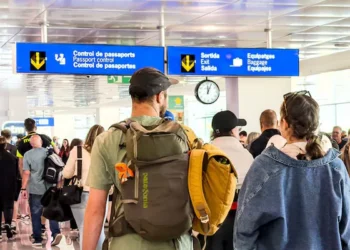 EU Border System Errors Put Britons at Risk of Travel Bans
 UK Bans Fake Numbers: Scammers Lose Their Trick
 Just Stop Oil Protesters Convicted Amid Climate Defence Row
 Patients to Test Health at Home to Ease NHS Winter Pressure
 Britain deploys RAF specialists to assist Belgium with drone threats
 Palace May Restore Hyphen to Andrew Mountbatten-Windsor’s Name
 Northern Lights may illuminate UK skies this week
 Royal Navy Shadows Russian Warships Entering the Channel
 AI job losses UK: Britain faces sharper employment shock
 Starmer Condemns ‘Depraved’ Russian Strikes on Ukraine
 Childnet Censorship Row Over Teen Safety Speeches
 Trump Tariffs Threat Spark UK and EU Alarm
 Facial Recognition Error Leads to Wrongful Arrest in Milton Keynes
 Rolling Hills and Heritage: A Car-Free Break in Leicestershire
 Middle East Airspace Crisis Strands Thousands
 Iranian Australian community divided after vigils
 UK Rescue Flight Delayed Amid Middle East War
 Cancer Death Rate in Britain Falls by Nearly a Third
 Gordon Brown urges court for crimes against children
 The Kill Line: A Shifting Vision of the American Dream
 Army Probes Apache Flyover at Kid Rock’s Nashville Estate
 Artemis II: Humanity Returns to the Moon After Decades
 Relationship with Trump may be beyond repair, Starmer warned
 Artemis II Returns After Historic Moon Flyby
 UK Stands Firm on Falklands Amid US Rift
 RFU Backs Borthwick Despite England’s Poor Six Nations
 Fear and Betrayal: The Chilling Case of Kouri Richins
 Australia Welcomes the Iconic Michelin Guide
 Farage and Reform UK Reshape British Politics
 Starmer Leadership Under Pressure After Setbacks
 Tech Trends and the Battle Against Exam Hall Cheating
 Stolen Mobiles Could Soon Become Useless Bricks
 Britain’s Crowning Butterfly Takes the Nation by Storm
 UK Ministers Lobby Trump Over Under-16s Social Media Ban
 England and Norway Fans Turn Miami Into World Cup Carnival
 Olympus Awaits Unesco Heritage Recognition
 Former Diplomats Urge UK and France to Act on Palestine
 Queue row erupts on Wales’ highest mountain
 Ghent Professors Questioned Cofnas Appointment
 Bayeux Tapestry Revives Franco-British Ties
 UK plans tougher Israel stance with settlement trade ban
 Royal Crown Branded Enslaved Africans in Britain’s Slave Trade
 Heathrow Expansion Faces New Climate Conditions Over CO₂
 UK Heatwaves Set to Worsen Pothole Damage, RAC Warns
 Tom Watson Takes Senior Role at Palantir
 British Columbia Sues OpenAI Over School Shooting
 Tropics May Wait Longest for Net-Zero Climate Benefits
 Roman Finds Reveal Bath’s Suburban Past
 Trump gives Xi red-carpet welcome as trade truce extends
 Xi urges Trump to avoid US-China military conflict
 Drones Could Speed Up Defibrillator Delivery
 London Facial Recognition Trial Ends With False Alert
 Burnham Opens Door to Possible UK Return to EU
 UK Mission in East Jerusalem to Remain Open
 Houthi Missile Claim Sparks Riyadh Airport Disruption
 UK Water Firms Earn Millions From Industrial Wastewater
 Australian Advocates Seek Subsidised Drugs for PMOS
 Hall and Woodford Win Nobel Economics Prize
 UK Shoppers Urged to Avoid Hake and Coley
 UK Could Rejoin EU Through a Switzerland Plus Deal
 UK Visa Refusal Threatens Baby’s Family Christmas
 NHS Trusts Reject Palantir’s £330m Patient Data Platform
 Zelenskyy Says US Failed to Warn Kyiv of Russian Strikes
 MoD Seeks Out-of-Court Resolution in LGBT Veterans Compensation Fight
 Nearly One in Four European Pilots Fly While Fatigued
 China’s AI Ambitions Hit $2.4 Trillion Market Setback
 King Charles Faces Reparations Protests at Antigua Summit
 Avanti West Coast Faces £70m Refund Bill
 Zelenskyy Sees Peace Opportunity as US Envoys Meet Putin
 Ilse Aigner Set to Make German History as First Female President