Published: 09 October 2026. The English Chronicle Desk. The English Chronicle Online
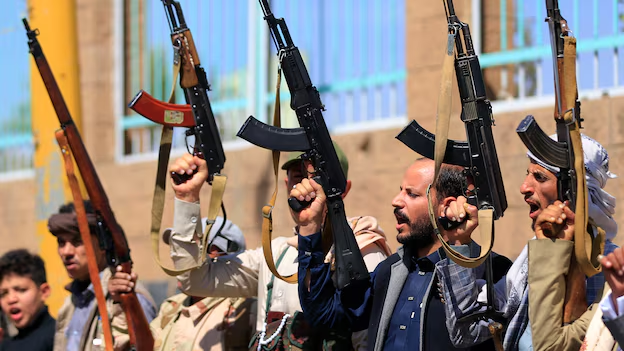
Yemen’s Iran-aligned Houthi movement has claimed responsibility for a ballistic missile strike targeting Saudi Arabia’s Riyadh airport, triggering fresh security concerns and contributing to widespread flight cancellations as tensions intensify across the region. Saudi authorities have not immediately confirmed the group’s claim, but reports from people briefed on the incident indicate that a Saudia Airlines passenger aircraft was badly damaged after catching fire while parked at a terminal.
The reported attack comes amid an escalating campaign of Houthi strikes against Saudi Arabia, which the group accuses of supporting government forces in Yemen’s renewed civil war. With commercial aviation disrupted, reports of casualties from earlier strikes and warnings about potential attacks on energy infrastructure, the latest developments have raised concerns about the safety of civilians and the wider consequences of a conflict increasingly affecting regional transport and economic activity.
The Houthis announced that they had launched a ballistic missile at Riyadh airport, although they did not provide independently verifiable evidence to substantiate the claim. Saudi Arabia had not immediately issued a response confirming that the airport had been struck by a Houthi missile. The distinction is significant because the reported damage to the aircraft does not, by itself, establish the precise origin of the projectile or whether the airport was hit directly.

Three people briefed on the incident told Reuters that shrapnel from an interception or another projectile had left a Saudia Airlines commercial aircraft heavily damaged after it caught fire on Thursday while parked at a terminal. They said the plane was not believed to have passengers aboard at the time, although they could not rule out the possibility of injuries. The circumstances surrounding the fire and the extent of the damage remained unclear.
Witnesses reported hearing explosions in Riyadh, including a major blast near King Khalid International Airport. One witness, who spoke anonymously, said firefighters and ambulance crews were deployed as the incident unfolded. The witness also reported that departing flights were halted and passengers were instructed to evacuate the airport, suggesting that authorities were taking precautionary measures while the security situation was assessed.
Video footage verified by Reuters showed flames and a thick column of black smoke rising from the airport area. While the footage provided evidence of a significant fire, it did not independently establish the cause of the incident or confirm the Houthis’ account of a missile strike. The lack of an immediate, comprehensive official explanation left important questions unanswered about the weapon involved, the damage caused and the potential threat to airport operations.
The disruption quickly spread to international aviation. Lufthansa and Air India confirmed that they were suspending flights to Riyadh, reflecting the heightened security concerns surrounding the Saudi capital. Data compiled by aviation analytics company Cirium indicated that almost half of departures from the airport had been cancelled by 1500 GMT on Thursday. A further 31 cancellations were expected on Friday across Saudi airports.
For passengers, the cancellations risked creating uncertainty over onward journeys, connecting flights and return travel. Airport evacuations and sudden changes to flight schedules can affect travellers far beyond the immediate location of an incident, particularly when a major regional hub experiences disruption. Airlines must balance operational demands against the safety of passengers and crew, while authorities assess whether aircraft movements can resume without exposing people to further danger.
The reported incident followed Saudi authorities’ announcement on Wednesday that three people had been killed in strikes targeting Riyadh airport and Abha airport in the kingdom’s south-west. The deaths underscored the human consequences of the growing confrontation and demonstrated that the latest escalation was not limited to damage to infrastructure or disruption to commercial travel.
Saudi officials also said debris from an intercepted missile had struck a kindergarten and a medical complex in Riyadh. The reported impact on civilian facilities added to concerns about the risks posed by missile interceptions and falling debris in populated areas. Even when air-defence systems intercept incoming projectiles, fragments can still threaten buildings, vehicles and people on the ground.
The Houthis have intensified their campaign against Saudi targets as the conflict in Yemen has reignited. The group says it is striking the kingdom because of its support for forces aligned with Yemen’s internationally recognised government. Saudi Arabia, meanwhile, has backed an offensive intended to recover territory from the Houthis, who have expanded their presence across parts of the country.
The latest confrontation is unfolding against the backdrop of significant changes on the battlefield. Over the past month, Houthi forces have made rapid advances across Yemen’s coastal plain. Their movement towards Taiz in the south-west has raised fears that the strategically important city could come under greater pressure. Independent observers have warned that the Houthis could be moving towards capturing Taiz, while some forces linked to the Saudi-backed government have reportedly shifted their attention towards protecting Aden, a major port city.
The struggle for Taiz and other areas matters because territorial control can shape supply routes, military positioning and access to important population centres. Further advances by the Houthis could place additional pressure on government forces and complicate attempts to contain the conflict. At the same time, Saudi Arabia’s support for the government increases the likelihood that the fighting will continue to affect the kingdom directly.
The Houthis have also issued warnings directed at workers near energy facilities, saying such sites could become targets. The threats raise concerns for Saudi Arabia’s energy infrastructure, which is important not only to the national economy but also to global energy markets. Any attack that damages production, processing or transport facilities could generate uncertainty over supplies and contribute to volatility in energy prices.
The timing is particularly sensitive because Riyadh is due to host the WPC Energy Congress, a major gathering of energy policymakers, during the same week. The reported airport incident and threats against energy installations could complicate travel arrangements and security planning for participants. Large international events depend on reliable transport links and confidence that visitors can move safely between airports, hotels and conference venues.
The potential impact extends beyond Saudi Arabia. The kingdom is a major regional aviation and economic centre, and disruption to its airports can affect international airlines, business travellers and passengers connecting to other destinations. Sustained threats to energy facilities could also increase concerns among investors and policymakers already monitoring the effects of conflict across the Middle East.
Despite the seriousness of the reports, several key details remain unconfirmed. Saudi authorities have not immediately verified the Houthis’ claim that a ballistic missile struck Riyadh airport, and the reported damage to the aircraft has not conclusively established the projectile’s origin. The possibility of injuries associated with the aircraft fire also remained unresolved in the information available from people briefed on the incident.
The distinction between a group’s claim and independently established facts is important during periods of conflict, when competing sides may present events in ways that support their military or political objectives. Reliable confirmation of the weapon involved, the circumstances of the fire and the full extent of the damage will be essential to understanding what happened.

For now, the incident highlights how rapidly Yemen’s renewed fighting is spilling across borders and threatening civilian life, commercial aviation and vital infrastructure. The deaths reported earlier in the week, the evacuation of airport passengers, the suspension of international flights and warnings to energy workers all point to a deteriorating security environment.
Whether the latest incident leads to further attacks or prompts a change in military calculations remains uncertain. What is clear is that the confrontation has raised the risks for ordinary travellers, airport employees and residents who may find themselves caught up in a conflict they cannot control. As airlines reassess their operations and authorities monitor possible threats, the immediate priority will be protecting civilians and preventing further loss of life while establishing the facts behind the reported airport strike.
Related News:
 Southeast Asia Turns to Russia Amid Energy Crisis
 US Awaits Iran Reply on New Ceasefire Proposal
 Hormuz Talks Near Critical Stage
 Saudi Arabia Shuts Oil Pipeline After Drone Attack
 South Korea Rules Out Military Role in Iran War
 Iran Rejects Claims of Shift in US Talks
 Xi urges Trump to avoid US-China military conflict
 Saudi intercepts Houthi missiles as oil fears grow
 Tanker Attacked Near Qatar as Hormuz Tensions Escalate
 South Korea Probes Fuel Shipments to Russia
 Canada Passes Carney’s First Budget in Tight Parliamentary Vote
 India’s Labour Law Overhaul Sparks Fierce Debate
 Carney’s Alberta Pipeline Deal Sparks Immediate Pushback
 Mark Carney Walks Diplomatic Tightrope on China Visit
 Nine Killed in Karachi Consulate Protest
 Trump to Deploy “God Squad” Over Gulf Wildlife Protections
 Trump Slams UK Ties and Threatens To Rewrite Trade Deal
 Athens Mayor Moves to Tackle Overtourism Crisis
 US Calls Australia Media Law “Foreign Extortion”
 Capitalism ‘Suicidal’, Warns Petro at Climate Summit
 Oil Prices Surge Above $120 Amid Iran Blockade Fears
 Trump approval plunges amid Iran war fears
 Trump Threatens UN Budget Cuts as US Pushes ‘Trade Over Aid’ Agenda
 Australia pushes Pacific security pact amid China tension
 Norway Doubles Down on Oil and Gas for Europe Energy Security
 One Nation Stuns Australia With Historic Farrer Win
 Beijing Becomes Centerstage for Global Diplomatic Ballet
 UK Pushes for New EU Goods Trade Deal
 Reeves Fights to Keep Treasury Role Amid Labour Turmoil
 China mine blast death toll rises to 90
 Discontent grows around Putin amid war strain
 Millions Gather for Khamenei’s Six-Day State Funeral
 Europe Weighs Hormuz Navigation Fee Plan
 Ukraine Creates Long-Range Strike Command
 Venezuela Quake Death Toll Surpasses 4,000
 Houthis Strike Saudi Arabia as Middle East Tensions Rise
 Taliban global ties grow as rights fears mount
 Seoul proposes historic peace talks to replace Korean War armistice
 Israeli Strike in Southern Lebanon Kills Seven
 Five Years of Taliban Rule Leave Afghanistan in Crisis
 Trump orders US to rename Lake Ontario ‘Lake America’
 Trump Hardens Canada Trade Stance as Talks Stall
 Green Leader Targets Starmer’s Former Seat
 Trump Calls Iran War ‘Small Potatoes’ Despite US Deaths
 Swedish Mining Push Puts Sami Land Rights Under Pressure
 Argentina to file criminal charges over Falklands oil drilling
 UK plans tougher Israel stance with settlement trade ban
 Trump Pledges $5,000 if Republicans Win Midterms
 North Korea Expands Uranium Facility at Yongbyon
 Iceland to Open First UK High Street Store in Falklands
 Nearly 50,000 Flee as Houthis Advance in Yemen
 Indonesia Receives First Aircraft Carrier
 Saudi Pact Raises Risk of Pakistan Entering War
 Middle powers seek new alliances amid Trump era
 Macron and Carney deepen France-Canada ties
 Trump Eyes Major Belarus Fertiliser Deal Amid Canada Trade Dispute
 Japan PM Backs International Criminal Court
 AI Takes Centre Stage in Trump-Xi Talks
 Trump gives Xi red-carpet welcome as trade truce extends
 Tony Blair Calls for Britain to Rejoin EU Within a Decade
 Lula accuses Trump of seeking control over Brazil
 Trump Asked Xi About Buying US Weapons
 Avanti West Coast Set for Public Ownership in March
 South Korea-Ukraine Row Erupts Over North Korean POWs
 Economic growth and political strain reshape Benin
 Israel-bound Plane Lands in Saudi Arabia After Cockpit Fight
 Trump Ads Trigger Fight Over Taxpayer Money
 Burnham Opens Door to Possible UK Return to EU
 New Maps Reveal Gaza’s Vast Destruction
 Pilot Recalls Fight to Save Flydubai Passengers
 North Korea Fires Missile Amid DMZ Tensions
 Germany Pledges €1bn Military Aid to Ukraine
 Spain Sets Snap Election as Housing Crisis Deepens
 Pacific Climate Summit Draws Limited Global Leaders
 South Korean fuel reaches Russia despite sanctions
 Japan PM condemns alleged killing by US Marine
 EU-China Talks Target Surge in Hybrid Car Imports
 Israel Marks Three Years Since October 7 Attack
 Report Urges UK to Rethink Overseas Military Spending
 France Urges UK to Consider Returning to EU