Published: 11 July 2026 .The English Chronicle Desk .The English Chronicle Online.
Europe is weighing a new diplomatic proposal that could reshape the future management of one of the world’s most strategically important maritime routes, the Strait of Hormuz, by allowing voluntary navigation service fees while rejecting any compulsory tolls that could threaten international shipping.
The discussions come at a time of heightened tensions in the Gulf, with the United States urging Iran to publicly guarantee that the vital waterway remains open and safe for international commercial traffic following weeks of military confrontation and fragile ceasefire negotiations.
European governments are examining proposals that would permit charges only for specific navigational and safety services, rather than imposing mandatory transit fees on vessels simply for passing through the strait. Diplomats involved in the discussions stress that any future arrangement must remain fully consistent with international maritime law and receive backing from the United Nations’ International Maritime Organization (IMO).

The proposal has gained attention after Oman, which controls much of the navigable waters within the Strait of Hormuz, developed a legal framework inspired by the long-standing cooperative management model used in the Strait of Malacca. Omani officials, working alongside British legal experts, have reportedly offered to brief Iranian authorities on the proposal in greater detail as efforts continue to find a lasting solution acceptable to all regional stakeholders.
The debate comes amid continuing uncertainty over the implementation of a ceasefire roadmap agreed between Washington and Tehran following months of military escalation. Although active hostilities have eased in some areas, disagreements remain over who should oversee navigation through the strategic waterway and under what conditions international vessels should operate.
British Foreign Secretary David Lammy has warned against introducing compulsory transit charges, arguing that mandatory tolls could have severe consequences for global trade and energy security. However, several European officials acknowledge that voluntary payments for enhanced navigational assistance, emergency response services and environmental protection already exist in other international waterways and may provide a workable compromise.
Under the emerging concept, ships would not be required to pay for the right of passage itself. Instead, vessel operators could voluntarily contribute towards services designed to improve maritime safety, reduce pollution risks, strengthen emergency preparedness and support navigational infrastructure throughout the strait.
Supporters argue that such a cooperative funding mechanism could encourage regional collaboration while avoiding legal disputes over freedom of navigation.
Meanwhile, the United States has intensified pressure on Tehran to issue a clear public declaration confirming that commercial vessels can safely transit the Strait of Hormuz without fear of attack. American officials believe such a statement would reassure shipping companies and insurance markets that have faced growing uncertainty following repeated security incidents in the Gulf.
US officials also suggest that internal divisions within Iran’s leadership are complicating negotiations. According to Western diplomatic assessments, some factions favour cooperation with international partners, while others remain deeply sceptical of international maritime arrangements following recent military confrontations with the United States.
President Donald Trump added further uncertainty by declaring that an earlier interim ceasefire agreement was effectively “over,” while insisting that diplomatic discussions aimed at securing a permanent settlement would continue. At the same time, he issued fresh warnings against any alleged Iranian assassination plots, promising an overwhelming military response if such actions were attempted.
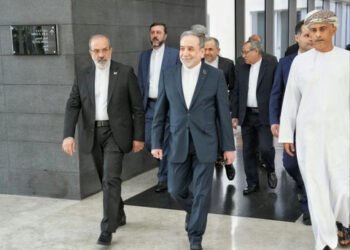
Against this backdrop, Iranian Foreign Minister Abbas Araghchi travelled to Oman for consultations centred on the future management of the Strait of Hormuz and maritime security. Iranian officials described the talks as part of an ongoing dialogue with Muscat that has continued for several months.
Oman has consistently opposed compulsory transit fees, maintaining that international law guarantees the right of transit passage through strategic waterways such as Hormuz. Nevertheless, Omani officials have indicated their willingness to explore voluntary service arrangements that enhance maritime safety without restricting freedom of navigation.
Qatar has also expressed concerns over proposals that could effectively place greater control of the strait in Iranian hands. Officials in Doha argue that any arrangement conflicting with established international maritime law could expose global trade to future political or military pressure.
Diplomatic sources indicate that regional governments are seeking greater clarity from Tehran regarding the precise nature of any proposed payment system. Several Gulf states remain concerned that voluntary service fees could eventually evolve into mandatory charges if not carefully regulated under international oversight.
At the International Maritime Organization’s council meeting in London this week, Oman reaffirmed its commitment to international maritime law while highlighting the potential value of voluntary cooperation on navigational support services. Officials emphasised that such initiatives could improve emergency response capabilities, reduce environmental risks and strengthen maritime safety without infringing upon internationally recognised transit rights.
The Strait of Malacca has emerged as the principal model under discussion. That strategic waterway, linking the Indian and Pacific Oceans, handles more than 120,000 vessel transits each year through a cooperative mechanism supported by regional governments and voluntary financial contributions from partner countries, including Japan.
Maritime experts believe elements of the Malacca framework could be adapted to Hormuz, providing financial support for navigational safety without undermining the legal principle of free passage.
Not all countries support the current European approach. During the IMO meeting, several Gulf and European states sought a resolution condemning Iran over alleged attempts to control shipping by targeting commercial vessels. However, both Russia and China opposed the motion, arguing that it ignored the wider causes of the regional crisis and exceeded the organization’s technical mandate.
The latest diplomatic efforts follow renewed military exchanges after the United States reportedly carried out strikes against more than 150 Iranian-linked targets aimed at reducing Tehran’s ability to threaten commercial shipping using drones, missiles and fast attack boats. Iran responded with attacks on American military facilities in Kuwait and Bahrain, further complicating regional security.
A central point of disagreement concerns differing interpretations of a previously negotiated memorandum of understanding. Under the temporary agreement, Iran committed to making every effort to ensure the safe passage of commercial vessels through the Strait of Hormuz for an initial 60-day period without imposing charges. The agreement also envisaged restoring normal commercial traffic once technical and military obstacles had been removed.
Washington insists the memorandum does not grant Iran authority to determine which vessels may pass through the strait or require commercial ships to obtain Iranian permission before transit. Iranian officials, however, maintain that their interpretation of the agreement remains consistent with their obligations.

Additional confusion has surrounded efforts by the International Maritime Organization to establish a southern shipping route designed to ease congestion and facilitate the evacuation of stranded crews. Although initial discussions appeared promising, diplomats say Tehran later withdrew its approval, forcing the IMO to suspend implementation.
Despite these setbacks, the United States says its naval forces have continued assisting commercial shipping through the Gulf. According to US Central Command, hundreds of commercial vessels carrying hundreds of millions of barrels of crude oil have safely transited the corridor in recent months under enhanced security measures.
Iran’s Islamic Revolutionary Guard Corps Navy has nevertheless reiterated that foreign military forces should have no role in managing the Strait of Hormuz, reinforcing Tehran’s long-standing position regarding regional sovereignty.
As negotiations continue, diplomats acknowledge that finding a durable solution will require balancing international maritime law, regional security interests and the uninterrupted flow of global energy supplies. With nearly one-fifth of the world’s seaborne oil trade passing through the Strait of Hormuz, any agreement reached in the coming weeks could have significant implications for global markets, energy prices and geopolitical stability.
Related News:
 US Awaits Iran Reply on New Ceasefire Proposal
 Canada Passes Carney’s First Budget in Tight Parliamentary Vote
 India’s Labour Law Overhaul Sparks Fierce Debate
 Carney’s Alberta Pipeline Deal Sparks Immediate Pushback
 Mark Carney Walks Diplomatic Tightrope on China Visit
 Trump to Deploy “God Squad” Over Gulf Wildlife Protections
 Trump Slams UK Ties and Threatens To Rewrite Trade Deal
 Athens Mayor Moves to Tackle Overtourism Crisis
 Southeast Asia Turns to Russia Amid Energy Crisis
 US Calls Australia Media Law “Foreign Extortion”
 Capitalism ‘Suicidal’, Warns Petro at Climate Summit
 Oil Prices Surge Above $120 Amid Iran Blockade Fears
 Trump approval plunges amid Iran war fears
 Trump Threatens UN Budget Cuts as US Pushes ‘Trade Over Aid’ Agenda
 Norway Doubles Down on Oil and Gas for Europe Energy Security
 Beijing Becomes Centerstage for Global Diplomatic Ballet
 Hormuz Talks Near Critical Stage
 UK Pushes for New EU Goods Trade Deal
 Reeves Fights to Keep Treasury Role Amid Labour Turmoil
 Victoria Labor Launches Apprenticeship Expansion Plan
 Ukraine Creates Long-Range Strike Command
 Trump’s UK Ambassador Urges North Sea Drilling to Strengthen US Ties
BBC to Apologise Over Edited Trump Speech Amid Backlash
Trump’s UK Ambassador Urges North Sea Drilling to Strengthen US Ties
BBC to Apologise Over Edited Trump Speech Amid Backlash
 Britain deploys RAF specialists to assist Belgium with drone threats
 Millionaires group urge Reeves to introduce wealth tax to ‘lift kids out of poverty’
 Greene Pushes Epstein Files Amid Trump Fallout
 Trump Deploys DHS to Charlotte in Major Arrest Operation
 December Run-Off in Chile as Election Produces No Winner
 Shadow Fleet at Sea: Europe’s Battle Against Illicit Oil Shipping
 Pentagon Officials in Ukraine to Discuss War End
 Venezuela Threatens Nobel Winner Machado with Fugitive Status
 Georgians Defy Government Crackdown After Year of Protests
 Starmer Says Labour’s Economic Plan Needs Years to Deliver
 EU plans $105bn Ukraine aid using frozen Russian assets
 Trump Policies Boost China’s Global Rise, Survey Finds
 Trump Fed bid heads to Supreme Court
 Pentagon Signals Reduced Role in Deterring North Korea
 ‘Black Tax’: Burden, Pride and Survival for African Workers
 Thousands Protest ICE Operations in Nationwide US Day of Action
 EU Signals Open Mind on UK Customs Union Talks
 UK and US Drop in Global Corruption Index Rankings
 UK shelves £110m border project amid trade strain
 Canberra Poster Seizure Sparks Free Speech Row
 Evo Morales Returns After Mysterious Absence
 AFP Reviews Pauline Hanson Comments
 Trump Tariffs Threat Spark UK and EU Alarm
 The Dangerous Rise of Remigration Across Modern Europe
 Jacinda Ardern Moves To Australia Following Her US Fellowships
 US to offer passport services in West Bank settlements
 Jacinda Ardern Move Sparks Kiwi Reflection
 Nick Greiner Warns Over Election Review Fallout
 Iran Defiance Grows Amid US-Israel War Pressure
 Injured Mojtaba Khamenei Elevated as Iran Leader
 Gordon Brown urges court for crimes against children
 Oil Prices Jump After Trump Claims Iran Oil Hub Destroyed
 Pakistan Targets Militant Hideouts in Afghanistan
 Oil Slides, Stocks Jump on Trump Peace Signals
 Danish Election Deadlock Shakes Frederiksen’s Grip
 Air Canada CEO Faces Outcry Over Recent Language Misstep
 Pope Rebukes Leaders for War as Middle East Tensions Rise
 Army Probes Apache Flyover at Kid Rock’s Nashville Estate
 Relationship with Trump may be beyond repair, Starmer warned
 Italian Town Buys Mussolini Villa to Keep Away Fascist Fans
 Report Says Pezzullo Acted ‘Recklessly’ in Dealings
 Suspected Plot Targets Pipeline Before Hungary Vote
 Trump Brokers Landmark Lebanon Ceasefire Amid Regional Hopes
 UK Stands Firm on Falklands Amid US Rift
 Trump orders US troop pullout from Germany
 Silent Tracks: Rail Line Without Passengers
 Tough Fiscal Realities Await Next Scottish Government
 US ‘Narco Boat’ Strikes Draw Global Outcry
 Global Conflict Hits Home As Bullock Warns Of Economic Pain
 Trump Announces 3-Day Russia–Ukraine Ceasefire Deal
 High Street Crisis: Fears Grow Over Post Office Closures
 Oil Markets Face ‘Red Zone’ Threat Amid Iran Crisis
 Kevin Warsh sworn in as Fed chair amid economic backlash
 Discontent grows around Putin amid war strain
 Farage and Reform UK Reshape British Politics
 Trump Faces Backlash Over $2bn Earnings Since Return
 Houthis Strike Saudi Arabia as Middle East Tensions Rise