Published: 08 October 2026. The English Chronicle Desk. The English Chronicle Online
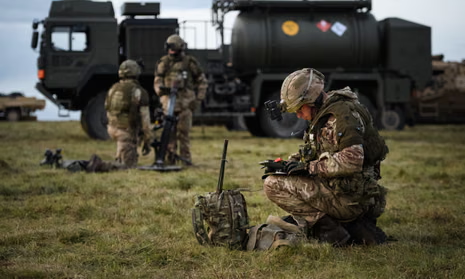
Britain should redirect a greater share of its growing defence budget towards protecting the UK rather than maintaining an extensive network of overseas military commitments, according to a new report that warns the government risks increasing waste unless it changes the country’s strategic priorities.
An analysis by researchers at the Transition Security Project argues that the UK has the most overseas-oriented military among European countries, with almost a quarter of defence spending directed towards commitments beyond the country’s immediate territory. The researchers say the pattern reflects an outdated approach to foreign policy and should be reconsidered as Britain prepares for a substantial expansion in defence expenditure.
The warning comes as the government prepares to increase military spending significantly over the coming decade. Under its current plans, defence expenditure is expected to rise to 3.5% of gross domestic product by 2035. The scale of the proposed increase means decisions about how the additional money is allocated could have major consequences for Britain’s military capabilities, public finances and wider national priorities.

According to the Transition Security Project, the defence budget is expected to increase from about £70bn in 2026 to approximately £151bn in nominal terms by 2035. The researchers argue that simply increasing the amount of money available will not necessarily make Britain safer if existing spending patterns remain largely unchanged.
Their analysis of figures from 2024-25 estimated that about 23% of the military budget was being used for overseas commitments, equivalent to slightly more than £14bn. The researchers believe the actual figure could be higher because some costs associated with overseas operations and infrastructure are difficult to identify separately within defence spending.
Around £2.8bn was estimated to have been spent outside Europe, including on military bases and strategic facilities in countries such as Cyprus, Kenya and Oman. Such locations allow Britain to maintain a military presence across important regions and provide logistical hubs from which forces can be deployed internationally.
The report argues that this global network comes with a substantial financial cost at a time when Britain faces growing pressure to strengthen its ability to respond to security threats closer to home.
The researchers describe the UK’s extensive overseas military posture as part of a broader foreign-policy approach based on projecting British power around the world. They question whether maintaining that posture has consistently improved national security, particularly given the financial and human costs of military interventions over the past two decades.
The report estimates that since 2001 Britain has spent more than £51bn in today’s money on military interventions in Iraq, Afghanistan, Libya and other operations. The figure is presented as evidence of the long-term financial burden created by repeated overseas deployments.
The Transition Security Project says the government should therefore use the planned increase in defence spending as an opportunity to reassess Britain’s military posture rather than simply expanding existing capabilities.
Its researchers argue that more resources should be directed towards domestic defence and preparation for the possibility of a major conflict in Europe. That would include strengthening capabilities required to protect British territory and infrastructure while ensuring the armed forces are adequately equipped for the security environment facing the country.
Kevin Cashman, a researcher at the organisation and co-author of the report, criticised what he described as an excessively large military sector designed around close alignment with the United States. He argued that Britain should be more cautious about committing resources to overseas wars and military operations.
Khem Rogaly, the organisation’s co-director and another report co-author, similarly called for an end to what he characterised as Britain’s role in global military policing. He said military resources should instead be concentrated on defence, while public investment should also address domestic challenges including healthcare, housing and climate change.
The report’s conclusions are likely to feed into a continuing debate over what Britain’s armed forces should be expected to do in the coming decades. The country remains a major NATO member with longstanding international defence commitments, including responsibilities linked to European security and relationships with allies around the world.
Britain’s military presence overseas also serves strategic purposes that go beyond direct combat operations. Bases and facilities can provide logistical support, intelligence capabilities, training opportunities and rapid access to regions considered important to national and allied security.
Supporters of Britain’s global military role argue that reducing those capabilities could weaken the country’s influence and limit its ability to respond to crises alongside allies. The UK’s role in NATO and its wider defence relationships mean that military commitments cannot be considered solely in terms of domestic territorial protection.
The report nevertheless raises questions about the balance between those international responsibilities and the need to ensure that Britain can adequately defend itself. Researchers argue that the distinction between overseas power projection and direct national defence should become more important when deciding how the additional defence budget is spent.
The concern about inefficient spending is not limited to external critics of government policy. Defence officials have also acknowledged the need to avoid waste as military expenditure increases. There is an awareness within government that simply setting an ambitious spending target could create incentives to spend money without sufficient consideration of whether individual programmes provide the greatest possible security benefit.
The central issue is therefore not necessarily whether Britain should spend more on defence, but how effectively the additional money is used.
The government has increasingly focused on preparing Britain and its armed forces for the possibility of a major conflict in Europe. Russia’s war against Ukraine has fundamentally altered the European security environment and prompted NATO members to reconsider military readiness, stockpiles, industrial capacity and the ability to sustain prolonged operations.
That changing environment has placed additional pressure on Britain to expand its defence capabilities. The armed forces face questions about personnel, equipment, ammunition supplies, military infrastructure, intelligence and the resilience of critical national systems.
The challenge for policymakers is to determine whether those requirements can be met while Britain continues to maintain a significant military footprint across the world.
The government’s defence investment programme is expected to increase spending dramatically over the next decade. The scale of the proposed rise means that even relatively small changes in spending priorities could involve billions of pounds.
Researchers at the Transition Security Project believe some of that money could be redirected towards domestic security and resilience. Their argument is that Britain should first establish what capabilities are necessary to defend the country and meet its most pressing security obligations before committing substantial additional resources to global military projection.
The debate also highlights the tension between defence spending and other public priorities. Britain faces demands for greater investment in healthcare, housing, infrastructure and measures to address climate change. Every additional pound allocated to defence therefore carries an opportunity cost, particularly at a time when public finances remain under pressure.
The government is likely to face competing demands from military leaders, defence companies, allies and domestic policymakers as the spending increase progresses. Defence manufacturers are already preparing for a period of greater government investment, while military planners are seeking additional resources to address capability gaps.
At the same time, taxpayers and political groups are likely to demand evidence that the increased spending is producing measurable improvements in national security.
The Transition Security Project report adds another dimension to that debate by challenging the assumption that a larger global military presence automatically translates into greater security for Britain.
Its argument is ultimately about strategic priorities: whether the UK should continue trying to maintain a broad international military footprint or concentrate more heavily on protecting its territory, strengthening domestic resilience and preparing for the most immediate threats facing Europe.

Britain’s defence policy will continue to be shaped by its obligations to NATO and its relationships with allies, meaning a complete withdrawal from overseas commitments is unlikely. But the report suggests that the planned expansion in spending provides an opportunity to reconsider where the country’s military resources deliver the greatest value.
As defence spending moves towards potentially unprecedented levels, the question facing policymakers is increasingly not simply how much Britain should spend, but what that money should achieve. The coming years could determine whether the additional billions strengthen the country’s core defence capabilities or extend a global military posture that critics argue has become too expensive and strategically outdated.
Related News:
 UK Pushes for New EU Goods Trade Deal
 Reeves Fights to Keep Treasury Role Amid Labour Turmoil
 Green Leader Targets Starmer’s Former Seat
 Trump Calls Iran War ‘Small Potatoes’ Despite US Deaths
 Reform Faces Fresh Financial Controversy
 Argentina to file criminal charges over Falklands oil drilling
 UK plans tougher Israel stance with settlement trade ban
 Europe’s democracies face a growing far-right threat
 Slave-Trade Wealth Embedded in Britain’s Financial System
 Lib Dems Prepare for Election Amid Reform Challenge
 Burnham Leaves Door Open to Future Brexit Reversal
 UK Plans New Centre to Counter Information Warfare
 UK Pauses Chagos Deal Amid US Opposition
 Elif Eralp Emerges as Berlin’s Next Political Force
 Tony Blair Calls for Britain to Rejoin EU Within a Decade
 Lula accuses Trump of seeking control over Brazil
 Dale Vince Plans New London-Wide News Operation
 Economic growth and political strain reshape Benin
 Trump Ads Trigger Fight Over Taxpayer Money
 Burnham Opens Door to Possible UK Return to EU
 Drumcree Talks Falter as Legal Challenge Deepens
 UK-France Returns Deal Faces Expiry as Talks Stall
 Green Party faces dispute over Zionism motion
 Palantir Lobbyist Had Role in Burnham Campaign
 Badenoch Raises Prospect of 2027 UK Election
 British Woman in Iran ‘Losing Hope’ Amid Ongoing Detention
 Trump’s UK Ambassador Urges North Sea Drilling to Strengthen US Ties
 Millionaires group urge Reeves to introduce wealth tax to ‘lift kids out of poverty’
 Canada Passes Carney’s First Budget in Tight Parliamentary Vote
 PM Highlights UK Business at G20 in South Africa
 India’s Labour Law Overhaul Sparks Fierce Debate
 Starmer Says Labour’s Economic Plan Needs Years to Deliver
 UK Government Borrowing Drops to £11.6bn in December
 Starmer Condemns ‘Depraved’ Russian Strikes on Ukraine
 UK shelves £110m border project amid trade strain
 Trump Tariffs Threat Spark UK and EU Alarm
 Reeves Must Back Defence Plan or Face Dismissal, Says Unite Chief
 Gordon Brown urges court for crimes against children
 Trump to Deploy “God Squad” Over Gulf Wildlife Protections
 Army Probes Apache Flyover at Kid Rock’s Nashville Estate
 Relationship with Trump may be beyond repair, Starmer warned
 UK Stands Firm on Falklands Amid US Rift
 Capitalism ‘Suicidal’, Warns Petro at Climate Summit
 Oil Prices Surge Above $120 Amid Iran Blockade Fears
 Silent Tracks: Rail Line Without Passengers
 Trump approval plunges amid Iran war fears
 US ‘Narco Boat’ Strikes Draw Global Outcry
 US Awaits Iran Reply on New Ceasefire Proposal
 Farage and Reform UK Reshape British Politics
 Starmer Leadership Under Pressure After Setbacks
 New South Wales Premier Chris Minns Signals Tough Road Ahead for Labor
 Ukraine Creates Long-Range Strike Command
 Burnham unveils £65m drought aid for farmers
 Unions Warn Labour Over Zero-Hours Contract Reforms
 Former Diplomats Urge UK and France to Act on Palestine
 Ghent Professors Questioned Cofnas Appointment
 RAF Barnham Protests Fuel Tensions in Norfolk Town
 Ukraine Villagers Demand Answers After Deadly Arms Depot Strike
 Trump Hardens Canada Trade Stance as Talks Stall
 Bayeux Tapestry Revives Franco-British Ties
 Swedish Mining Push Puts Sami Land Rights Under Pressure
 Councils spend £125m on illegal children’s care
 Iceland to Open First UK High Street Store in Falklands
 Saudi Arabia Shuts Oil Pipeline After Drone Attack
 Royal Crown Branded Enslaved Africans in Britain’s Slave Trade
 Israel Accused of Undermining Palestinian Life
 Fugitive Developer Rants at NSW Corruption Inquiry
 Trump Threatens EU With Tariffs Over Canada Proposal
 US Sanctions Open New Battle for Cuba Assets
 Tom Watson Takes Senior Role at Palantir
 US Networks Suspend Trump White House Pool Coverage
 MPs Defend UK Economic Watchdog Against Critics
 Xi urges Trump to avoid US-China military conflict
 The Tests Awaiting Andy Burnham After Labour Conference
 Republican Senator Questions Trump Ad Spending
 Free Speech Emerges as Key UK Election Issue
 UK University Strikes Spread as Financial Pressure Grows
 UK Diesel Reaches £2 as Inflation Surges Across Europe
 US bombers leave RAF Fairford after terror threat
 South Korea Probes Fuel Shipments to Russia