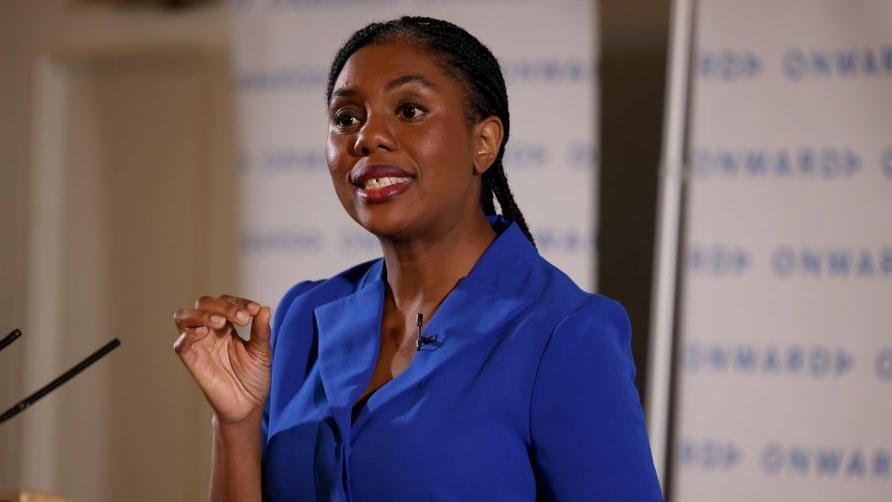
Conservative leader Kemi Badenoch is being encouraged by senior figures within her party to reduce the prominence of Brexit in her political messaging, marking a significant strategic shift for a party whose identity and internal divisions were shaped by Britain’s departure from the European Union. With Prime Minister Andy Burnham pursuing a closer relationship with Brussels, Badenoch’s team is increasingly keen to focus on issues it believes offer stronger electoral opportunities, including the economy, welfare spending, the cost of living and national defence.
Sources within the Conservative Party have indicated that Badenoch has been advised to avoid allowing Brexit and Europe to dominate public debate. Although she continues to defend Britain’s decision to leave the EU and criticise aspects of the government’s approach, the issue is now regarded as less central to the party’s immediate political strategy.

The shift reflects an apparent recognition among senior Conservatives that repeatedly revisiting the arguments surrounding the 2016 referendum may offer limited electoral benefits. Brexit remains an important political issue, but its divisive legacy could make it difficult for the party to broaden its appeal if it continues to concentrate heavily on the subject.
One source said Badenoch had received advice from Stephen Gilbert, a former Conservative official who is now a peer and joined her team as a senior political adviser approximately a year ago. According to the source, Gilbert encouraged the leader to move the party’s political narrative away from Brexit and towards issues that could resonate more strongly with voters.
Another Conservative source described the advice as more nuanced, suggesting the strategy was not simply about avoiding Europe but about giving greater attention to subjects where the party believes it has stronger arguments and policy proposals.
Recent parliamentary activity appears to reflect this change. During eight sessions of Prime Minister’s Questions since Burnham entered Downing Street over the summer, Badenoch and her deputy, Alex Burghart, have focused on Europe only once. That intervention took place on 28 October, when Badenoch challenged the Prime Minister over whether he wanted to hold another referendum on Brexit.
The other sessions concentrated on domestic economic and social issues, including welfare policy, the cost of living, public spending, defence, government debt and the future of North Sea oil and gas exploration. The pattern suggests that the Conservatives are attempting to reposition their parliamentary attacks around subjects they consider more relevant to voters’ everyday concerns.
A senior Conservative said the approach was less about deliberately sidelining Europe and more about creating opportunities to discuss areas where the party believes it has greater political strength. The economy and defence were identified as particularly important priorities.
The strategy has reportedly received support from other senior party figures. One Conservative shadow minister, who described themselves as a former supporter of remaining in the EU, said the party needed to move forward rather than repeatedly debate an issue that had already dominated British politics for years.
Another shadow minister argued that Brexit had been deeply divisive and that continuing to focus on it could prevent the Conservatives from addressing more immediate challenges facing the country. The comments indicate that at least some figures within the party believe a change of emphasis is necessary if the Conservatives want to rebuild support among voters with differing views on Britain’s relationship with Europe.
However, Badenoch has not abandoned her defence of Brexit. In an opinion article published on Thursday, she criticised Burnham’s efforts to reset relations with the European Union, describing the move as backward-looking. She argued that the Prime Minister was reopening arguments from 2016 because he lacked convincing answers to the challenges facing Britain today.
Her criticism came in response to Burnham’s position that Brexit had weakened Britain’s international standing and economic performance. The Prime Minister has been seeking to renegotiate aspects of the post-Brexit relationship, arguing that closer cooperation with the EU could improve trade and reduce unnecessary barriers for British businesses.
Despite her criticism, Badenoch’s recent comments suggest a more pragmatic approach to some aspects of cooperation with Brussels than the language traditionally used by parts of the Conservative Party during the most contentious years of the Brexit debate.
Earlier this month, when questioned about Burnham’s proposals to reduce administrative barriers surrounding food checks, Badenoch acknowledged that removing unnecessary red tape would be beneficial. However, she expressed doubts about whether the government would successfully deliver the promised changes.
She also accepted that Britain’s post-Brexit trade agreement with the EU could and should be updated. Badenoch argued that trade agreements require regular negotiation and improvement, adding that a country with an independent trade policy should seek better arrangements with international partners.
Her comments suggest that the Conservative leader wants to distinguish between defending Brexit as a political decision and opposing practical cooperation with European countries. This distinction may allow her to maintain the support of committed Brexit supporters while avoiding the impression that the party is against every form of closer economic engagement with the EU.
The political shift comes at a significant moment in UK-EU relations. Burnham’s government is attempting to establish a more constructive relationship with Brussels, with negotiations focused on improving trade arrangements and addressing practical obstacles that have emerged since Britain’s departure from the bloc.
The proposed reset has become a point of political disagreement, with the government presenting closer cooperation as an opportunity to support economic growth, while the Conservatives warn against reopening divisions from the referendum period. Badenoch’s challenge is to criticise the government’s plans without allowing Brexit to overshadow the wider policy issues she wants to place at the centre of the Conservative message.
A Conservative spokesperson said the country did not need to be dragged back into another debate about Brexit. The spokesperson stressed that this did not mean Badenoch or the party would avoid discussing the European Union, but argued that Burnham was attempting to reopen old political divisions because he had insufficient answers to the country’s current problems.
The spokesperson also said that reducing welfare spending, providing adequate funding for defence and lowering taxes to encourage economic growth were all possible outside the EU. The Conservatives described the government’s proposed reset as a distraction from these priorities and insisted that the party would continue to challenge it.
The economic argument is likely to become particularly important as the Conservatives seek to establish a clear alternative to the government. Household finances, public spending and the future of welfare policy are issues that directly affect voters, while defence has gained greater political significance amid growing international instability and pressure on the UK’s security commitments.
For Badenoch, placing these subjects at the forefront could help the Conservatives reach voters who are less interested in revisiting the referendum and more concerned about employment, taxation, public services and economic security. It may also offer an opportunity to present the party as focused on future challenges rather than past political conflicts.
Nevertheless, Brexit remains difficult for the Conservatives to leave behind entirely. The party’s internal divisions over Europe played a major role in its political history, and its position on the EU continues to influence how voters assess its economic and constitutional policies. Any attempt to reduce the issue’s prominence will therefore require careful political management.
The leadership will also need to ensure that a change in messaging is supported by clear policy proposals. Simply talking less about Brexit may not be enough to restore confidence if voters remain uncertain about the party’s plans for taxation, public services, economic growth and national security.

The emerging strategy suggests that Badenoch wants to draw a distinction between the Conservative Party’s historical commitment to Brexit and its priorities for the next election. Rather than allowing the European question to dominate every political confrontation, she appears increasingly determined to make the economy, welfare and defence the central themes of her leadership.
As Burnham continues efforts to improve relations with Brussels, the Conservatives face a delicate balancing act. They must challenge the government’s approach to Europe while demonstrating that they have a wider programme capable of addressing the country’s economic and social pressures. Whether Badenoch’s shift can help the party rebuild its political standing will depend on how convincingly she turns that strategy into policies that connect with voters.
Related News:
 UK Pushes for New EU Goods Trade Deal
 Reeves Fights to Keep Treasury Role Amid Labour Turmoil
 Green Leader Targets Starmer’s Former Seat
 Argentina to file criminal charges over Falklands oil drilling
 UK plans tougher Israel stance with settlement trade ban
 Burnham Leaves Door Open to Future Brexit Reversal
 Tony Blair Calls for Britain to Rejoin EU Within a Decade
 Burnham Opens Door to Possible UK Return to EU
 Report Urges UK to Rethink Overseas Military Spending
 Holborn and St Pancras Vote Tests Labour and Greens
 France Urges UK to Consider Returning to EU
 Labour Wins Key London By-election as Greens Fall Short
 Burnham Rises as Farage and Polanski Face Setbacks
 Labour Beats Greens in Crucial London By-election
 UK Urges Interpol to Reject Argentina’s Falklands Arrest Requests
 UK Rejects EU Pressure to Impose Tariffs on China
 UK Could Rejoin EU Through a Switzerland Plus Deal
 Brexit Debate Returns as UK Voters Reconsider EU Exit
 UK Aid Set to Fall Short of Reduced 2027 Target
 Brexit Deal Not Good Enough for Britain, Burnham Says
 Denmark Seeks EU-Wide Ban on Fast-Growing Turbo Chickens
 Australia Reviews UK Visa Rules Amid Worker Influx
 UK Parliament Faces Risk of Notre Dame-Style Fire
 Burnham’s Christmas Homelessness Pledge Faces Uncertainty
 Argentina Threatens UK Oil Boss with Jail Over Falklands
 Trump, Xi and Putin Face Fears of a New Yalta
 Burnham Says Brexit Has Failed, Pledges New EU Deal
 Trump’s UK Ambassador Urges North Sea Drilling to Strengthen US Ties
 Millionaires group urge Reeves to introduce wealth tax to ‘lift kids out of poverty’
 Canada Passes Carney’s First Budget in Tight Parliamentary Vote
 Starmer Says Labour’s Economic Plan Needs Years to Deliver
 UK Government Borrowing Drops to £11.6bn in December
 Starmer Condemns ‘Depraved’ Russian Strikes on Ukraine
 UK shelves £110m border project amid trade strain
 Trump Tariffs Threat Spark UK and EU Alarm
 Gordon Brown urges court for crimes against children
 Army Probes Apache Flyover at Kid Rock’s Nashville Estate
 Relationship with Trump may be beyond repair, Starmer warned
 UK Stands Firm on Falklands Amid US Rift
 Oil Prices Surge Above $120 Amid Iran Blockade Fears
 Silent Tracks: Rail Line Without Passengers
 Trump approval plunges amid Iran war fears
 Farage and Reform UK Reshape British Politics
 Starmer Leadership Under Pressure After Setbacks
 Ukraine Creates Long-Range Strike Command
 Burnham unveils £65m drought aid for farmers
 Unions Warn Labour Over Zero-Hours Contract Reforms
 Former Diplomats Urge UK and France to Act on Palestine
 Trump Hardens Canada Trade Stance as Talks Stall
 Bayeux Tapestry Revives Franco-British Ties
 Trump Calls Iran War ‘Small Potatoes’ Despite US Deaths
 Swedish Mining Push Puts Sami Land Rights Under Pressure
 Trump Threatens EU With Tariffs Over Canada Proposal
 Tom Watson Takes Senior Role at Palantir
 MPs Defend UK Economic Watchdog Against Critics
 Xi urges Trump to avoid US-China military conflict
 The Tests Awaiting Andy Burnham After Labour Conference
 Badenoch Raises Prospect of 2027 UK Election
 South Korea Probes Fuel Shipments to Russia
 UK Mission in East Jerusalem to Remain Open
 Houthi Missile Claim Sparks Riyadh Airport Disruption
 Trump’s Russian Diesel Deal Sparks Ukraine Fury
 Brazil Court Scandal Threatens Lula as Bolsonaros Rise
 UK Borrowing Hits £24.5bn Ahead of Healey’s Budget
 Middleton Revitalisation Blueprint for UK Towns
 Lula Supporters Make Final Push Ahead of Brazil Runoff
 Labour MPs Urge Burnham to Lead UK Reindustrialisation
 UK Land Registry Plan Faces Opposition From Landowners
 Trump’s Global Policies Put Republicans at Risk
 King Charles Faces Reparations Protests at Antigua Summit
 Australia Raises Interest Rates to 18-Year High
 James Talarico Makes History with Texas Senate Victory
 Paraguay President Quits After Major Bank Collapse
 UK Employers to Be Forced to Publish Job Salaries
 Labor Minister Defends Chalmers Amid Budget Tensions
 US Treasury Chief Moves to Military Base Over Iran Threat
 Zelenskyy Sees Peace Opportunity as US Envoys Meet Putin
 Ilse Aigner Set to Make German History as First Female President
 Canada May Turn to Chinese Automakers if US Talks Fail
 Bank of England Faces £160m Renovation Challenge