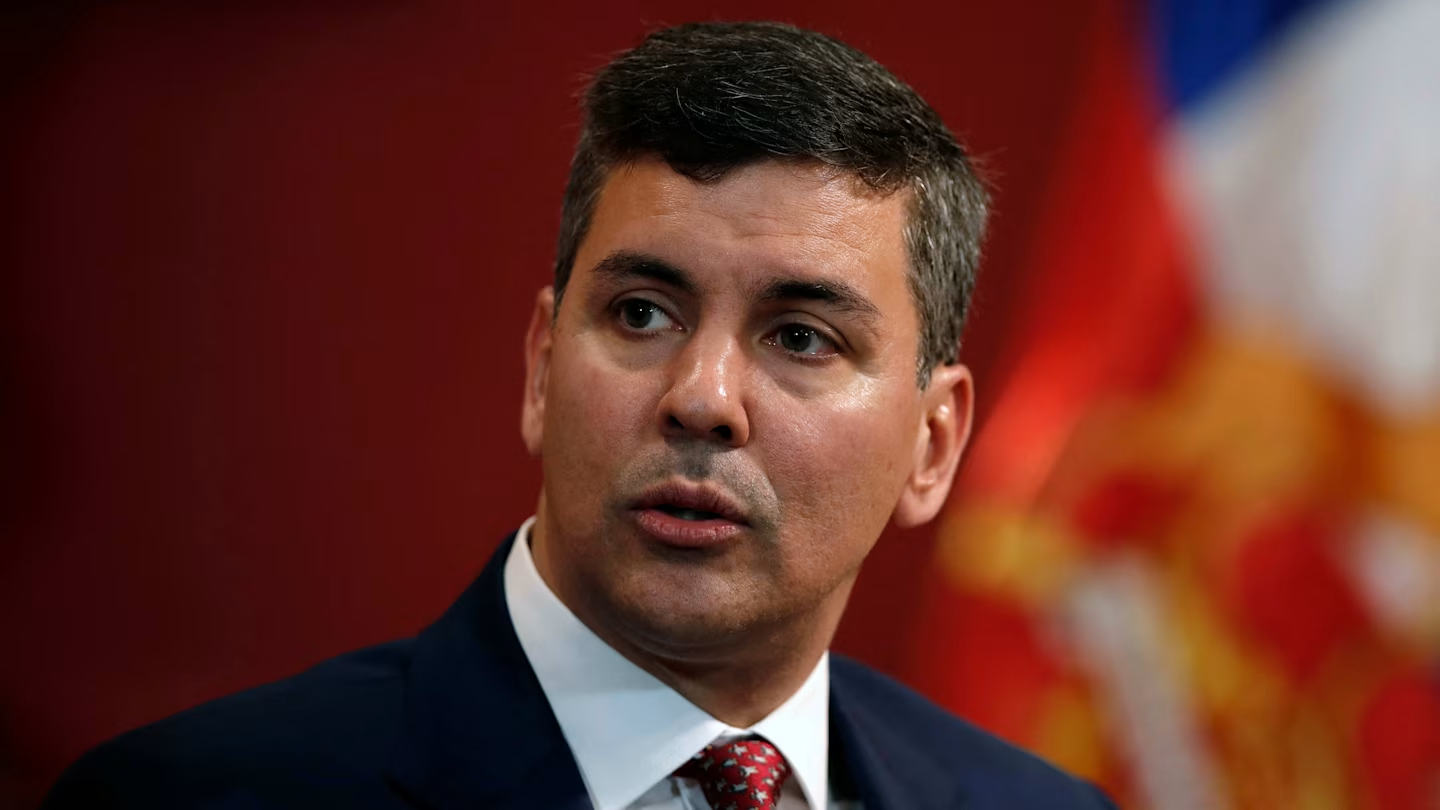
Paraguay has been plunged into one of its most serious political and financial crises in recent years after President Santiago Peña announced his resignation amid the collapse of Ueno Bank, a major financial institution whose operations had expanded rapidly under his administration. The crisis has left millions of customers unable to access their savings, triggered widespread public protests, led to the arrest of bank executives and prompted lawmakers from across the political spectrum to pursue impeachment proceedings against the president.
Peña announced his decision to step down on Thursday, saying that the stability of the country, social peace and the protection of democratic institutions had become his priorities. His resignation came as public anger intensified over frozen bank deposits and growing allegations that political connections had helped the lender expand its business and gain access to substantial public and pension-related funds.
The 47-year-old economist had been serving as president since August 2023, with his term originally scheduled to continue until 2028. However, the financial scandal surrounding Ueno Bank rapidly developed into a national political emergency, placing his leadership under unprecedented pressure.

In a video address to the nation, Peña described the decision as one of the most difficult moments of his life. He said that the interests of the republic must always take precedence over any individual or political circumstance. He also apologised to Paraguayans if he had failed to meet their expectations and expressed concern for people who had entrusted their savings to the country’s financial system.
His statement came after thousands of demonstrators gathered outside Congress in the capital to demand accountability and action over the financial crisis. Many families have been particularly concerned about their inability to withdraw money for food, household necessities, medical expenses and other essential daily costs.
At the centre of the controversy is Ueno Bank, a financial institution that experienced an extraordinary expansion over a relatively short period. Originally established as a finance company in the 1970s, the institution was purchased in 2021 by Grupo Vázquez, one of Paraguay’s major business and industrial conglomerates.
The bank received authorisation from the central bank at the end of 2023 to operate as a digital bank. That approval came during Peña’s presidency and marked an important stage in its transformation into a major player in the country’s financial sector.
Ueno subsequently expanded its customer base through attractive promotional offers, including cashback incentives on grocery purchases. It also developed a high-profile public presence by sponsoring Paraguay’s national football team. These marketing activities helped establish the institution as a familiar name among consumers and contributed to its rapid growth.
The bank claimed to have approximately 60 per cent of Paraguay’s adult population among its customers. However, its rapid expansion ultimately became the subject of serious questions about financial oversight, institutional responsibility and the relationship between political authority and private business interests.
The crisis reached a critical point on Monday when Paraguay’s central bank ordered Ueno Bank into resolution over insolvency concerns. The decision effectively froze deposits belonging to approximately three million customers, creating immediate difficulties for households and individuals who depended on their accounts for everyday financial transactions.
The scale of the disruption has raised concerns about the financial security of ordinary citizens. For many depositors, savings represent years of employment, careful budgeting and personal sacrifice. The inability to access those funds has therefore created considerable uncertainty, particularly among families with limited financial reserves.
Bank executives were arrested as authorities moved to address the situation. The arrests intensified public attention and increased demands for a comprehensive investigation into how the institution had reached such a critical financial position despite its rapid growth and prominent market presence.
Another major concern involves the bank’s relationship with state institutions and pension funds. Reports indicated that Ueno had come to manage between $800 million and $850 million in deposits from government-related entities and pension organisations. The involvement of public and retirement funds raised questions about the financial decisions made by those responsible for managing institutional resources.
The controversy became particularly sensitive because Peña previously had shareholding connections with Ueno Holding, the group associated with the bank. Although the president maintained that his involvement had been a personal investment and said he had disposed of all his shares, opposition politicians questioned whether his previous business interests had created a conflict of interest.
Peña had rejected allegations of improper favouritism, describing criticism surrounding the allocation of state and pension funds to the institution as a false media campaign intended to undermine his administration. He repeatedly maintained that he had committed no wrongdoing.
Nevertheless, concerns about possible political influence continued to grow. Critics argued that the combination of presidential connections, the bank’s rapid expansion and its access to substantial public-sector deposits required closer scrutiny.
Opposition lawmakers and members of Peña’s own Colorado Party eventually joined forces in submitting an impeachment motion. The initiative accused the president of misconduct and raised questions about his relationship with the financial institution.
Political pressure increased further when former president Horacio Cartes, once an ally of Peña, publicly expressed support for impeachment. In a statement, Cartes said that the country should not tolerate the theft of public, private or pensioners’ money. He argued that restoring the republic’s institutional order required political accountability.
His intervention was particularly significant because it demonstrated that dissatisfaction with Peña had extended beyond the traditional opposition. Support for impeachment within the governing political camp suggested that the president was increasingly isolated at a moment when public confidence in the administration was deteriorating.
The country’s national football team also entered the debate. On Wednesday, its players issued a public letter demanding a forceful response from the government and the justice system. Their intervention reflected the wider social impact of the crisis and the growing demand for action from institutions capable of influencing public opinion.
Opposition senator Rafael Filizzola described the affair as one of the biggest alleged financial frauds involving political power during Paraguay’s democratic era. Speaking to a local radio station, he accused those connected to the institution of using public resources to support private business interests linked to political influence.
Such allegations have not yet established individual criminal responsibility. However, they have increased pressure on investigators to determine whether financial decisions involving Ueno were properly authorised and whether any political or institutional interference contributed to the bank’s difficulties.
Peña’s resignation also carries significant international implications. The former president, who previously served as finance minister, had positioned himself as a supporter of economic modernisation and promised to build a stronger Paraguay.
He was also considered an important regional partner of US President Donald Trump. Peña attended Trump’s second inauguration and maintained close diplomatic engagement with senior American officials, including Secretary of State Marco Rubio.
American officials had repeatedly described Paraguay as a strategic partner. More recently, Peña travelled to Washington to discuss economic cooperation and critical minerals, areas considered increasingly important for international investment and industrial development.
However, neither Trump nor Rubio had publicly commented on Peña’s resignation at the time of the announcement. The political uncertainty could create new questions about the direction of Paraguay’s international economic relationships and the continuity of investment initiatives.
The country’s immediate constitutional situation also remains complicated. Under the expected succession process, Vice-President Pedro Alliana would assume the presidency if Congress formally accepts Peña’s resignation. However, Alliana has also faced allegations of possible involvement in the Ueno Bank controversy, which he has denied.
This has created uncertainty over whether the political transition will restore public confidence or introduce further complications. The resignation must be handled through the country’s constitutional institutions, while lawmakers and investigators continue examining the circumstances surrounding the bank’s collapse.
Approximately an hour after Peña announced his decision, Paraguay’s lower house unanimously approved the impeachment motion. The proposal was then forwarded to the Senate for consideration.
The parliamentary process remains important even following the president’s resignation. If the Senate approves impeachment, Peña could lose his Senate seat and the parliamentary immunity associated with it, potentially leaving him exposed to criminal proceedings in ordinary courts if investigators establish grounds for prosecution.
For ordinary Paraguayans, however, the most immediate concern remains the recovery of their frozen deposits. Political statements and parliamentary decisions may determine the country’s leadership, but they cannot by themselves resolve the financial difficulties facing millions of customers.

The authorities will face pressure to explain how the bank’s operations deteriorated, establish the extent of its financial liabilities and determine how depositors can recover their money. The handling of public and pension-related funds will also require careful examination to establish whether existing safeguards were followed.
Paraguay’s crisis has exposed the potentially damaging consequences of weak financial oversight, questionable political relationships and insufficient public accountability. It has also demonstrated how the failure of a major financial institution can quickly develop into a national political emergency when millions of citizens are directly affected.
As the country moves towards a possible change of leadership, the central challenge will be restoring confidence in its banking system and ensuring that ordinary depositors are not left to bear the consequences of decisions made by powerful financial and political figures. The investigation into Ueno Bank, the constitutional transition and the future of millions of people’s savings are now closely connected to Paraguay’s broader struggle to rebuild institutional trust.
Related News:
 Trump Pledges $5,000 if Republicans Win Midterms
 Brazil Court Scandal Threatens Lula as Bolsonaros Rise
 Trump Rallies GOP as Senate Democrats Boost Key Races
 Trump Halts New Russia Sanctions Amid Ukraine Rift
 Trump Fears Shock Democratic Senate Win in Kansas
 Fed Expected to Hold Rates Steady Ahead of US Midterms
 Global Crises Test Diplomacy as Trump’s Policies Face Scrutiny
 G20 Photo Cancelled as Russia Deepens Western Rift
 Trump approval plunges amid Iran war fears
 Trump Threatens UN Budget Cuts as US Pushes ‘Trade Over Aid’ Agenda
 US Awaits Iran Reply on New Ceasefire Proposal
 Hormuz Talks Near Critical Stage
 Reeves Fights to Keep Treasury Role Amid Labour Turmoil
 Trump Refuses to Sign Housing Bill, But Law Takes Effect
 Trump announces major US oil deal with Venezuela
 Trump Hardens Canada Trade Stance as Talks Stall
 Trump Calls Iran War ‘Small Potatoes’ Despite US Deaths
 US House Passes Russia Sanctions Bill Amid Debate
 Macron and Carney deepen France-Canada ties
 Trump Eyes Major Belarus Fertiliser Deal Amid Canada Trade Dispute
 Tony Blair Calls for Britain to Rejoin EU Within a Decade
 Xi urges Trump to avoid US-China military conflict
 Lula accuses Trump of seeking control over Brazil
 Saudi intercepts Houthi missiles as oil fears grow
 Trump Ads Trigger Fight Over Taxpayer Money
 EU-China Talks Target Surge in Hybrid Car Imports
 Tanker Attacked Near Qatar as Hormuz Tensions Escalate
 US Senate Debates Turn Bitter as Midterms Near
 Trump’s Russian Diesel Deal Sparks Ukraine Fury
 France Faces Debt Crisis as Protests and Markets Clash
 Millions Face Tougher Medicaid Rules From January
 Trump Targets Arizona and Montana Amid GOP Election Worries
 Brazil Cuts Working Week to 40 Hours in Lula Election Boost
 Serbia Leader Linked to Controversial Trump Tower Plan
Trump Falsely Questions Ossoff’s Election Legitimacy
 Cormann Warns Australia Against Populist Migration Caps
 Alberta Voters Reject Push for Canadian Independence
 Meta Faces Election Bias Claims Ahead of Brazil Runoff
 Trump Pledges $400m to Boost Republicans in Midterms
 Trump Faces Voter Backlash Over Soaring Gas Prices
 Trump’s Global Policies Put Republicans at Risk
 Haley Stevens Backs Republican Rival in Michigan Senate Race
 US Midterms Put Trump’s Presidency to the Test
 US Strikes Iran Island as Vance Signals Hope for Peace
 Australia Raises Interest Rates to 18-Year High
 Democrats Seize Senate Control in Major Trump Setback
 Democrats Retake US House in Major Trump Backlash
 James Talarico Makes History with Texas Senate Victory
 Canada Passes Carney’s First Budget in Tight Parliamentary Vote
 Trump Fed bid heads to Supreme Court
 Thousands Protest ICE Operations in Nationwide US Day of Action
 UK Stands Firm on Falklands Amid US Rift
 Oil Prices Surge Above $120 Amid Iran Blockade Fears
 Trump orders US troop pullout from Germany
 Kevin Warsh sworn in as Fed chair amid economic backlash
 Houthis Strike Saudi Arabia as Middle East Tensions Rise
 Swedish Mining Push Puts Sami Land Rights Under Pressure
 Trump gives $45,000 holiday gifts to White House aides
 Trump Threatens EU With Tariffs Over Canada Proposal
 US Networks Suspend Trump White House Pool Coverage
 MPs Defend UK Economic Watchdog Against Critics
 Trump gives Xi red-carpet welcome as trade truce extends
 Republican Senator Questions Trump Ad Spending
 Burnham Opens Door to Possible UK Return to EU
 Lula Warns of Bolsonaro Family Return as Brazil Votes
 Quebec separatists return to power without majority
 South Korea Probes Fuel Shipments to Russia
 Ministers Push ATO to Reconsider Credit Card Ban
 Trump Says He Deserves Nobel Peace Prize
 Houthi Missile Claim Sparks Riyadh Airport Disruption
 Trump Rules Out Iran Attack Before US Elections
 Trump Names Katie Zachariah as Next White House Press Secretary
 Hall and Woodford Win Nobel Economics Prize
 UK Borrowing Hits £24.5bn Ahead of Healey’s Budget
 Lula Supporters Make Final Push Ahead of Brazil Runoff
 Labour MPs Urge Burnham to Lead UK Reindustrialisation
 Flávio Bolsonaro Reportedly Leaves Brazil After Election Defeat
 Albanese Faces Labor Pressure as Inflation Hits 4.3%
 Hegseth Faces Growing Pressure After GOP Election Defeat
 Trump-Backed Republicans Suffer Major Midterm Defeats